Your search Marcus Aurelius Antonius Augustus gave 307 results.

Altar from Intercisa, Pannonia Inferior, dedicated to Deo Soli invicto for the welfare of Emperor Commodus.
Altar from Mithraeum I at Carnuntum, Pannonia Superior, dedicated to Deo invicto by Iulius Pacatus ex voto, with Marcus Valerius serving as sacerdos for the second time — one of the few attestations of the Mithraic title sacerdos from Pannonia.
Inscription from Mithraeum II at Ptuj, ancient Poetovio, dedicated to Deo Soli invicto Mithrae for the welfare of Flavius Iovinus, who had vowed the gift after witnessing the birth of the god; dated to the consulship of Peregrinus and Aemilianus, AD 244.
Inscription from Mithraeum I at Ptuj, ancient Poetovio, set up by Primitivos, contrascrip of the imperial procurator Caius Antonius Rufus, in memory of Hyacinthus — probably the founder of the sanctuary.
Inscription from Sisak, ancient Siscia, dedicated to Iovi optimo maximo, Soli invicto, and the Genius loci by Aurelius Antiocianus; the Mithraic character is uncertain.
Marble fragment from the Zollfeld at Virunum, Noricum, bearing a dedication to Deo invicto Mithrae for the welfare of the Emperor Antoninus Augustus.
Altar from Töltschach am Zollfeld, Noricum, dedicated to Soli invicto Mithrae for the welfare of the Augustus in honour of the Domus Divina by Hilarus, imperial freedman and tabularius patrimonii regni Norici, and Epictetus, imperial arkarius…
Inscription from Virunum, Noricum, dedicated to Deo invicto Mithrae for the welfare of Antonius Severinus by Helvius Acceptinus ex voto.
Ritual coin deposits beneath sanctuary bases helping date the Mithraeum to the late second century A.D.
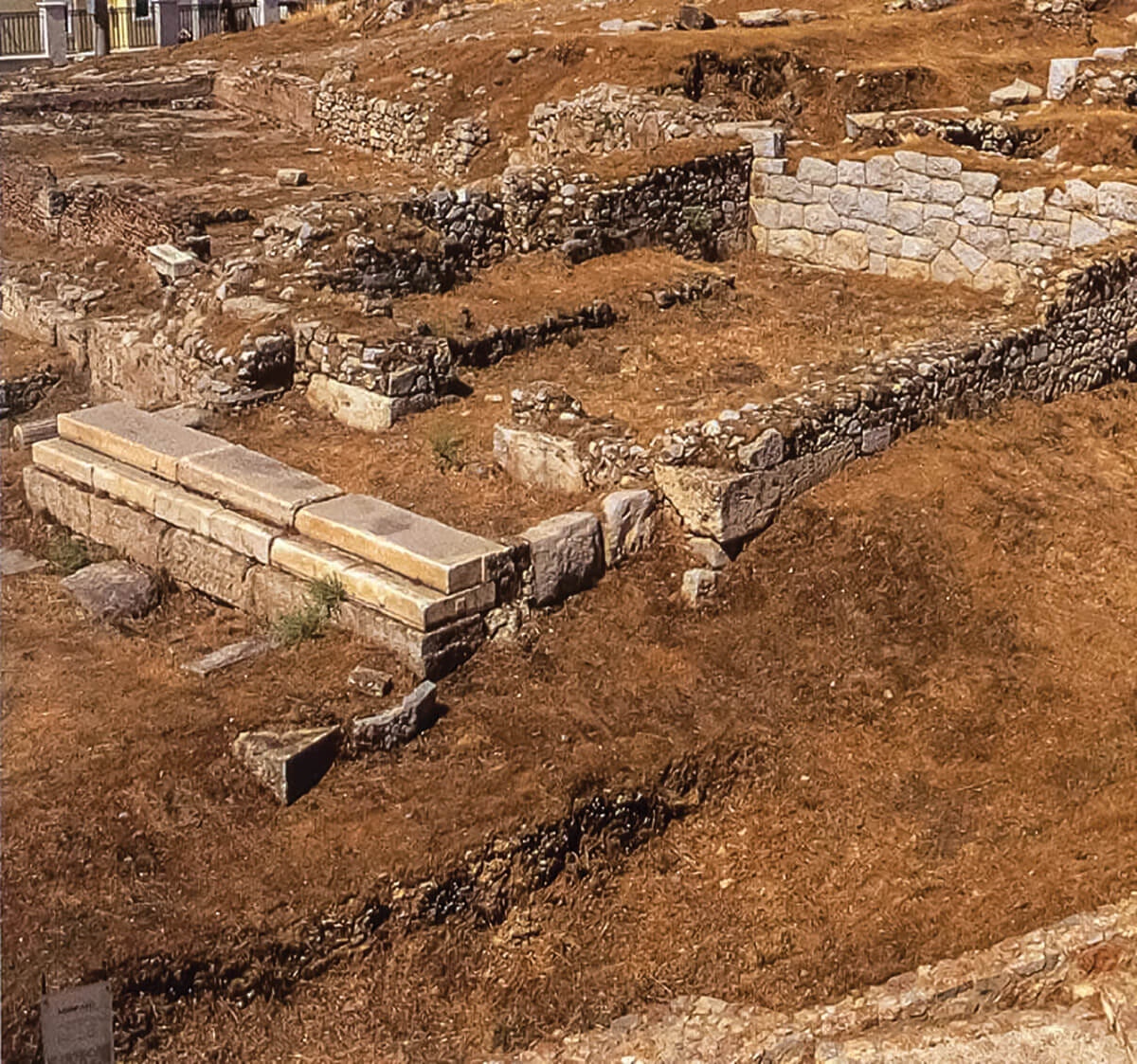
A Mithraeum has been identified in Eleusis where the last Hierophant form thespia had the rank of Father in the Mithraic Mysteries.

The roman castrum was built in the 2nd century BC. During the reign of Emperor Augustus in the 1st century BC, it officially became a city and was part of the Roman colony of Colonia Iulia Parentium.
Today Lugo was the capital of the Capori tribe. It was conquered by Paullus Fabius Maximus and named Lucus Augustus in 13 BC after the positioning of a Roman military camp.
Lambaesis, Lambaisis or Lambaesa, is a Roman archaeological site in Algeria, 11 km southeast of Batna and 27 km west of Timgad, located next to the modern village of Tazoult.
Emerita Augusta was founded in 25 BC by order of the Emperor Augustus to protect a pass and a bridge over the Guadiana River. The city became the capital of the province of Lusitania and one of the most important cities in the Roman Empire.
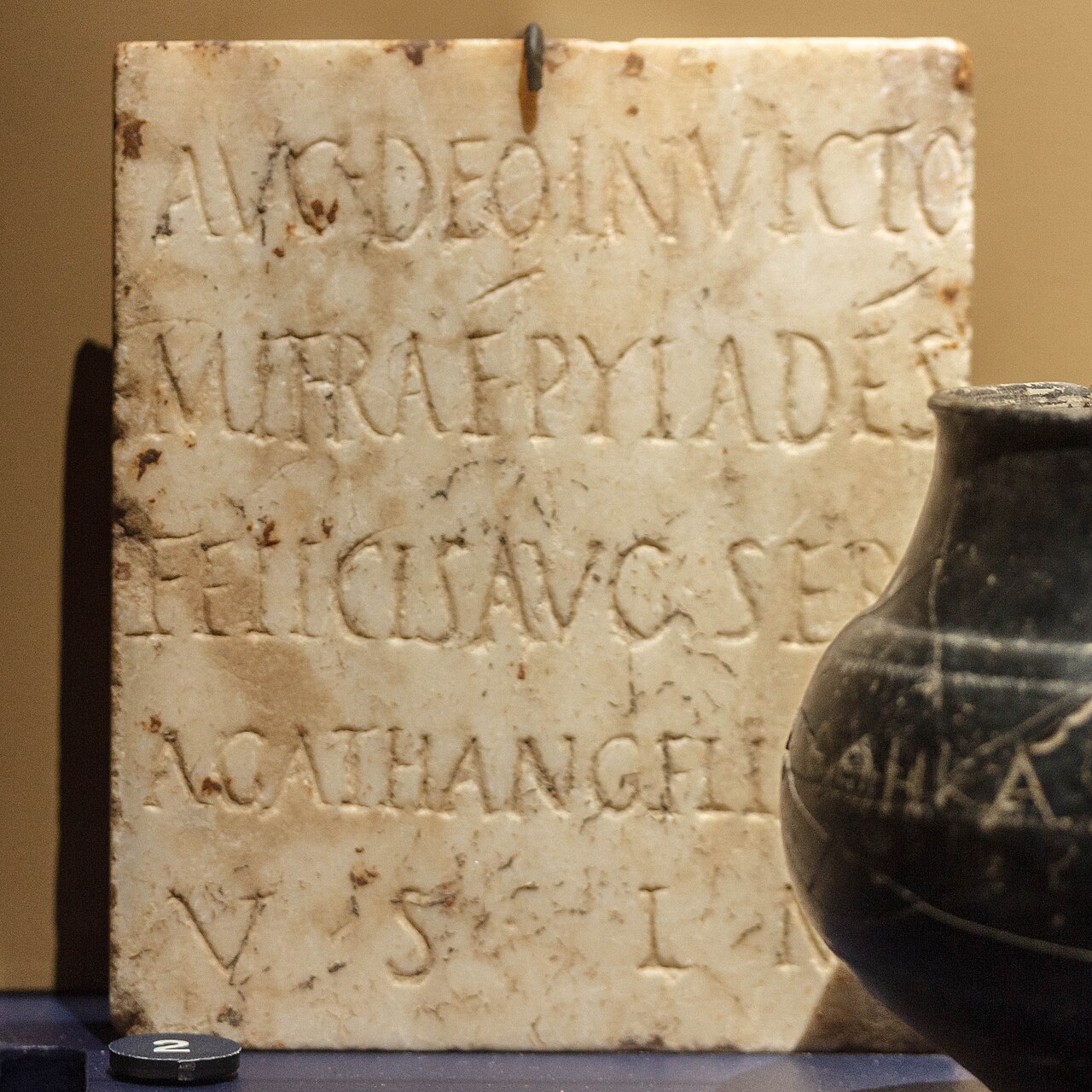
This marble plaque from Iuliomagus, Roman Angers, bears a rare dedication to Mithras by Pylades, a slave of an imperial slave connected to the Roman administration in Gaul.
A probable Mithraic sanctuary at Poetovio, identified by Vermaseren as the so-called Mithraeum IV on the basis of four associated inscriptions.
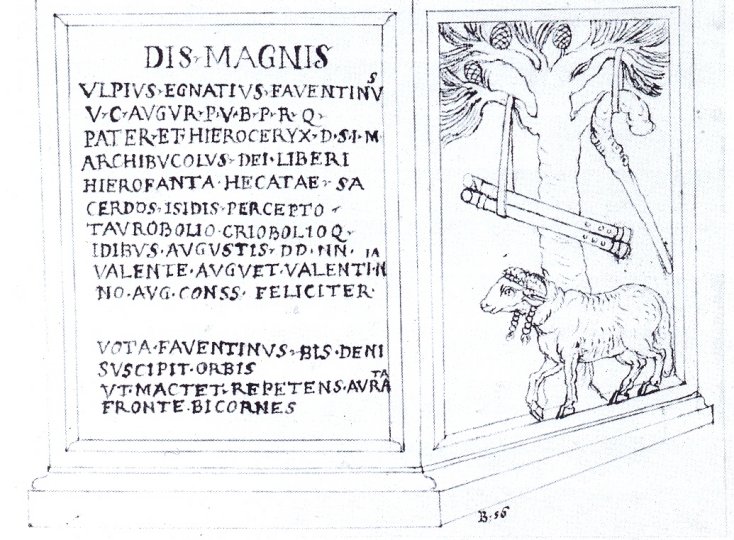
Both of them were discovered in 1609 in the foundations of the façade of the church of San Pietro, Rome.
Marble altar dedicated at the Vatican Phrygianum in Rome by the Mithraic pater Alfenius Ceionius Iulianus Kamenius in 374 CE.
This inscription shows that Publilius Ceionius, most distinguished man, dedicated a temple to Mithras at Mila, in the modern Constantina, Algeria.
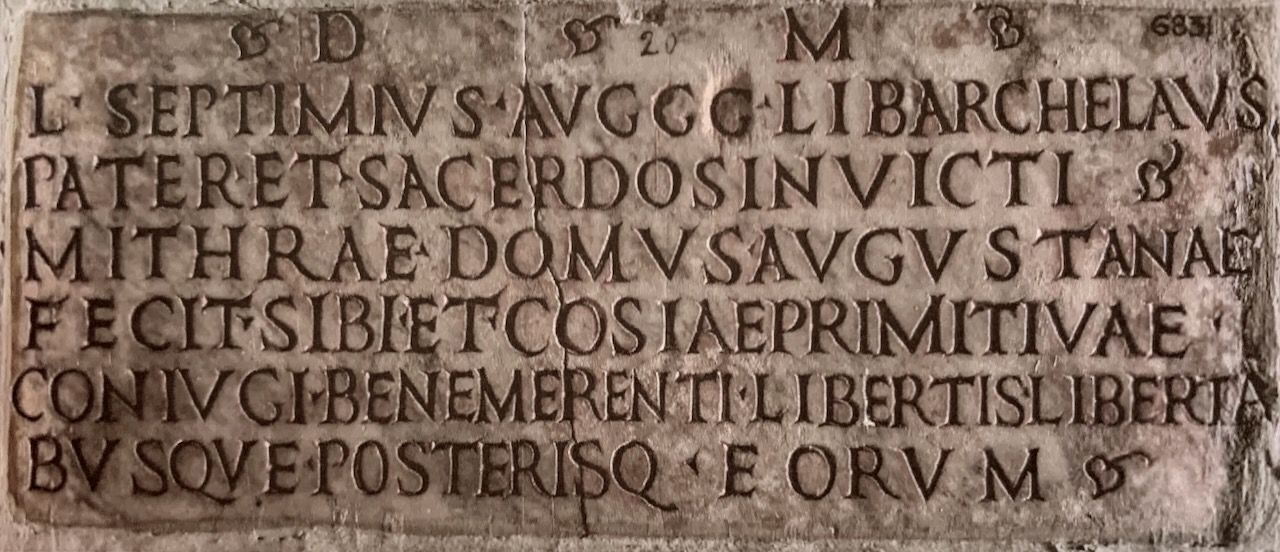
Marble funerary plaque erected by Lucius Septimius Archelaus, a Pater and priest of Mithras, for himself, his wife, and their freedmen and descendants.
