Your search Villa of Domitian at the Castel Gandolfo gave 3663 results.

Pair of small sandstone altars of different sizes, recovered from the Mithraeum at Ober-Florstadt in Upper Germany
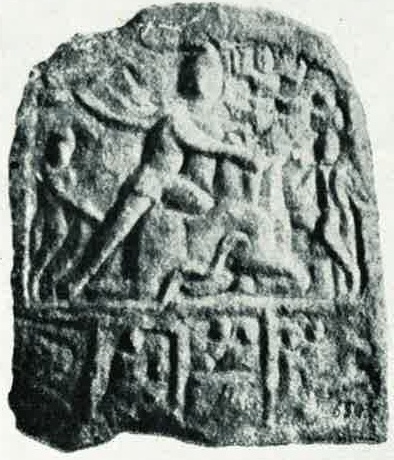
Small arched marble tauroctony relief from Philippovtsi near Sofia, Thracia, divided into two parts by a horizontal rim.
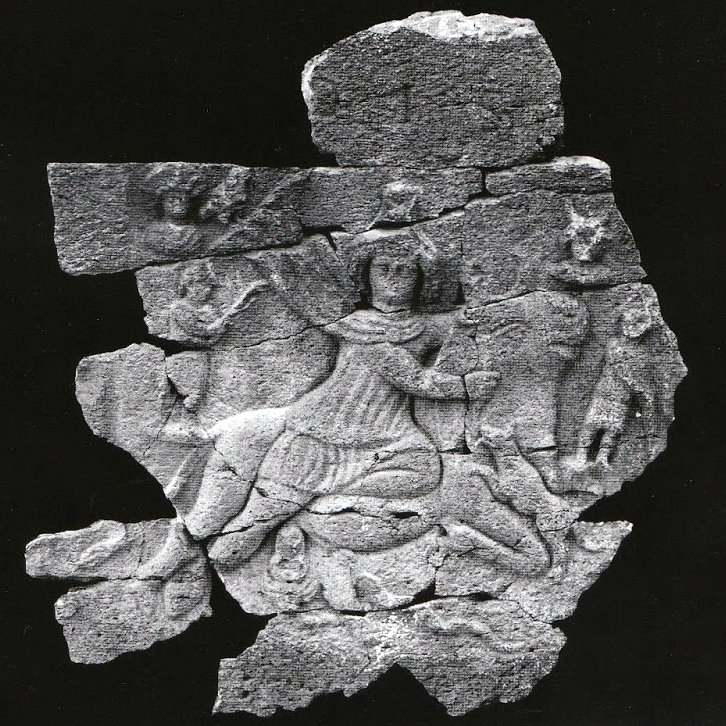
The second tauroctony of Jabal al-Druze seems to have be made by the same sculptor.
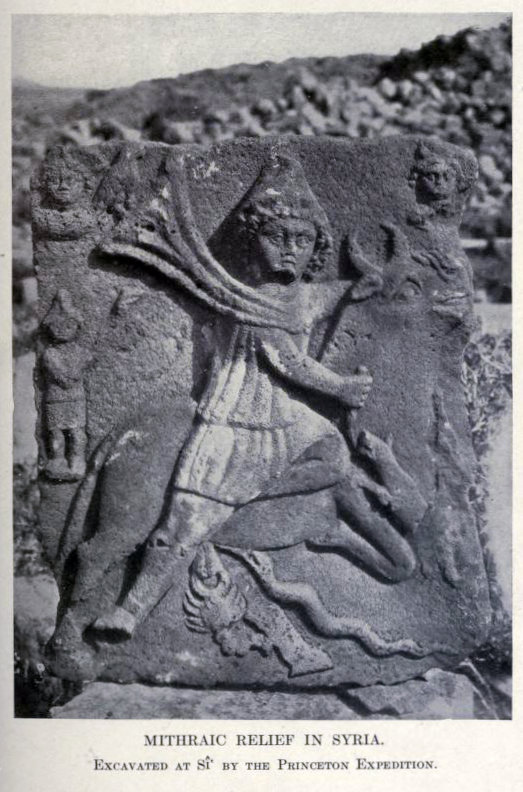
In the tauroctony of Jabal al-Druze in Syria, the snake appears to be licking the head of the bull's penis.
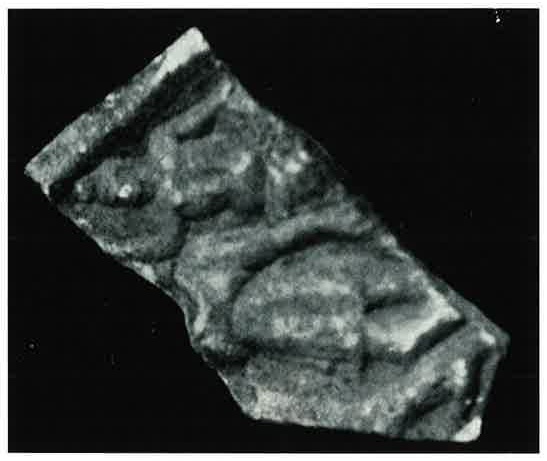
Tauroctony relief fragment with torchbearer and scene of Mithras’ rockbirth from Romula, Romania.
A probable Mithraic sanctuary near Santa Maria in Domnica on the Caelian Hill, known from a group of dispersed reliefs formerly owned by Ottaviano Zeno.
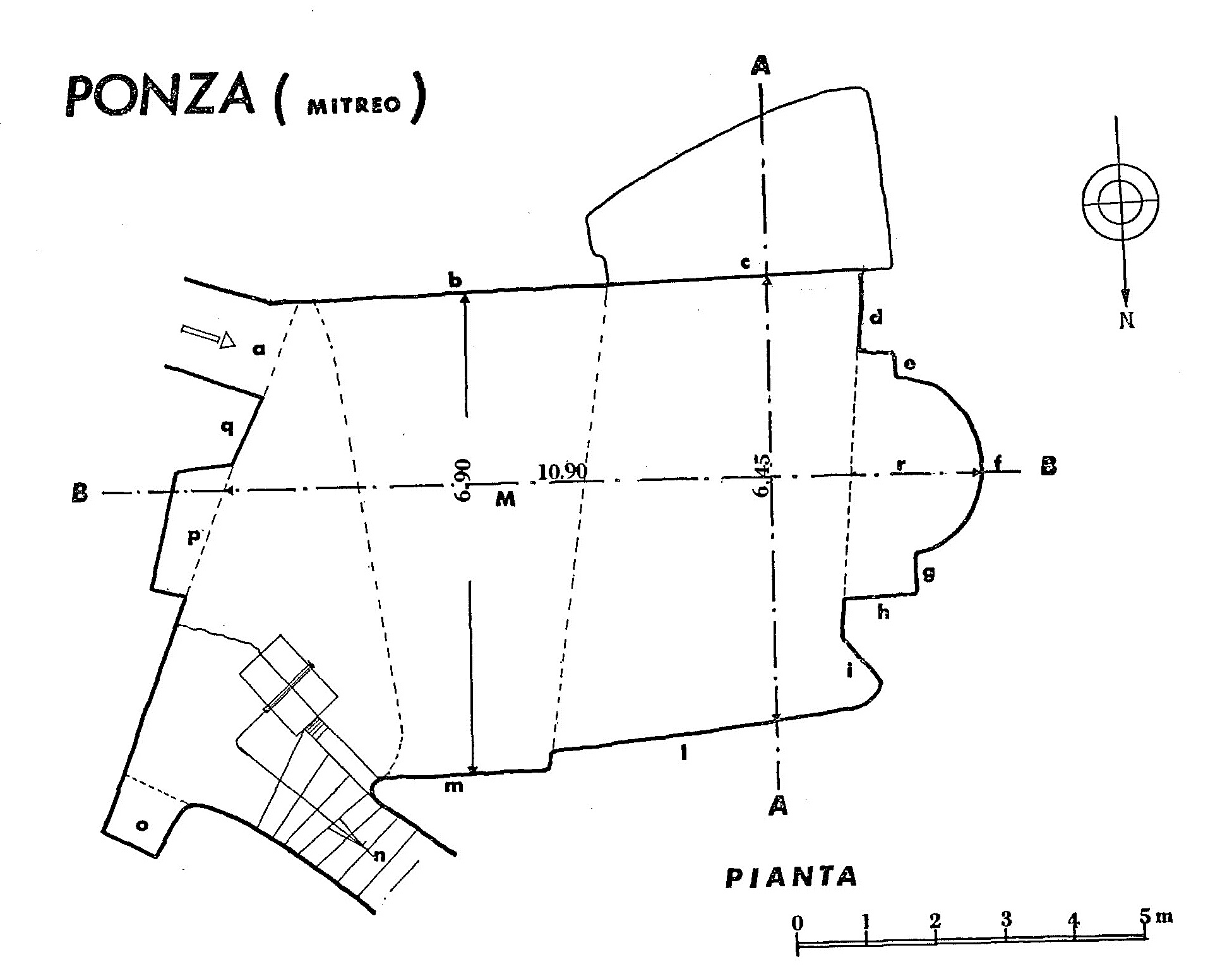
This Mithraic shrine on the island of Ponza is renowned for its exceptional stucco zodiac and astral symbolism linked to Roman Mithaism.
The Mithra Tauroctonos from Syracuse, Sicily, is currently on display in the city's archaeological museum.
,_found_in_Rome,_2nd_century_AD,_British_Museum_(15545876047).jpg)
The sculpture of Mithras slaying the bull was transported from Rome to London by Charles Standish in 1815.
This fragmentary tauroctony from Roman Gaul preserves a striking raven behind Mithras’ cloak and the bust of Sol in the upper corner.
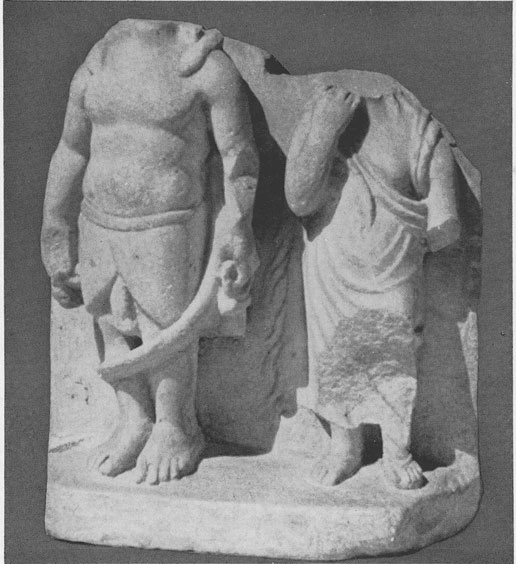
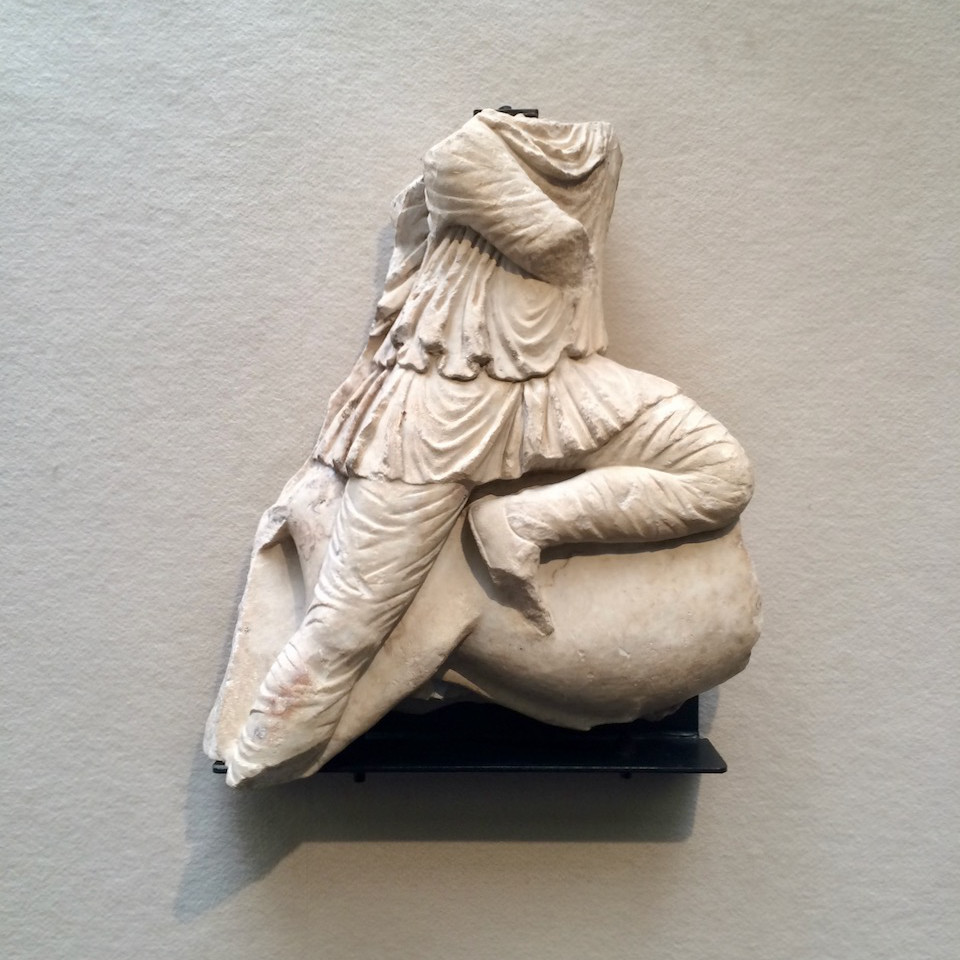
Marble relief, probably found in Rome during the construction of the Palazzo Primoli along the Via Zanardelli.
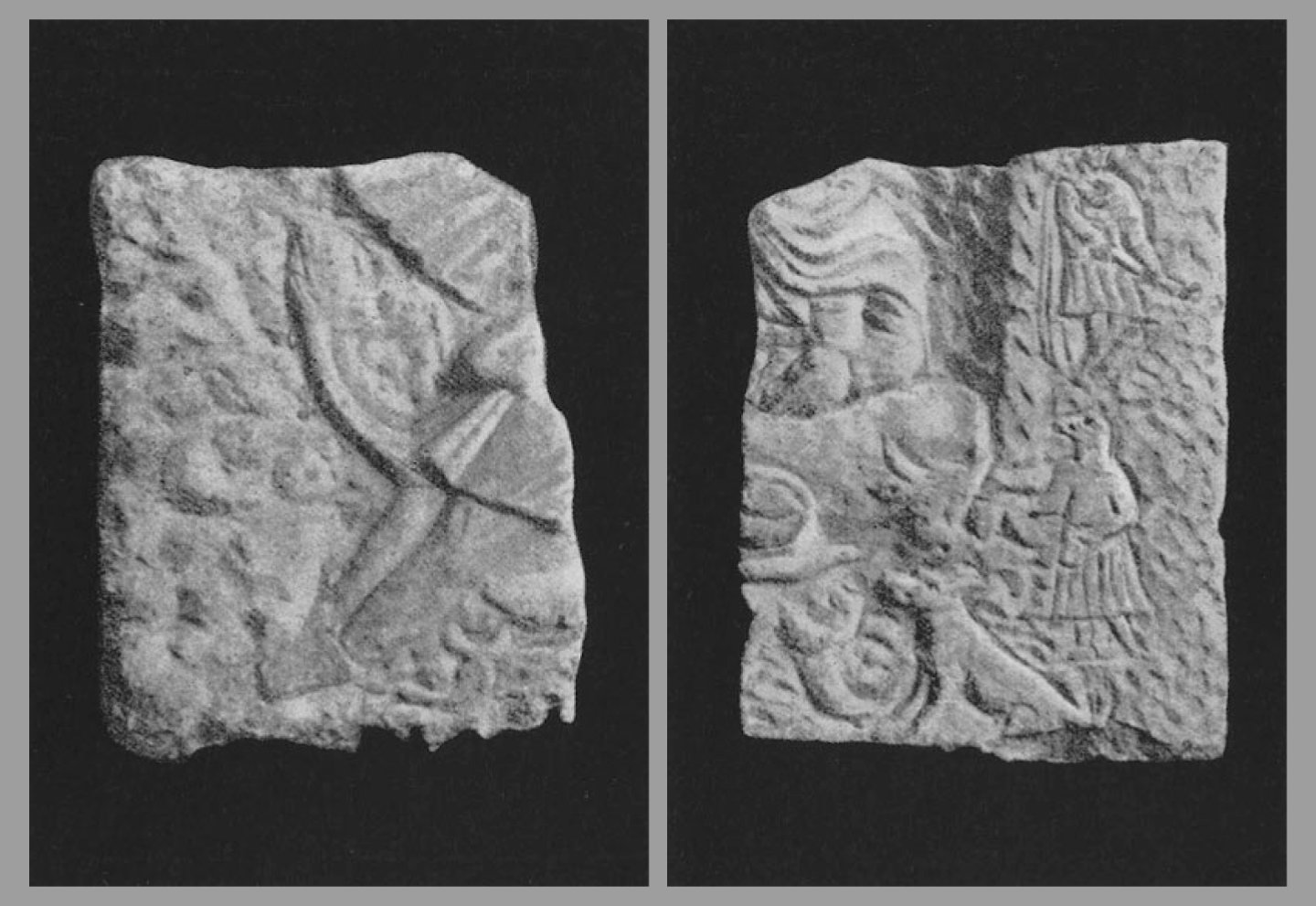
This fragment of a double relief shows a tauroctony on one side and the sacred meal, including a serving Corax, on the other.
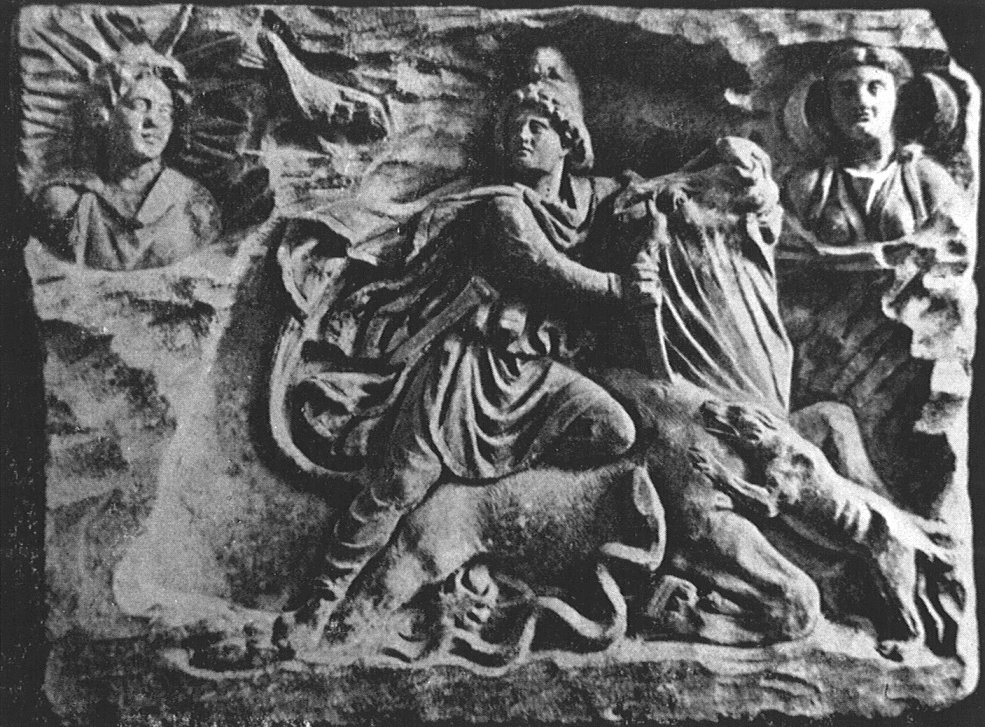
This marble relief depicting Mithras as a bull slayer was found in the back room of the Mithraeum of the Circus Maximus.

Fragments of a marble relief of Sol, which probably served as a fenster.

Roman stone low-relief depicting Mithras as a bull-slayer, with the upper part of his head missing.
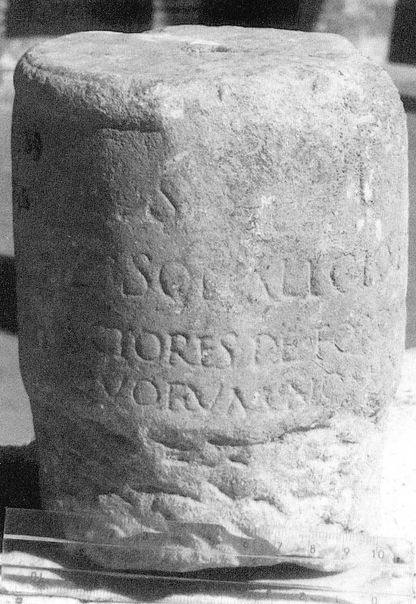
The inscription included the names of the brotherhood, which are now lost.

This marble altar was found ’in the street called di Branco’, behind the palace of the Cardinal of Bologna, in Rome.
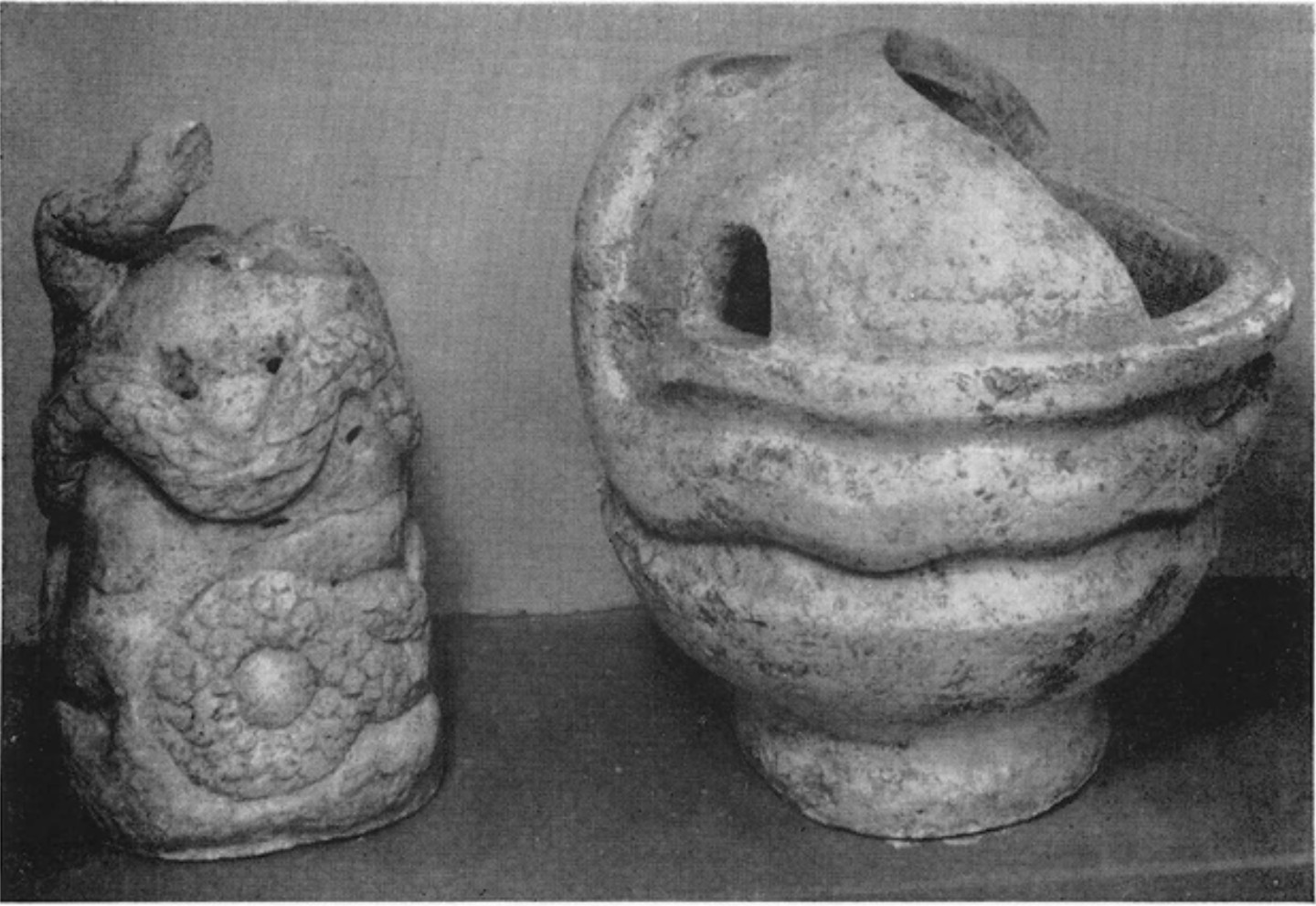
Both objects have a snake winding itself around them.
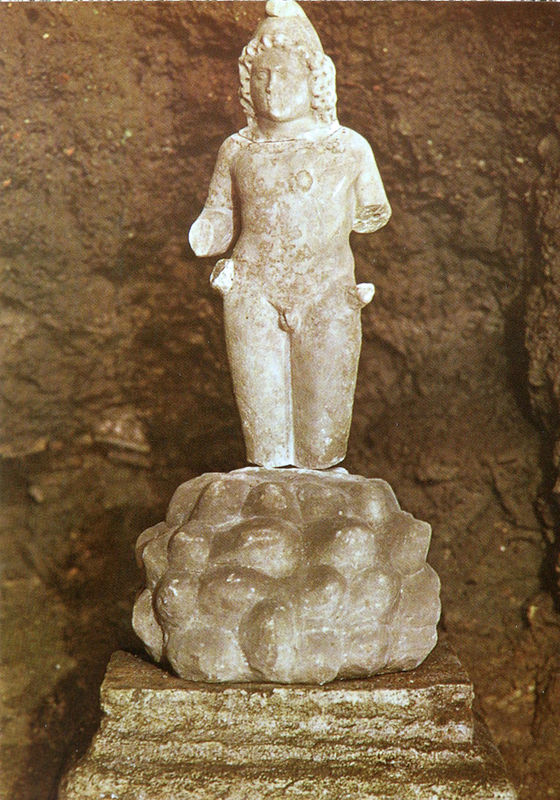
Mithras birth from the knees upwards emerging from a rock and wearing as usual a Phrygian cap.
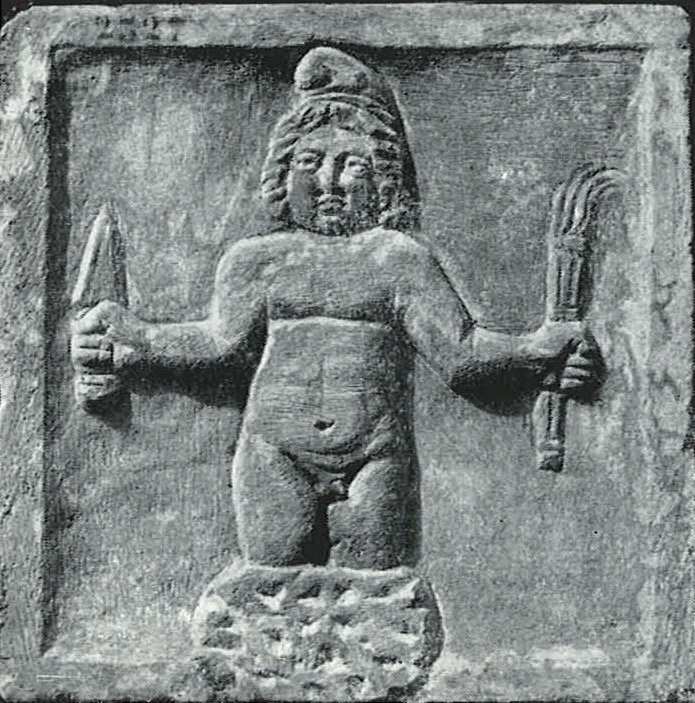
The relief of Mithras being born from the rock of the Esquiline shows the young god naked, as usual, with a torch and a dagger in his hands.
