Your search Villa of Domitian at the Castel Gandolfo gave 3663 results.

Limestone tauroctony relief fragment of unknown provenance, preserving the upper part of Mithras as bull-slayer with the flying cloak on which the raven is perched.
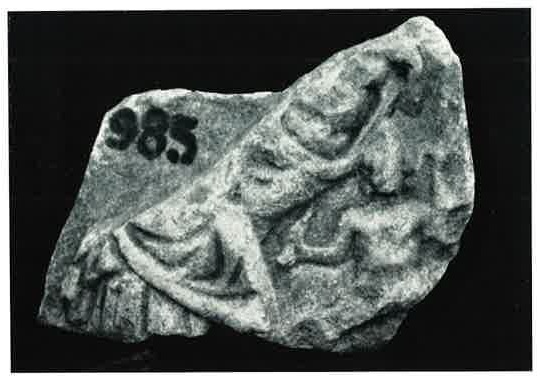
Limestone tauroctony relief fragment of unknown provenance, preserving the upper part of the right torchbearer of a bull-slaying scene.
White marble tauroctony relief fragment of unknown provenance, preserving the foremost part of the bull and part of Mithras as bull-slayer.
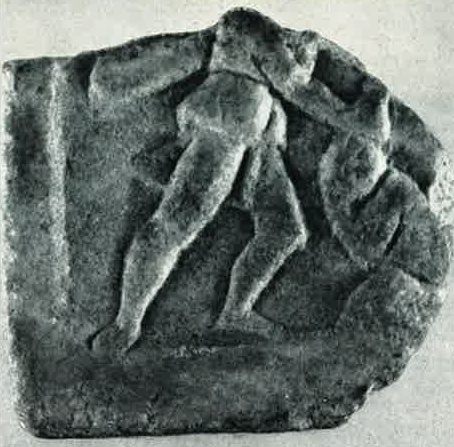
Marble relief fragment from Dacia, depicting Mithras placing a Phrygian cap on the kneeling Sol — one of the more unusual variants of the Mithraic iconographic programme.

Torcello is associated with the lagoon landscape of Venetia and later settlement activity.
Belignae is associated with archaeological material from the Roman landscape of Venetia.
Val di Non is an Alpine valley in Trentino associated with Roman-period finds.
Introbbio is associated with archaeological material from the Alpine region of northern Italy.
Industria was a Roman settlement in northern Italy, today associated with Monteu da Po.
Ganaceto is associated with archaeological material from Roman northern Italy.
Petrianae was a Roman fort on Hadrian’s Wall, generally associated with Stanwix near Carlisle.
Longovicium was a Roman fort and settlement in northern Britannia, today associated with Lanchester.
The findspot of this monument is unknown, though it has traditionally been associated with the historical region of Wallachia.
The locality of Alsóbajom is associated with archaeological material attributed to the Roman province of Dacia.
