Your search Villa of Domitian at the Castel Gandolfo gave 3663 results.

A fragmentary inscription on the right side of a marble slab from Tortona (ancient Dertona) in Liguria, partially legible as a dedication to Deus Sol Mithras Invictus.

Roman military settlement in Germania superior, generally identified with present-day Ober-Florstadt and known for its well-preserved Mithraic sanctuary.
A fragmentary inscription on the lower border of the limestone tauroctony relief from San Zeno di Romedio near Trento, partially reading a dedication to the Invincible Mithras by Marius.

Scholar specializing in the history of ancient North Africa, with a particular interest in the Oriental cults (Anatolian, Egyptian, Syrian, and Iranian) that spread throughout this region.
San Zeno is a locality near Tuenno in the Val di Non, where Mithraic material attributed to Roman Raetia was discovered.
A fragmentary epistyle from Aquileia preserving part of the inscription [Deo In]victo [Mi]th[rae], indicating the presence of a Mithraic sanctuary in the city.
A fragmentary inscription from Aquileia, probably dedicated to Cautopates, recording a soldier named Marcianus, optio of the Second Adiutrix Legion, who fulfilled his vow for the welfare of himself and his family.
A small relief fragment from Aquileia, now in the Lapidary Museum at Trieste, preserving part of Mithras' flying cloak and the head of one of the torchbearers.
Housesteads Roman Fort is the remains of an auxiliary fort on Hadrian's Wall, at Housesteads, Northumberland, England, south of Broomlee Lough.

First Roman emperor of African origin and founder of the Severan dynasty, which ruled the empire for over four decades.
Roman settlement of Dacia superior located in the area of present-day Sibiu in Romania. The site became an important urban and military centre, later developed into the medieval city known as Hermannstadt in German and Nagyszeben in Hungarian.
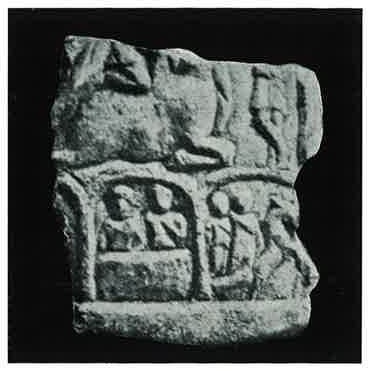
Right lower corner of a marble tauroctony relief from Oltenia, Dacia, preserving the lower portion of Mithras killing the bull.
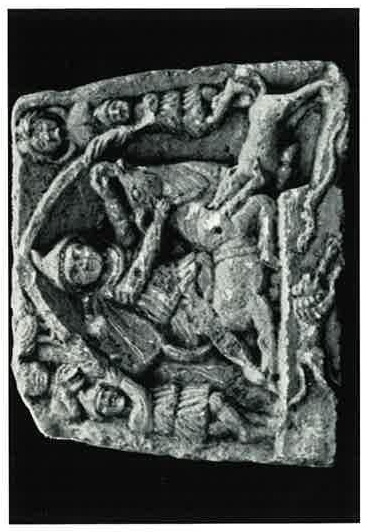
Limestone tauroctony relief from Oltenia, Dacia, of unknown exact provenance, depicting the standard bull-slaying with the full iconographic programme.
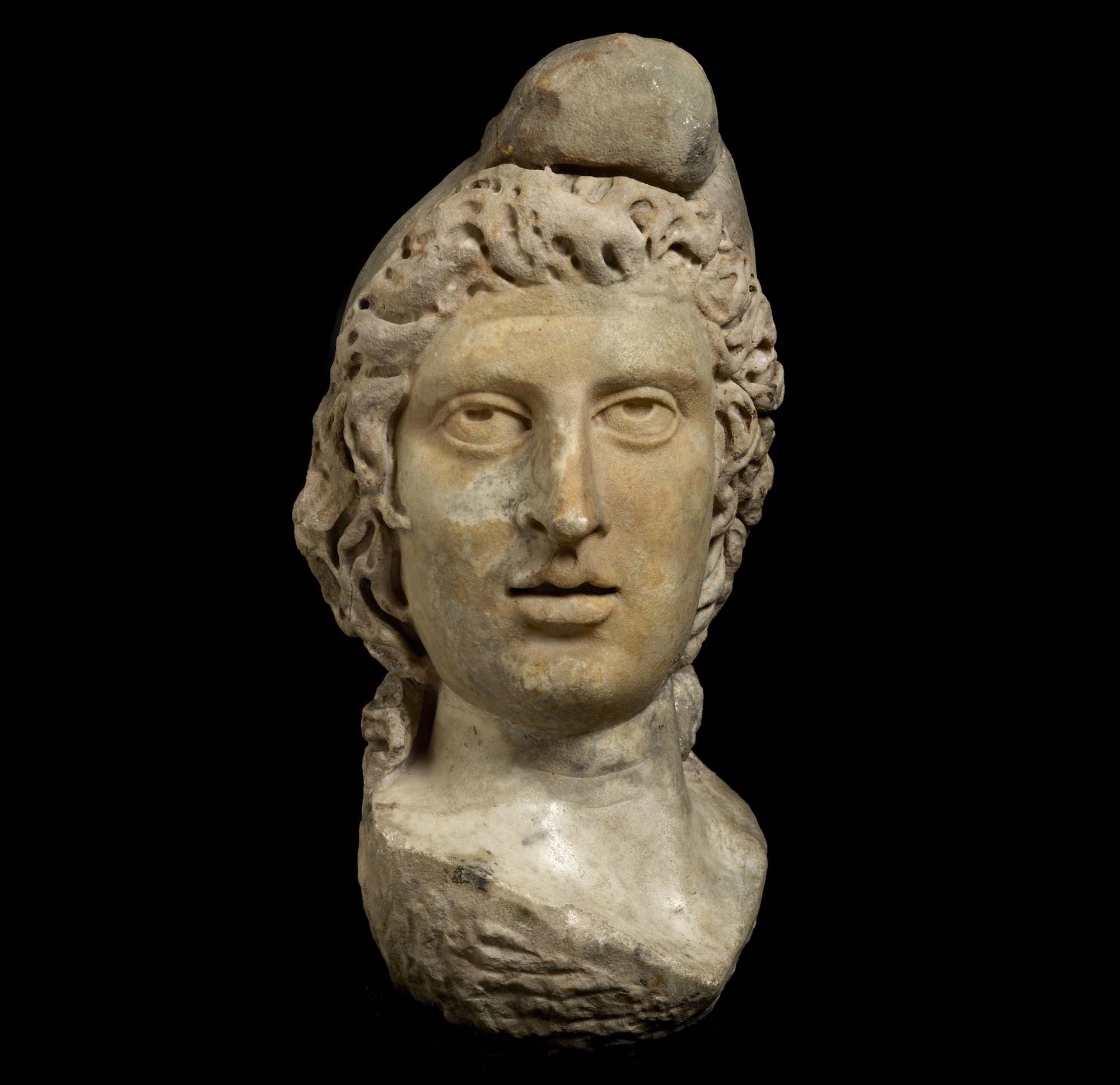
The Mithras's head of Walbrook probable belonged to a life-size scene of the god scarifying the bull.
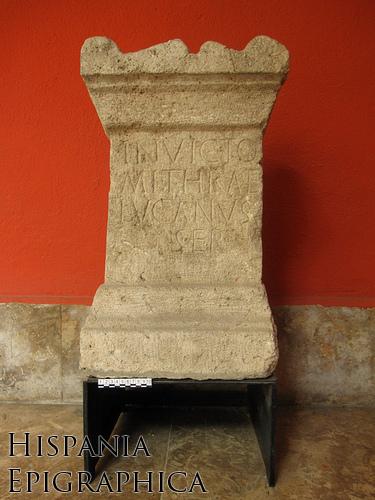
This altar found in Benifaió, València, was erected by a slave called Lucanus.
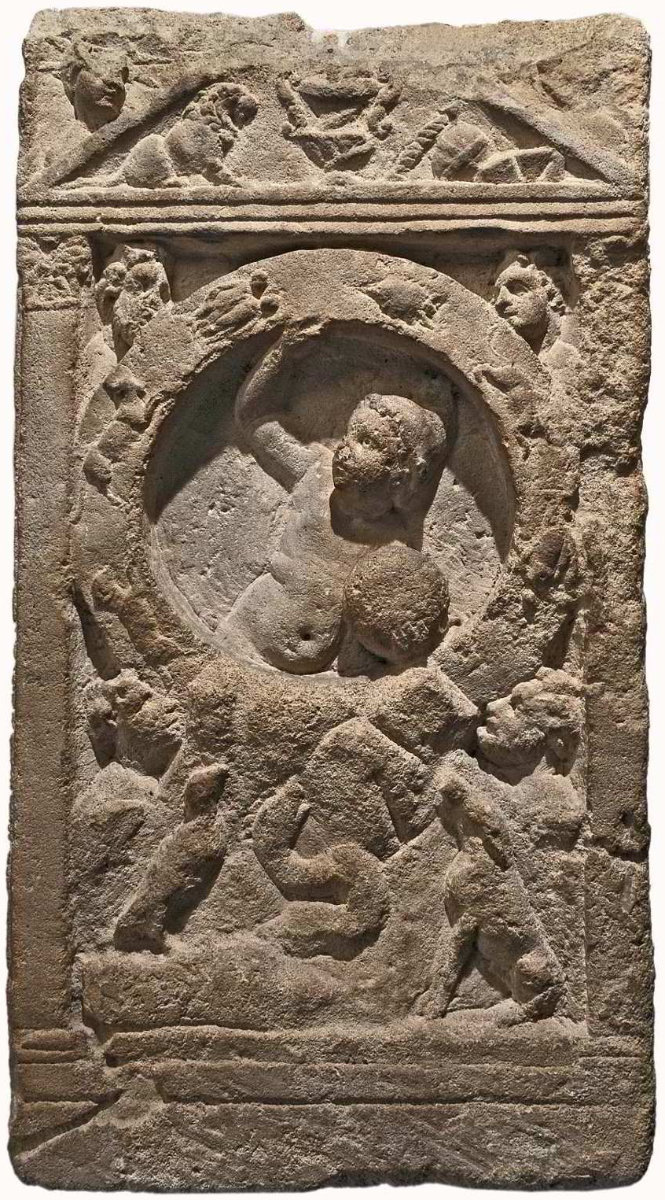
The relief depicts the birth of Mithras, holding a globe, surrounded by the zodiac.
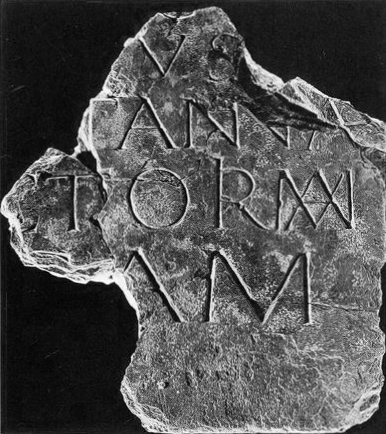
Archaeological material from the Mithraeum of Londinium discussed in Hill’s study of Roman London.
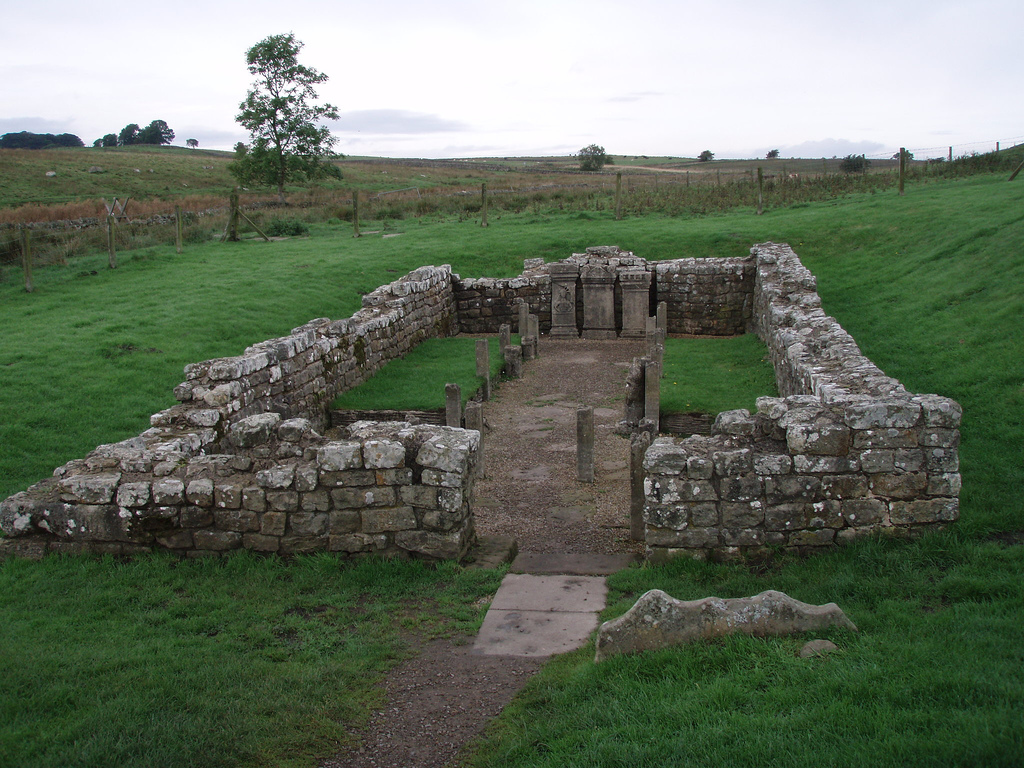
The temple of Mithras of Carrawburgh, Brocolita, disclosed three main stages of development, the second exhibiting two reconstructions.
Third-century sepulchral inscription from near Philippi, Macedonia, studied for its Mithraic content in the upper lines of the text.
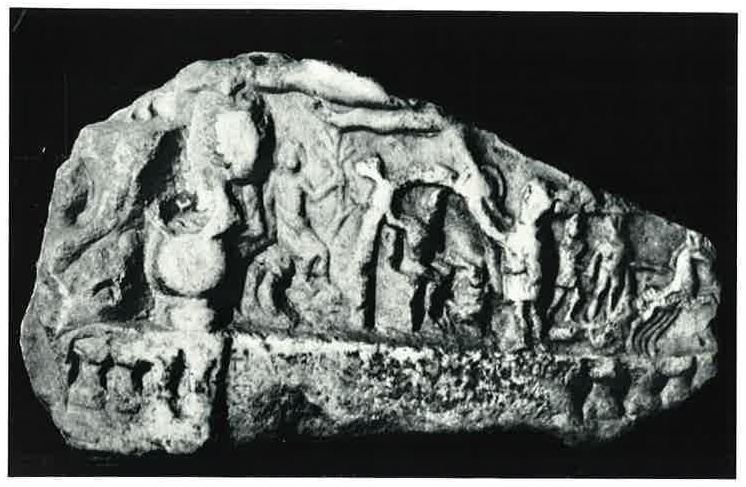
Lower part of a marble tauroctony relief from Sinitovo, Thracia, found walled into a well, depicting the lower portion of the bull-slaying scene; the Greek inscription in the lower border records a thanksgiving to Helios Mithras invictos.
