Your search Villa of Domitian at the Castel Gandolfo gave 3663 results.

Clarissimus knight and legate born in Poetovio that helped to disseminate the cult of Mithras in the African provinces.

Member of the Mithraic community of Les Bolards and dedicator of a statue of Cautes.
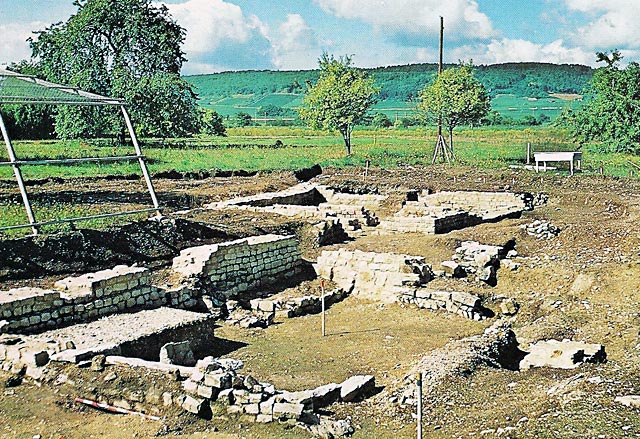
The Mithraeum des Bolards was integrated into a therapeutic cultural complex related to healing waters.

Bactria occupied a distant eastern horizon associated with Iranian cultural traditions and the wider background of Mithraic interpretations.

This small and highly questionable relief from southern France may depict a winged leontocephalic figure seated.
This supposed Mithraic altar from Soulan in the Pyrenees was later identified as a modern forgery, including both the inscription and the alleged cave context in which it was said to have been discovered.
Histria connected the northern Adriatic to the Balkan and Danubian worlds through maritime and regional communication networks.
Transpadana occupied the northern plains of Italy where major communication routes connected the peninsula to the Alpine and Danubian worlds.
Aemilia connected northern and central Italy through prosperous urban centres and major communication routes of the Roman Peninsula.
Persia occupied a central place in ancient and modern interpretations concerning the origins and eastern background of Mithraic traditions.
Britannia superior preserves a substantial body of Mithraic evidence associated with military sites and urban centres of Roman Britain.
Armenia occupied a frontier crossroads between the Roman world, Anatolia and the Iranian cultural sphere.
Liguria linked northern Italy to southern Gaul and the western Mediterranean through coastal and Alpine communication routes.
Venetia connected northern Italy to the Adriatic and Danubian worlds through trade, mobility and imperial communication routes.
Umbria formed part of the central Italian heartland through which religious practices circulated between Rome and the northern provinces.
Picenum connected the Adriatic coast of central Italy to inland communication routes and the wider networks of the Roman Peninsula.
Lucania connected inland southern Italy to the Tyrrhenian and Ionian maritime worlds through regional communication networks.
Apulia connected southern Italy to the Adriatic and eastern Mediterranean through maritime trade and regional urban networks.
Campania preserved a vibrant urban and maritime environment closely connected to the commercial life of Roman Italy.
At the western edge of the Roman world, Mauretania Tingitana linked North Africa to Hispania through military and maritime exchange.
