Your search ernesto mila gave 148 results.

The last pagan emperor of Rome, closely associated with Mithras and Neoplatonic interpretations of the Sun God.
Alfius Severus was a prominent figure associated with the Mithraeum of Marino, probably acting as pater of a small Mithraic community connected with the nearby peperino stone quarries.
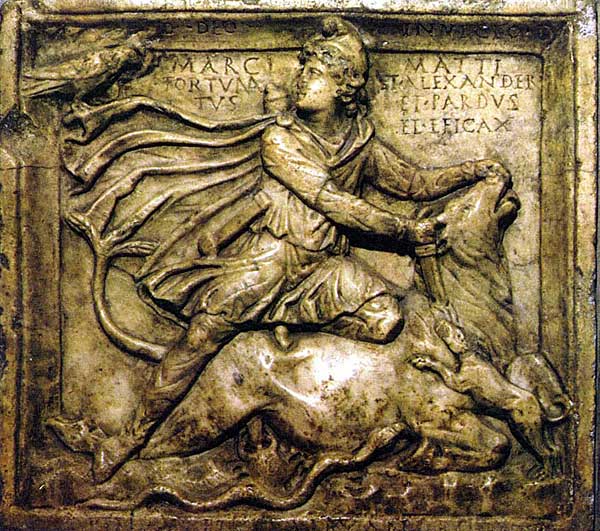
The relief marble of Mithras sacrifying the bull, exposed on the Hermitage Museum comes from Rome.
.jpg)
This limestone statue of Cautes is now exposed at Great North Museum of Newcastle.

Pottery assemblage from the cult room of the Mithraeum at Linz, ancient Lentia, including glazed dishes, three-handled serpent-vases, and related fragments; a vessel type closely associated with Mithraic ritual in the Danubian provinces.
Dark-red clay vase from the refuse pit of the Roman camp at Windisch, ancient Vindonissa, with three handles each encircled by a coiling serpent; a vessel type closely associated with Mithraic ritual.
Fragmentary inscription from Pola preserving a possible reading of the name Atticus.
Head in fine-grained marble in the Vatican Musea Magazzini, showing a curly-haired figure in a Phrygian cap turned to the left with a grievous expression, probably representing Mithras.
Fragmentary relief from the area of the Porticus of Pompey once interpreted as Mithraic but later identified as a representation of Victoria.
Series of small bronze plaques depicting zodiac signs and planetary figures discovered in Ostia and possibly connected with the decoration of a Mithraic sanctuary.
Relief featuring an enigmatic agricultural implement interpreted either as a scythe or an early type of plough.
Large limestone altar from near Mithraeum III at Aquincum, Pannonia Inferior, with a hole in the base probably designed to hold a cult object; the detailed iconographic programme of this altar is notable within the Aquincum Mithraic assemblage.
Limestone relief of Silvanus found south of the Krempelmühle near Mithraeum III at Aquincum, Pannonia Inferior, in 1895; mentioned because similar representations of Silvanus are attested at other Mithraic sites.

The lion-headed statue of Hedderneheim is a reconstruction from fragments of two different sculptures.
Commagenean sanctuary preserving relief fragments of Mithras greeting royal figures at the hierothesion of Mithridates Kallinikos.
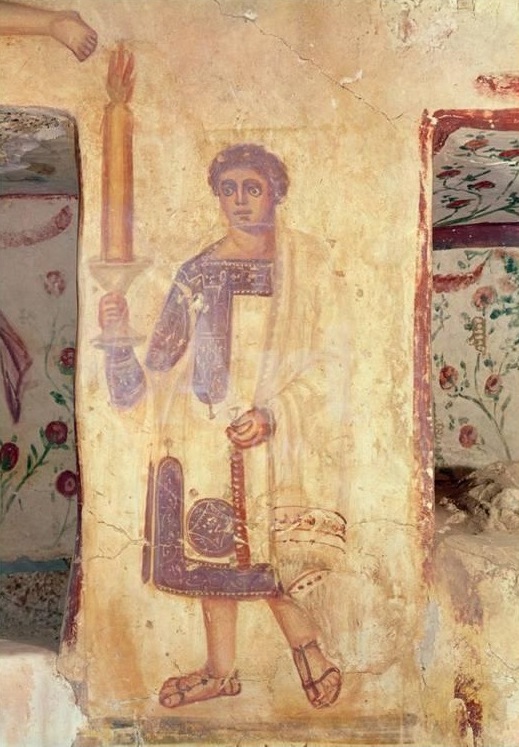
The Mithraic nature of the frescoes of Oea, according to the scholars Cumont and Vermaseren, is now questioned.
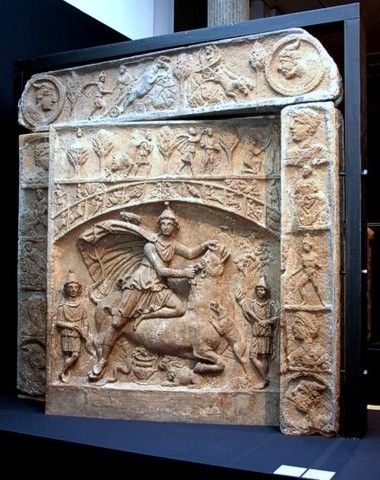
This relief is so well-known that it has been reproduced in nearly every handbook of archaeology and of history of religions.
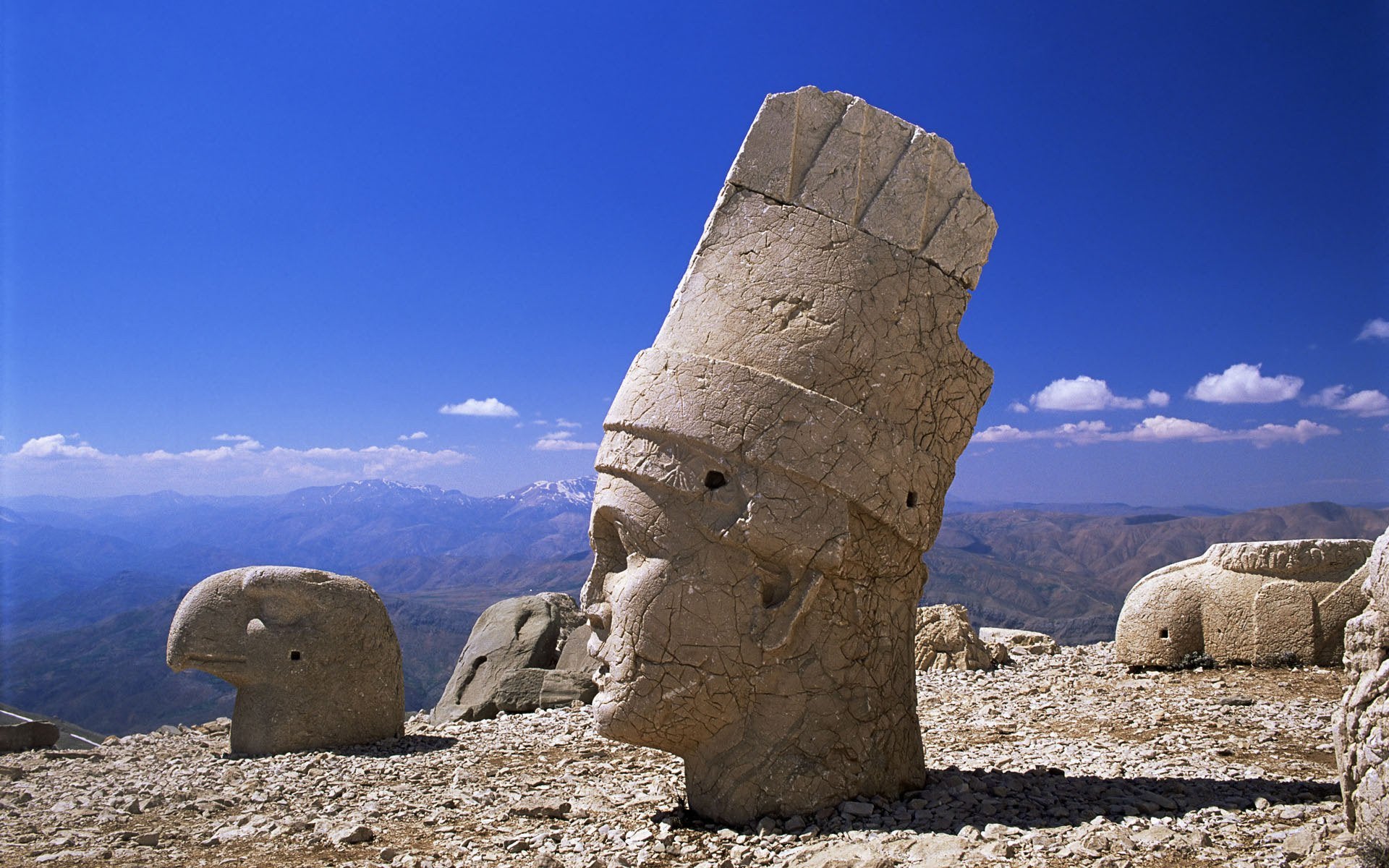
The colossal head has been identified as a solar god, Apollo-Mihr-Mithras-Helios-Hermes.
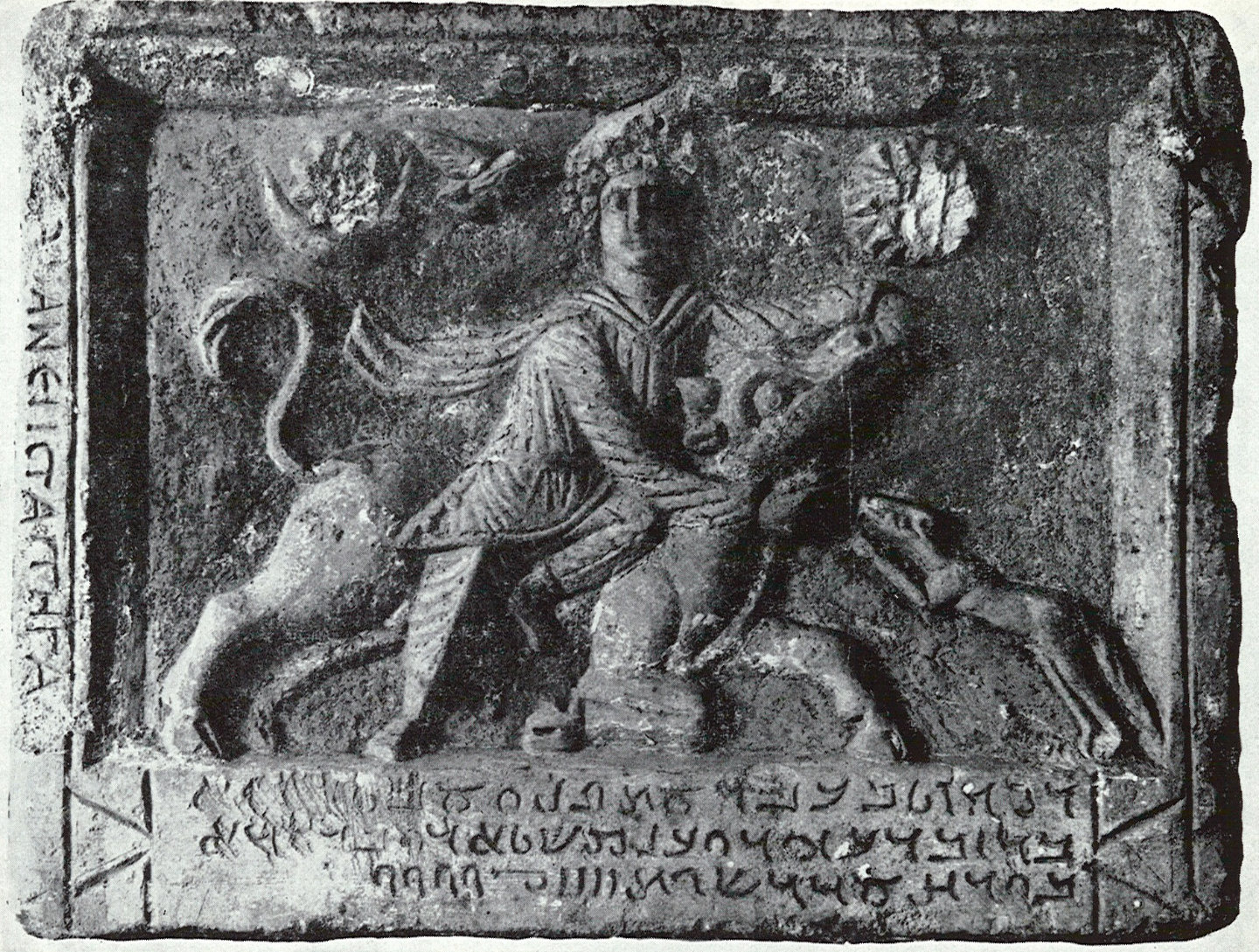
One of the reliefs of the Dura Europos tauroctonies includes several characters with their respective names.

Administrator, probably a slave of Pater Alfius Severus, who dedicated the main altar of the Mitreo di Marino.
