Your search farid ud din attar gave 1805 results.
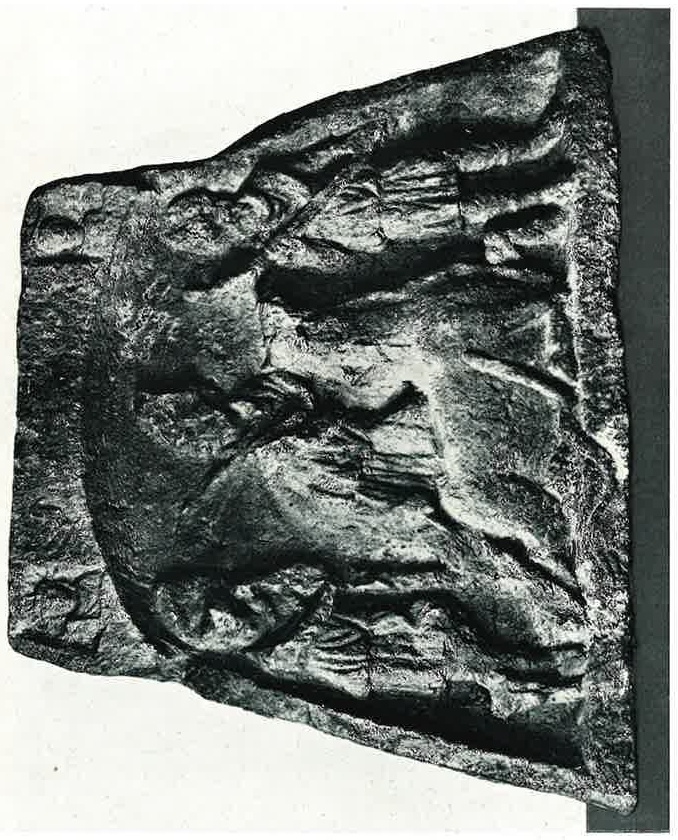
Mithraic sanctuary found in the district of Campona near Nagytétény, Pannonia Inferior, in 1934, yielding three inscribed altars, statue fragments, and other cult objects.

Deposit of 1,200 coins spanning Augustus to Constantine and a small bronze bell from Thun-Allmendingen, representing the longest chronological range of any coin assemblage from a Mithraic context in Germania.
The six divine names inscribed on the bronze hatchets from Thun-Allmendingen — Iovi, Neptuni, Minervae, Mercurio, Matribus, Matroni — reflecting the polytheistic religious landscape of the Mithraic community at this site.
Set of six triangular bronze votive hatchets from Thun-Allmendingen, each inscribed with the name of a deity: Iovi, Neptuni, Minervae, Mercurio, Matribus, and Matroni; forming a unique ensemble of polytheistic dedications within a Mithraic context.
Limestone left hand holding a caduceus from Thun-Allmendingen, belonging to a statue of Mercury associated with the possible Mithraeum.
Fragmentary limestone relief from Thun-Allmendingen of the same dimensions as the bull relief, depicting a swine; both may have formed part of the sanctuary's ritual décor.
Large limestone relief from Thun-Allmendingen depicting a bull walking to the left; the head is lost. At approximately 2.91 × 2.43 m one of the largest single-animal reliefs from a Mithraic context.
Two small limestone heads in Phrygian caps from the Stockhorn Mountains near Thun-Allmendingen, each approximately fist-sized, probably belonging to statues of the torchbearers.
Oolitic stone statuette of the torchbearer Cautopates discovered in Drury Lane, Londinium.
Major Mithraic sanctuary in the City of London with east-west orientation, multiple building phases and rich sculptural finds.
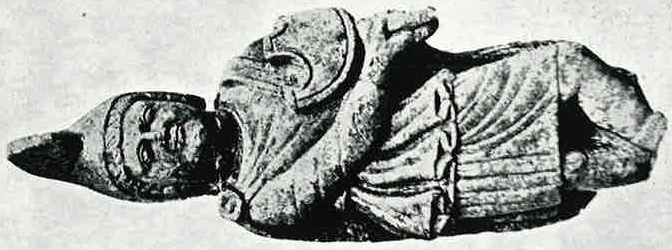
Small head in Phrygian cap from Aquincum, Pannonia Inferior, possibly representing a torchbearer or Attis.
Altar from Aquincum, Pannonia Inferior, dedicated to Deo Soli by Claudius Patasio; dated to AD 191, one of the earliest dated Mithraic inscriptions from Aquincum.
Terracotta relief from Aquincum, Pannonia Inferior, depicting a Venus-like goddess in the company of a child holding a fruit basket; its association with the Mithraeum is probable but not certain.
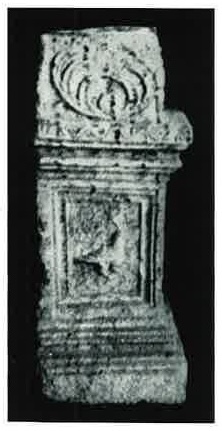
Inscription from Aquincum, Pannonia Inferior, dedicated to Deo invicto Mithrae by Caelius Anicetus with his son.

Vicus Baudobriga was a Roman settlement on the left bank of the Rhine, founded during the conquest of Gaul. Its development reflects the Rhine’s shifting role as frontier, trade route, and fortified border before Roman withdrawal.
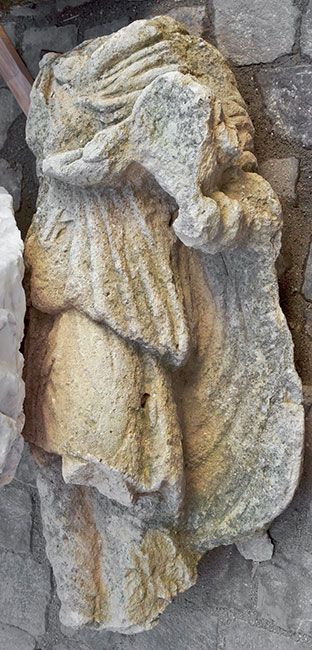
This weathered limestone statue from the Mithraeum of Apulum depicts a standing figure in Oriental attire holding the head of a bull or ram.
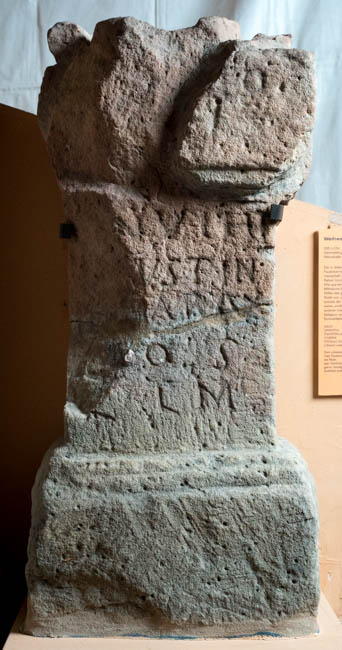
This sandstone altar was dedicated to the god Invictus by a certain Faustinus from Gimmeldingen.
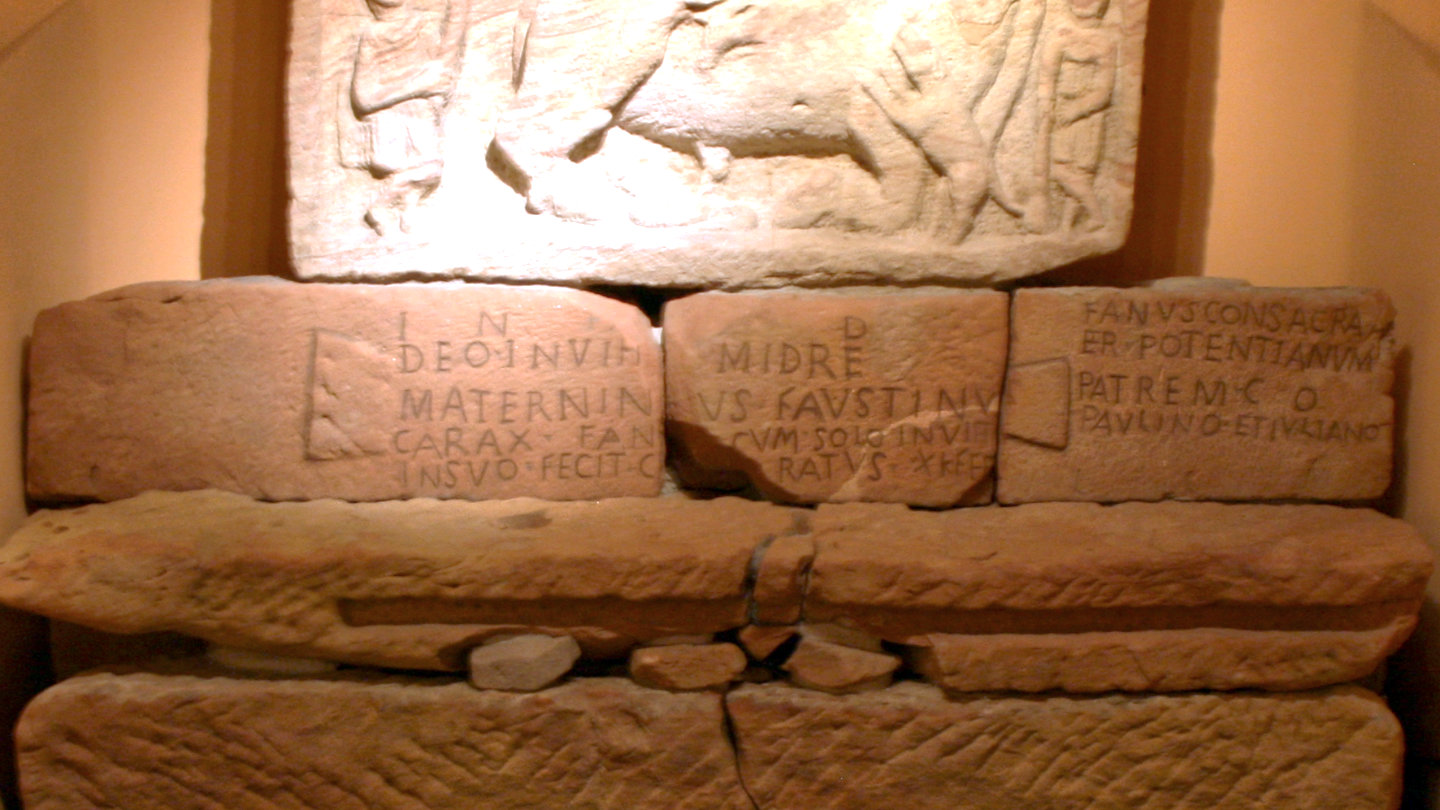
The inscription was located at the base of the main Tauroctony of the Gimmeldingen Mithraeum.
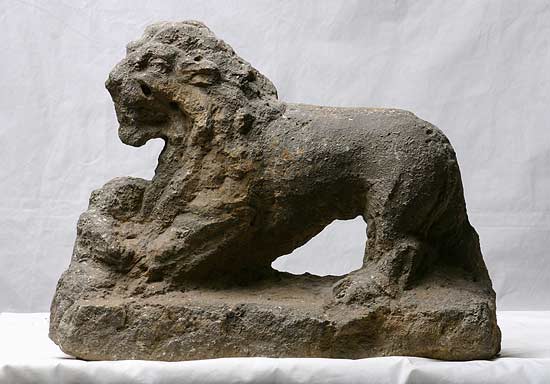
Marble statue from Intercisa representing a lion holding an indistinct animal beneath its forepaws. Found in a vineyard, the piece is now in the Hungarian National Museum.