Your search farid ud din attar gave 1805 results.

Tracing the links between the cult of Mithras and the Proud Boys’ quest for identity, power, and belonging. How ancient rituals and brotherhood ideals resurface in radical modern movements.
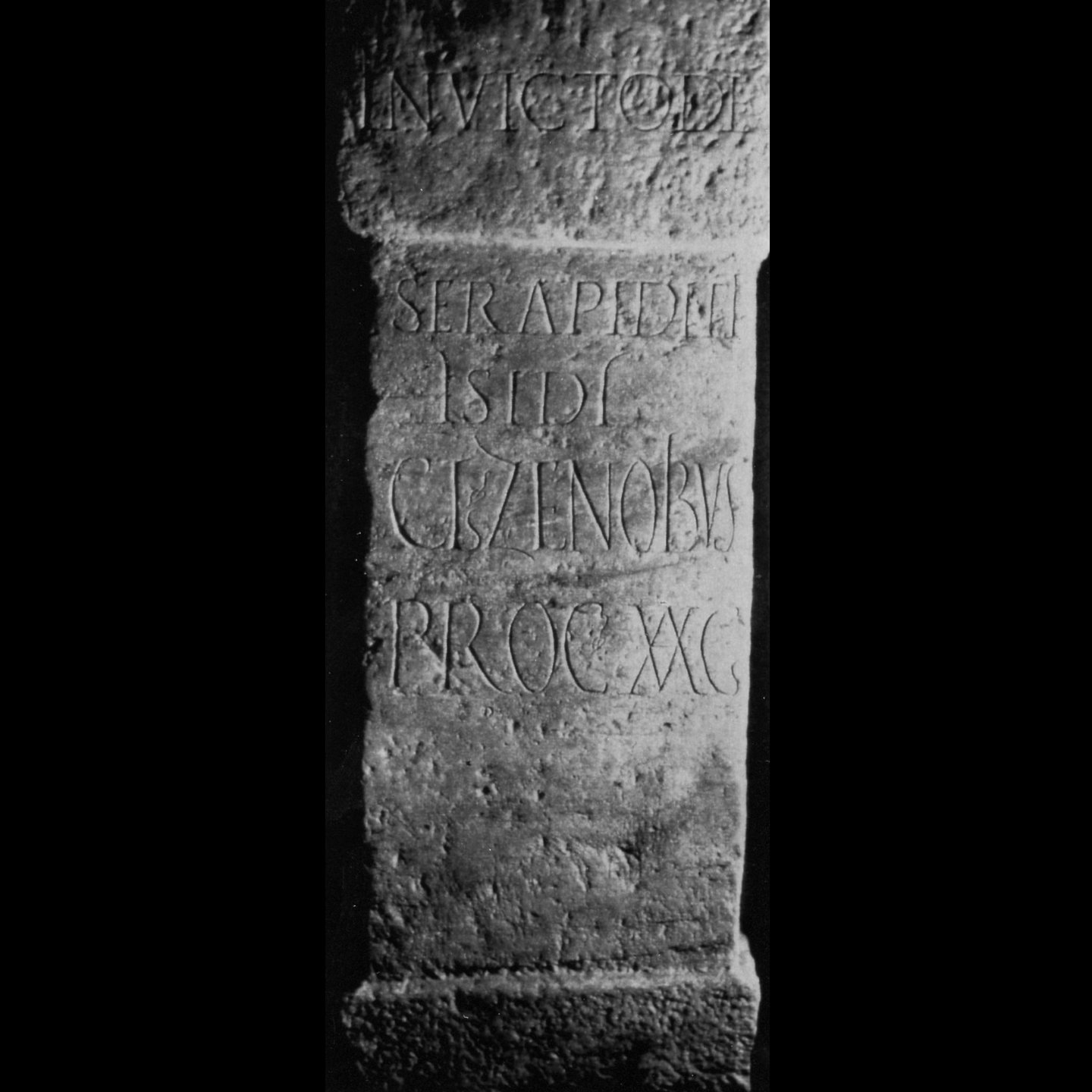
This slab dedicated to the invincible god, Serapis and Isis by Claudius Zenobius was found in 1967 in the walls of the city of Astorga, Spain.

In this 4th-century Roman altar, the senator Rufius Caeionius Sabinus defines himself as Pater of the sacred rites of the unconquered Mithras, having undergone the taurobolium.
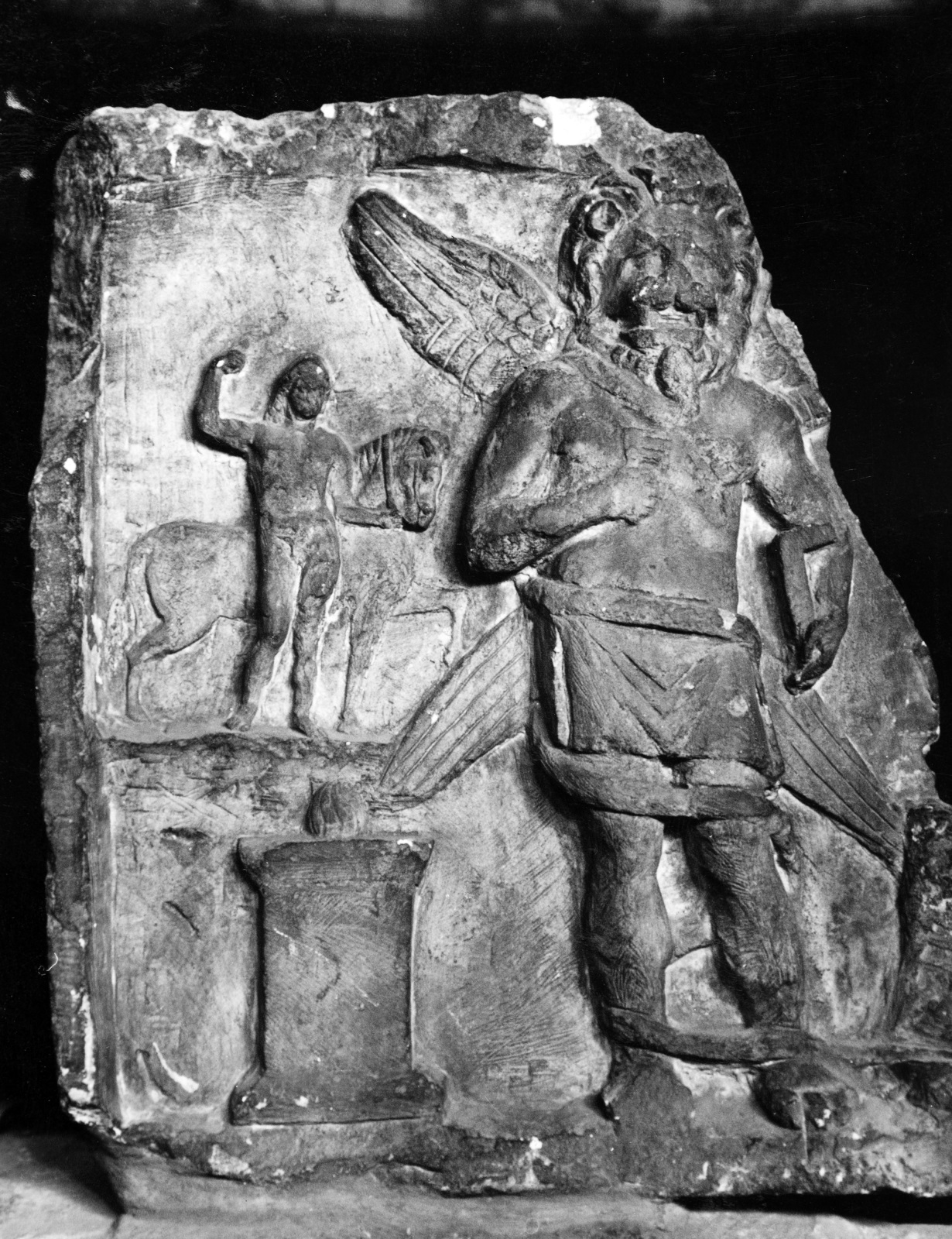
The relief of Aion from Vienne includes a naked youth in Phrygian cap holding the reins of a horse.
This lost monument bears an inscription to Cautes by a certain Tiberius Claudius Artemidorus.
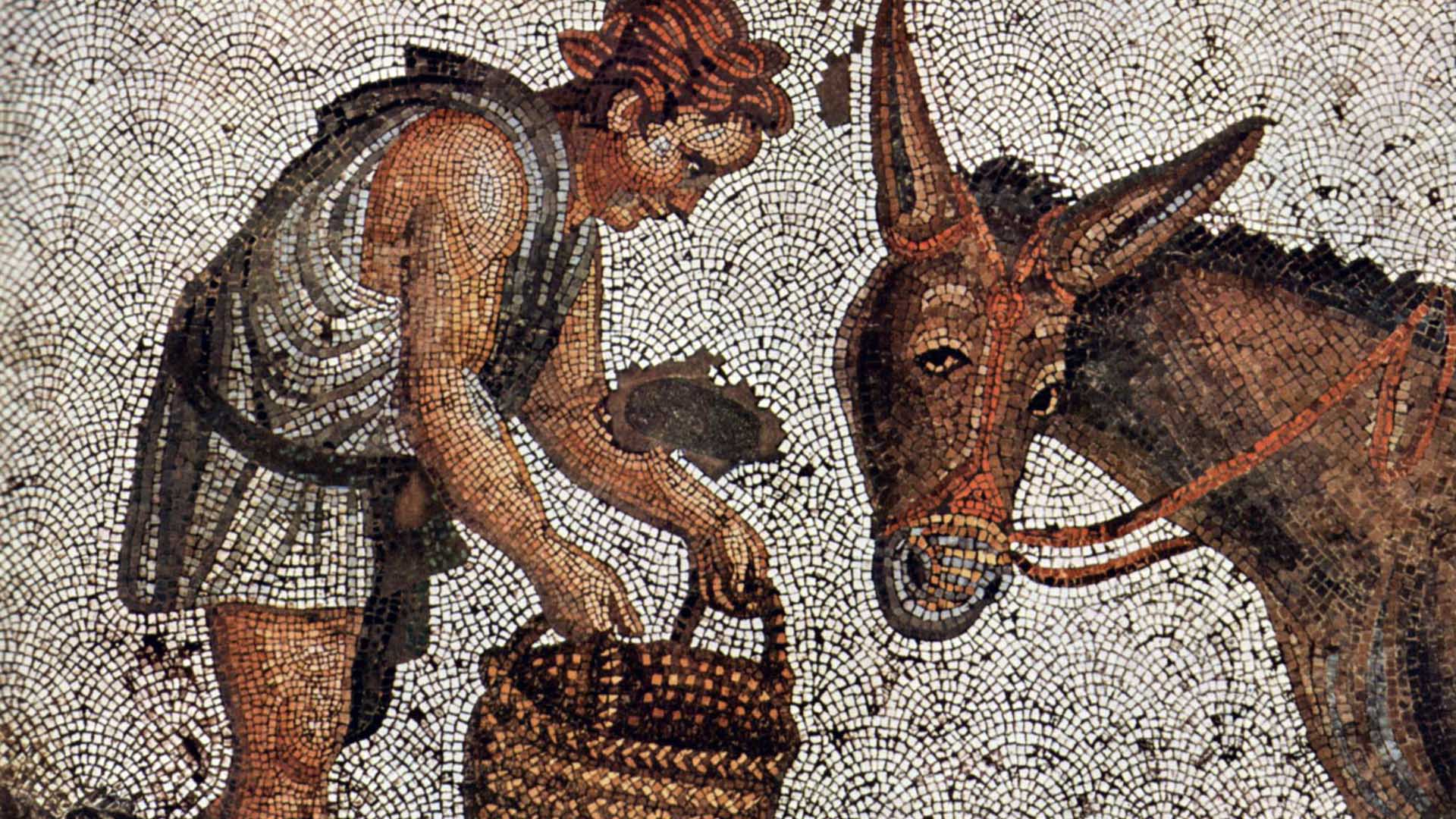
The concluding book of Apuleius’ Golden Ass (or Metamorphoses), where Lucius, the story’s protagonist, undergoes initiation into the mysteries of Isis and Osiris.
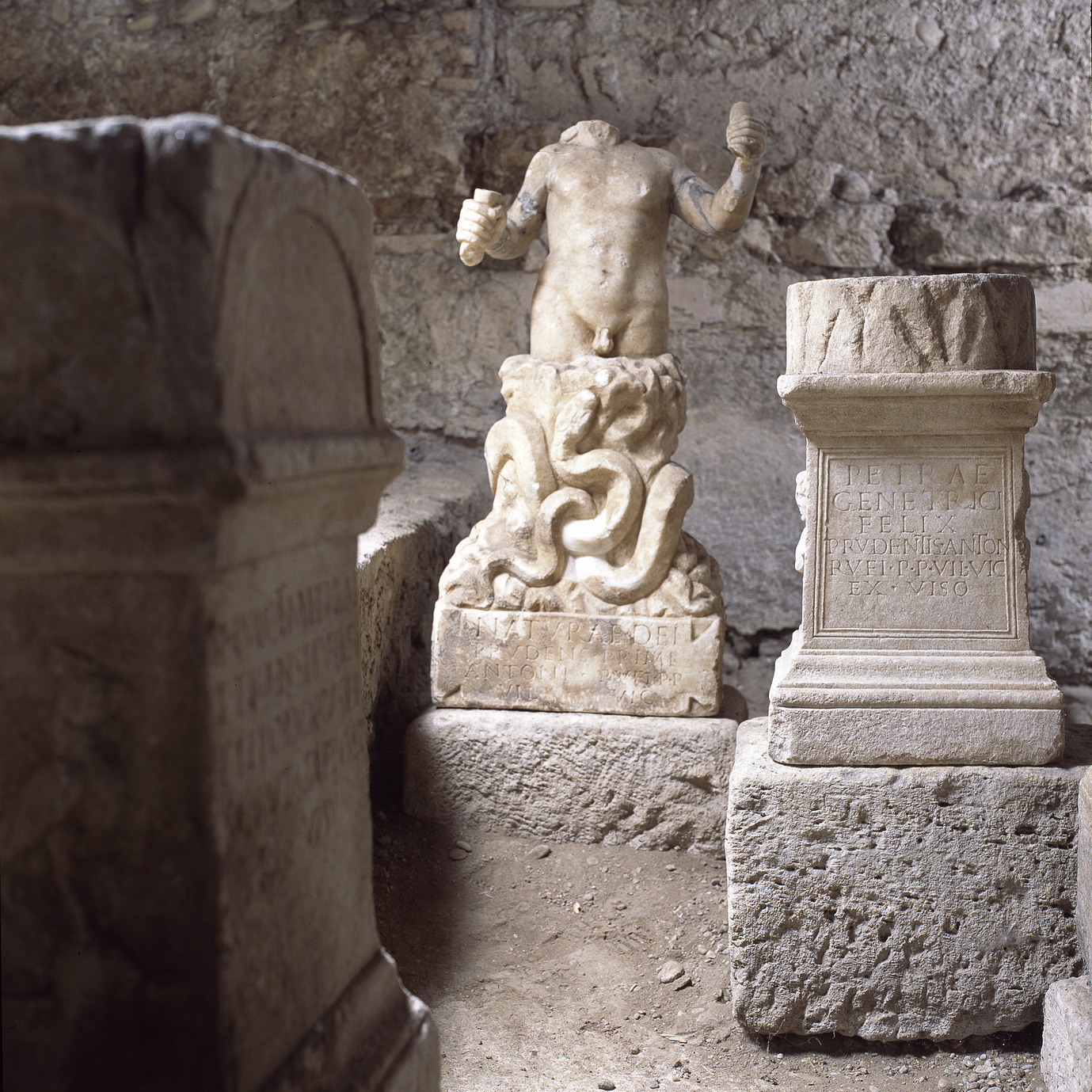
The sculpture includes a serpent climbing the rock from which Mithras is born.
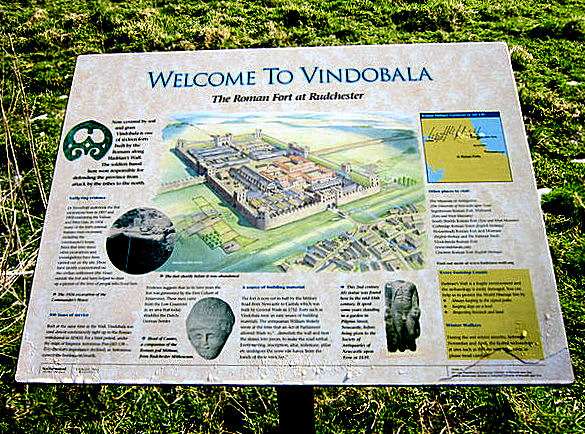
This sandstone altar from the Mithraeum of Vindobala (modern Rudchester) preserves a dedication to the Invincible Mithras by P. Aelius Titullus, prefect of a cohort.

Kadine-Most lies within the central Balkan region historically connected with Roman Moesia.
Dolni Vadin occupies a position near the Danubian frontier zone of northern Thrace.
Mithraic sanctuary found at Sárkeszi near Székesfehérvár, Pannonia Inferior, in a place called Ságvölgyi; yielding altars, tauroctony reliefs, and cult objects.
Sandstone altar from Campona, Pannonia Inferior, dedicated to Deo Soli invicto by Claudius Neronianus; the dedication is painted red.
Votive stone found at Epfach in 1830, ancient Abudiacum in Raetia, dedicated to Soli sacrum by Tiberius Claudius Mace, son of Tiberius Claudius Mace, apparently a dedication by a son continuing his father's cult.
Site excavated by C. F. L. Lohner in 1824–25 at the Renzenbühl near Thun-Allmendingen, Germania Superior, where the outline of five rooms was identified, one or more of which may have served as a Mithraic sanctuary.
Sandstone statue from near Mithraeum III at Aquincum, Pannonia Inferior, depicting a lion to the right with an open frontal mouth, holding an ox head between its forefeet with a red-painted tongue.
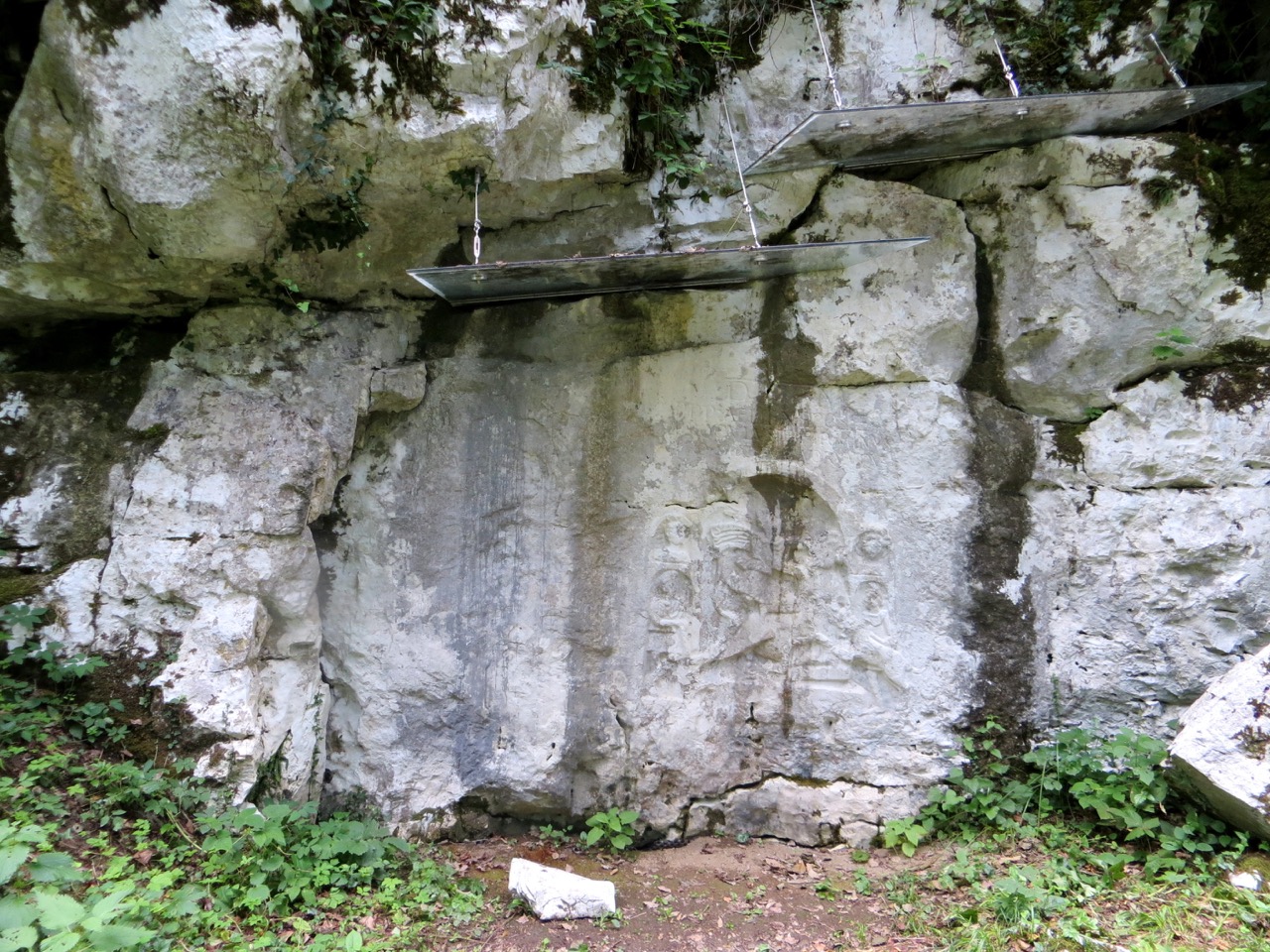
According to Hitzinger remnants of animal bones were found in front of the relief of the Mithraeum at Rozanec.
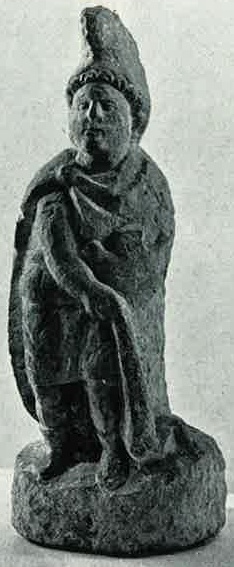
This statuette of Cautopates from Intercisa shows the torchbearer holding a burning torch and a pelta at his side.
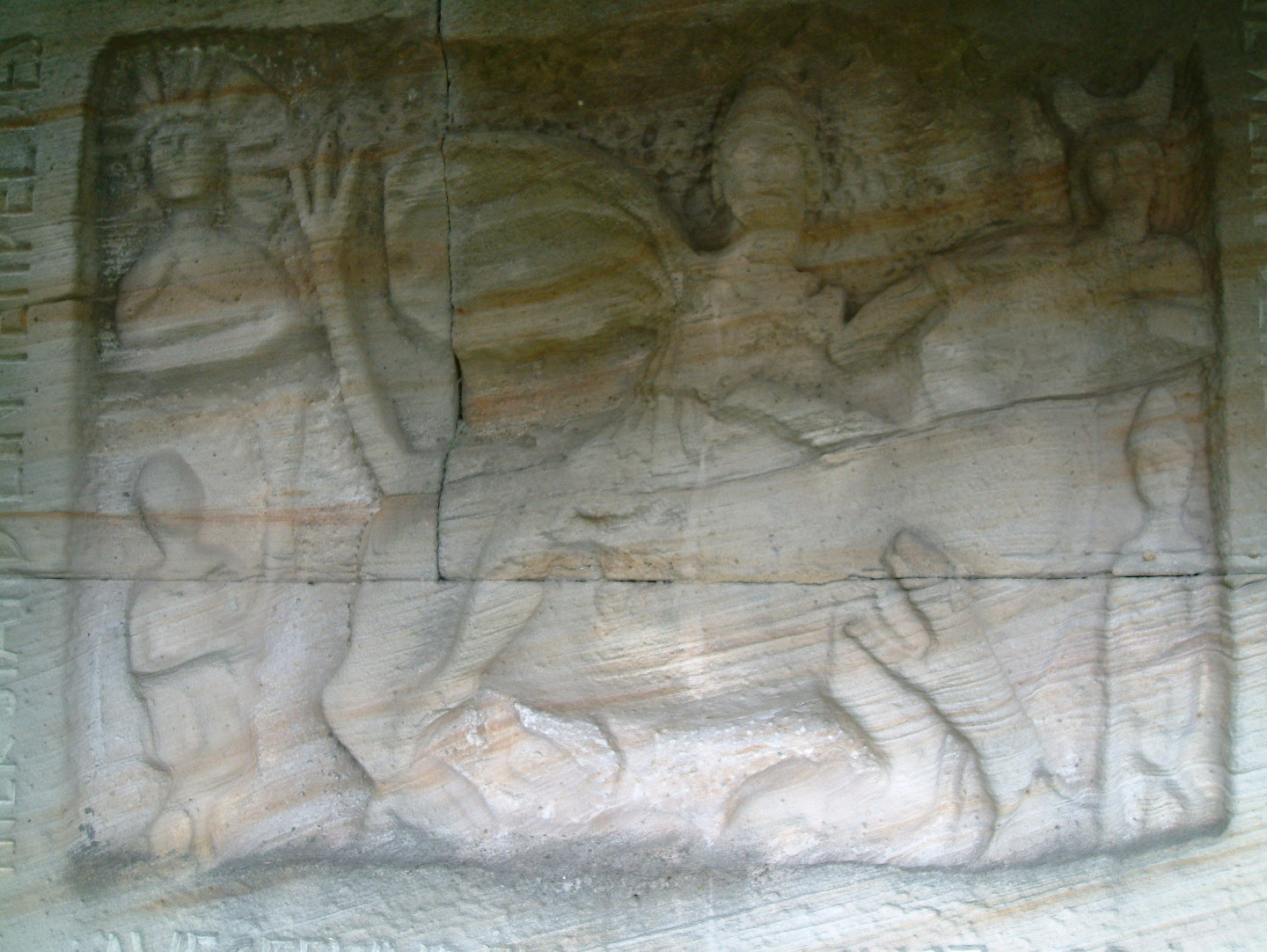
This relief of Mithras killing the bull found in Gimmeldingen, Germany, lacks the usual raven.
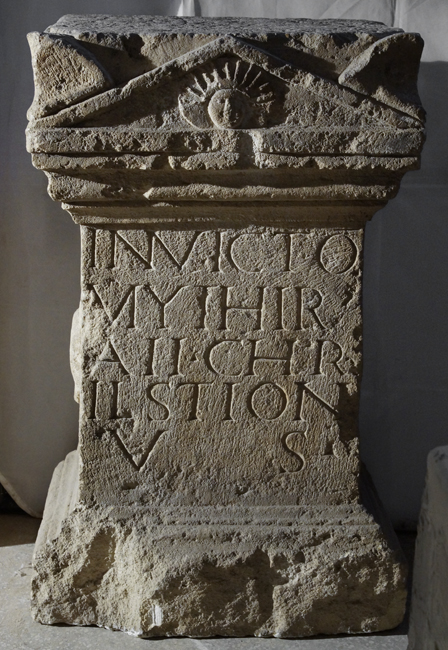
In 1852, Károly Pap, a naval captain, unearthed several Mithraic monuments in his garden at Marospartos, including this altar.
