Your selection in monuments gave 151 results.
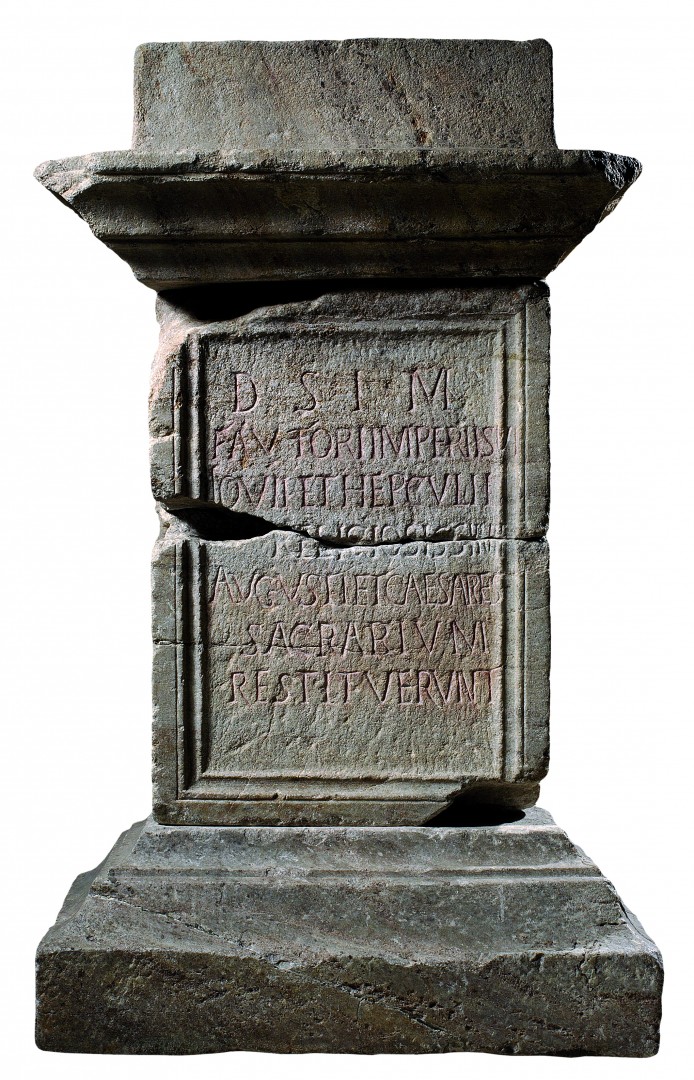
Altar with Cautes and Cautopates dedicated to Sol Invictus Mithras as protector of the Tetrarchy in 3rd-century Carnuntum.

Fragment of a sandstone relief from Nida-Heddernheim depicting the torchbearer Cautopates.
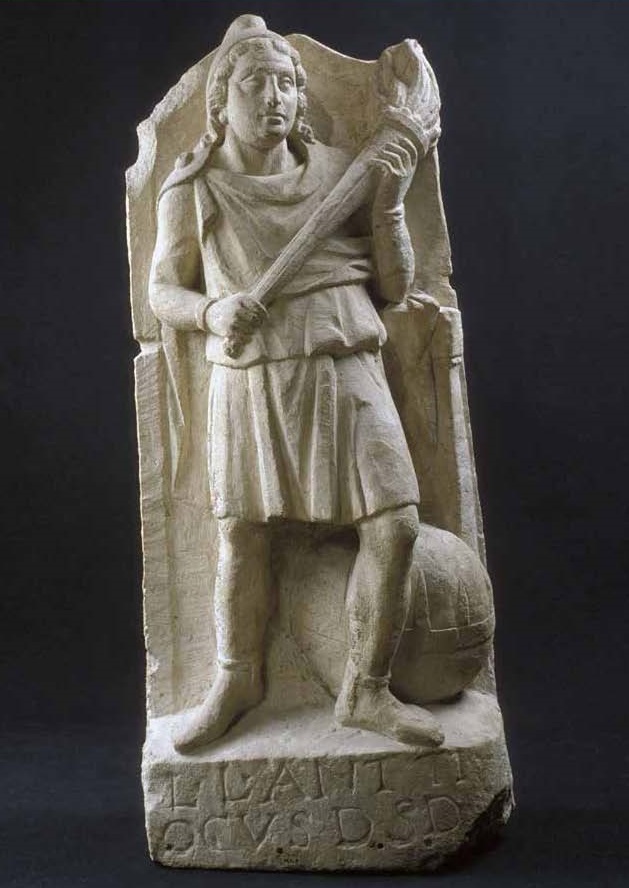
This monument representing Cautes with uncrossed legs was consecrated by a certain Anttiocus.
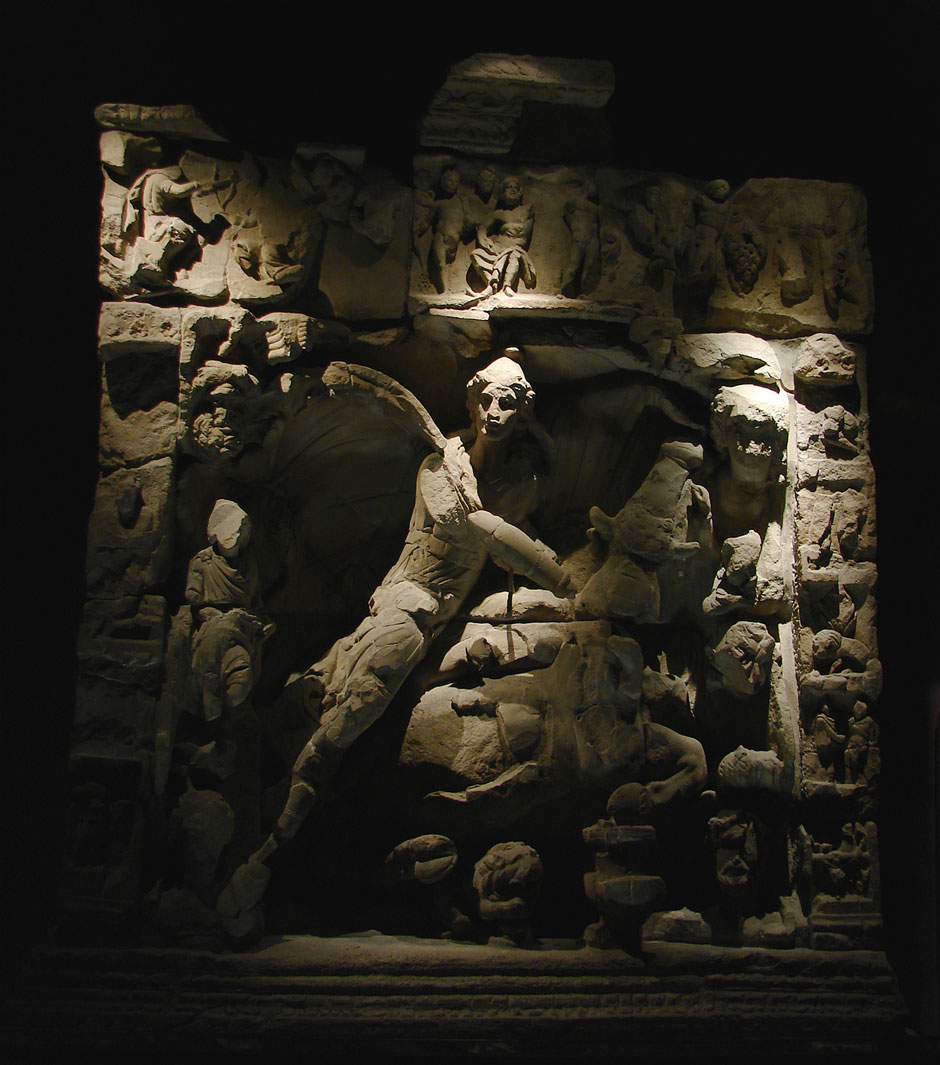
The Tauroctony of Saarbourg (Sarrebourg, ancient Pons Sarravi), France, contains most of Mithras deeds known in a single relief.
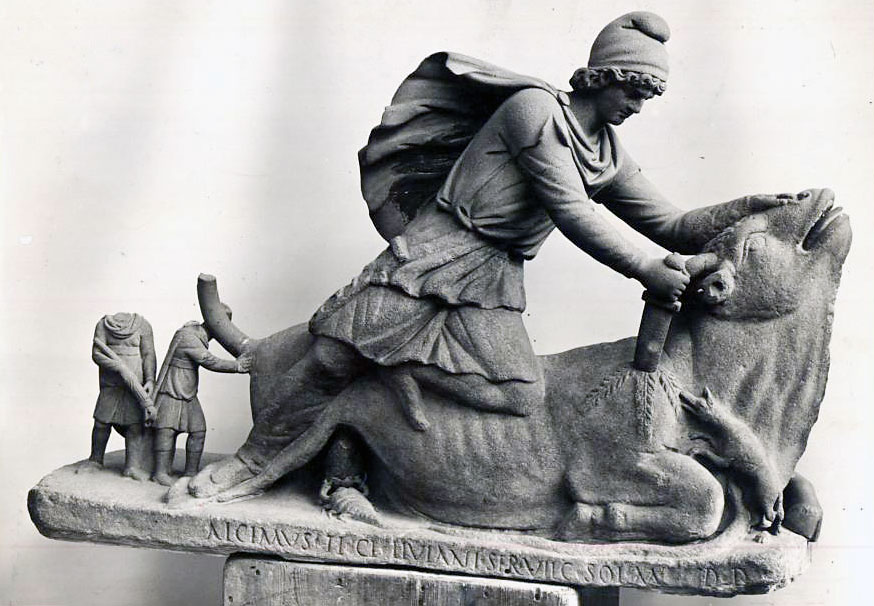
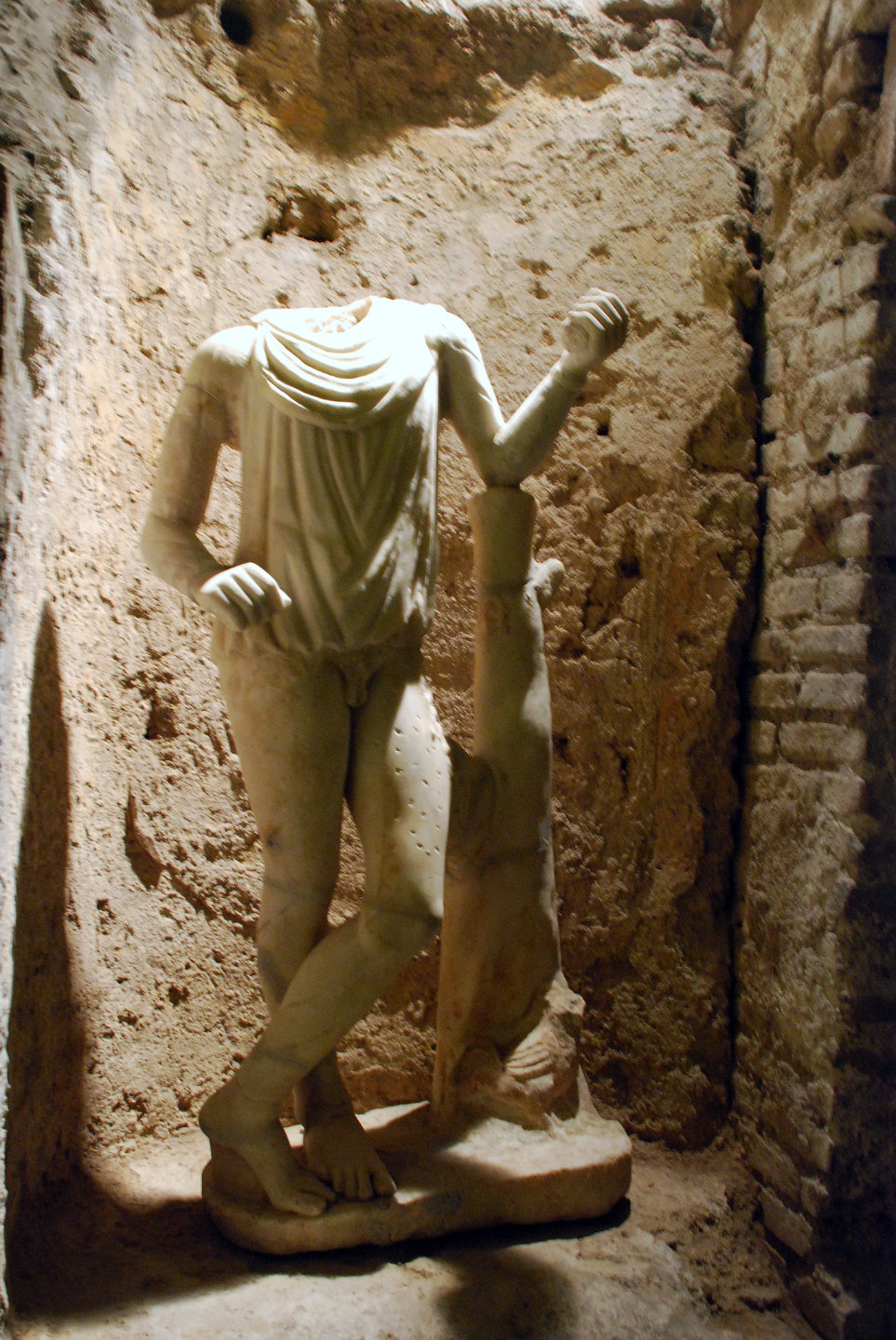
The marble statue of Cautes, found in the Mithraeum of Santa Prisca, was originally a Mercury.
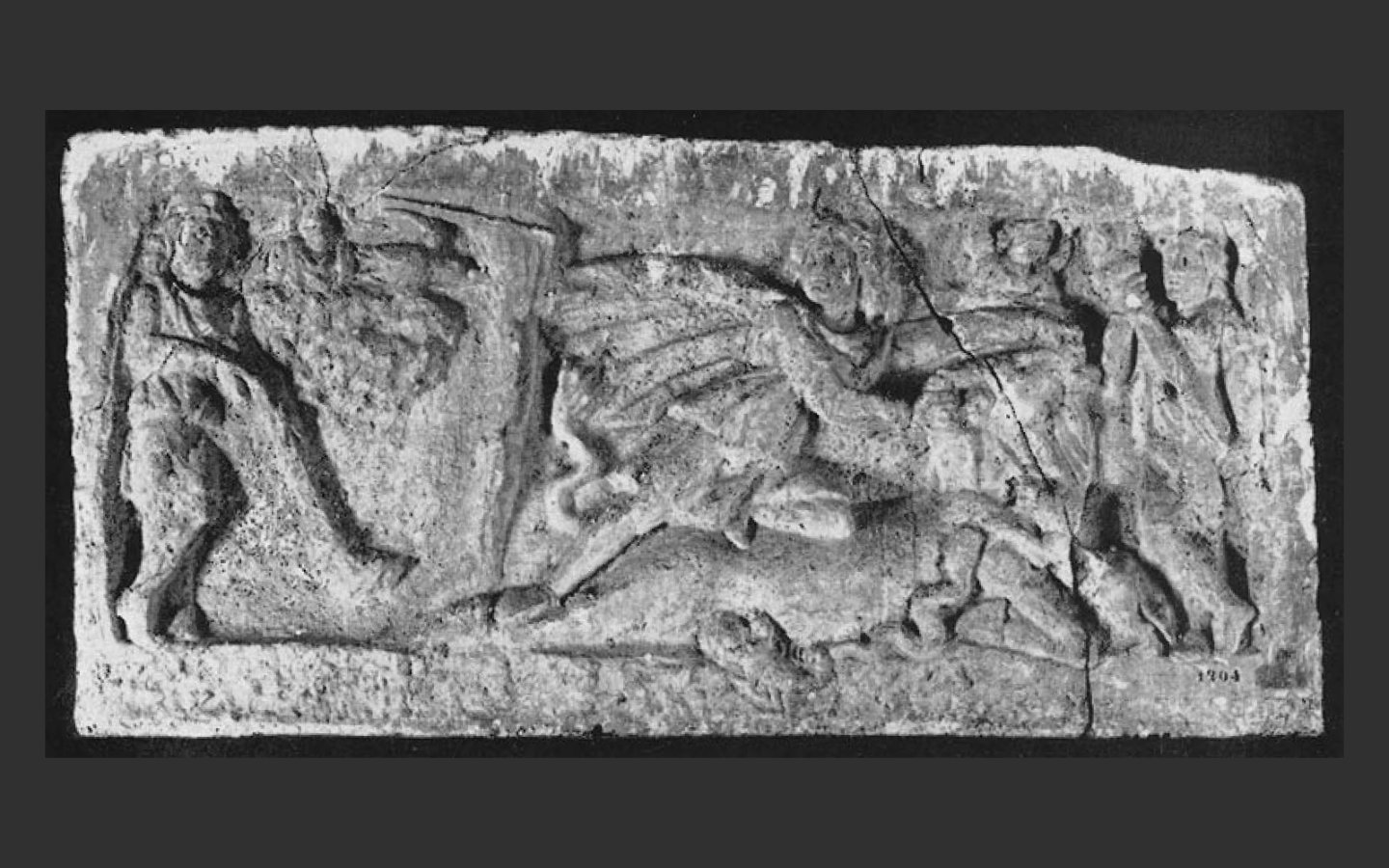
This relief of Mithras Tauroctonos from Rome bears the inscription of three brothers, two of them lions.
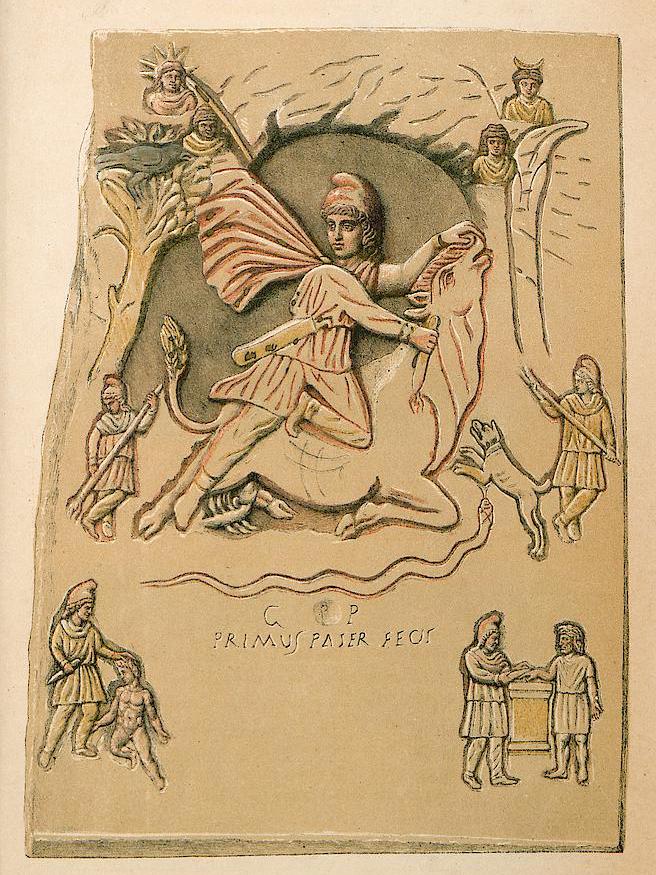
The relief of Mithras slaying the bull found on the Esquiline Hill includes two additional scenes with Mithras and two other figures.
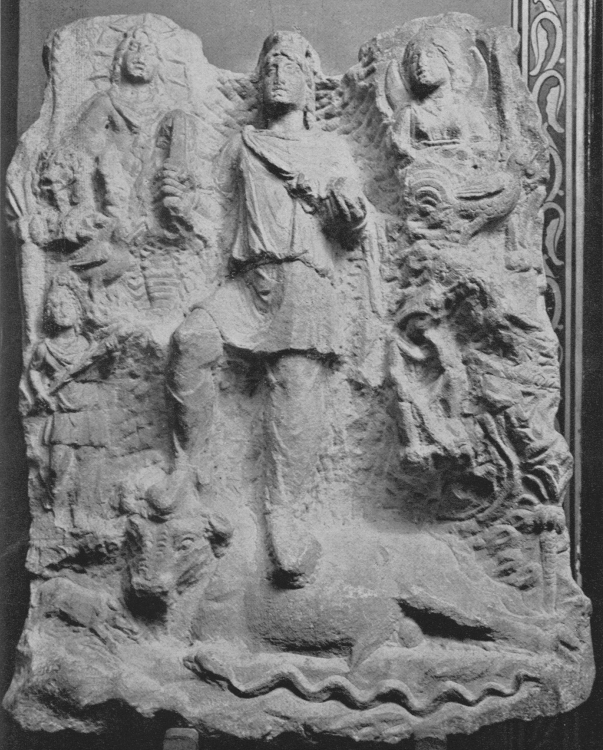
This unusual representation of Mithras standing on a bull was kept in the Casino di Villa Altieri sul Monte Esquilino until the 19th century.
.jpg)
This limestone statue of Cautes is now exposed at Great North Museum of Newcastle.
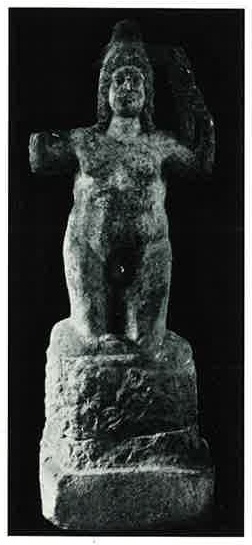
This white marble statue of the rock-birth from Cibinium in Roman Dacia is one of the largest known Mithraic sculptures from the Danubian provinces.

The tauroctonic relief from Dragus includes a naked flying figure that Vermaseren has identified as Phosporus or Lucifer.
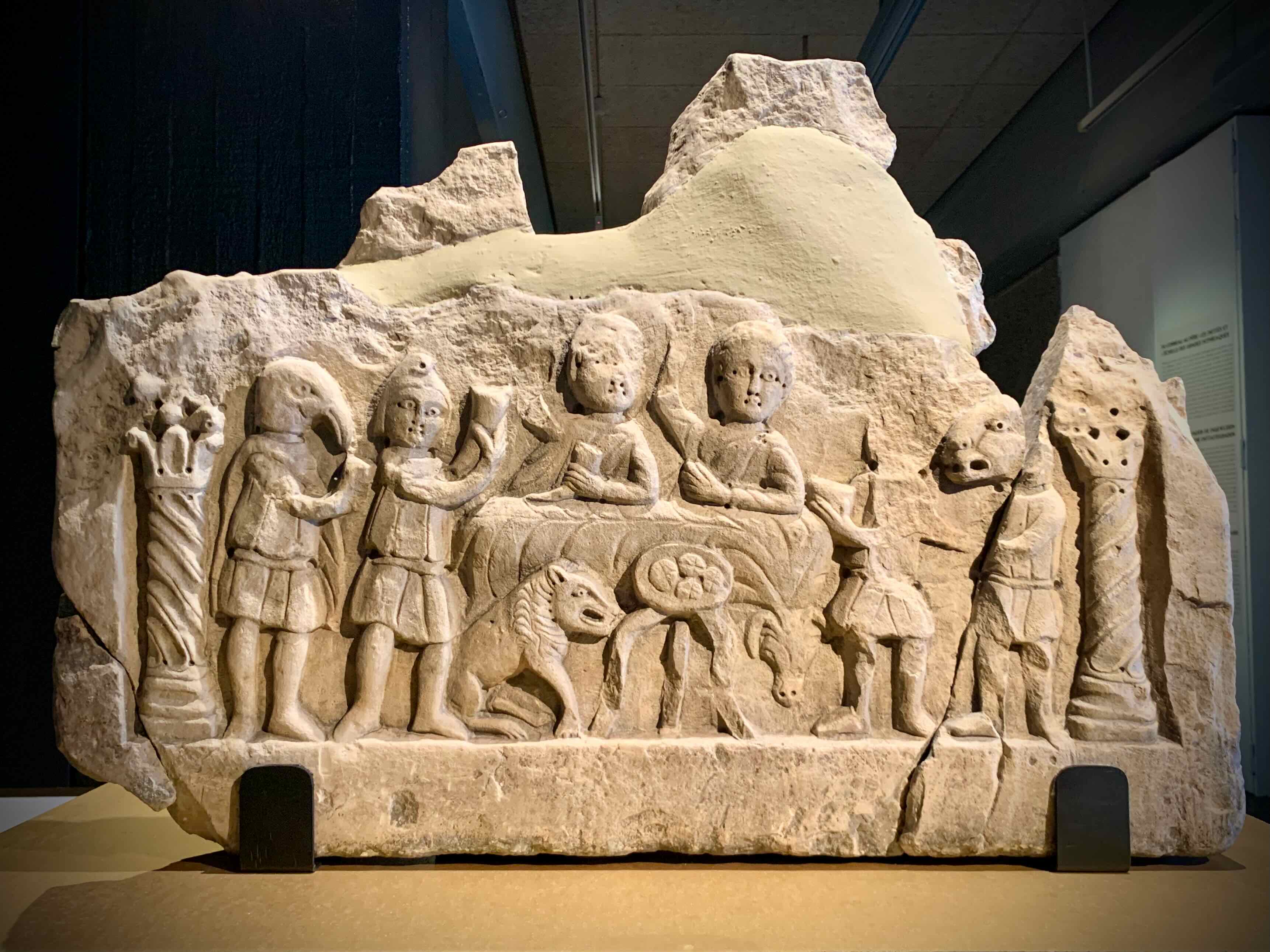
The mithraic relief of Konjic shows a Tauroctony in one side and a ritual meal in the other.
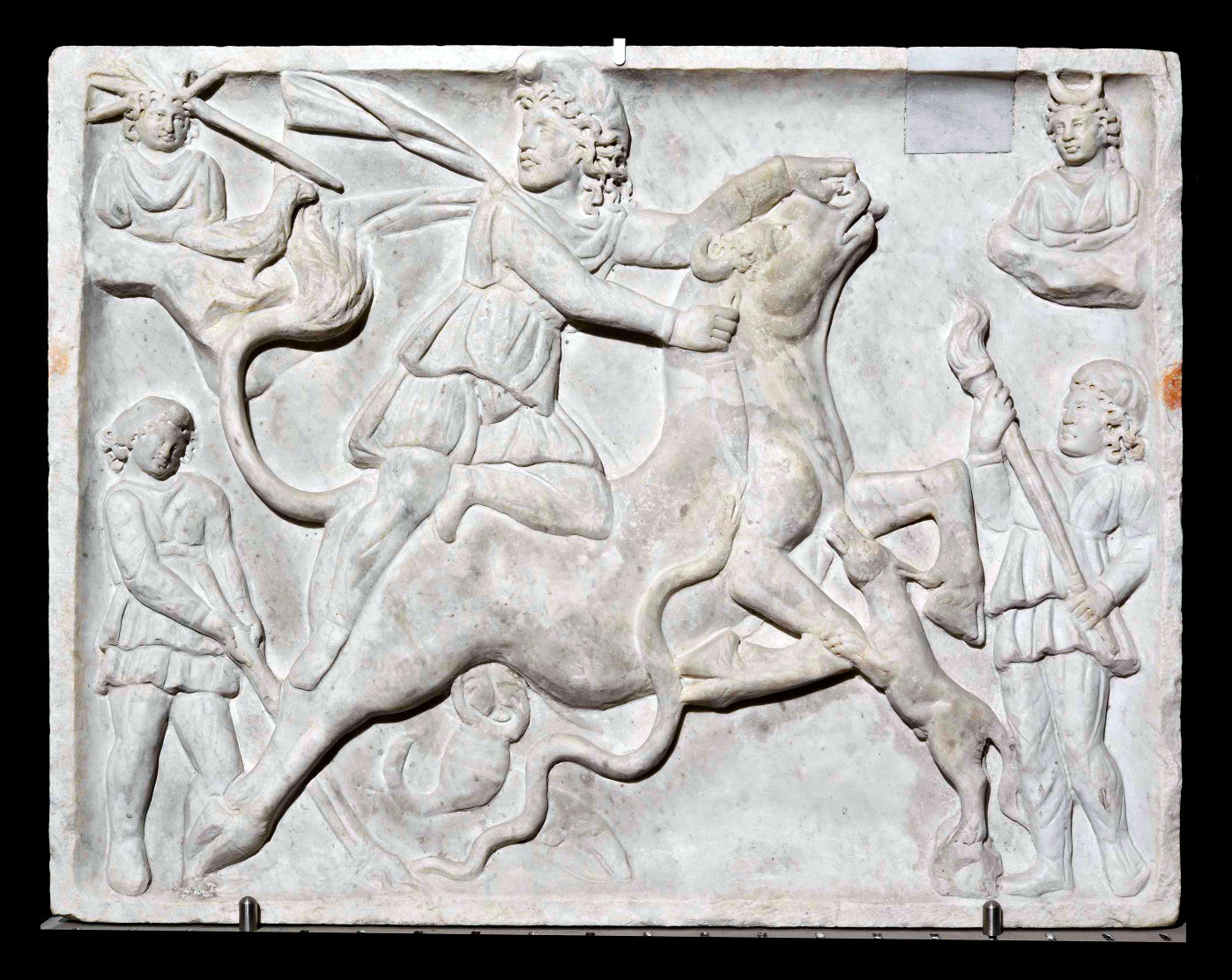
It is not certain that the marble relief of Mithras killing the bull was found on Capri, in the cave of Matromania, where a Mithraeum could have been established.
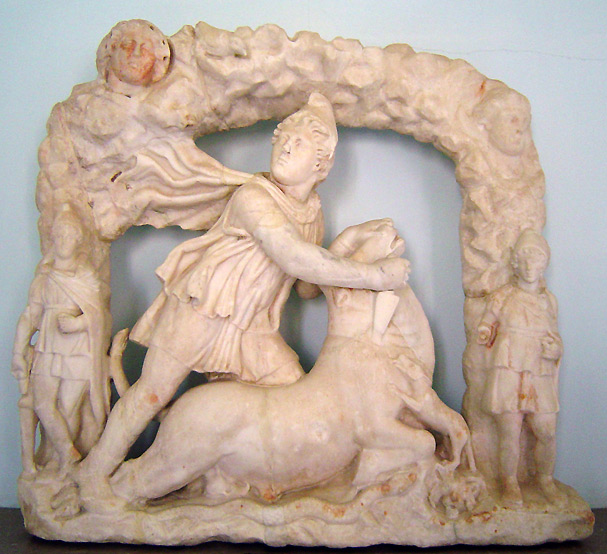
The assumed find-place of the Mithras Tauroctonus of Palermo is uncertain.
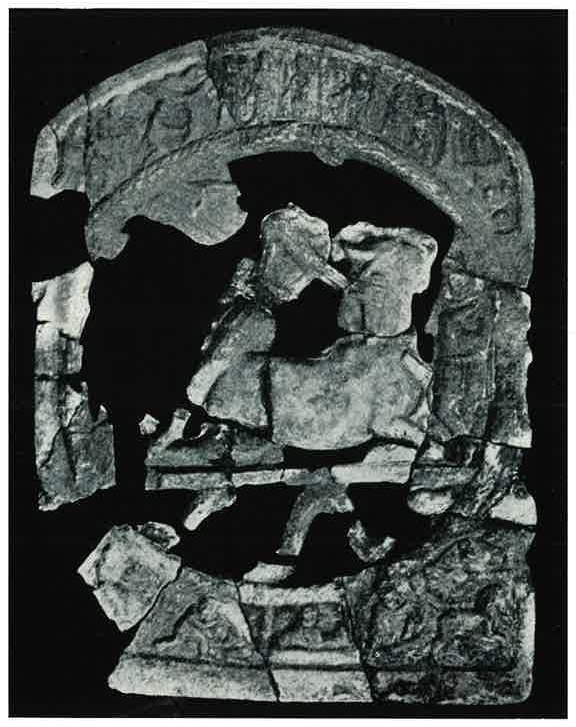
White marble tauroctony relief in several fragments from the Mithraeum at Biljanovac, Moesia Superior, depicting the standard bull-slaying with the full iconographic programme.
Fragmentary tauroctony preserving Mithras, the torchbearers, Sol and Luna from the sanctuary at Aïtodor.
Corner fragment preserving the feet and lowered torch of the Mithraic torchbearer Cautopates.
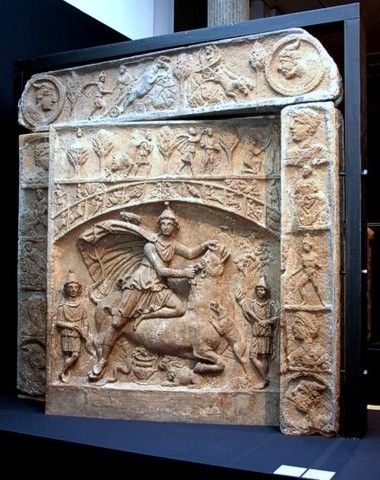
This relief is so well-known that it has been reproduced in nearly every handbook of archaeology and of history of religions.
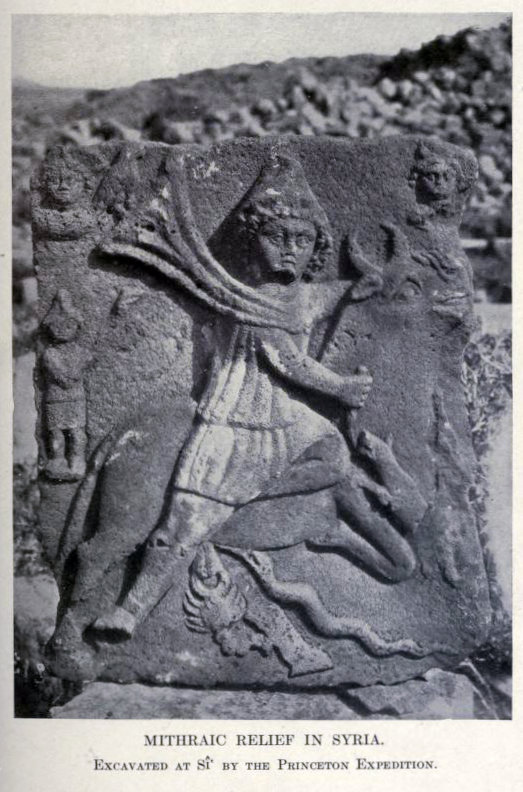
In the tauroctony of Jabal al-Druze in Syria, the snake appears to be licking the head of the bull's penis.
