Your selection in monuments gave 294 results.
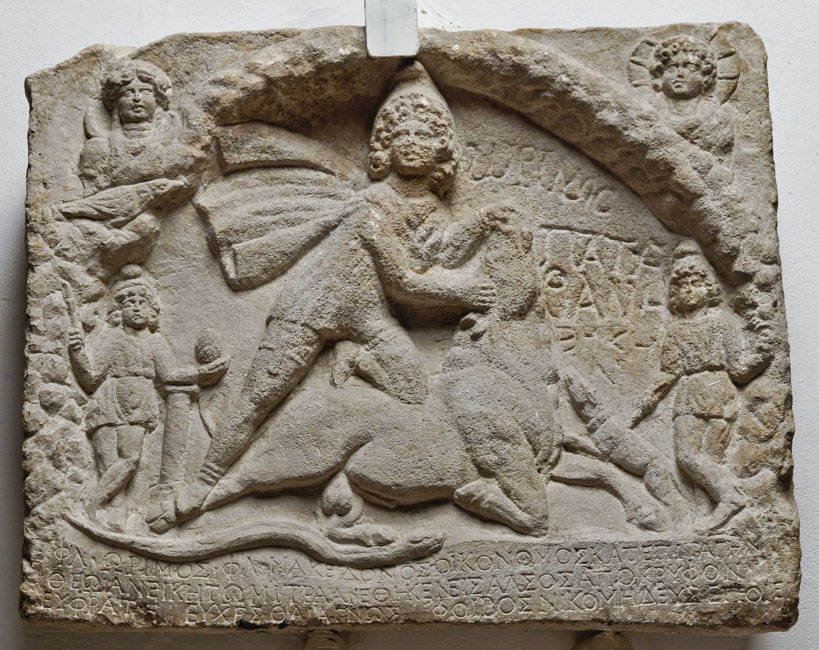
This limestone relief of Mithras killing the bull bears an inscription by a certain Flavius Horimos, consecrated in a ’secret forest’ in Moesia.
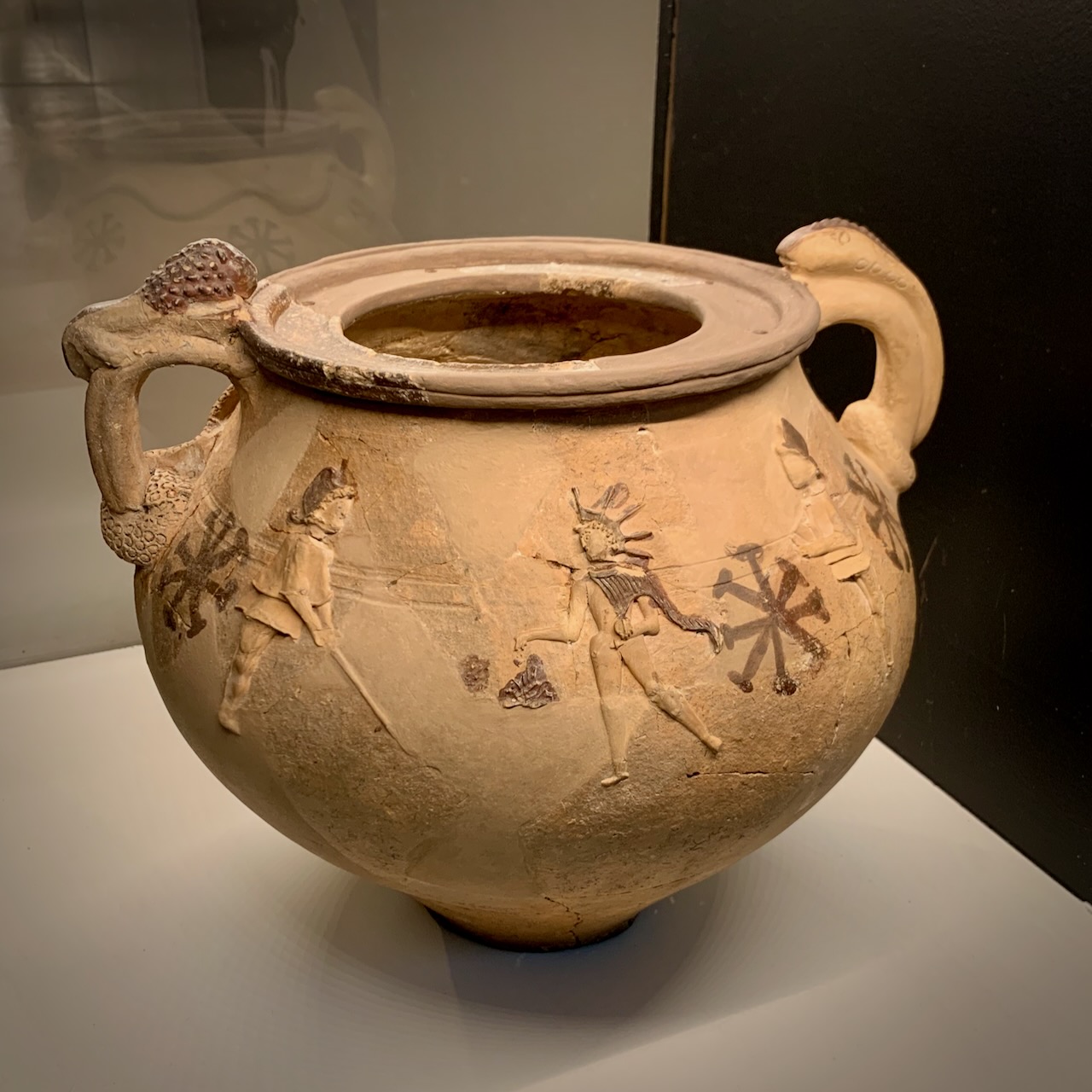
The Mithraic vase from Colonia Claudia Ara Agrippinensium in Germany includes Sol-Mithras between Cautes and Cautopates, as well as a serpent, a lion and seven stars.
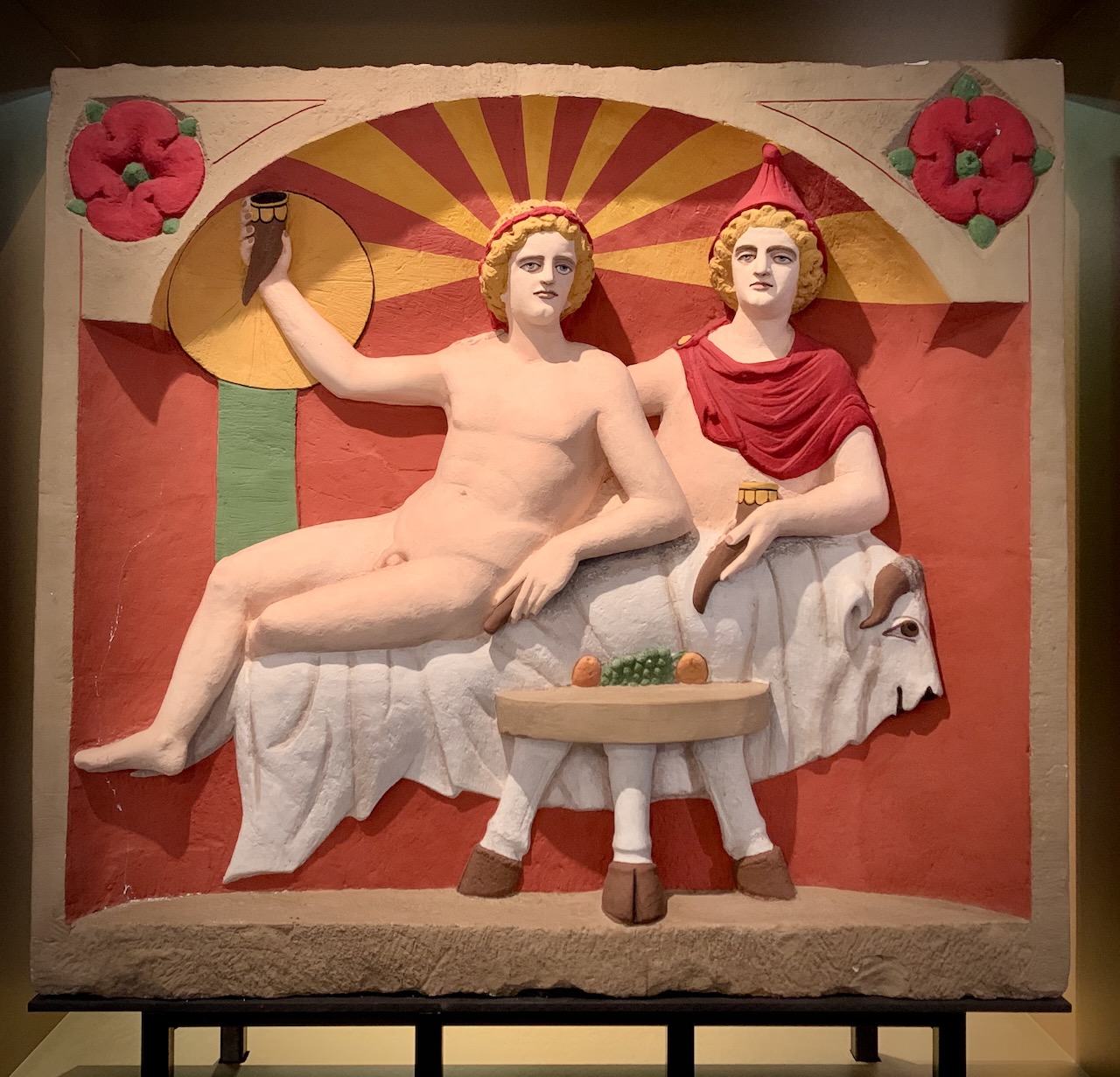
Bas-relief depicting a naked Sol leaning over his fellow Mithras while raising a drinking horn during the sacred feast.
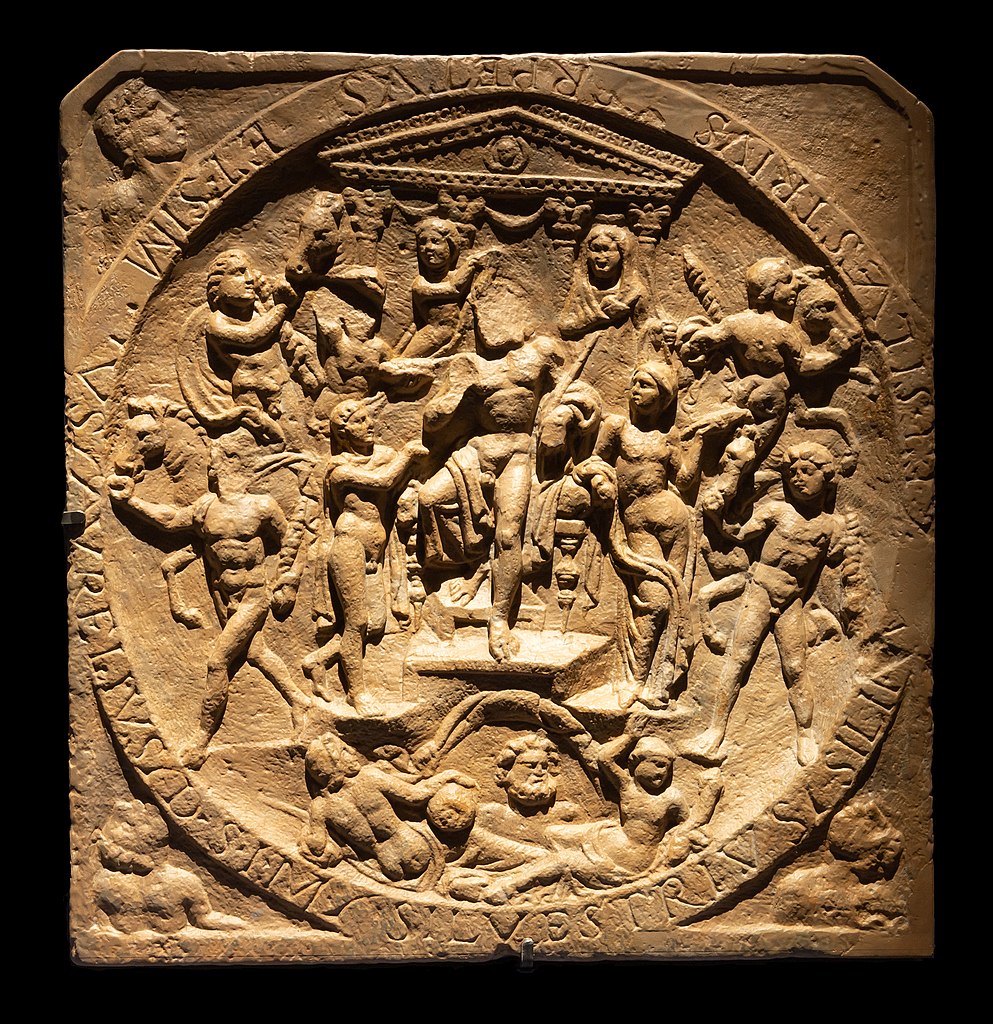
The relief of Dieburg shows Mithras riding a horse as main figure, surrounded by several scenes of the myth.
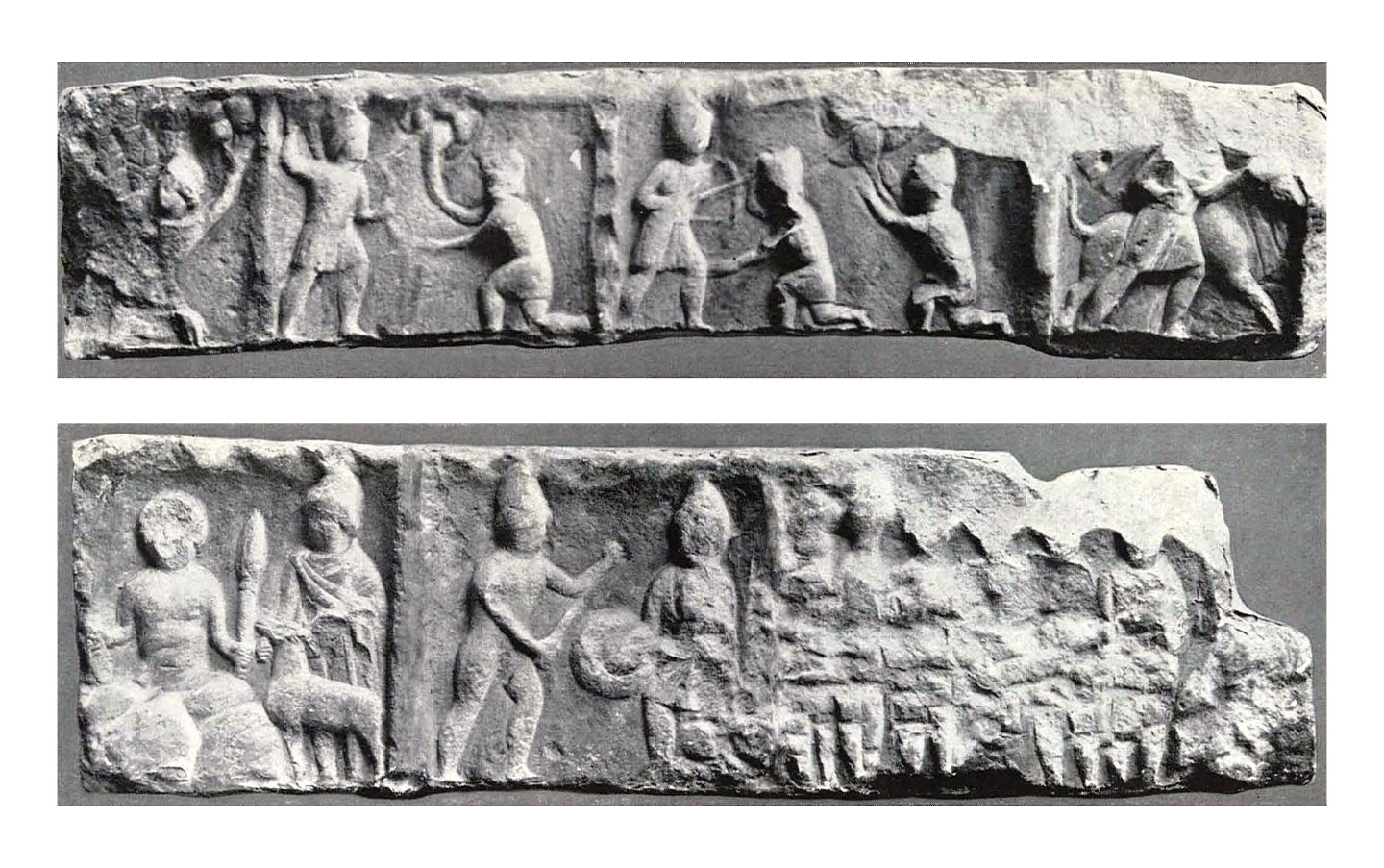
These two fragments of a sandstone relief were walled into a house on the market square in Besigheim.
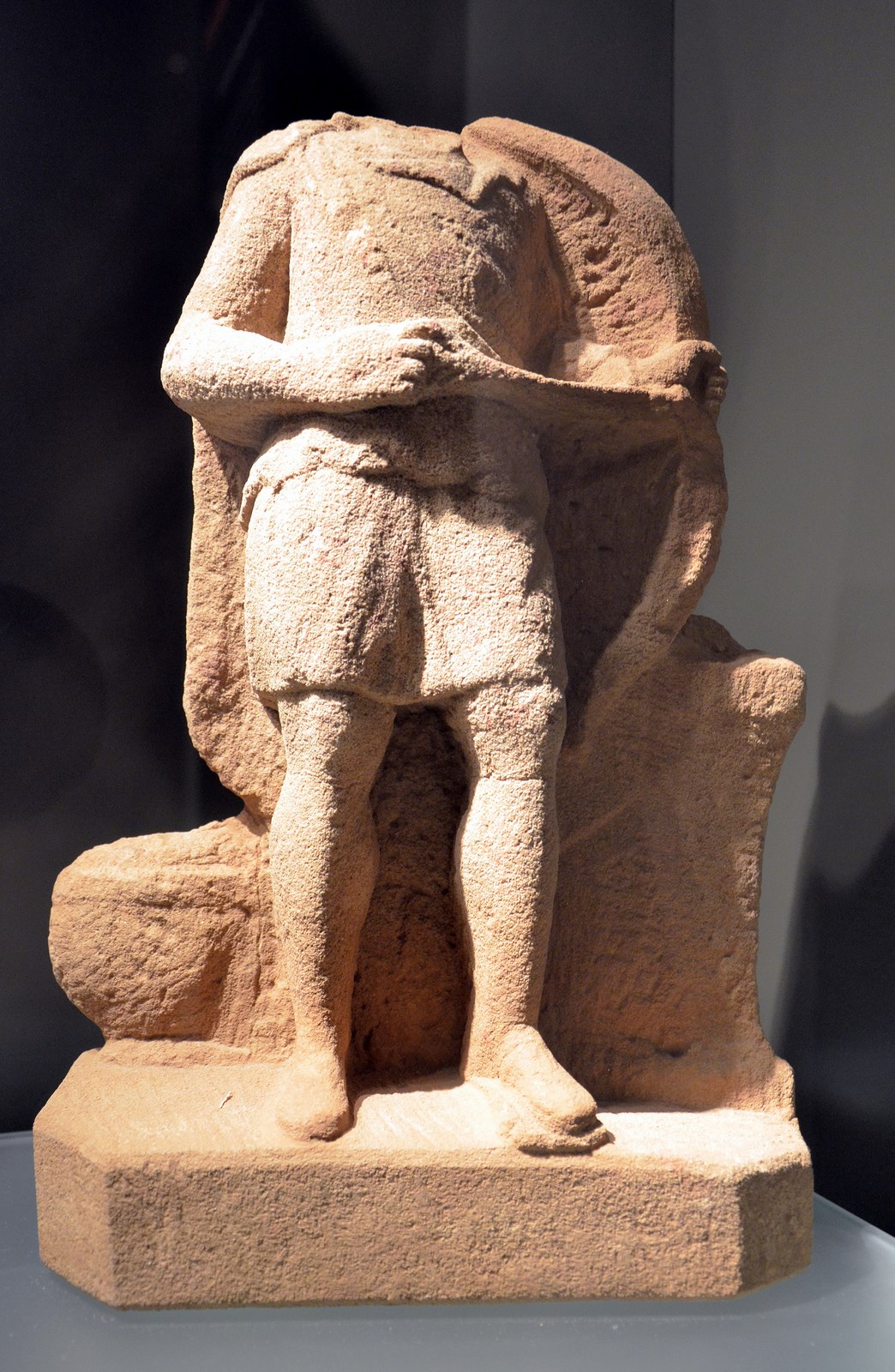
Statue in yellow sandstone found in the pit of the Mithraeum of Dieburg, showing Mithras standing beside an altar with bow and arrow, accompanied by a vase and associated with the water miracle.
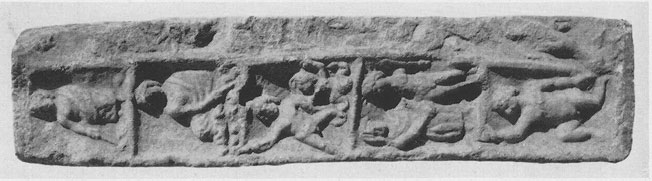
Fragment of a double-sided white marble Mithraic relief from San Zeno, found near the Castello di Tuenno, depicting elements of the tauroctony cycle and bearing a dedication to Deo Invicto Mithrae.
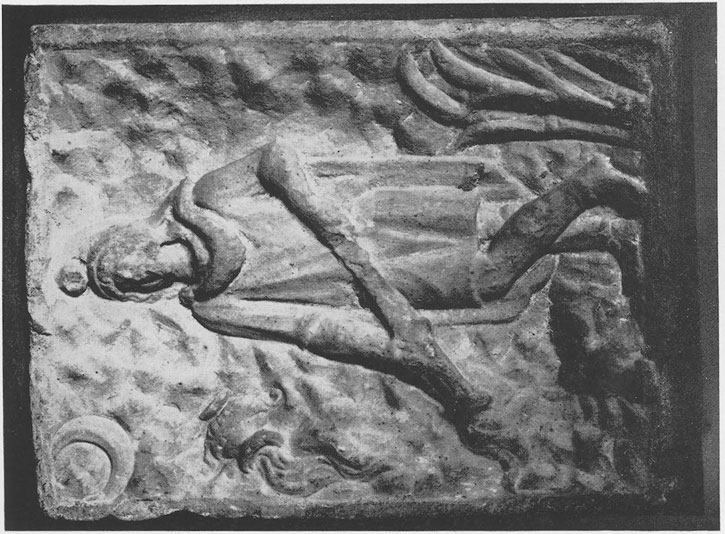
Limestone low-relief depicting Cautopates standing cross-legged in eastern dress, accompanied by a bull, flowing water from an overturned jar and a crescent from Bolognia.
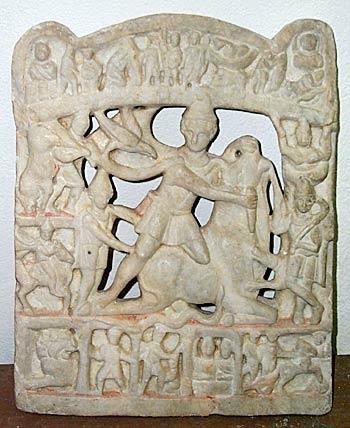
This Mithraic relief of the Danubian type was found in 1940 in the old town of Plovdiv.

The sculpture of the birth of Mithras in Florence included the head of Oceanus.
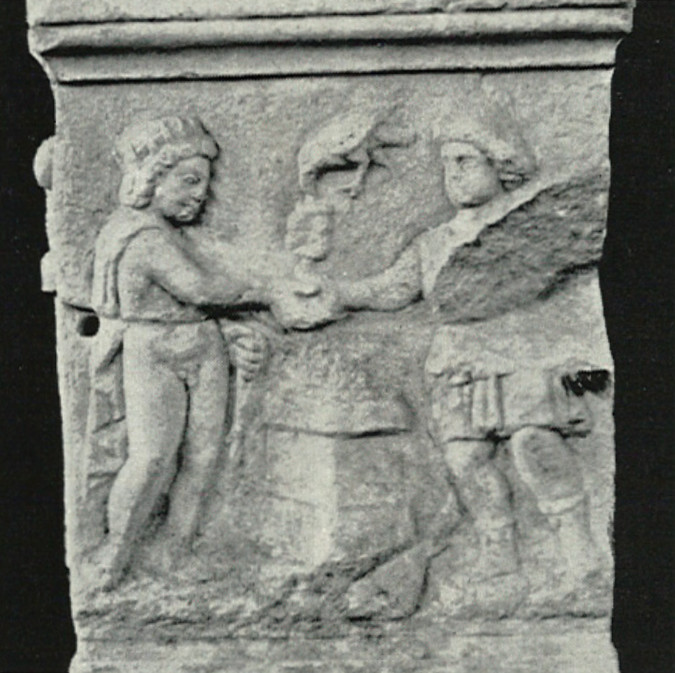
The altar of Ptuj depicts Mithras and Sol on the front and the water miracle on the right side.
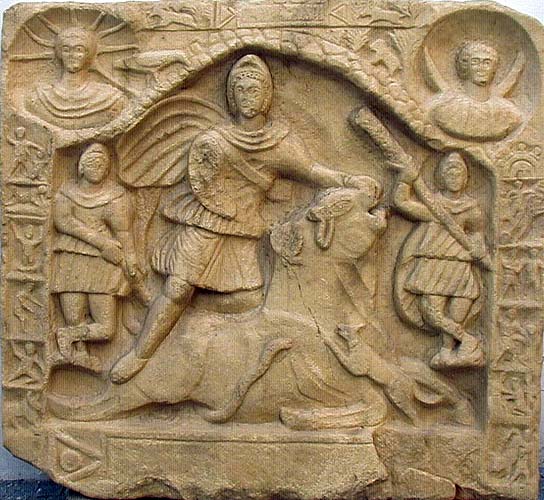
The relief of Mithras slaying the bull at Mauls in Gallia cisalpina is a paradigmatic example of the so-called Rhine-type Tauroctony.
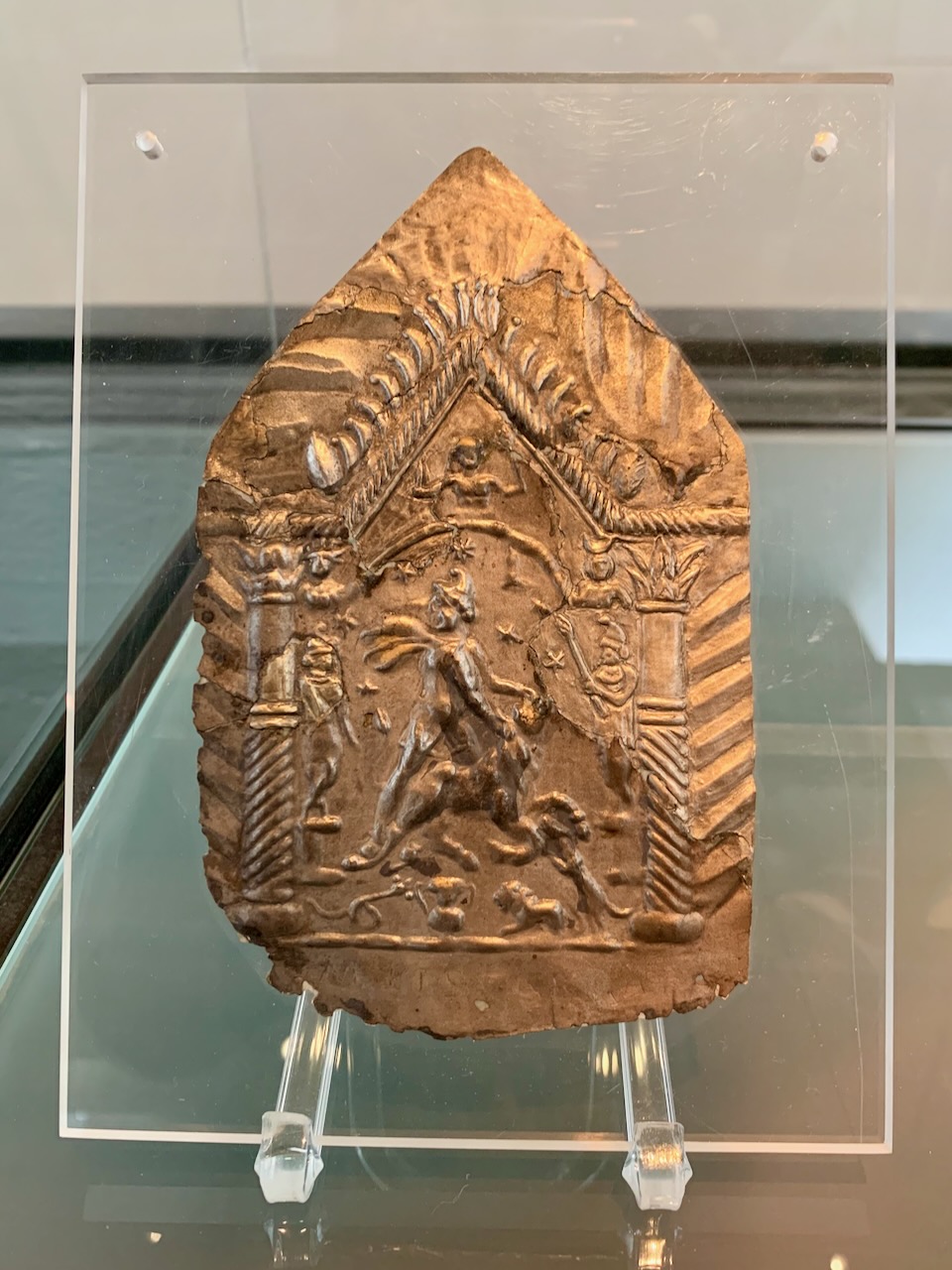
This plaque was found in Mithraeum I at Stockstadt broken into pieces inserted between the blocks of the socle of the cult relief, in the manner of a votive deposit.

Sandstone base from Vetera (Xanten), Germania Inferior, with a relief of Cautes in Oriental dress holding a long burning torch.
Sandstone statue of Cautopates holding two downward-pointing torches, from the Ober-Florstadt Mithraeum.
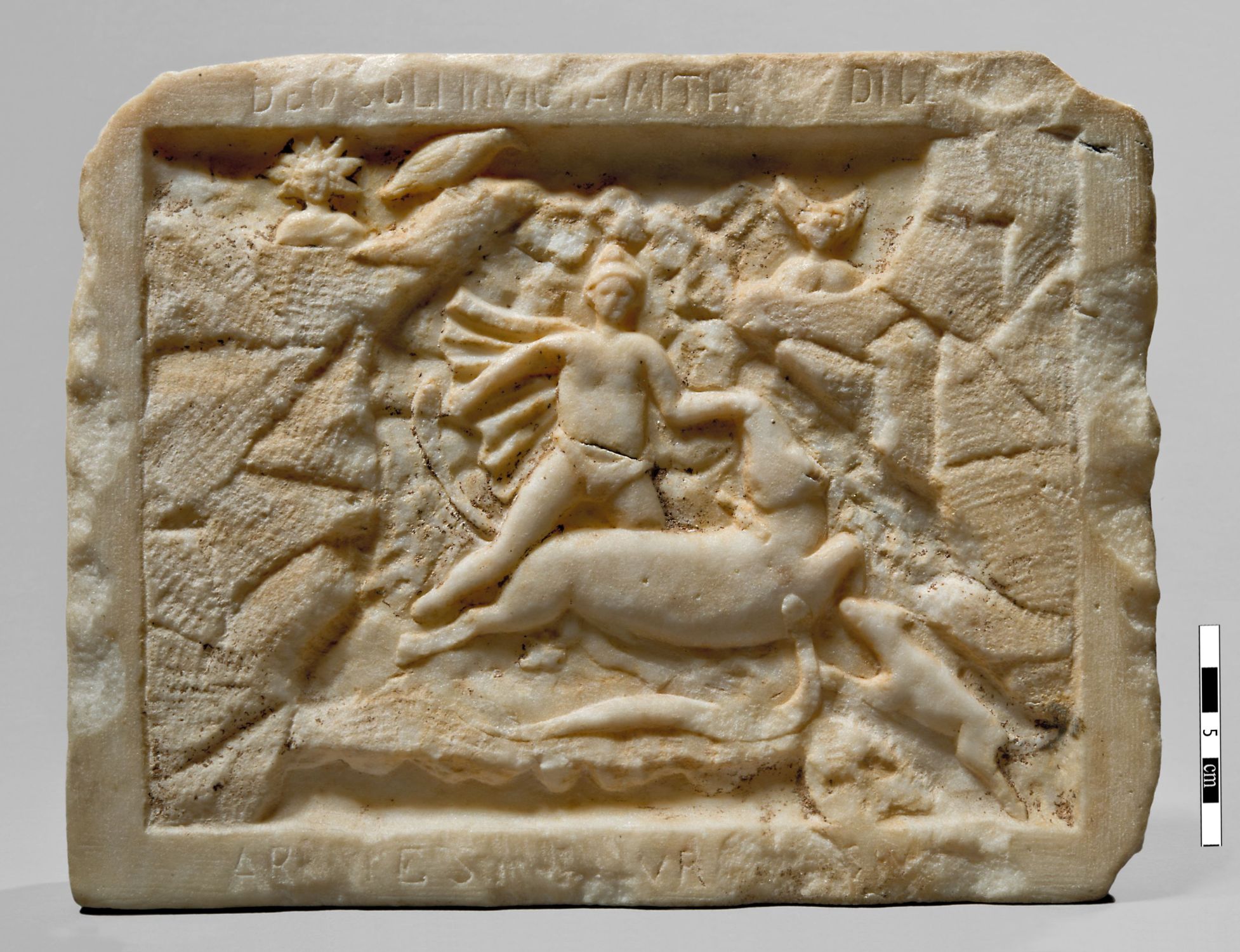
White marble relief depicting Mithras as bull-slayer in a grotto from the Froehner collection, now in the Cabinet des Médailles, Paris.
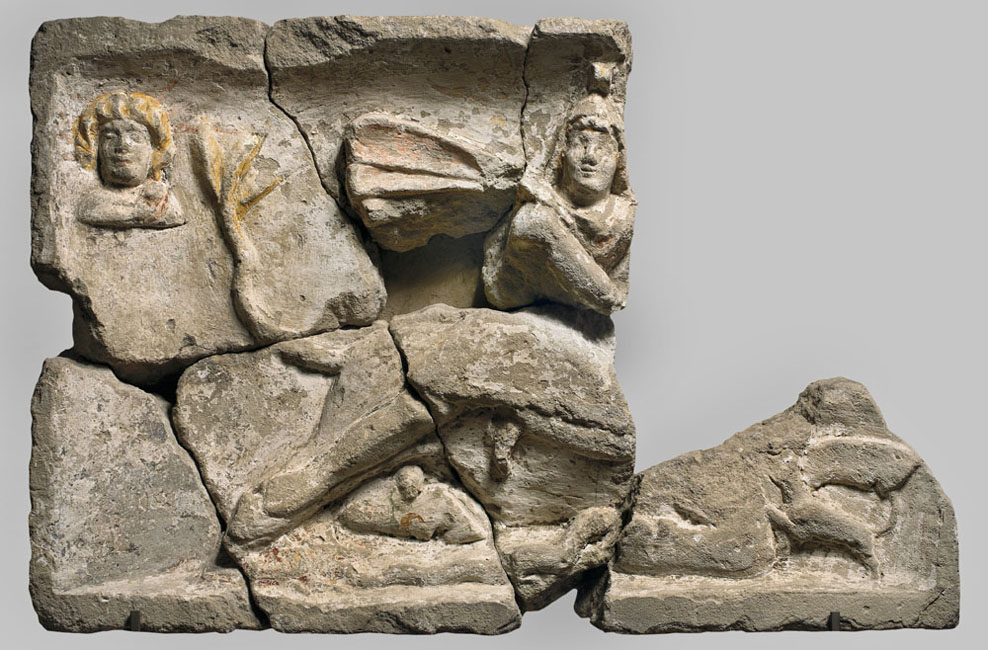
Sandstone relief of Mithras as bull-slayer, found at Petronell in 1932, with dog, serpent and scorpion, traces of polychromy preserved, now in the Museum Carnuntinum.
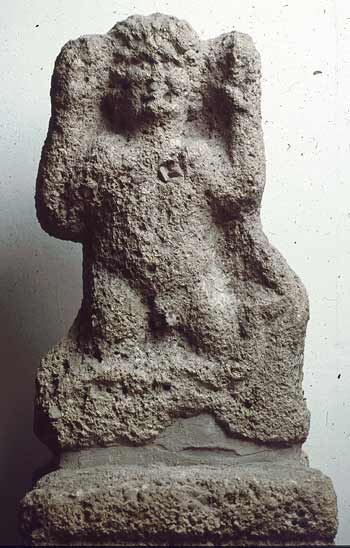
Conglomerate statue of the birth of Mithras, found in a burnt layer, showing the god nude emerging from the rock with raised hands and a snake.
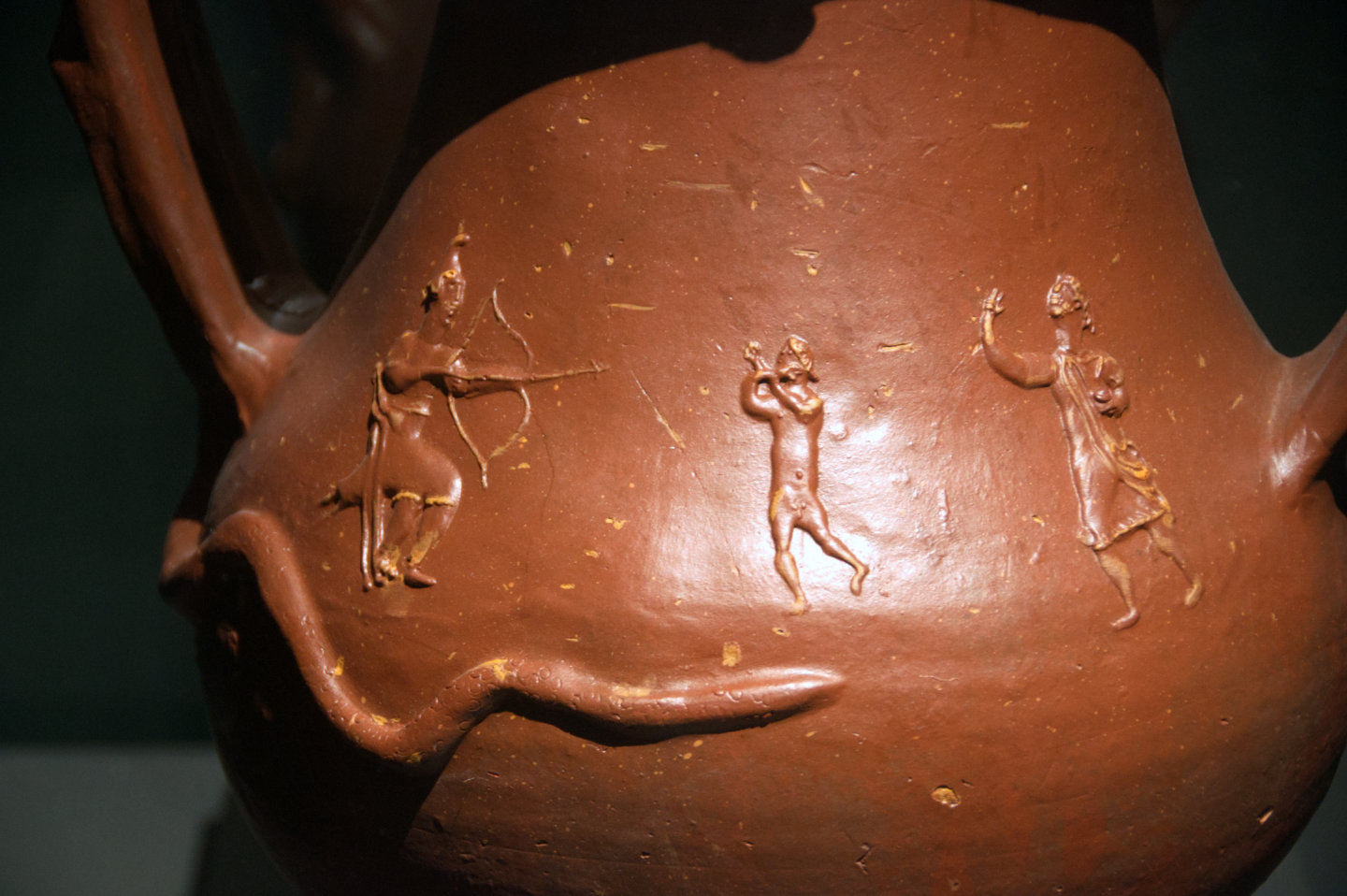
The Mithraic vase from Ballplatz in Mainz depicts seven figures arranged in two narrative sequences, commonly interpreted in relation to initiation rites.
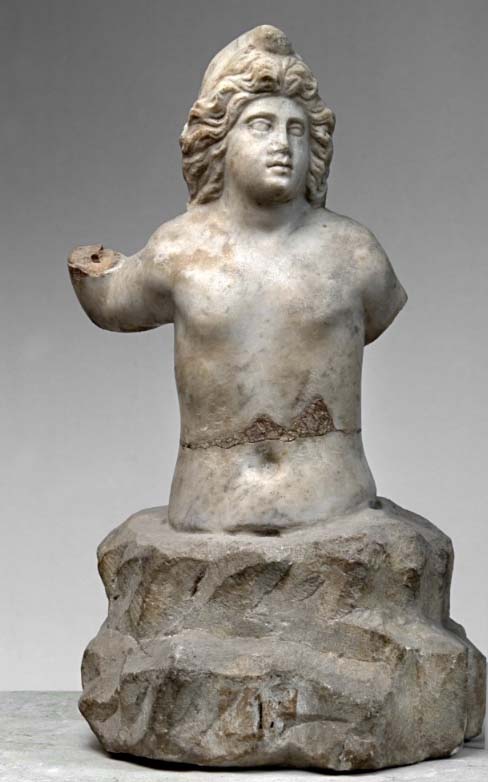
Mithras being born from the rock (petrogenia), acquired in Rome and formerly kept in Berlin.
