Your selection in monuments gave 294 results.
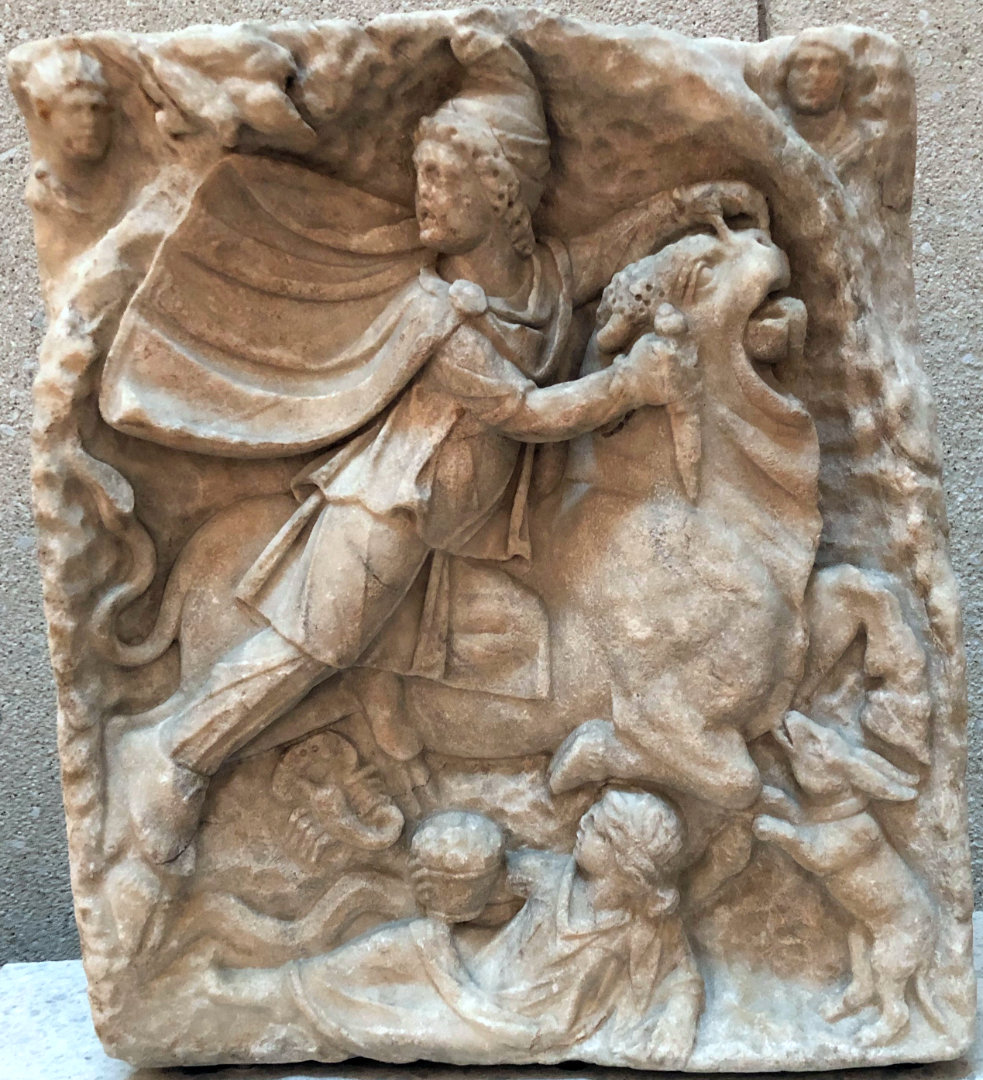
This tauroctony relief is distinguished by the rare depiction of Tellus reclining beneath the bull.

Small limestone stele, discovered at Apt in 1903. It depicts a standing torchbearer in the conventional Mithraic posture and dress, accompanied by a cock placed at his feet.
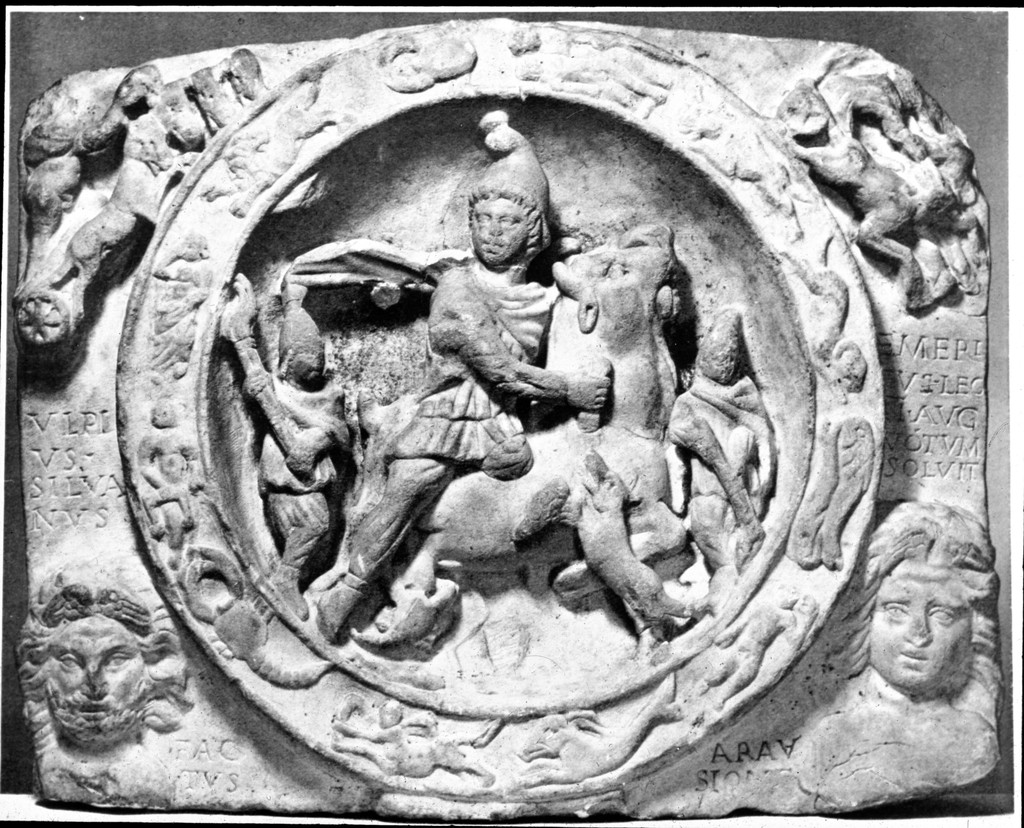
The image of Mithras killing the bull, found near Walbrook, is surrounded by a Zoadiac circle.
Statue of a standing person in eastern attire in red, local limestone with inscription.
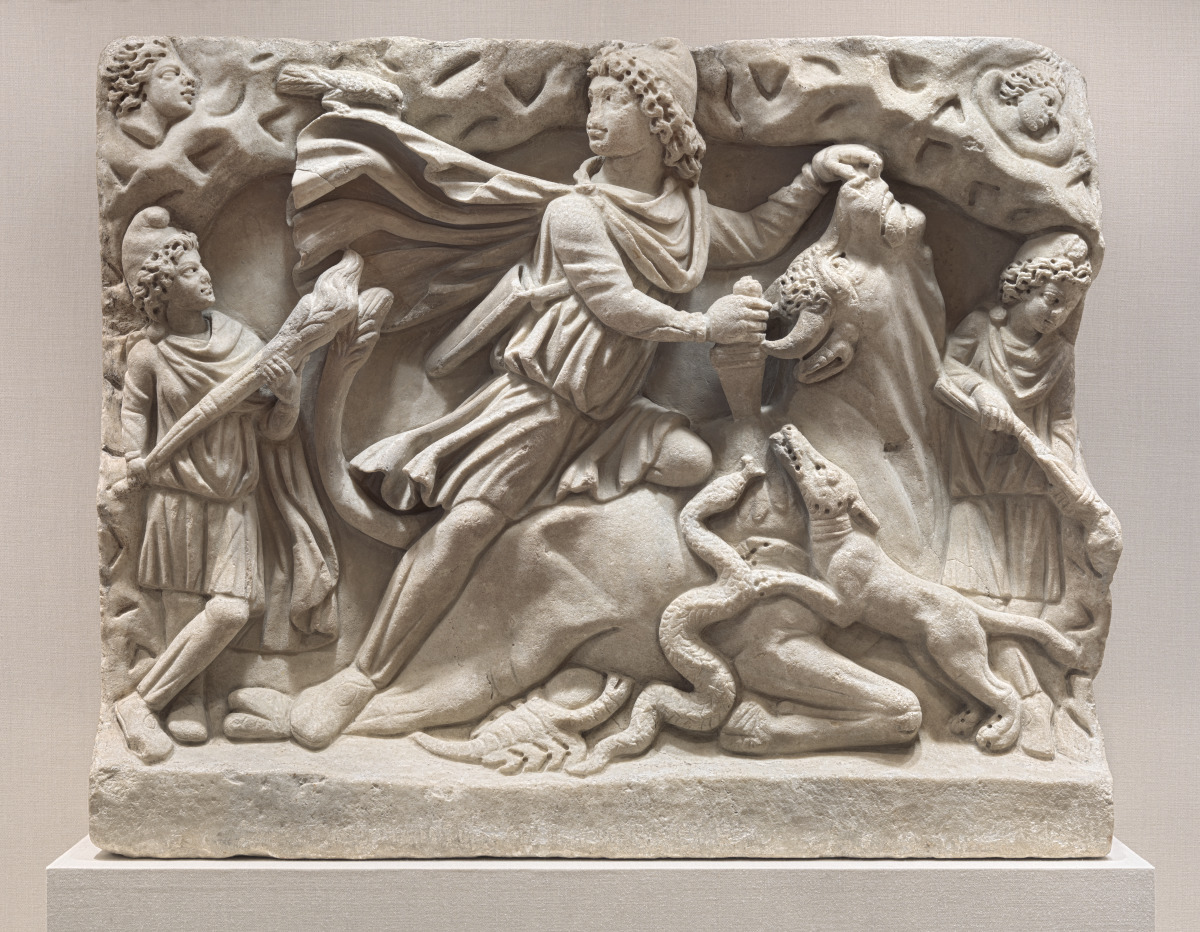
Rich relief on display at the Virginia Museum of Fine Art showing Mithras sacrificing the bull accompanied by Cautes and Cautopates.

New evidence for the cult of Mithras and the religious practices of Legio IV Scythica at the Roman frontier city of Zeugma on the Euphrates.
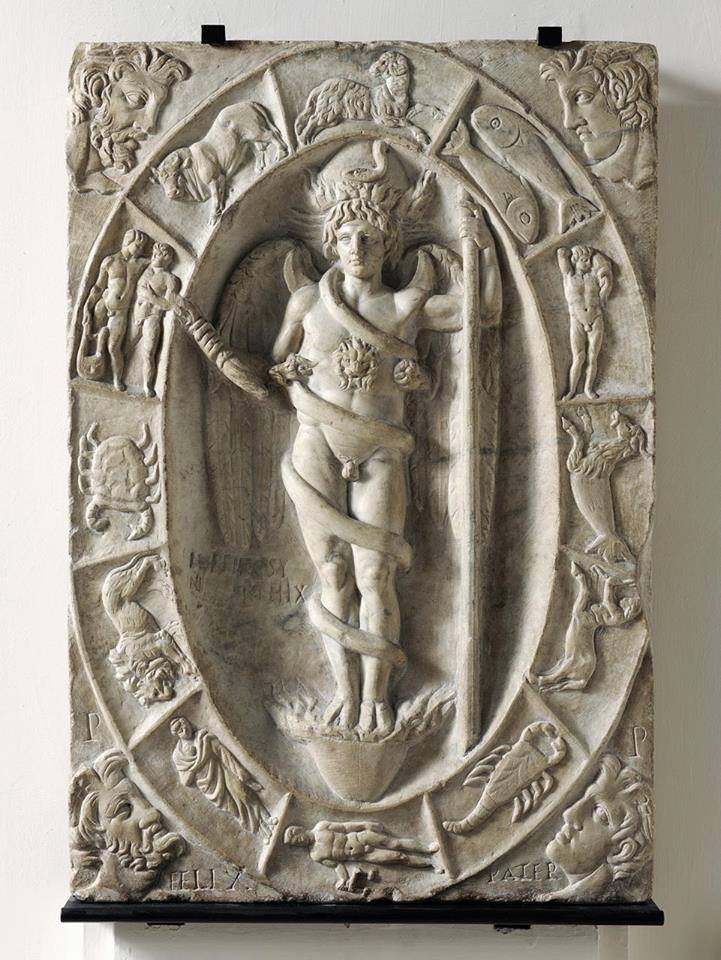
The Aion / Phanes relief, currently on display in the Gallerie Estensi, Moneda, is associated with two Eastern mysteric religions: Mithraism and Orphism.
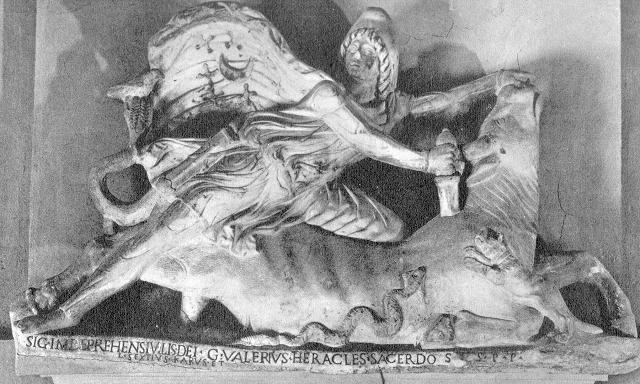
This sculpture of Mithras killing the bull was dedicated to the ’incomprehensible god’ by a certain priest called Gaius Valerius Heracles.
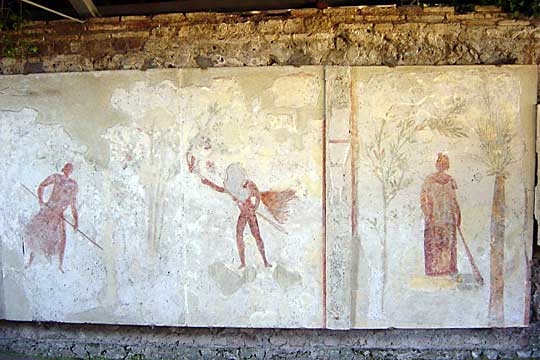
The frescoes depict several figures dressed in different garments associated with the Mithraic degrees.

Fragment of a marble relief (H. 0.27 Br. 0.38 D. 0.045).
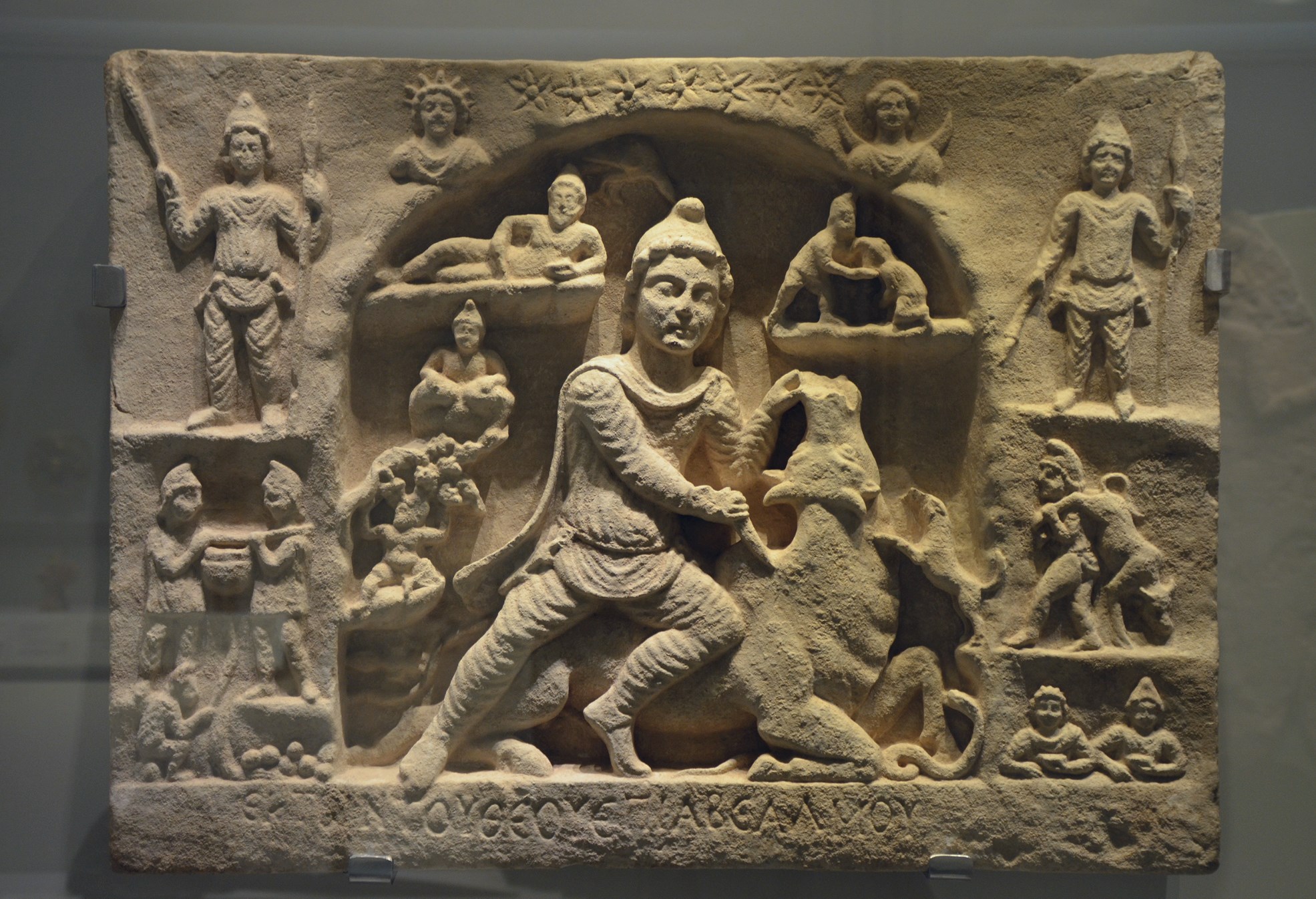
In this terracotta relief depicting Mithras as a bull killer found at Cales, now in Calvi Risorta, none of the usual accompanying animals is present.

Second terracotta tablet found at Calvi depicting Mithras killing the bull, now at Berlin, Antiquarium.

Relief possibly depicting Mithras-Men holding a torch and a a bust of Luna on a crescent.
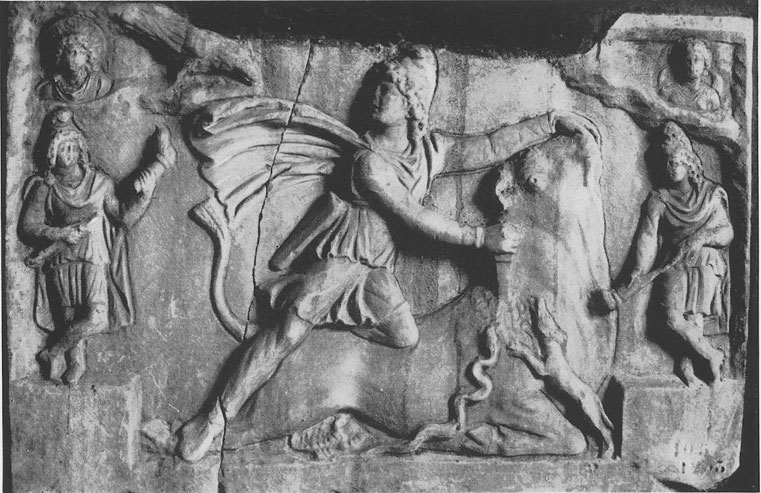
White marble relief depicting Mithras killing the bull, found broken in two parts in 1872 near Salita delle Tre Pile in Rome.
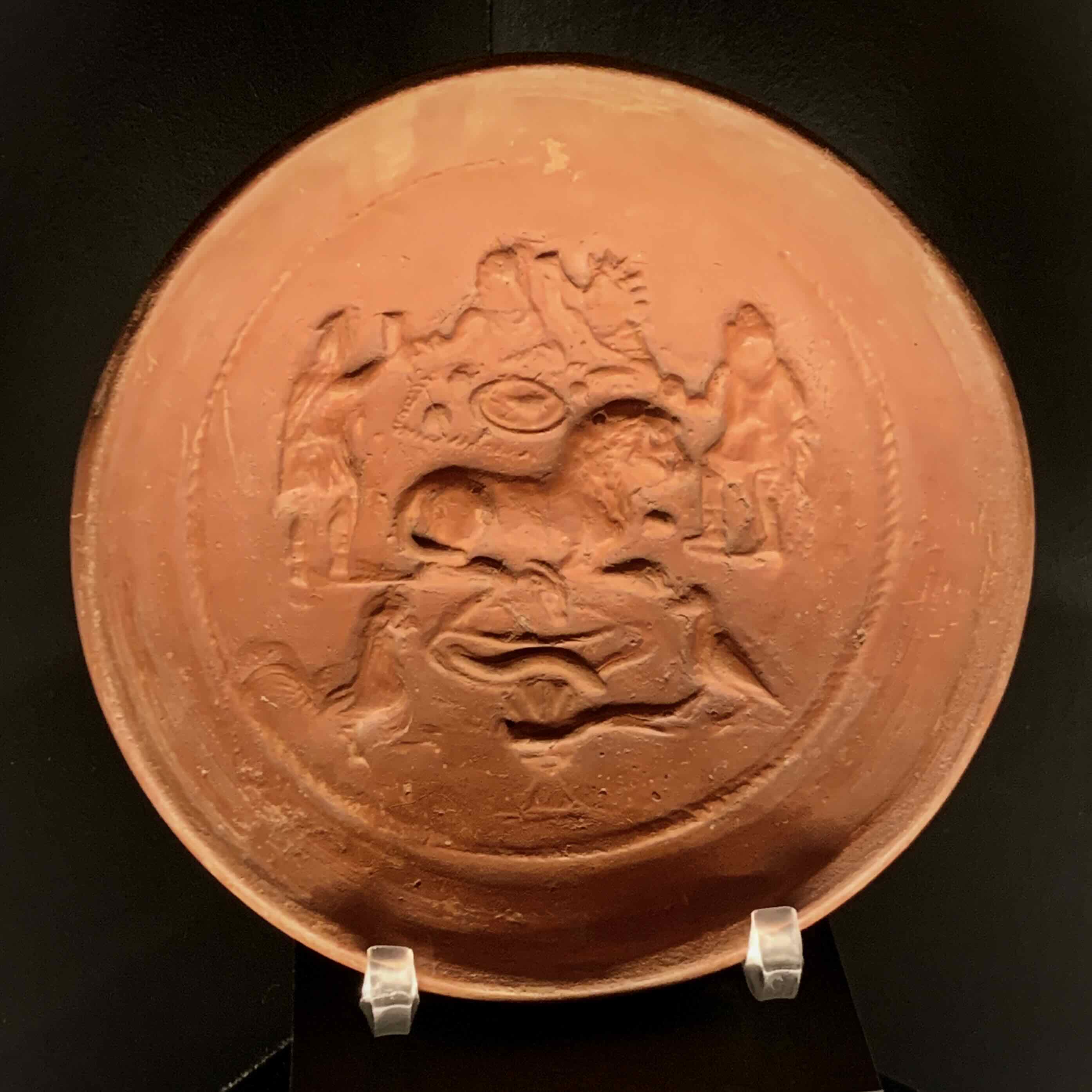
This terra sigillata was found in 1926 in a grave on the Roman cemetery of St. Matthias, Trier. An eyelet indicates that it could have been hung on a wall.
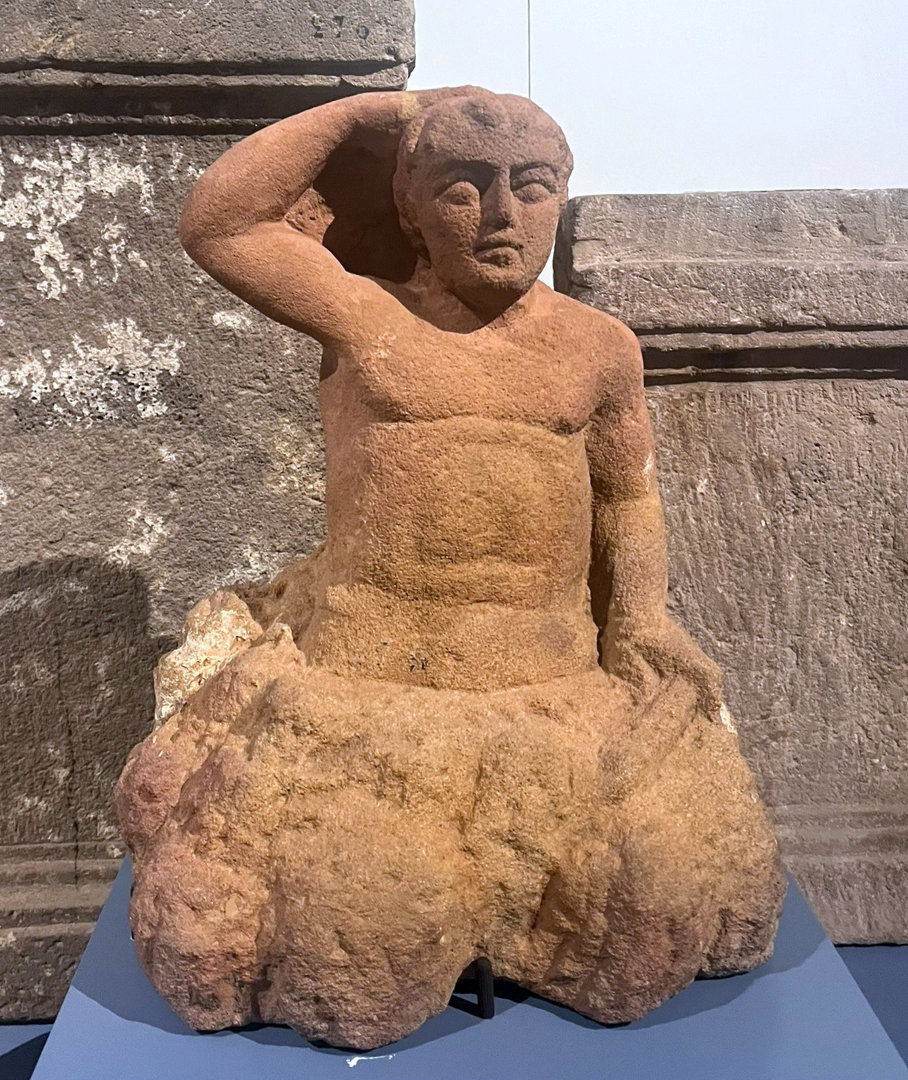
This sculpture of Mithras being born from a rock is unique in the position of the hands, one on his head, the other on the rock.
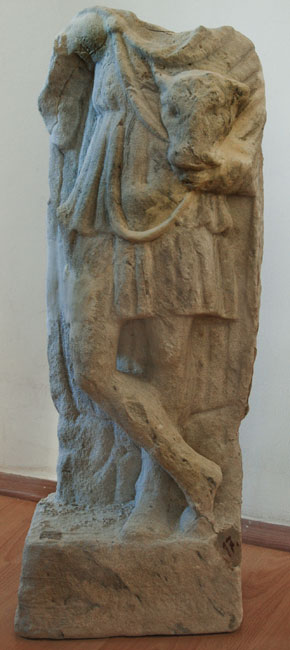
This sculpture of Cautes holding a bull’s head was found in 1882 in Sarmizegetusa, Romania.

This unusual bronze bust of Sabazios features multiple symbolic elements, with Mithras depicted in his characteristic pose of slaying the bull, positioned just below Sabazios’ chest.
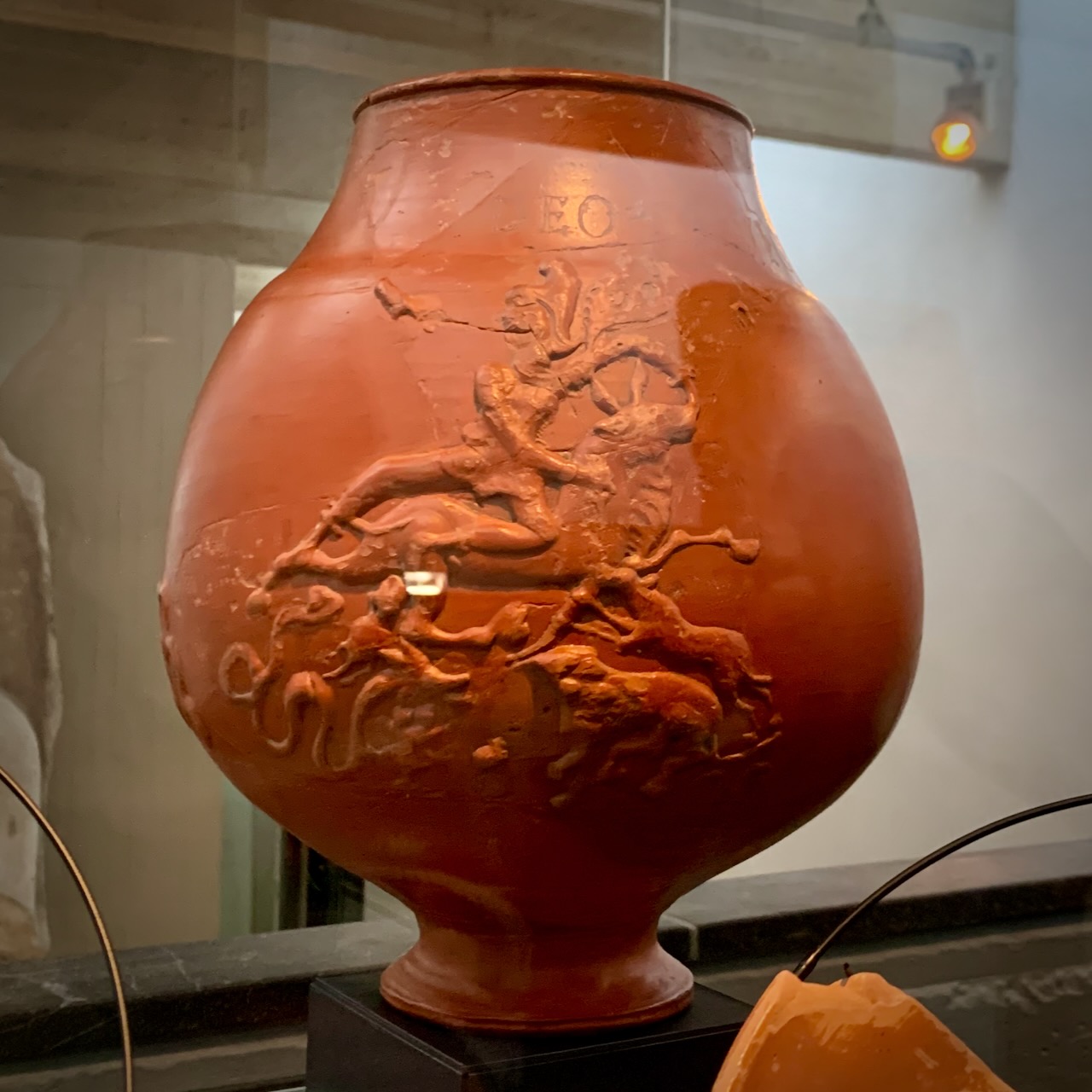
The Mühltal Mithraic crater was discovered among the artefacts of a mithraeum found in Pfaffenhoffen am Inn, Bavaria.
