This site uses cookies to offer you a better browsing experience.
Find out more on how we use cookies in our privacy policy.

 
Support The New Mithraeum The New Mithraeum is an independent, non-profit project dedicated to Mithraic studies, ancient religions and classical culture. Developed and maintained independently since 2007, the site exists without advertising, paywalls or institutional funding. If you have found value in its articles, interviews, photographs or database, please consider supporting the project with a contribution. Every contribution helps keep The New Mithraeum open, free and alive. Thank you.
Support us →
Monumentum

Mithraeum of Dunaújváros (Intercisa)

The Dunaújváros Mithraeum was discovered in 1973.
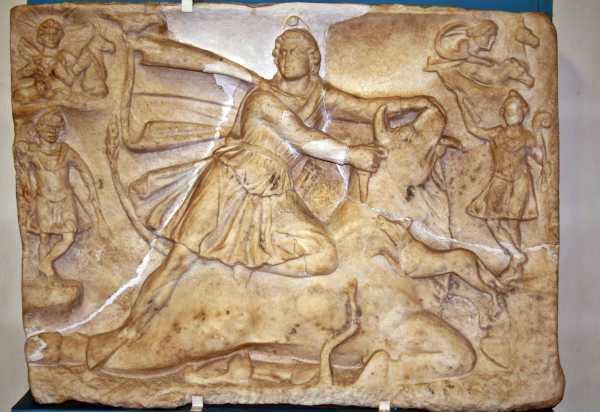
Relief of Mithras slaying the bull of Dunaújvaros

Relief of Mithras slaying the bull of Dunaújvaros
Intercisa Múzeum

 
The New Mithraeum
22 Aug 2021
Updated on Mar 2026

TNMM 345

Some 46 Roman miles south of Aquincum, on the border of Pannonia inferior, a castrum and vicus on the highest point of the plateau above the Danube. Its eastern side, facing the river, was partially destroyed by the collapse of the riverbank, but the other three sides are still identifiable on the ground plan.

The vicus developed around the fort as early as the 1st century, which developed into a flourishing settlement in the presence of Syrian troops and a growing number of oriental populations.

After the Marcoman-Sarmic Wars, the settlement grew considerably, including on the hills to the north and west of the camp. The vicus, already established to the south of the camp, developed further. This must have been the site of the sanctuary of Mithras. By the 4th century there were already burials in the cannabae, so this area was no longer used as a settlement.

Related monuments

Tauroctony from Dunaújváros (Intercisa)

The relief of Mithras slaying the bull of Danaújváros was found broken into three parts in a tomb looted in antiquity.

 
Back to Top