This site uses cookies to offer you a better browsing experience.
Find out more on how we use cookies in our privacy policy.

 
Support The New Mithraeum The New Mithraeum is an independent, non-profit project dedicated to Mithraic studies, ancient religions and classical culture. Developed and maintained independently since 2007, the site exists without advertising, paywalls or institutional funding. If you have found value in its articles, interviews, photographs or database, please consider supporting the project with a contribution. Every contribution helps keep The New Mithraeum open, free and alive. Thank you.
Support us →
Monumentum

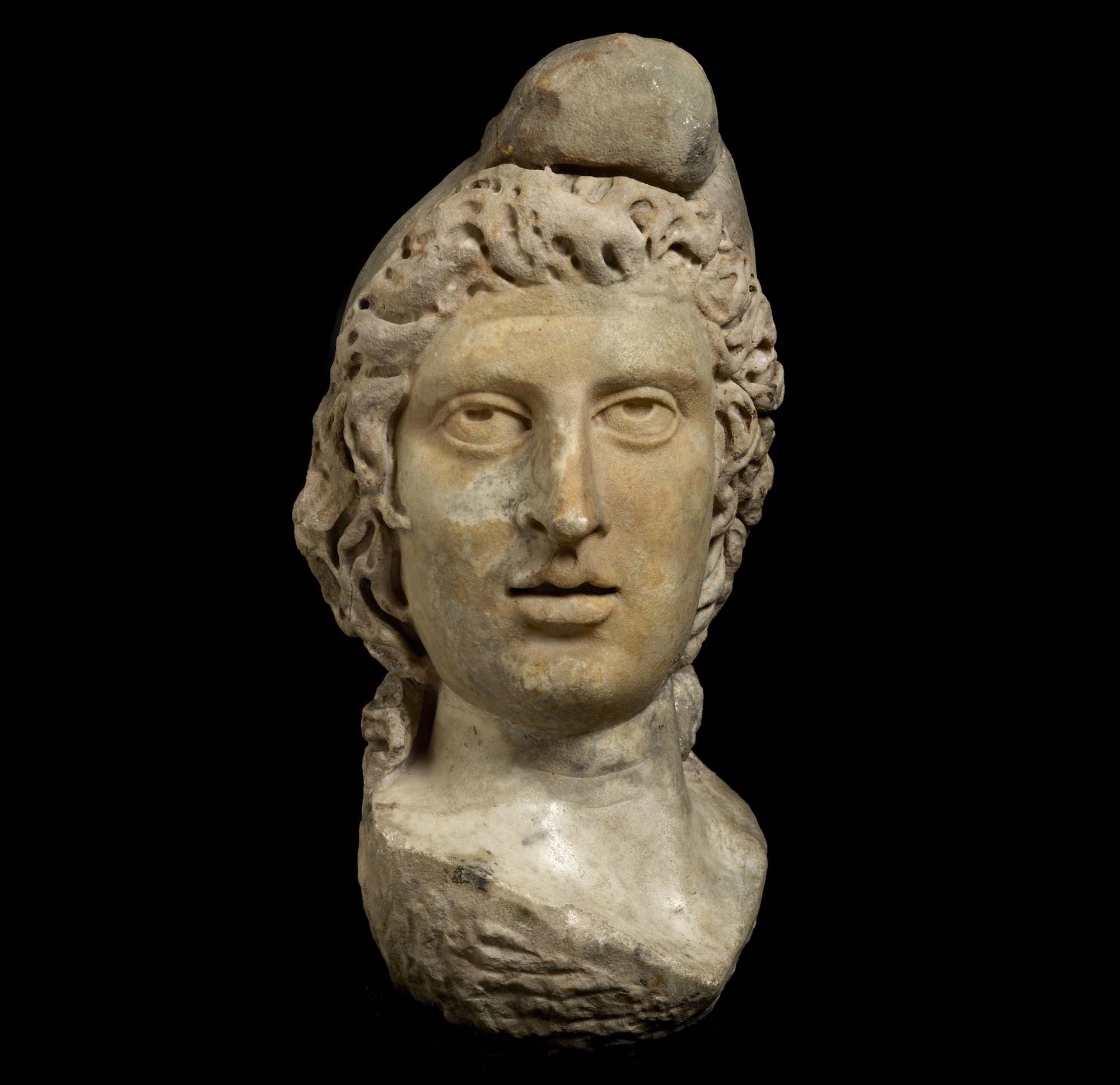
Head of Minerva from London

This head was found at the east end of temple of Mithras in London.
  • Head of Minerva from London Mithraeum

    Head of Minerva from London Mithraeum
    HEIR Project

  • Head of Minerva from London Mithraeum

    Head of Minerva from London Mithraeum
    Museum Crush

 
The New Mithraeum
24 Aug 2021
Updated on May 2026

TNMM 351

Marble head of a woman (H. 12 ins.), originally crowned with a diadem (ILN, 542; 636).


Roman marble head of Minerva. Head of goddess Minerva, the metal helmet is missing. This head was found at the east end of temple of Mithras. This statue head must have had a crested metal helmet. Its early date suggests that it might have stood elsewhere before its dedication in the Walbrook temple. It was deliberatly buried in a hollow, close to the head of Mithras and has been sealed by the 4th century floors of the temple. 130 AD - 190 AD.


Head of the Minerva, the Roman goddess of war, poetry, medicine, magic and crafts. Her metal helmet has not survived. This sculpture was recovered from the east end of the Roman Temple pf Mithras site at Bucklersbury House, London EC4; just within the entrance under the penultimate floor, across line of the north arcading. The scale and pose of the head suggests that this piece may have originated in a full-size statue. The face and neck are highly polished. The goddess’s hair projects from beneath the plain ridge which provided the seating for the lost helmet, held in place by two holes drilled into the top of the head. The eyes are plain and the pupils were probably originally painted on. The brows are clear-cut and the nose is long and straight. The mouth is small and neat. The absence of drilled grooves in the hair together with the lack of drilling in the eyes might suggest an early second-century date for the piece, even as early as c. 130 CE.

Related monuments

London Mithraeum

The Mithraeum of London, also known as the Walbrook Mithraeum, was contextualised and relocated to its original site in 2016.

Tauroctonia de Walbrook

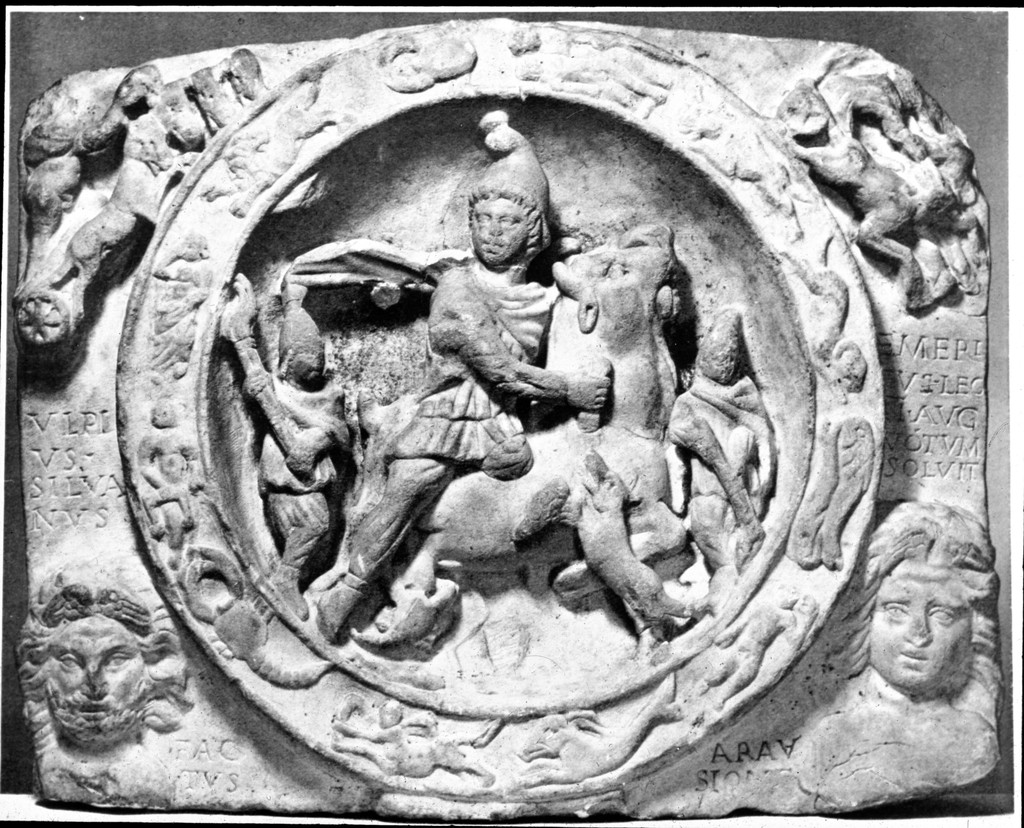
The image of Mithras killing the bull, found near Walbrook, is surrounded by a Zoadiac circle.

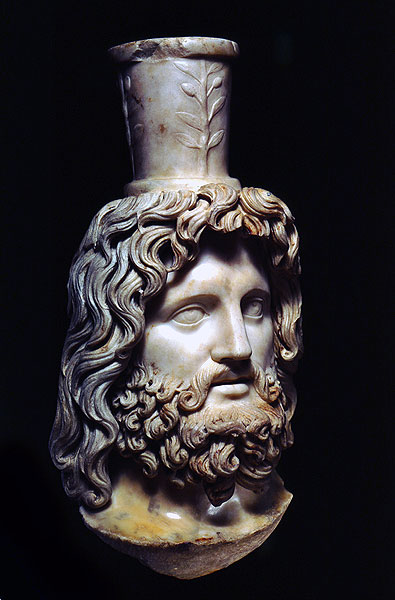
Serapis head of Walbrook

The head of Serapis found at Walbrook, London, is decorated with stylised olive branches.

Mithras head of Walbrook

The Mithras's head of Walbrook probable belonged to a life-size scene of the god scarifying the bull.


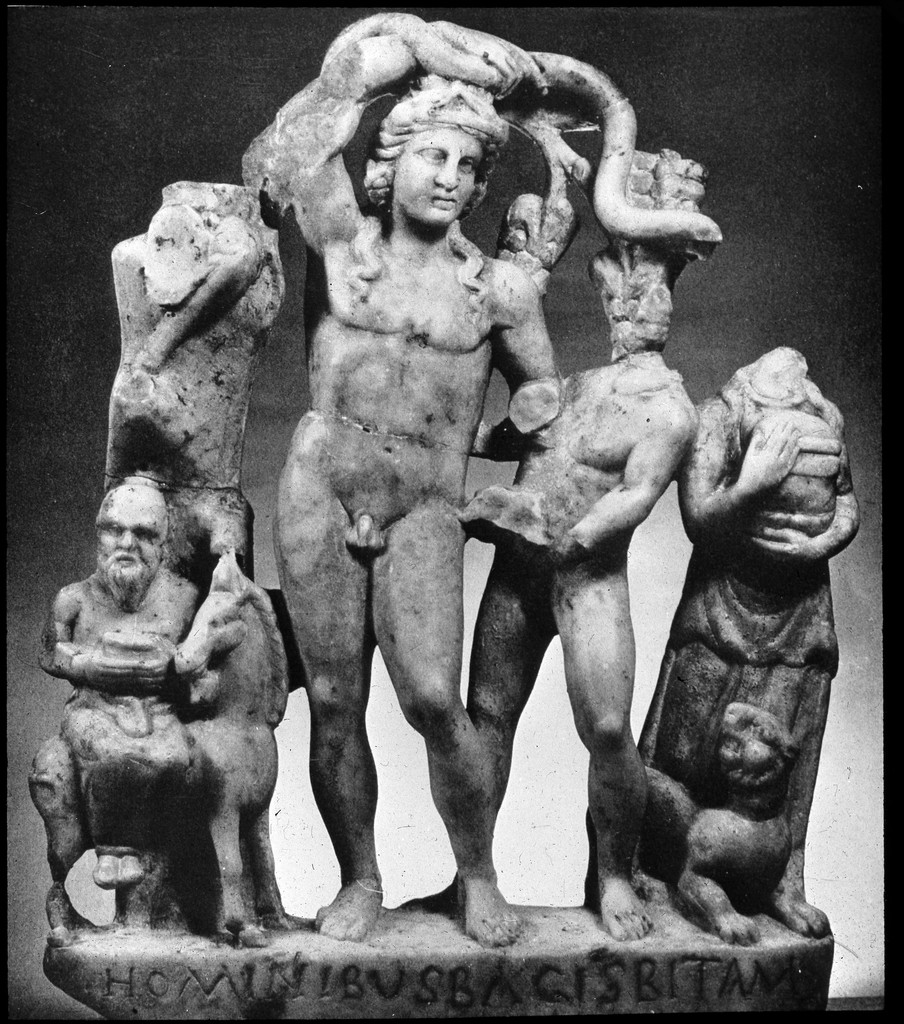
Dionysus group marble of London

Marble group of Dionysus accompanied by a Silenus on a donkey, a satyr and a menead.

Mithraic find from London

Archaeological material from the Mithraeum of Londinium discussed in Hill’s study of Roman London.

 
Back to Top