The New Mithraeum
18 Oct 2023
Updated on May 2026
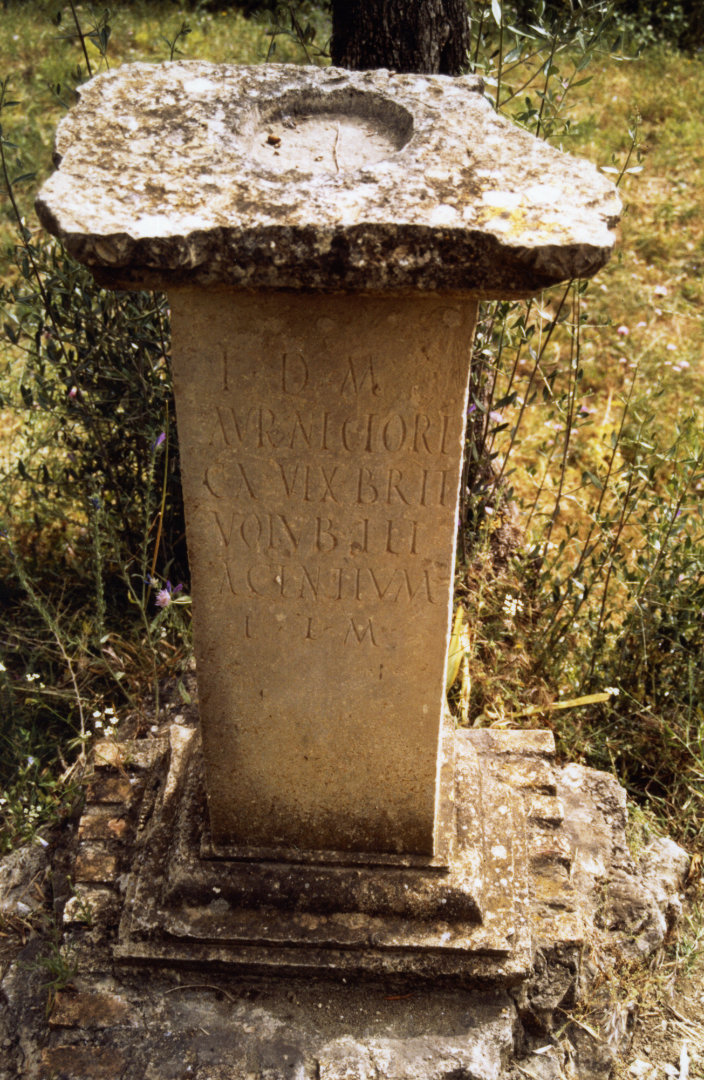
Altar in freestone.
Pro salute et incolumitate imp(eratoris) Caesaris / L(ucii) Aeli(i) Aurel(ii) Commodi Pii invicti feli/cis Herculis Romani imperioque / eius Aur(elius) Nectorega (centurio) vex(illariorum) Britt(onum) / Volubili agentium sua pecunia / invicto posuit et d(e)d(icavit).
191 A.D.CIMRM II 161Marble plate (H. 0.56 Br. 0.97).ILA, 180 No. 612; St. Weinstock in HTkR L, 1957, 242 n. 174.L.H. 0.04–0.035.ILA reads: Nectoreca c(enturio) vex(illationis) Britt(onum) / Volubuli agentium sua pecunia / invicto posuit et d(onum) d(edit).
At Volubilis, in Mauritania Tingitana…
Pro salute et incolumitate imp(eratoris) Caesaris / L(ucii) Aeli(i) Aurel(ii) Commodi Pii invicti feli/cis Herculis Romani imperioque / eius Aur(elius) Nectorega (centurio) vex(illariorum) Britt(onum) / Volubili agentium sua pecunia / invicto posuit et d(e)d(icavit).
191 A.D.CIMRM II 161Marble plate (H. 0.56 Br. 0.97).ILA, 180 No. 612; St. Weinstock in HTkR L, 1957, 242 n. 174.L.H. 0.04–0.035.ILA reads: Nectoreca c(enturio) vex(illationis) Britt(onum) / Volubuli agentium sua pecunia / invicto posuit et d(onum) d(edit).
At Volubilis, in Mauritania Tingitana…
The full article is reserved for our members.
Log in or create a free account to access the entire site.