This site uses cookies to offer you a better browsing experience.
Find out more on how we use cookies in our privacy policy.

 
Quaere

The New Mithraeum Database

Find news, articles, monuments, persons, books and videos related to the Cult of Mithras

Your search Capri gave 24 results.

 
Monumentum

Tauroctony from Capri

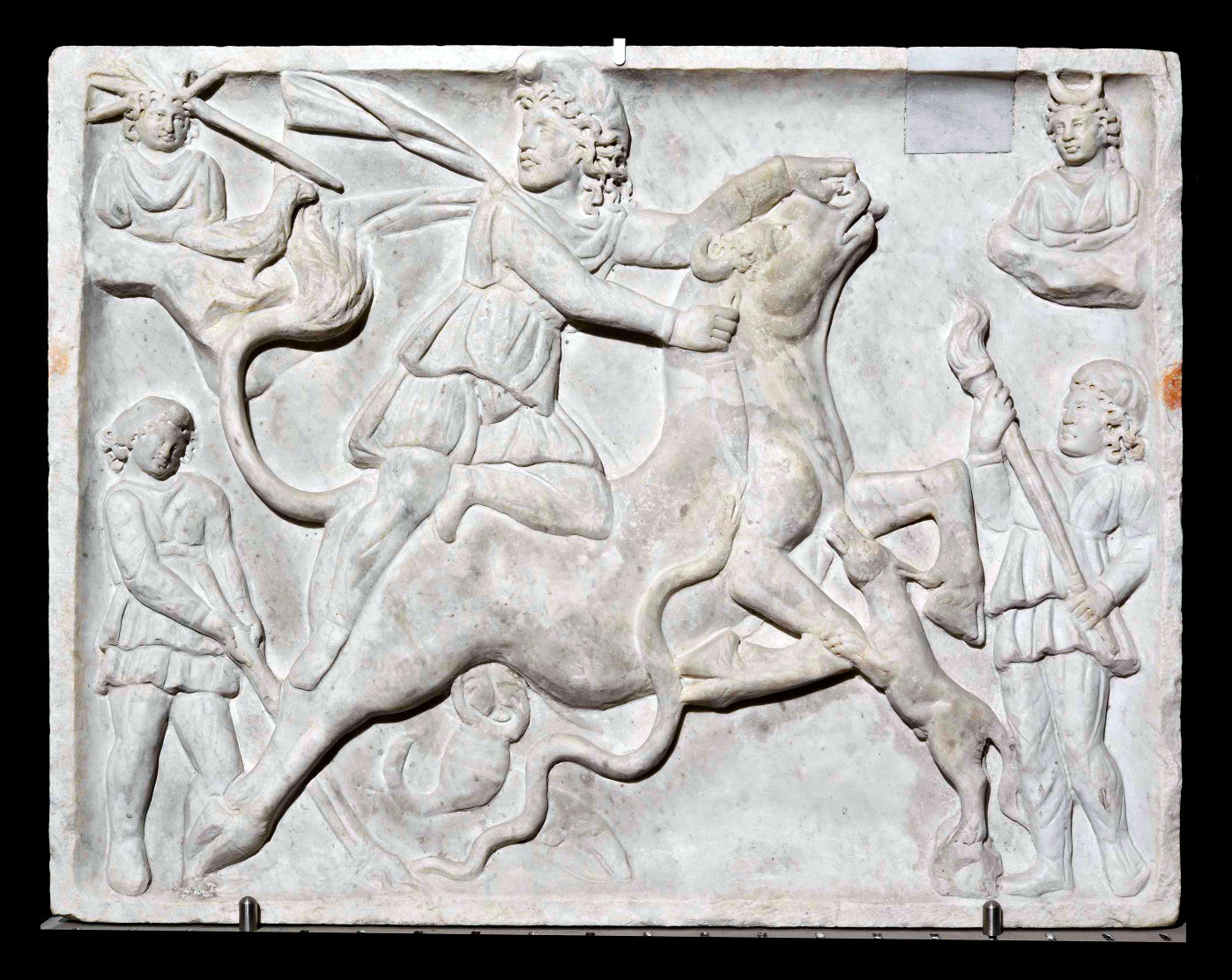
It is not certain that the marble relief of Mithras killing the bull was found on Capri, in the cave of Matromania, where a Mithraeum could have been established.

 
Monumentum

Tauroctony from Santo Domingo de Silos

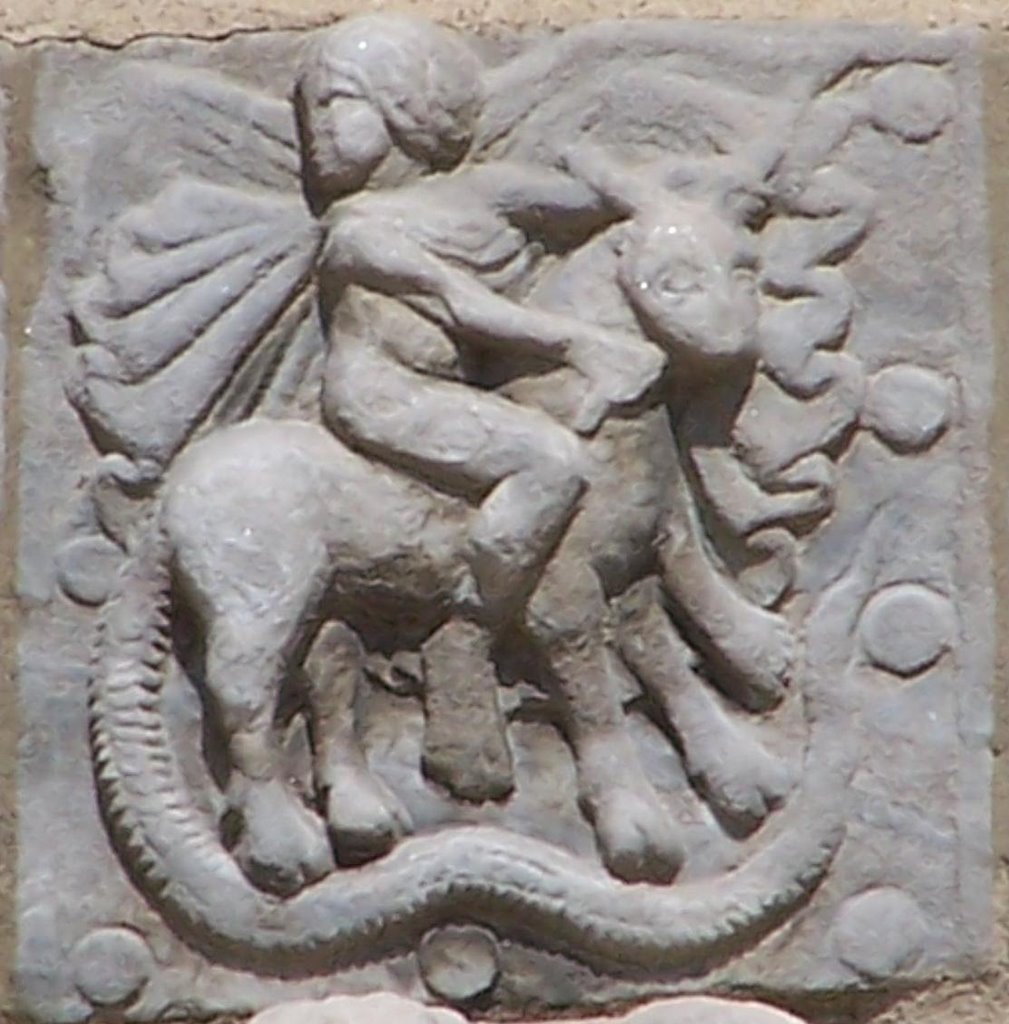
Mithras slaying the bull appears as the sign of Capricorn in a zodiacal sequence on the Pórtico del Cordero of the Abbey de Santo Domingo de Silos, Burgos, Spain.

 
Monumentum

Cautopates in the Walters Art Museum

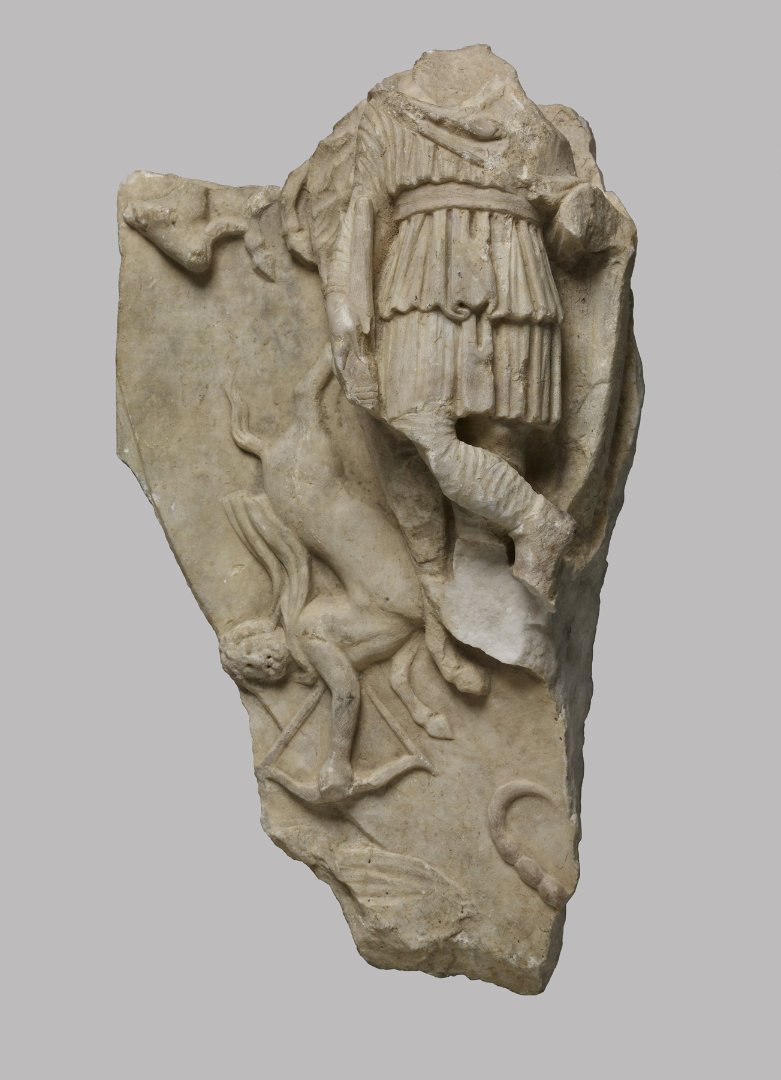
This fragmentary relief shows Cautopates bordered by three of the six zodiacal signs with which He is associated: Capricorn, Sagittarius and Scorpio.

 
Locus

Capreae

Capri is an island located in the Tyrrhenian Sea off the Sorrento Peninsula, on the south side of the Gulf of Naples in the Campania region of Italy.
 
Monumentum

Two-sided relief of Dieburg

The relief of Dieburg shows Mithras riding a horse as main figure, surrounded by several scenes of the myth.

 
Textum

Julian on Mithras

In these passages from his hymns and satires, Julian articulates a solar theology in which Helios governs cosmic order and time. Within this framework, Mithras appears as a personal divine guide associated with the ascent of souls.

 
Monumentum

Tauroctonia de Walbrook

The image of Mithras killing the bull, found near Walbrook, is surrounded by a Zoadiac circle.

 
Liber

The Religion of the Mithras Cult in the Roman Empire. Mysteries of the Unconquered Sun

Roger Beck describes Mithraism from the point of view of the initiate engaging with the religion and its rich symbolic system in thought, word, ritual action, and cult life.

 
Monumentum

Aion of Villa Albani

White marble statue of Lion-head god of time, formerly in the Villa Albani, nowadays in the Musei Vaticani.

 
Monumentum

Relief of Aion-Phanes

The Aion / Phanes relief, currently on display in the Gallerie Estensi, Moneda, is associated with two Eastern mysteric religions: Mithraism and Orphism.

 
Monumentum

Tauroctony from Osterburken

Franz Cumont considers the bas relief of Osterburken ’the most remarkable of all the monuments of the cult of Mithras found up to now’.

 
Monumentum

Mitreo delle Sette Sfere

The Mithraeum of the Seven Spheres (Sette Sfere) is of great importance for the understanding of the cult, because of its black-and-white mosaics depicting the planets, the zodiac and related elements.

 
Textum

If So, How? Representing “Coming Back to Life” in the Mysteries of Mithras

Porphyry states that the Mithraists “perfect their initiate by inducting him into a mystery of the descent of souls and their exit back out again, calling the place a ‘cave’.”.

 
Monumentum

Mithras rock-born from Housesteads

A naked Mithra emerges from the cosmic egg surrounded by the zodiac, as always carrying a torch and a dagger.

 
Scriptum

#68

Mithras Dualism. What are the Philosophical Consequences? Summary of Mithraic philosophy on a drawing of an ornate temple. It is possible to draw the organisation of a Mithraeum, and also his philosophical consequences…
 
Monumentum

Tauroctony from Ottaviano Zeno

In this relief of Mithras as bull slayer, recorded in 1562 in the collection of A. Magarozzi, Cautes and Cautopates have been replaced by trees still bearing the torches.

 
Notitia

On the Cave of the Nymphs

Translation and Introductory Essay by Robert Lamberton. Station Hill Press Barrytown, New York 1983.

 
Monumentum

Tauroctony on intaglio

Large intaglio engraved with Mithras as bull slayer surrounded by a peculiar version of Cautes and Cautopates and other celestial deities.

 
Monumentum

Tauroctony relief of Sidon

The tauroctony relief of Sidon depicts the signs of the zodiac and the four seasons, among other familiar features.

Back to Top