Oracle against the Christians under Galerius
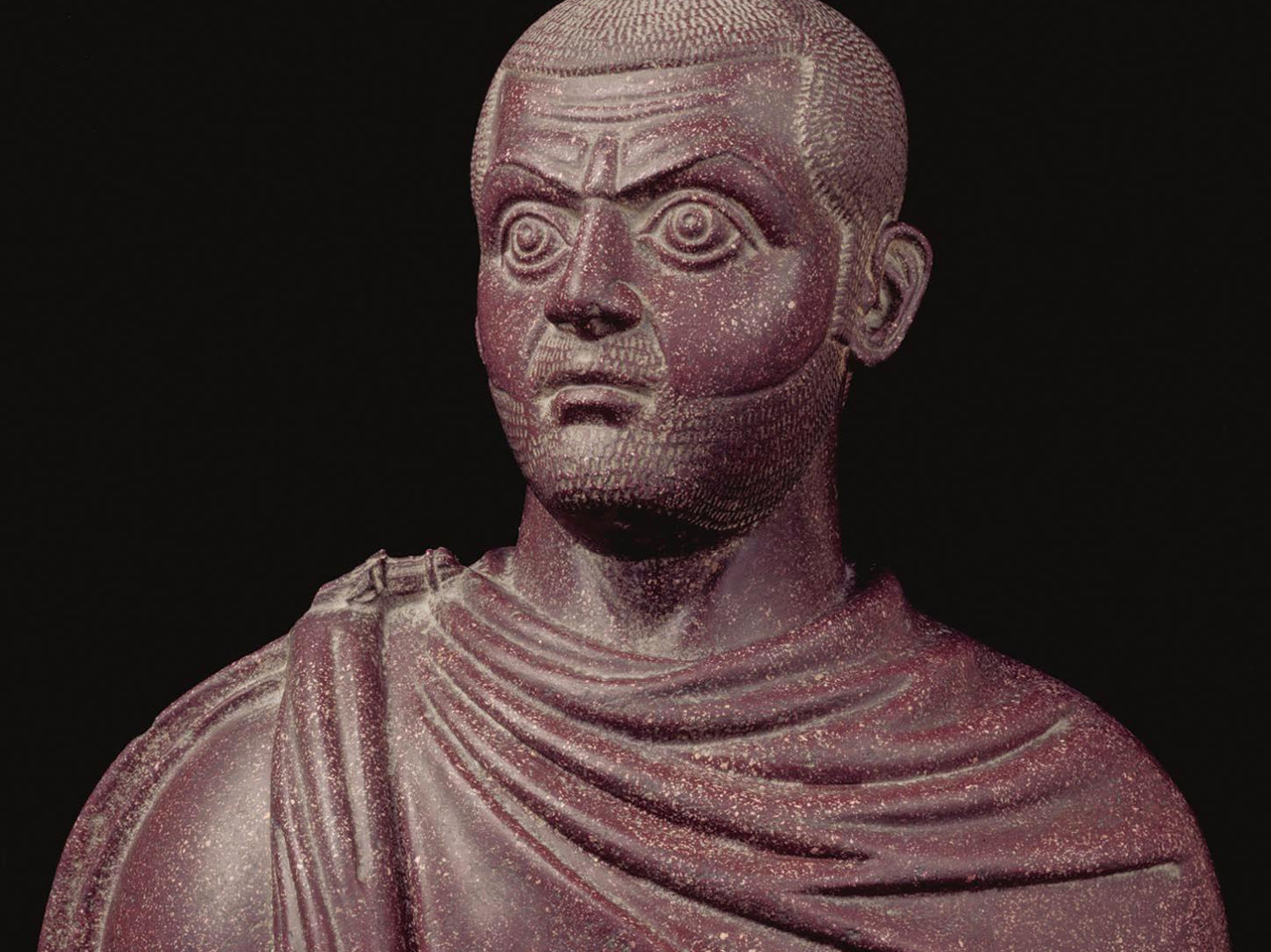
Galerius Valerius Maximianus, Roman emperor from 305 to 311.
Unknown
[AM 5794]. In the eighteenth year of Diocletian’s rule, persuaded by the magician Theoteknos, Galerius Maximianus was sacrificing to demons. Having crept into his cave, Theoteknos gave him an oracle to raise a persecution of Christians. He invented the Memoirs of Christ and sent these everywhere as an insult and ordered school-teachers to teach them to their pupils.
—Theophanes the Confessor, Chronographia, AM 5794; ed. C. de Boor; trans. C. Mango & R. Scott.
Cumont argues that inasmuch as Galerius was an adherent of Mithraism the priest referred to must have been a priest of that religion. Theophanes, a Christian abbot in the second half of the seventh century, wrote a chronicle of events from the accession of the Emperor Diocletian, 277 A.D., to the year 8n, four or five years before his own death in banishment in Samothrace. The chronicle is arranged according to years anno mundi, of which the extract as given by Cumont is 5794.
—A. S. Geden, 1925
