Carmen ad Antonium
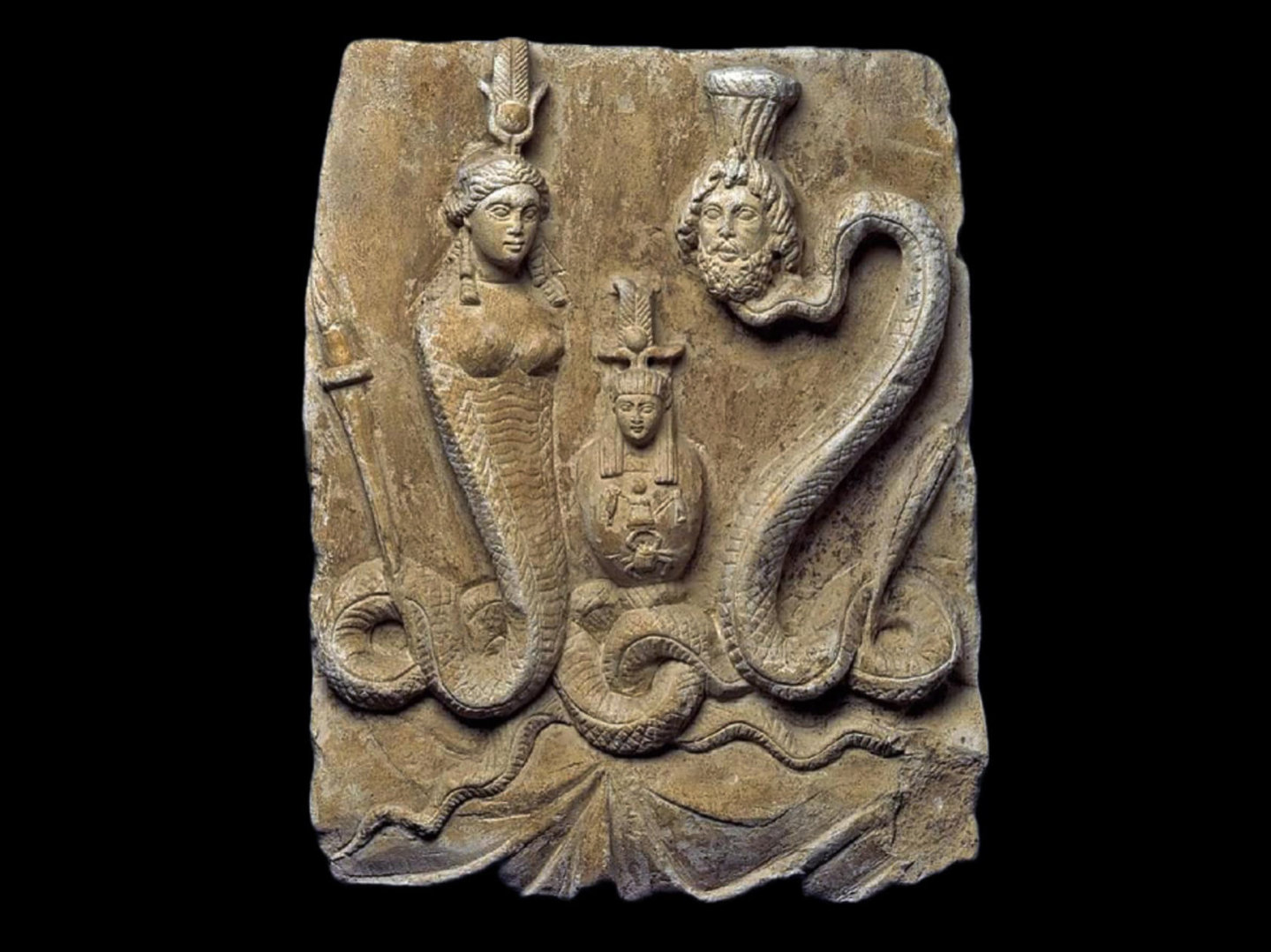
Isis and Osiris (Serapis) with bodies of a serpent c. 332 B.C. – 395 A.D.
Dutch National Museum of Antiquities
Preserved as Poema 32 (Carmen ad Antonium), the following text has come down to us without authorial attribution in manuscripts transmitting the poems of Paulinus of Nola. Probably composed at the end of the fourth or beginning of the fifth century, it adopts the form of a didactic address combining moral exhortation with anti-pagan invective.
What of the fact that they hide the Unconquered One in a rocky cave and dare to call the one they keep in darkness the Sun? Who adores light in secret or hides the star of the sky in the shadows beneath the earth except for some evil purpose? Why do they not hide the rites of Isis with her symbols and the dog-headed Anubis even deeper, instead of showing them throughout the public places as they do? Yes, they look for something and rejoice when they have found it and lose it again so that they can hunt for it again.
What sensible man could put up with the sight of one sect hiding the sun, as it were, while the others openly display their monstrous gods? What had Serapis done to deserve to be so dragged and torn by his own people through such varied and degrading places? Always at last he becomes a wild beast, a dog, a decomposing ass’s corpse, he becomes now a man, now bread, now heavy with disease. While acting in this way, they admit he feels nothing.
Source: Roger Pearse (2010), based on the translation by Croke and Harries.

Comments
Add a comment