Gregory of Nazianzus on rites, tortures and orgies
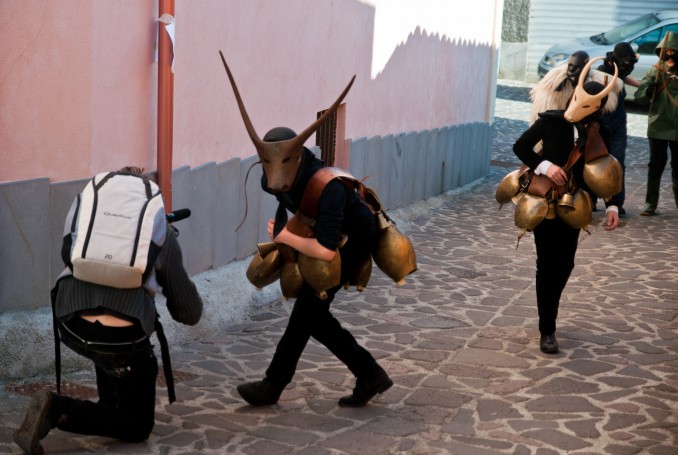
Boes e Merdules, maschera tradizionale di Ottana (Sardegna)
Creative Commons
In several orations and poems written during the reign and aftermath of Emperor Julian, Gregory of Nazianzus deploys Mithraic initiation as a rhetorical foil against Christianity. References to tortures, brandings, and violent endurance are not intended as ethnographic description but as part of a wider Christian invective strategy, grouping Mithras with other pagan cults portrayed as irrational, cruel, or morally corrupt. These passages are central to understanding how Mithraism was constructed in late antique Christian discourse rather than how its rites were actually practiced.
Oration 4, First Invective against Julian
Chapter 70
[…] thou that admirest the funeral pyre of Hercules […] the castrations of Phrygians, who are fascinated by means of the pipe, and are abused after the piping; and those in the rites of King Mithras, the well-deserved or mystical brandings; and the sacrifice of strangers at Tauri […]
—Ante-Nicene Fathers
The mutilations of the Phrygians distraught with the sound of the flute, and the tortures in the temple of Mithra, and the mystic cauteries, and the sacrifice of strangers among the Taurians.
—Geden
Chapter 89
A Christian priest is lynched: He was dragged through the streets, he was thrust into the sewers, he was pulled by the hairs, not only of the head, but of every part of the body without exception, shame being mingled with torment, at the hands of people who deservedly are thus tortured in the rites of Mithras...
Oration 39, Ad Sancta Lumina
Chapter 5
Nor is it the sacrificial art of Magi, and their entrail forebodings, nor the Chaldaean astronomy and horoscopes, comparing our lives with the movements of the heavenly bodies, which cannot know even what they are themselves, or shall be. Nor are these Thracian orgies, from which the word Worship is said to be derived; nor rites and mysteries of Orpheus, whom the Greeks admired so much for his wisdom that they devised for him a lyre which draws all things by its music. Nor the tortures of Mithras which it is just that those who can endure to be initiated into such things should suffer; nor the manglings of Osiris, another calamity honoured by the Egyptians; nor the ill-fortunes of Isis and the goats more venerable than the Mendesians, and the stall of Apis, the calf that luxuriated in the folly of the Memphites, nor all those honours with which they outrage the Nile, while themselves proclaiming it in song to be the Giver of fruits and corn, and the measurer of happiness by its cubits.
–Ante-Nicene Fathers
Neither the divination of the Magi, nor inspection of the victims, nor the astronomy and horoscopy of the Chaldaeans […] nor Thracian orgies […] nor the mystic rites of Orpheus […] nor the painful endurance required of the initiates of Mithra, nor the mutilations of Osiris […] nor the misfortunes of Isis, etc.
—Geden
Carmen 7, Ad Nemesium
Chapter 7, lines 265 f.
The mountain-haunting Bacchants in the train of Semele’s son, and the ill-omened apparitions of nightly Hecate, and the shameful deeds and unrivalled orgies of the Mithraean shrine.
Cumont adds that Eustathius appears to have borrowed these lines for his sermon In sanctam quadragesimam. (Tafel, Eustathii metropolitae opuscula 1832, p.74, 90 f.)
