This site uses cookies to offer you a better browsing experience.
Find out more on how we use cookies in our privacy policy.

 
Support The New Mithraeum The New Mithraeum is an independent, non-profit project dedicated to Mithraic studies, ancient religions and classical culture. Developed and maintained independently since 2007, the site exists without advertising, paywalls or institutional funding. If you have found value in its articles, interviews, photographs or database, please consider supporting the project with a contribution. Every contribution helps keep The New Mithraeum open, free and alive. Thank you.
Support us →
Monumentum

Lion-headed Aion from Sidon

The controversial Italian journalist Edmon Durighello discovered this marble statue of a young naked Aion in 1887.
  • Frontal view of the lion-headed statue from Sidon

    Frontal view of the lion-headed statue from Sidon
    Coyau / Wikimedia Commons / CC BY-SA 3.0

  • Head left-side view of the lion-headed statue from Sidon

    Head left-side view of the lion-headed statue from Sidon
    Coyau / Wikimedia Commons / CC BY-SA 3.0

  • Central body view of the lion-headed statue from Sidon

    Central body view of the lion-headed statue from Sidon
    Coyau / Wikimedia Commons / CC BY-SA 3.0

  • Head right-side view of the lion-headed statue from Sidon

    Head right-side view of the lion-headed statue from Sidon
    Coyau / Wikimedia Commons / CC BY-SA 3.0

  • Base with inscription view of the lion-headed statue from Sidon

    Base with inscription view of the lion-headed statue from Sidon
    Wikinade / Wikimedia Commons / CC BY-SA 3.0

  • CIMRM 78

    CIMRM 78
    Vermaseren's Corpus

  • CIMRM 78-2

    CIMRM 78-2
    Vermaseren's Corpus

 
The New Mithraeum
4 Jul 2009
Updated on Dec 2023

TNMM 157 ↔ CIMRM 78 & 79

Lion-headed figure of the Mithraic Mysteries, from the late 4th-century Mithraeum at Sidon (Colonia Aurelia Pia, Syria), discovered by the journalist Edmond Durighello in 1887. The figure had probably stood in a niche. Sculpture is part of the ’Collection Péretié’, brought to Paris in 1892 [typo in Vermaseren: ’1882’] by de Clerque and placed in the home of Comte Louis de Boisgelin (5 Rue Masseran, Paris VII), and then donated to the Louvre in 1967. The figure has Louvre accession number AO22258.


On a round pedestal with inscription (No. 79) stands an entirely naked figure with a lion’s head (Aion*). Beneath his wide-open mouth the head of a snake, entwining him in three large coils. In his hands, which he holds stiffly by his side the figure carries two keys. A double pair of wings attached to his back; Behind his legs a tree stump. The function of a round hole in the back of his head is doubtful.

Main inscription

Φλ. Γερόντιος, πατὴρ νόμιμος, ἀνεϑέμην τῷ φ̕ ἔτι.
Fl[avius] Gerontios, pater nominos, have consecrated [this statue] in the year 500.

References

de Ridder 6lff No. 40 and PI. XXII-XXIII (see fig. 29); Legge in Proc. Soc. bibl. arch. 1912 PI. XIX 18; 1915 154 and PI. XXIII 1; DS col. 1951 fig. 5090; RRS II 266 4; Gressmann Or. Ret. 146 fig. 54; Cumont in CRAJ 1928 277 and PI. I 3; Leipoldt XV and figs. 35-36; MM PI. I 6; Lavedan Diet. Myth. 654 fig. 617; Pettazzoni in AntC. XVIII 1949 PI. VII.

Related monuments

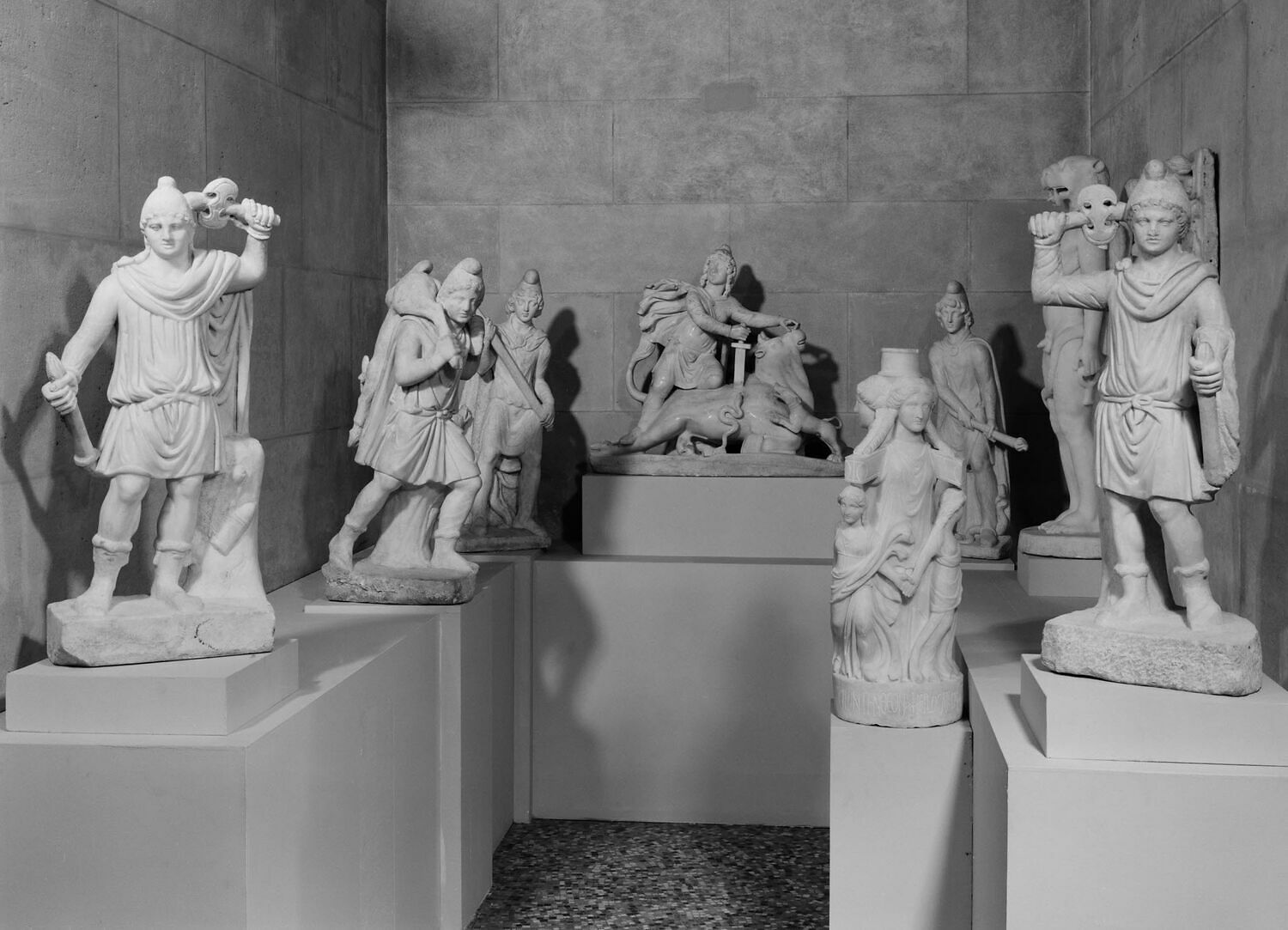
Mithraeum of Sidon

The Mithraeum of Sidon may have escaped destruction because the Mithras worshippers walled up the entrance to the underground sanctuary.

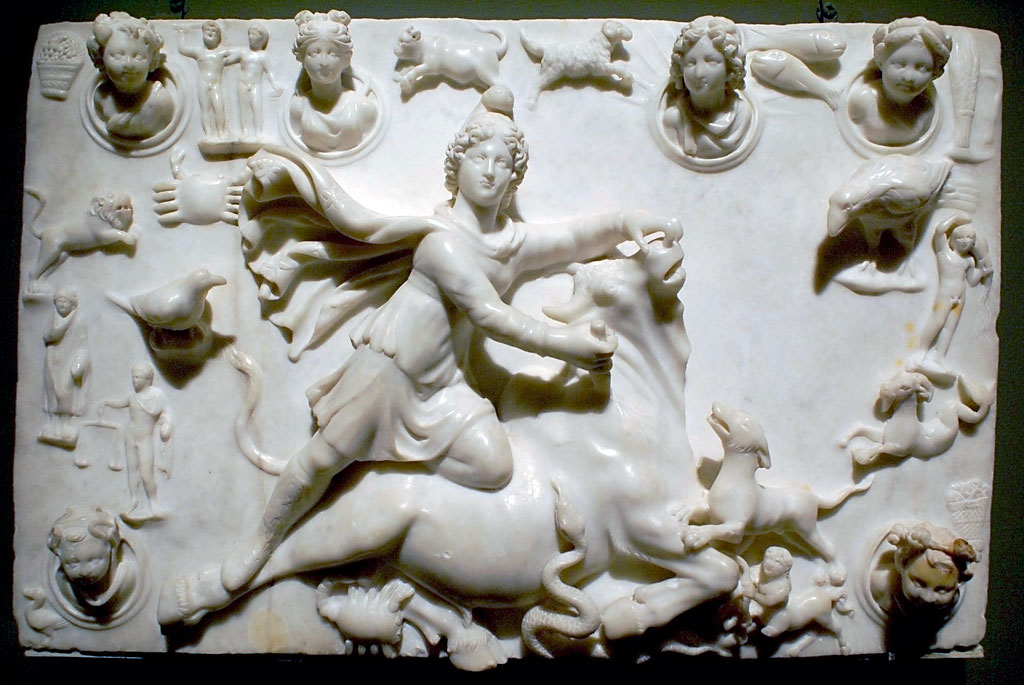
Tauroctony relief of Sidon

The tauroctony relief of Sidon depicts the signs of the zodiac and the four seasons, among other familiar features.

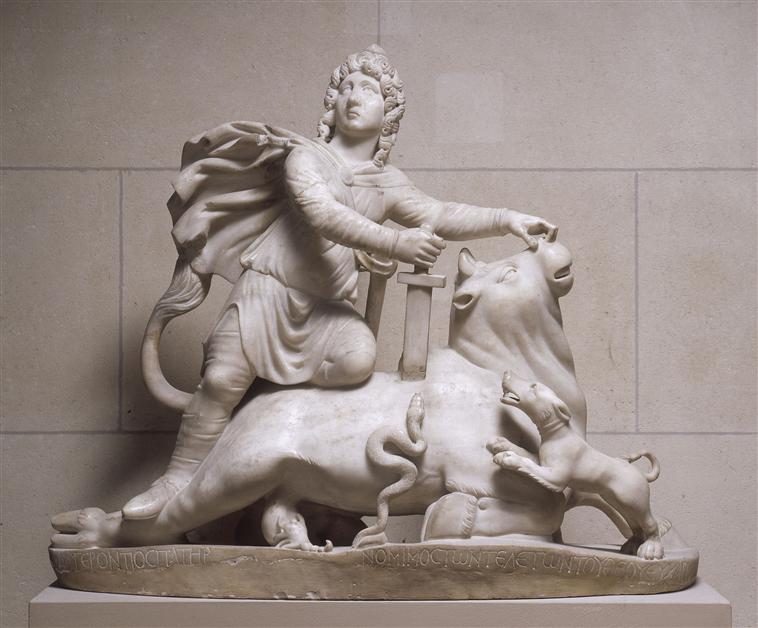
Taurcotony sculpture from Sidon

The Mithras killing the bull sculpture from Sidon, currently Lebanon.

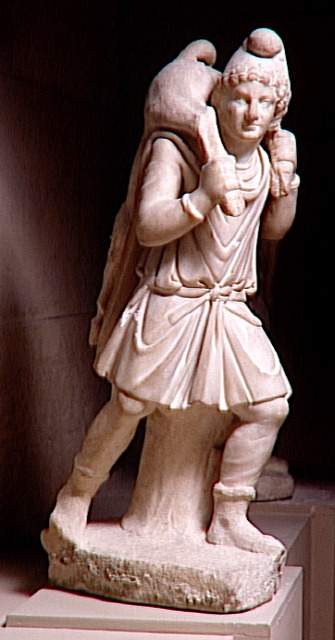
Mithras carrying the bull

Sculpture depicting Mithras carrying a young bull on his shoulders.


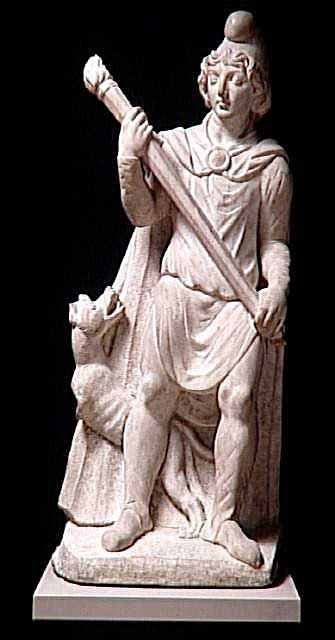
Cautes of Sidon

The Sidon sculpture includes a dog jumping between Cautes's legs.

Cautopates of Sidon

Cautopates sculpture of Sidon features a snake near his left leg.

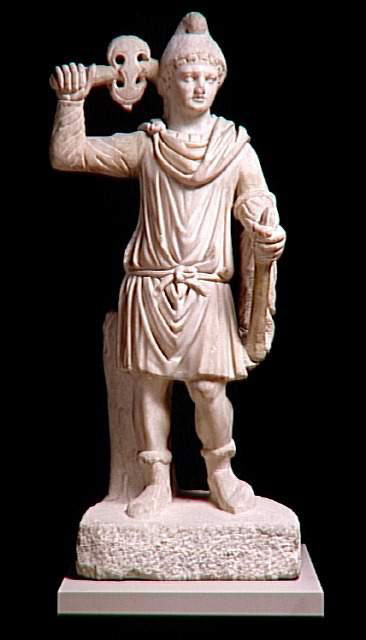
Cautes with an axe

The Cautes of Sidon who wields an axe also wears a piece of cloth on his left arm.

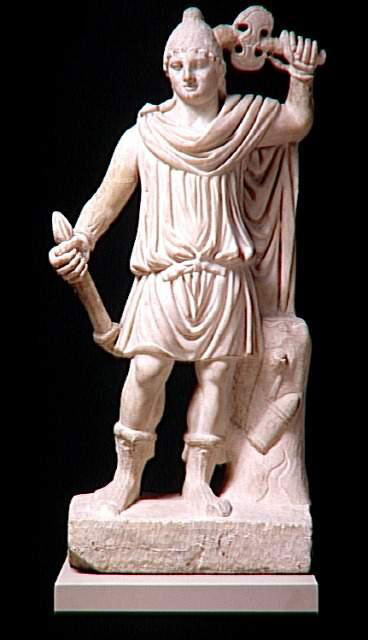
Second Cautes of Sidon holding an axe

In this case, a quiver has been attached to the tree-stump behind the torchbearer.


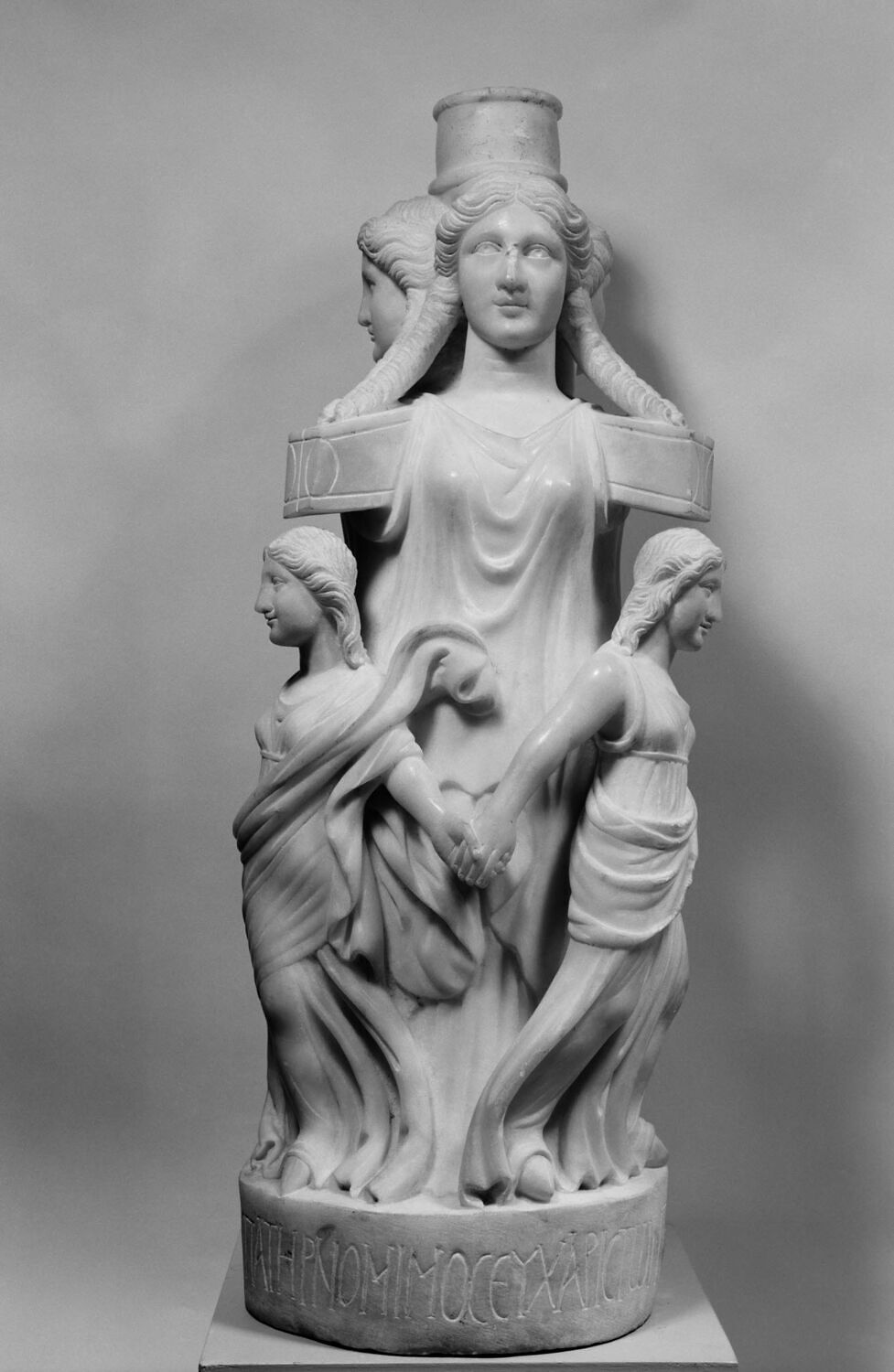
Hekataion of Sidon

The Hekataion of Sidon, which depicts Hekate in her trimorphic form surrounded by three dancing girls, is the only example found to date in connection with the Mithraic cult.

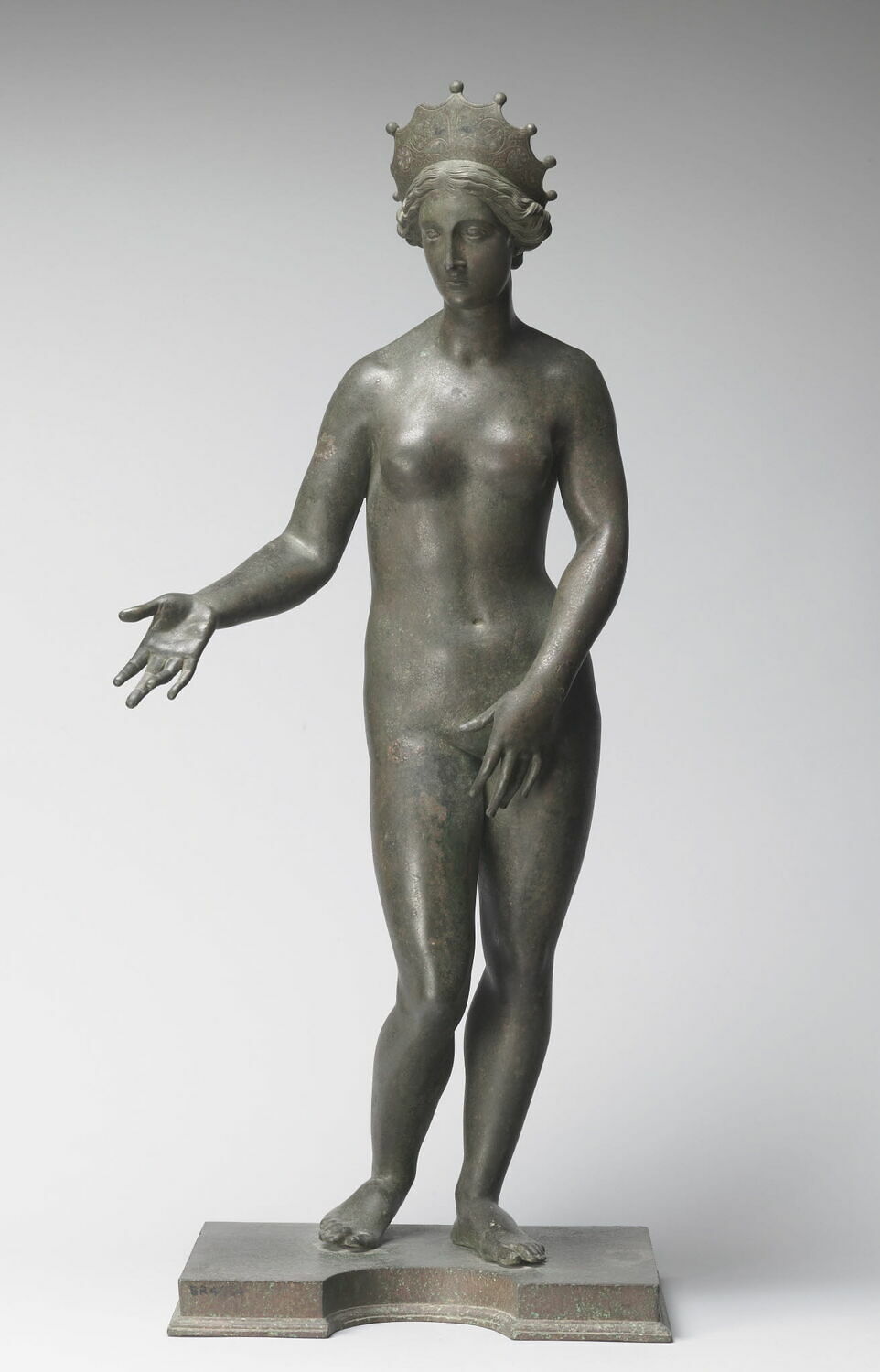
Bronze Venus of Sidon

There are two Venus from the Mithraeum of Sidon, one in bronze and the other in Parian marble.

 
Back to Top