This site uses cookies to offer you a better browsing experience.
Find out more on how we use cookies in our privacy policy.

 
Support The New Mithraeum The New Mithraeum is an independent, non-profit project dedicated to Mithraic studies, ancient religions and classical culture. Developed and maintained independently since 2007, the site exists without advertising, paywalls or institutional funding. If you have found value in its articles, interviews, photographs or database, please consider supporting the project with a contribution. Every contribution helps keep The New Mithraeum open, free and alive. Thank you.
Support us →
Monumentum

Mitreo della Piazza Dante

The Mithraeum located in Piazza Dante in Rome was discovered in 1874 along with a series of monuments dedicated by a Pater named Primus.
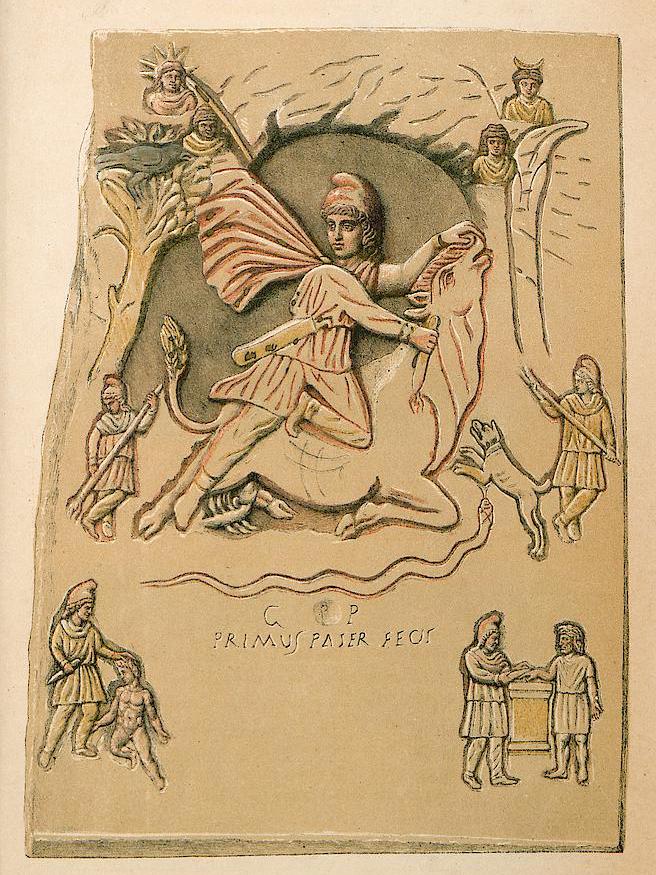
  • Mithras Tauroctonos from the Mithraeum of piazza Dante in Rome

    Mithras Tauroctonos from the Mithraeum of piazza Dante in Rome
    Carole Raddato (CC BY-SA 2.0)

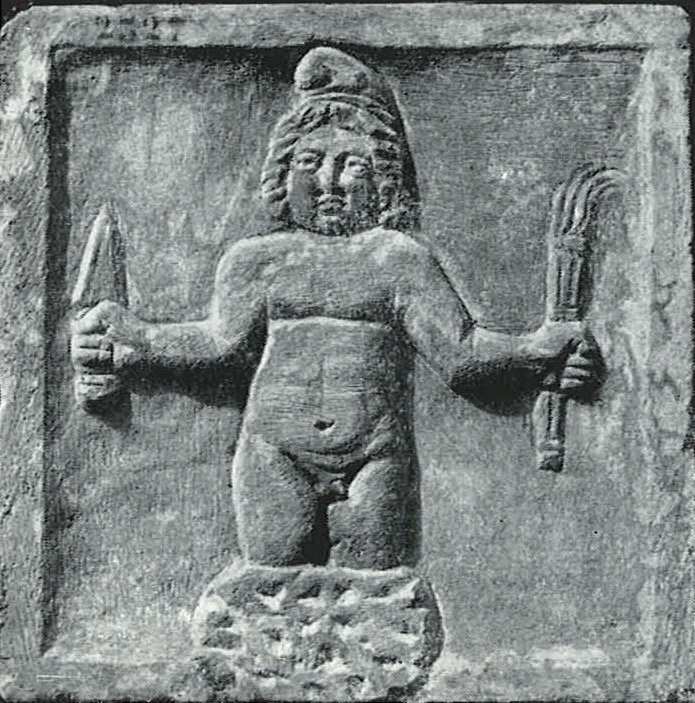
  • Mithras birth from the rock

    Mithras birth from the rock
    CIMRM

  • Tauroctony relief from the Esquiline ancient reproduction

    Tauroctony relief from the Esquiline ancient reproduction
    Heidelberger historische Bestände

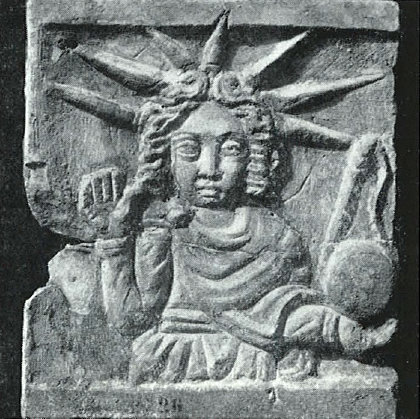
  • Sol of Piazza Dante

    Sol of Piazza Dante
    CIMRM

 
The New Mithraeum
12 Jan 2022
Updated on Oct 2022

TNMM 379 ↔ CIMRM 349

On the Esquiline, where in Antiquity the Imperial gardens were situated (actually Piazza Dante), the following four Mithraic representations were found. They lay in a room (L. 20.00 Br. 6.00), perhaps a Mithraeum, and were carefully covered by tiles. The room has a floor covering of white mosaic and was formerly arched.


In March 1874 an area of the Esquiline hill in Rome was being landscaped in preparation to create the area now known as the Pizza Dante. In the process, a Mithraeum was uncovered, with a number of monuments, all dedicated by a Pater named Primus. Details may be found in: C. L. Visconti in Bullettino della Comissione archeologica municipale (=BCM) 1874, 224-243, and pl. XX-XXI.

The location was once occupied by the Villa Palombara. In ancient times this was part of the Horti Lamiani, it was thought, and so imperial property. Various art objects have been found here. The Mithraeum was located about 10m from the westernmost corner of the villa on Nolli's map, and the site corresponds with the raised edge of the wall which in Nolli's time divided the villa Palombara from the Manganelli garden.

Two parallel walls of good bricks were found, around 20m in length, which formed a room about 6m wide, with a floor of white mosaic, perfectly preserved. The room had once been vaulted, of which some indications survived. An entrance to the SE led to a narrow corridor with a mosaic floor, and a number of rooms off it. The bas-relief (CIMRM 350) was found face-down in one of the larger rooms, and covered with tiles. The other two reliefs (CIMRM 353 and 534) were buried nearby but excavated illegally, so their exact location is uncertain. All the items retain some colour.

The location in which these items were found was not a Mithraeum as such, which the excavators presumed would be near at hand, to be located in subsequent excavations.

Related monuments

Taurcotony statue of the Esquiline Hill

Except for the serpent, the sculpture of the taurcotony found on the Esquiline Hill lacks the usual animals that accompany Mithras in sacrifice.

Mithras petrogenitus of the Esquilino

The relief of Mithras being born from the rock of the Esquiline shows the young god naked, as usual, with a torch and a dagger in his hands.

Tauroctony relief of the Esquiline

The relief of Mithras slaying the bull found on the Esquiline Hill includes two additional scenes with Mithras and two other figures.

Mithraic Sol of Piazza Dante

The relief of Sol was found during the construction of Piazza Dante in Rome in 1874.

 
Back to Top