

Biography
of Hermes
- Hermes is attested as a member of a Mithraic community (syndexios).
- Attested at Senia, Dalmatia in 150 – 170 (TNMM 402).
TNMP 48
Hermes was a vilicus (estate manager) and slave of Caius Antonius Rufus, praefectus vehiculorum and contractor of the public customs revenues. An inscription from Senia records that he financed a Mithraic spelaeum together with all associated expenses. His dedication provides rare evidence for the active participation of slaves and estate managers in the promotion of Mithraic worship and suggests the existence of a Mithraic community connected with the imperial transport and customs administration of Dalmatia.
References
Attestations
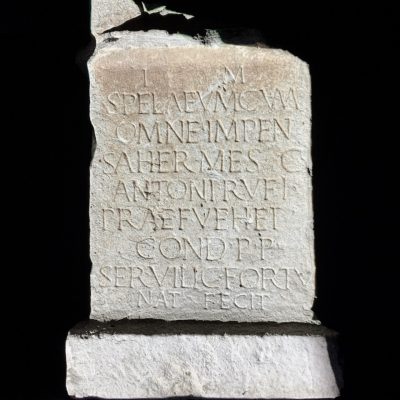
Altar of Senj made by the slave Hermes
TNMM 402
The dedicator of this altar was a slave in the service of a high official, the prefect Gaius Antonius Rufus, known from other inscriptions.
I[nvicto] M[ithrae] / spelaeum cum / omne impen/sa Hermes C[aii] / Antoni[i] Rufi / praef[ecti] veh[iculorum] et / cond[uctoris] p[ublici] p[ortorii]/ ser[vus] vilic[us] Fortu/nat[us or -ianus] fecit.
To the invincible god Mithras, Hermes, estate manager and slave of Caius Antonius Rufus, prefect of roads and customs collector, [gave] the spelaeum, with all of the [related] expenses, [and] Fortunat[us or -ianus] made it.
