Your search Abel Rey gave 118 results.
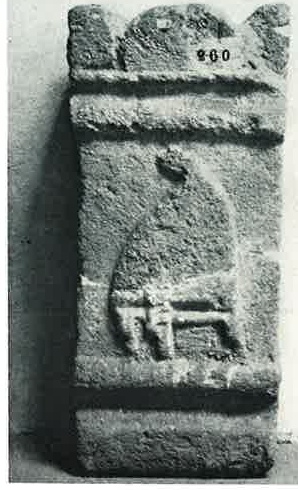
Sandstone altar from Mithraeum I at Heddernheim, ancient Nida, decorated on one side with the representation of a Phrygian cap
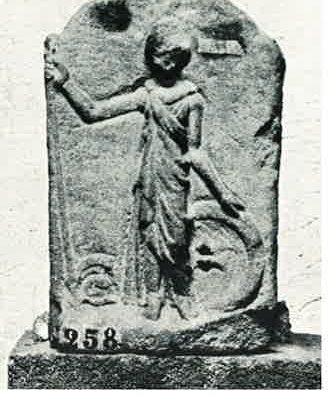
Sandstone relief from Mithraeum I at Heddernheim, ancient Nida, depicting a standing Minerva resting her left hand on a shield while holding a lance
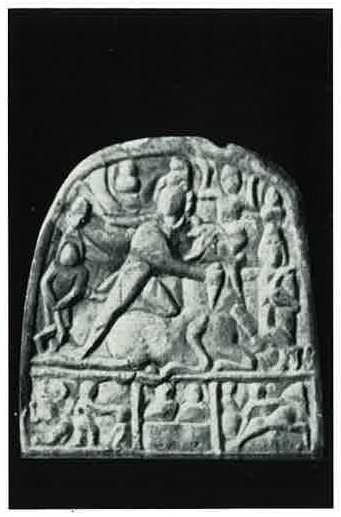
Small tauroctony relief in white marble, preserved in five fragments, from Mithraeum I at Heddernheim, ancient Nida

The lion-headed statue of Hedderneheim is a reconstruction from fragments of two different sculptures.
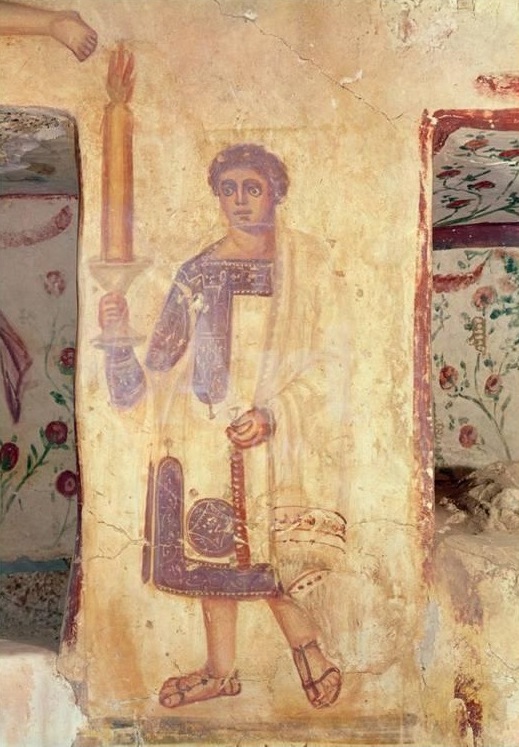
The Mithraic nature of the frescoes of Oea, according to the scholars Cumont and Vermaseren, is now questioned.
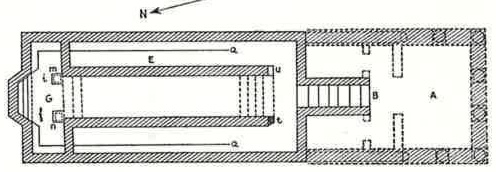
Second Mithraic sanctuary discovered in 1826 some 150 metres west of Mithraeum I at Heddernheim, ancient Nida, with finds in the Wiesbaden museum.
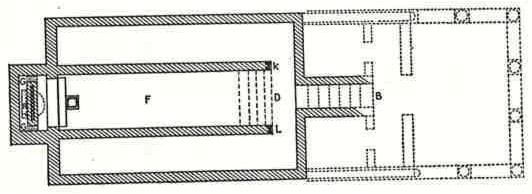
First Mithraic sanctuary discovered at Heddernheim (ancient Nida) in 1826, with finds preserved in the Städtisches Museum at Wiesbaden.
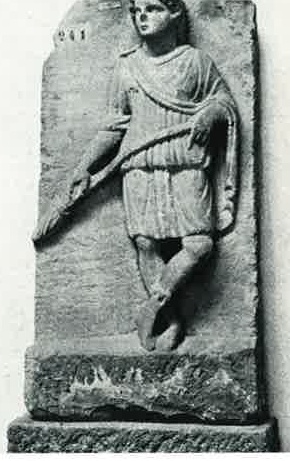
Relief in red sandstone originally standing on a base in Mithraeum I at Heddernheim, ancient Nida, featuring the bull-slaying scene.
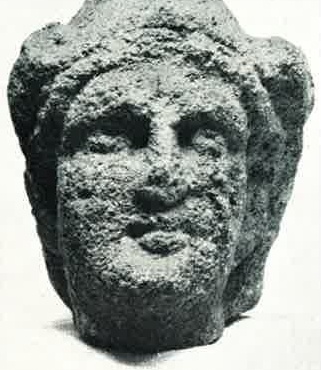
Sandstone fragment from Mithraeum I at Heddernheim, ancient Nida, probably the damaged head of a torchbearer, often misidentified as Mercury.


Carrara is a town and comune in Tuscany, in northern Italy, of the province of Massa and Carrara, and notable for the white or blue-grey marble quarried there.
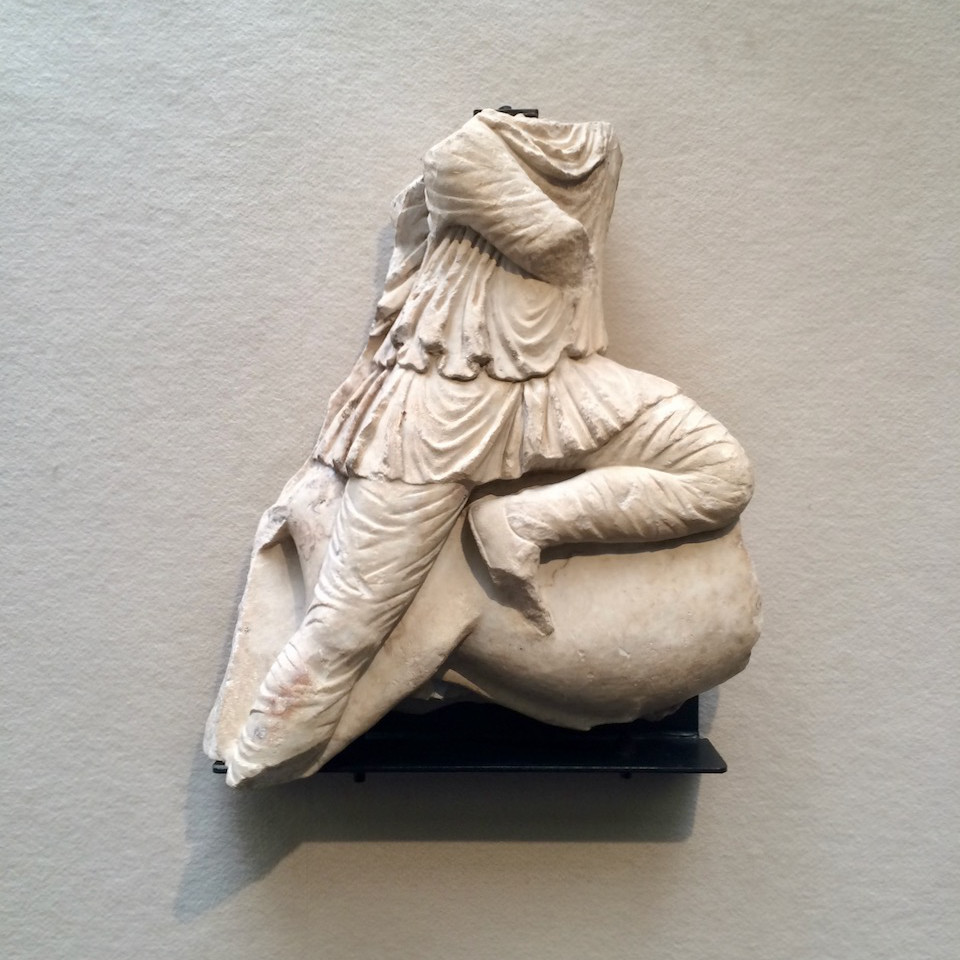
The Mithra Tauroctonos from Syracuse, Sicily, is currently on display in the city's archaeological museum.
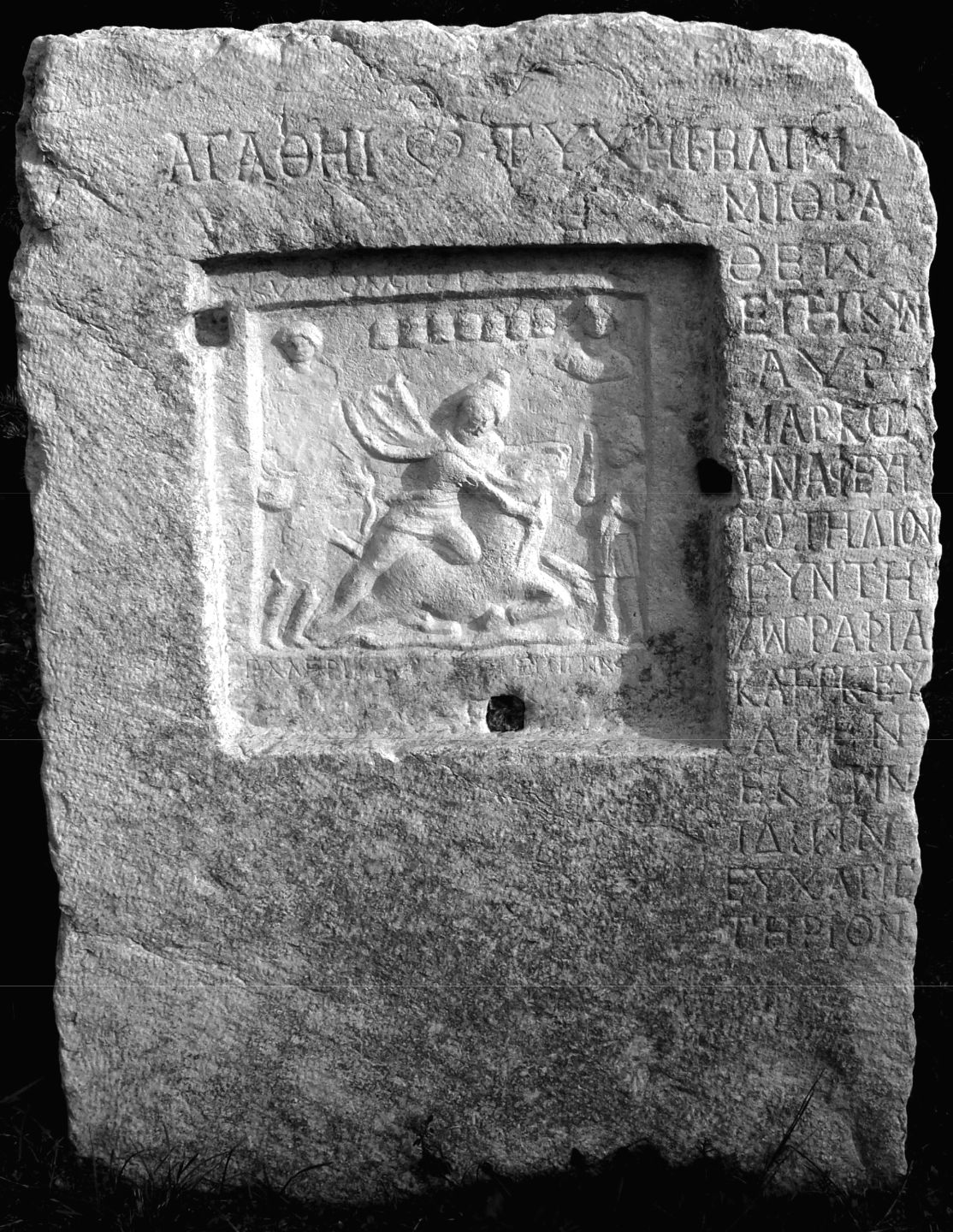
The Tauroctony of Nicopolis ad Istrum is unique as it is the only Mithraic stele befitting a Greek donor.
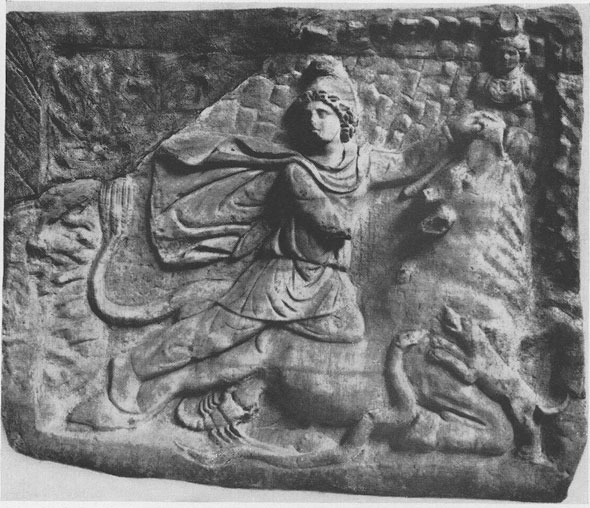
This marble tauroctony relief, probably originating from Naples, depicts Mithras slaying the bull within a cave-like setting, accompanied by the usual animals and celestial busts.

Supervisor of the imperial couriers who offered an elaborate votive altar and ritual insignia to Mithras in Rome under Commodus.
This fragment of pottery depicting Mithras may have come from Gallia.
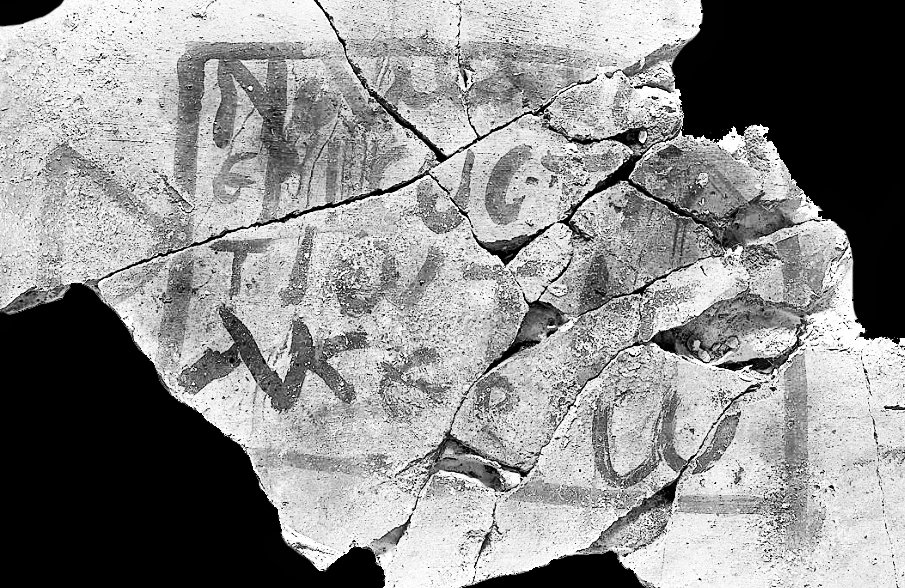
The text mentions a certain Kamerios, described as immaculate miles.
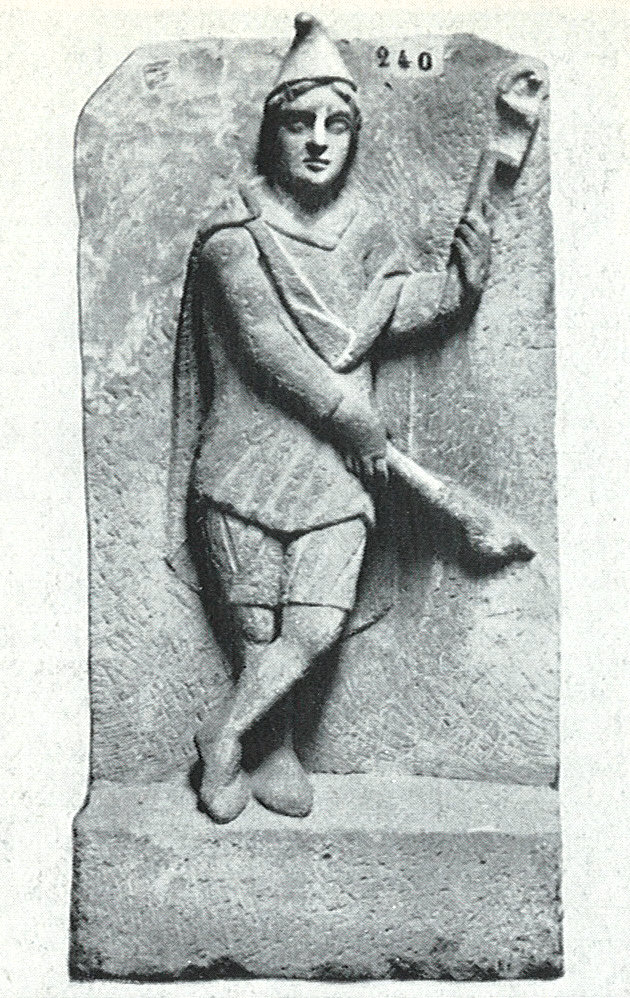
This Cautopates from Nida carries the usual downward torch in his right hand and a hooked stick in his left.
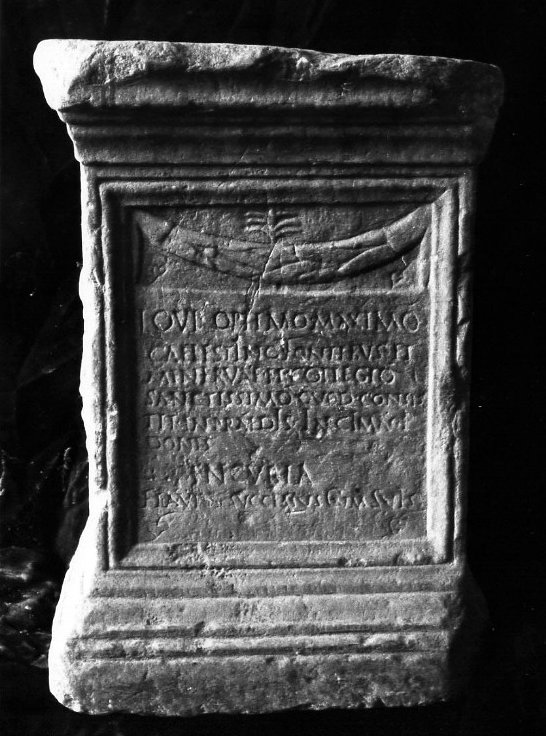
According to the inscription on it, this altar probably supported a statue of Jupiter.
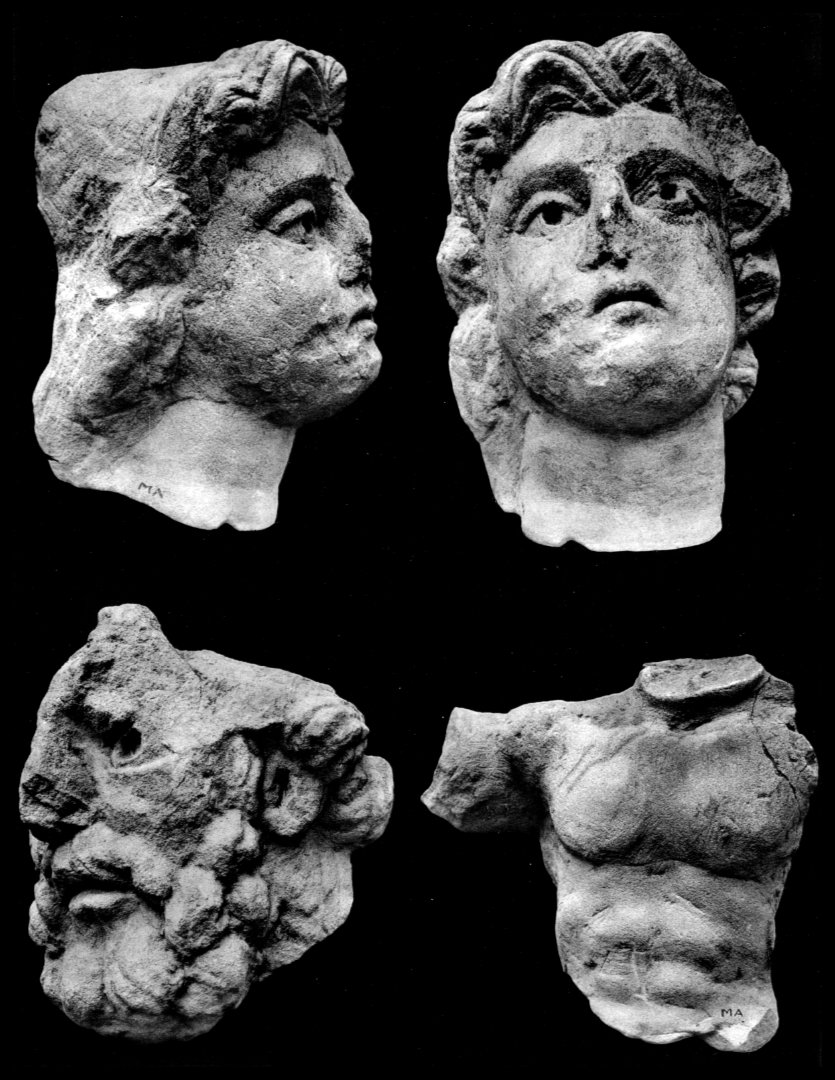
This fragment of the head of a young Mithras is one of the finds made during the excavations carried out by Jean-Jacques Hatt at Mackwiller, France, in 1955.
