
The Mithraeum of Pamphylia was cut back into the rock to form a cave, with a separate relief of Mithras killing the bull.
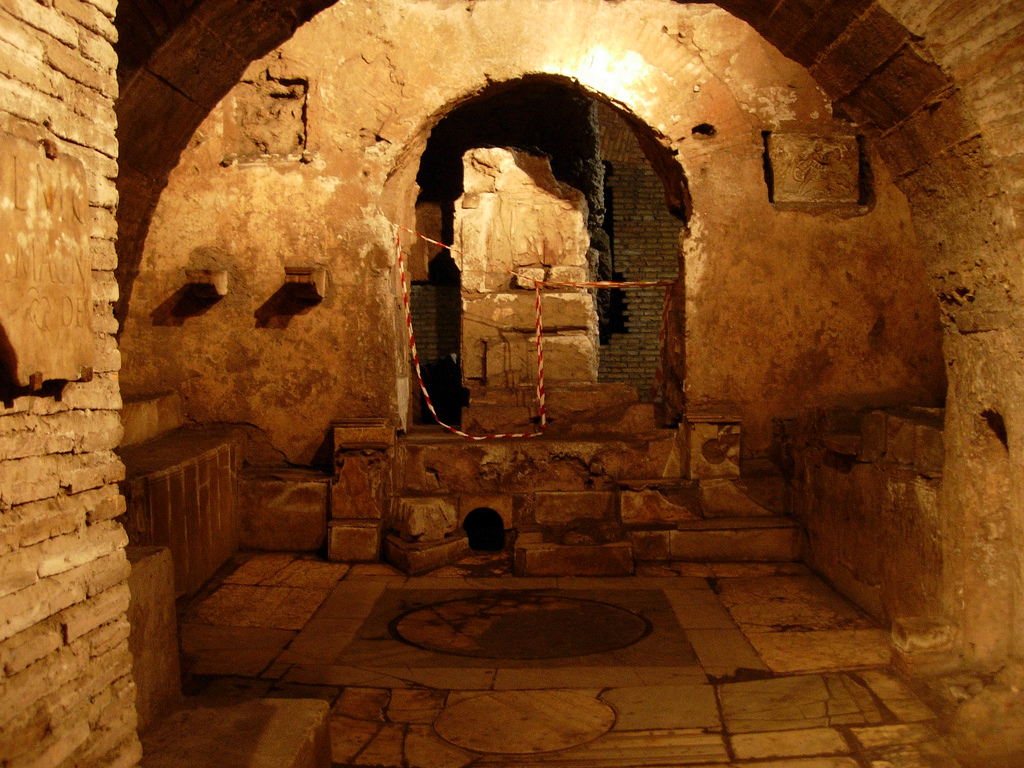
The Mithraeum near the Circus Maximus was discovered in 1931 during work carried out to create a storage area for the scenes and costumes of the Opera House within the Museums of Rome building.
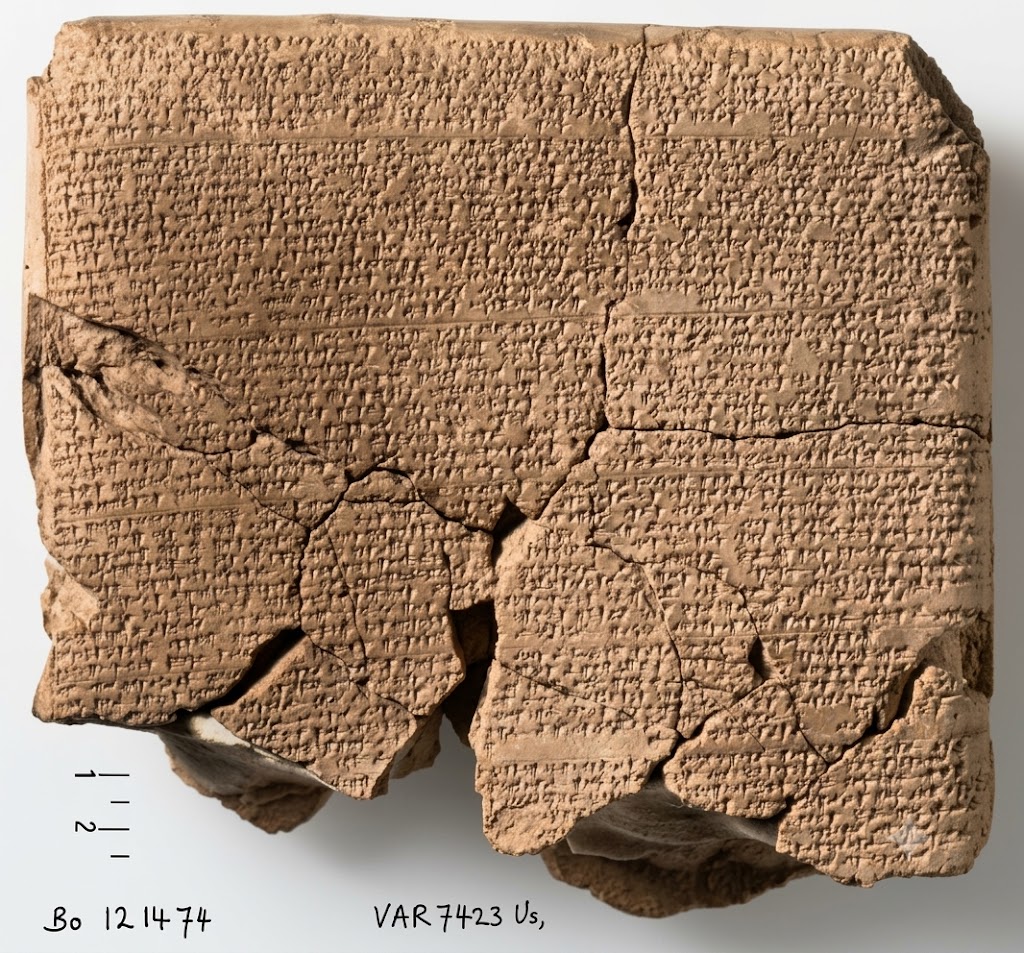
Late Bronze Age treaty from Ḫattuša invoking Mitra, Varuna, Indra and the Nāsatyas among the divine witnesses of the Hittite-Mitanni oath.
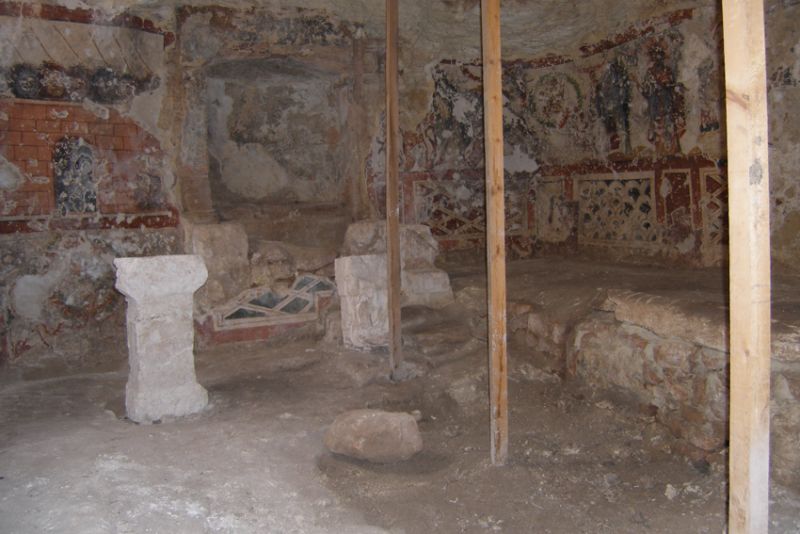
Late Roman Mithraeum beneath a fourth-century church, preserving one of the most extensive cycles of Mithraic wall paintings ever discovered.
,_found_in_Rome,_2nd_century_AD,_British_Museum_(15545876047).jpg)
The sculpture of Mithras slaying the bull was transported from Rome to London by Charles Standish in 1815.
.jpg)
The statue of Arimanius/Ahriman was found in 1874 under the city wall of York during the construction of the railway station.
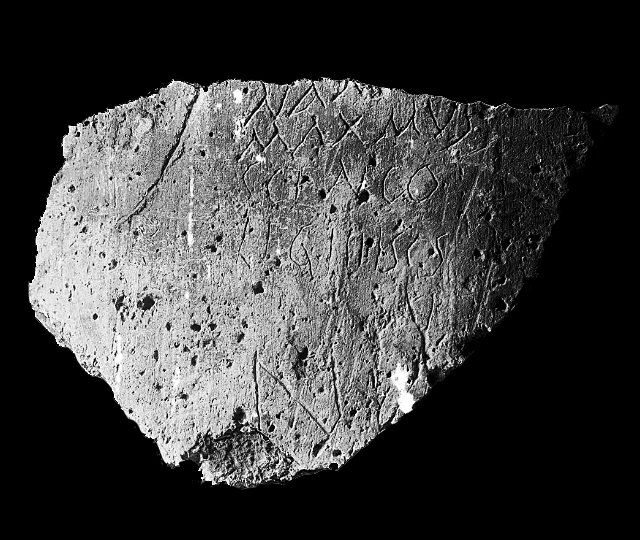
A certain Maximus from the Legio IV Scythica engraved his name in one of the columns of the Mithraeum of Dura Europos.
Ptolemaic sanctuary of the Iranian god Mithra, probably located at ancient Memphis and known exclusively through third-century BCE Greek papyri.
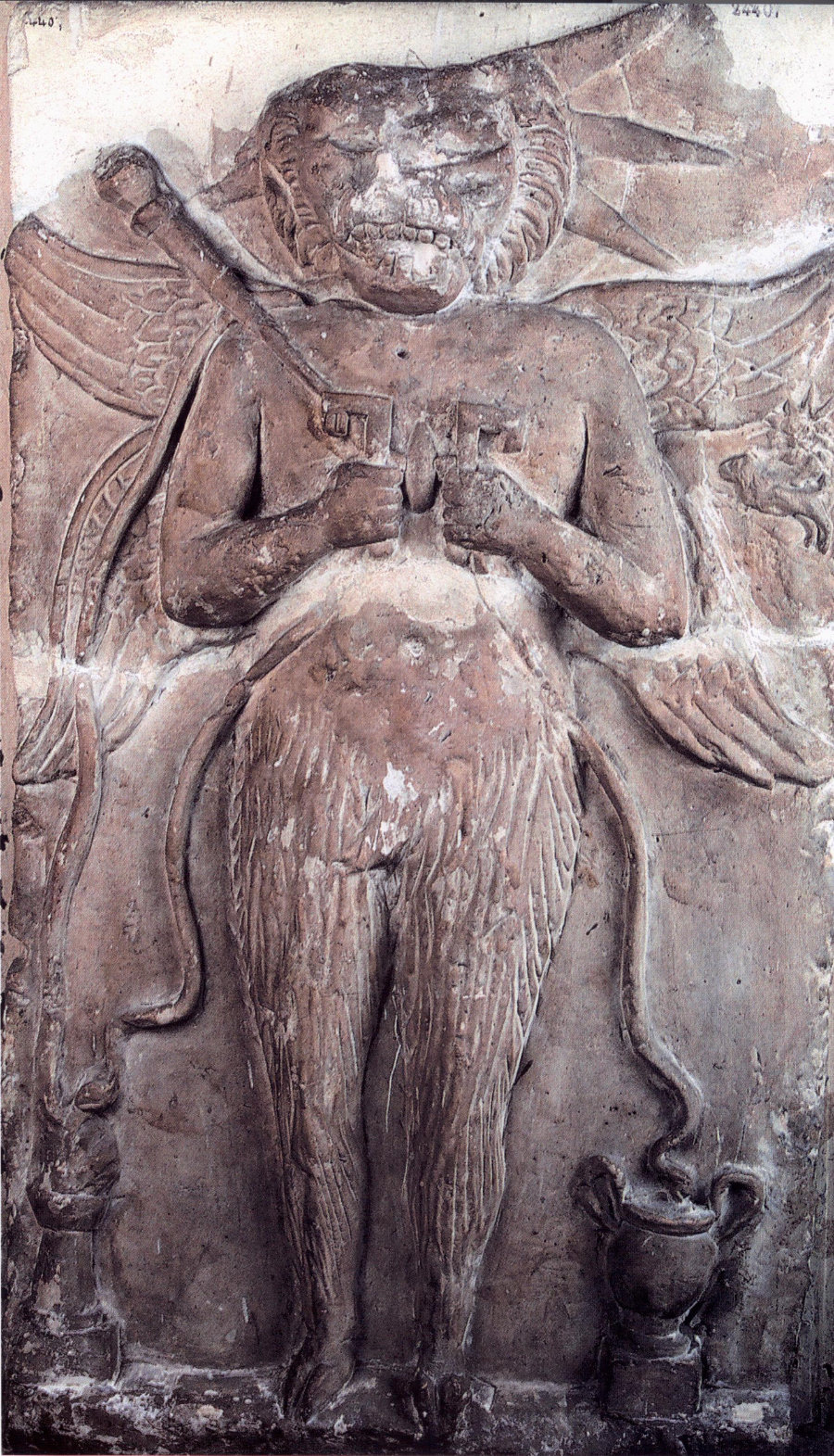
Limestone relief from ancient Oxyrhynchus depicting a four-winged lion-headed deity with keys, torch and three serpents, one of which emerges from the god’s mouth towards a burning altar.
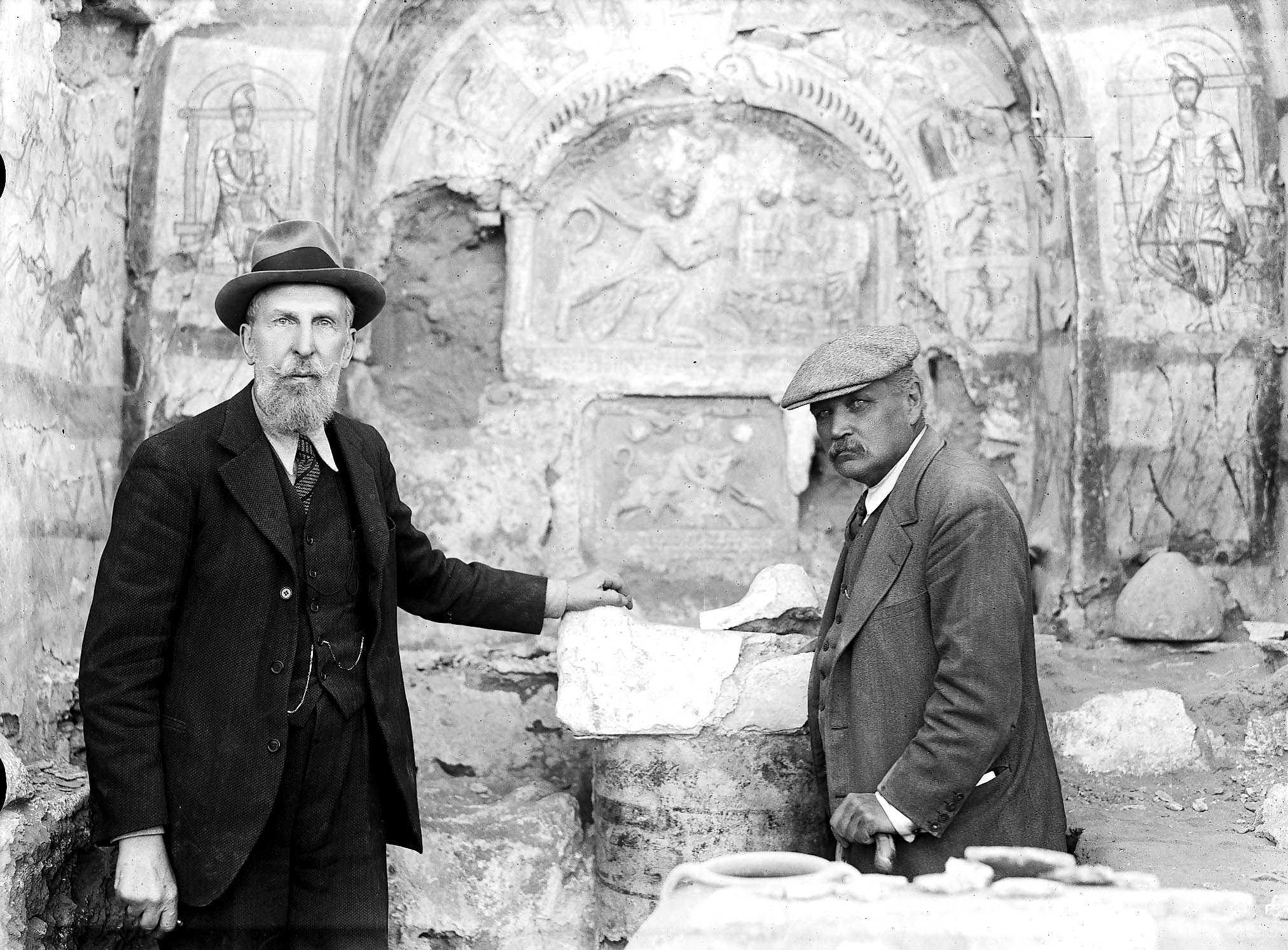
The most emblematic of the Syrian Mithraea was discovered in 1933 by a team led by the Russian historian Mikhaïl Rostovtzeff.
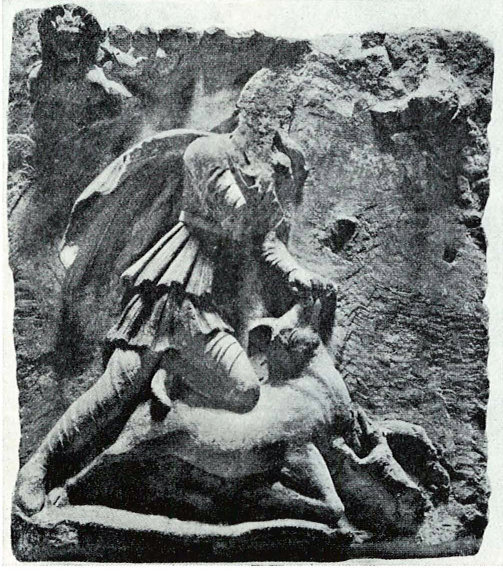
Limestone tauroctony relief from the Mithraeum of Memphis, depicting Mithras sacrificing a small bull inside a rocky cave.
Roman Mithraeum at Kom Dafbaby, near ancient Memphis, poorly documented archaeologically but known through the remarkable group of Mithraic sculptures and reliefs recovered from the site.
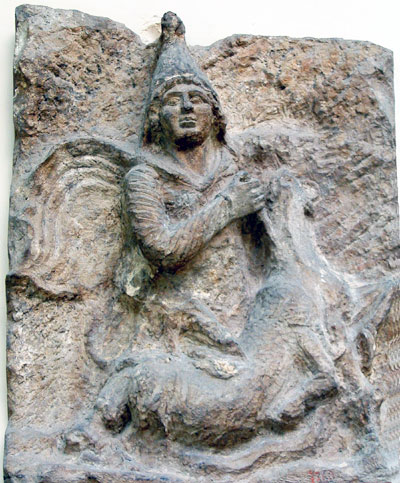
Primitive limestone tauroctony relief from the Mithraeum of Memphis, preserving a simplified representation of Mithras slaying the bull.
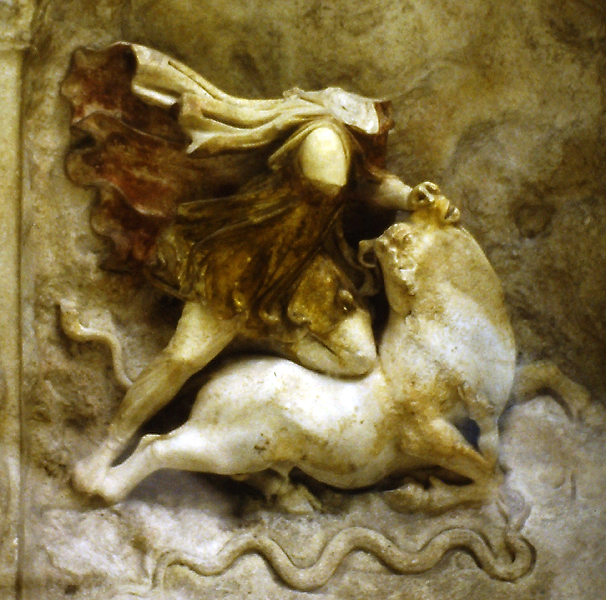
Marble tauroctony relief from the Mithraeum of Memphis, depicting Mithras slaying the bull within an architectural niche framed by Cautes and Cautopates.

This plaque, located on the western staircase of the Palace of Darius, mentions the god Mithra together with Ahura Mazda as protectors of King Artaxerxes III Ochus.
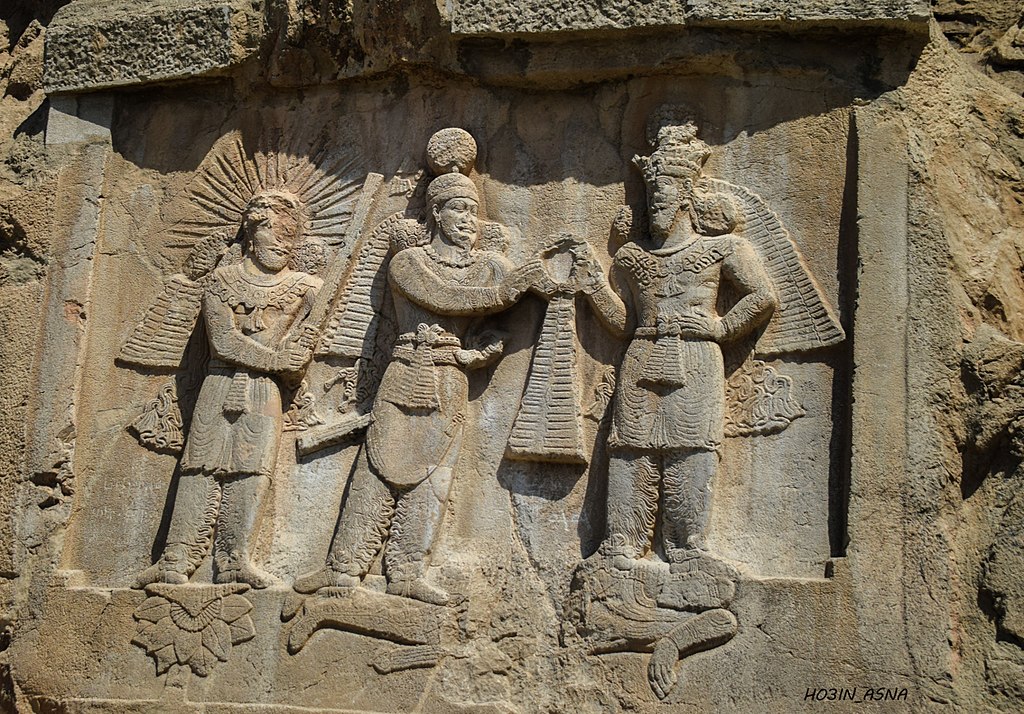
This monument depicts Mihr/Mithras watching over the transition of power from Shapur II to Ardashir II, which took place in 379.

Large marble slab found in 1648 near S. Silvestro in Capite, inscribed with a Latin dedicatory poem forming a cypher-acrostic for TAMESIUS and AUGENTIUS, with records of leontica and chrysos initiations, dated to 362 A.D.
Inscription recording the transmission of the leontica grade by Nonius Victor Olympius and Aurelius Victor Augentius at the Mithraeum of Piazza S. Silvestro in Capite, dated to 359 and 358 A.D.
Inscription CIL VI 750 recording the transmission of the Persica and Heliaca grades by Nonius Victor Olympius and Aurelius Victor Augentius at the Mithraeum of Piazza S. Silvestro in Capite, dated to 358 A.D.
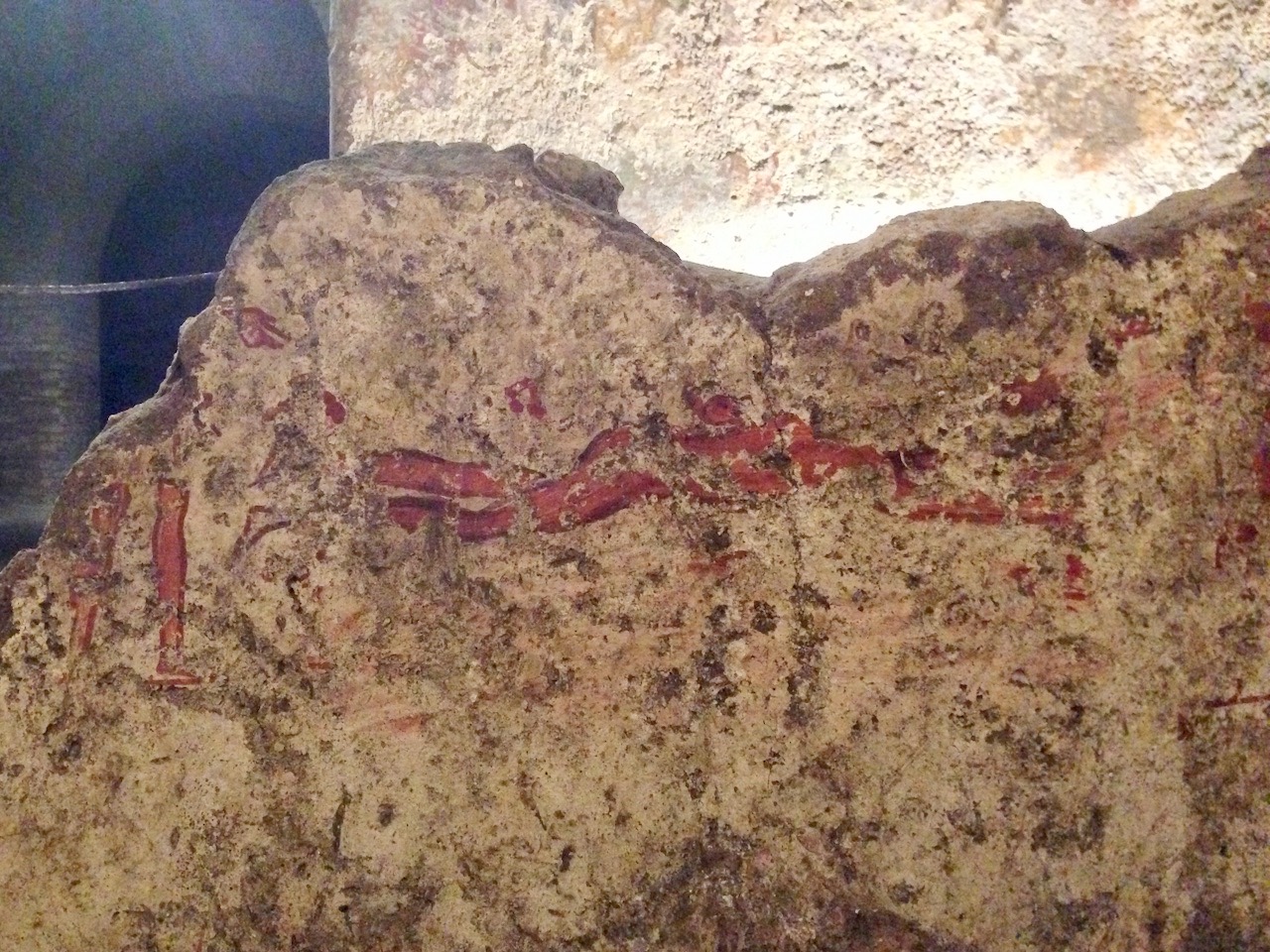
Representation of a person lying prostrate on the ground between two other walking figures on the Mitreo of Santa Capua Vetere.
