
The tauroctonic relief from Dragu includes a naked flying figure that Vermaseren has identified as Phosporus or Lucifer.
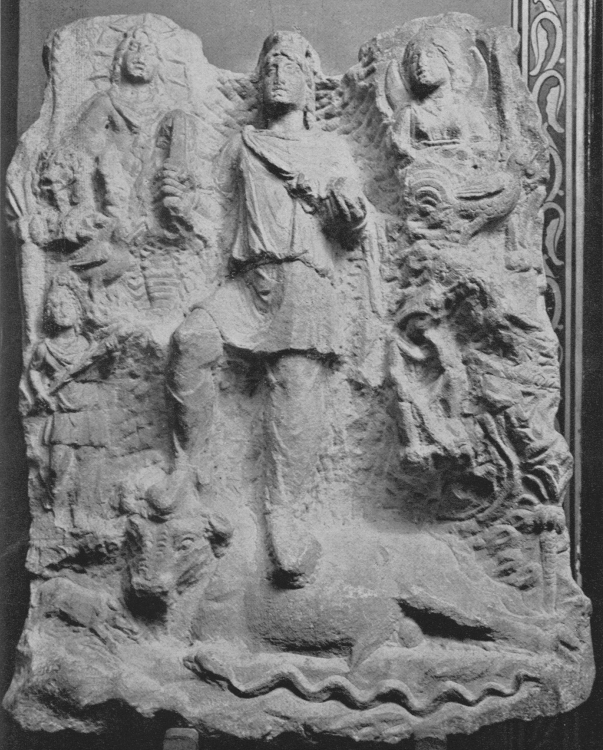
This unusual representation of Mithras standing on a bull was kept in the Casino di Villa Altieri sul Monte Esquilino until the 19th century.
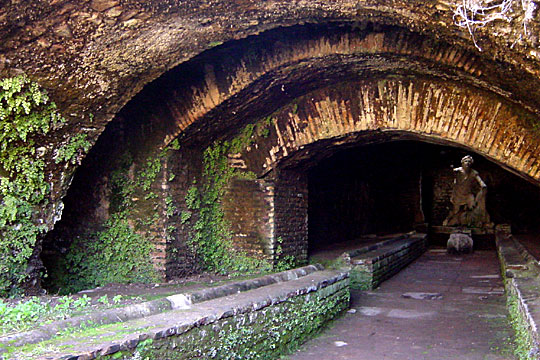
The Mithraeum of the terms of Mithras takes its name from being installed in the service area of the Baths of Mithras.
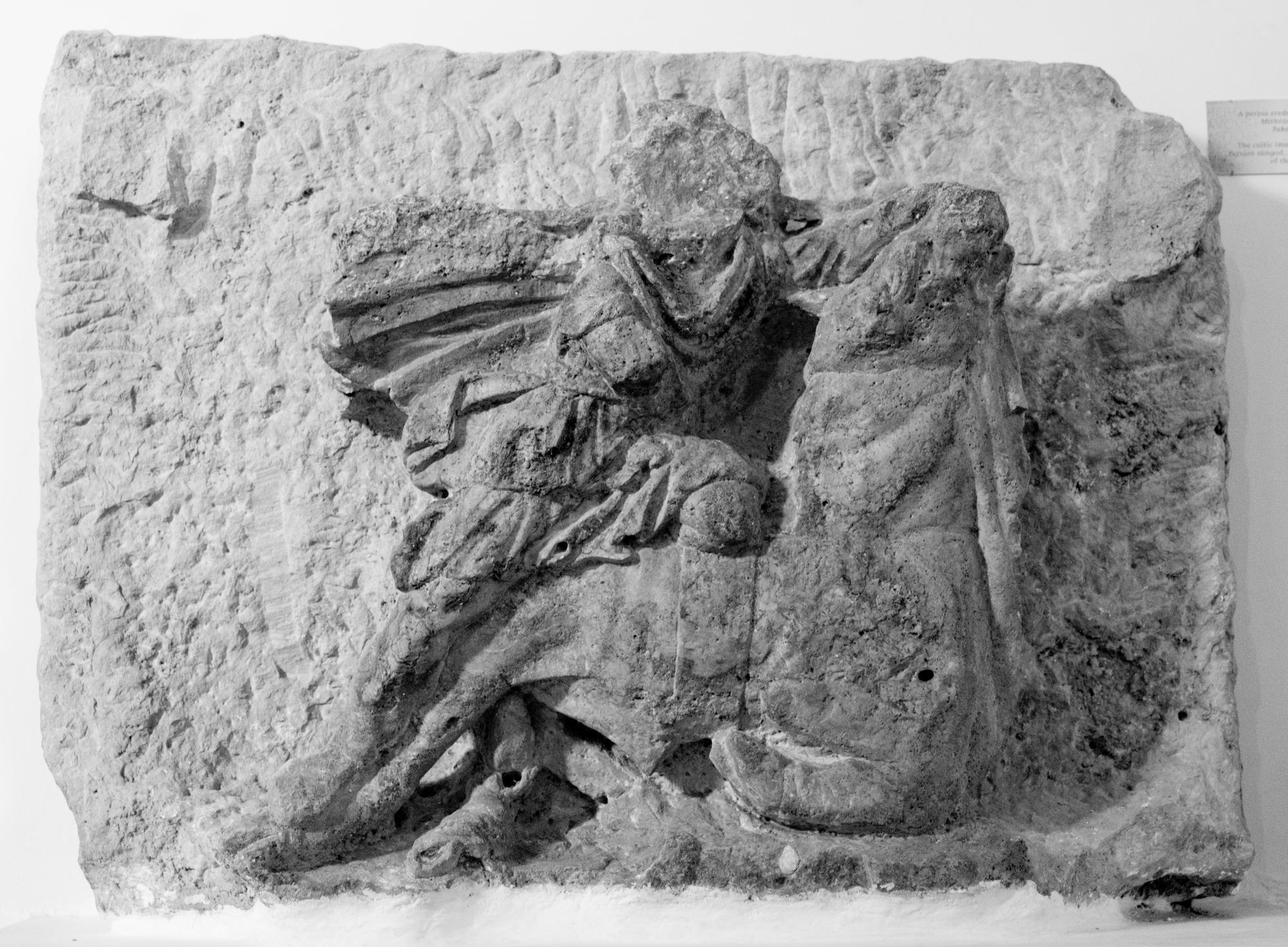
Relief showing Mithras slaying the bull, found at Paks in Roman Pannonia, modern-day Hungary.
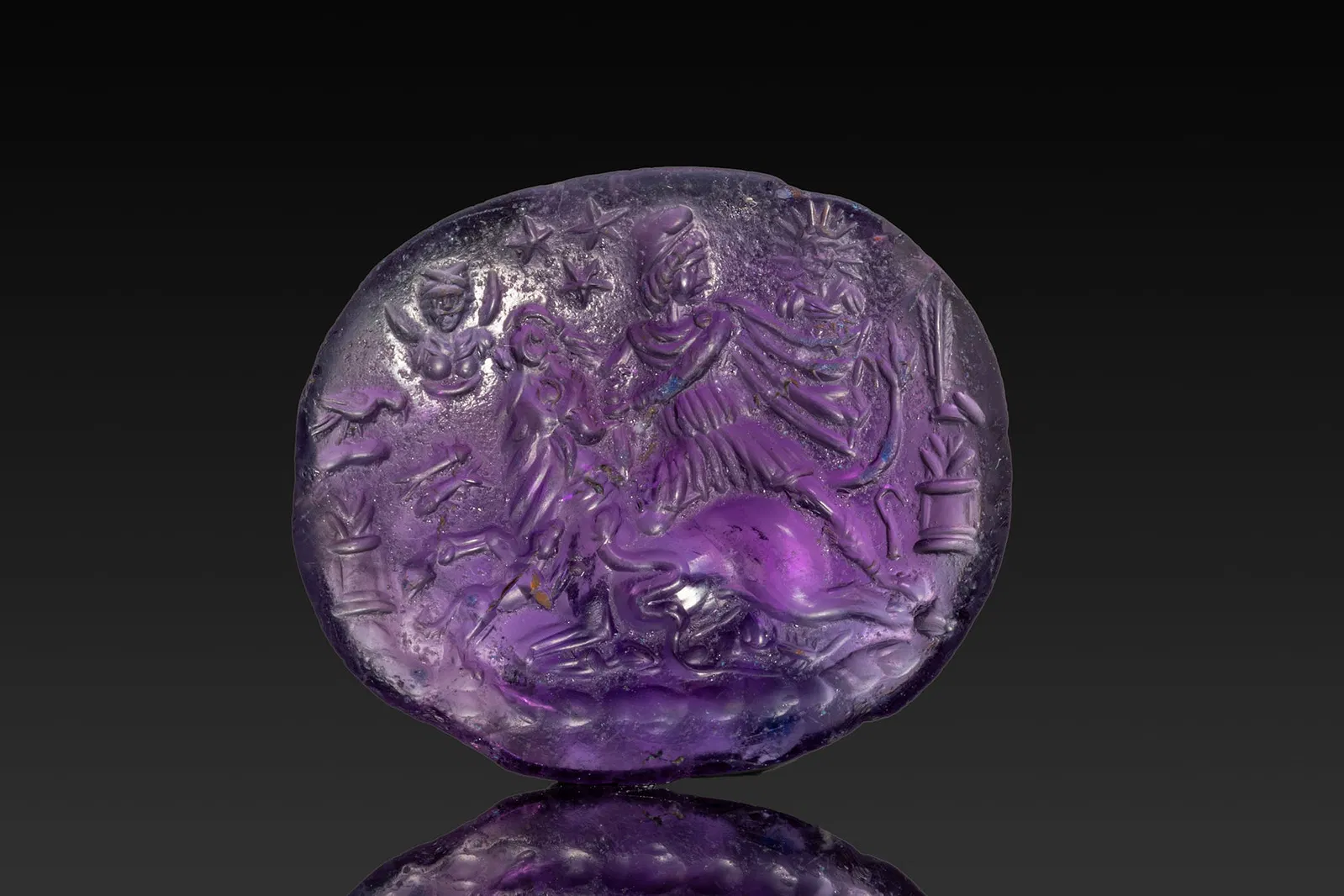
Amethyst intaglio engraved with Mithras slaying the bull, accompanied by Sol, Luna and other canonical Mithraic symbols.
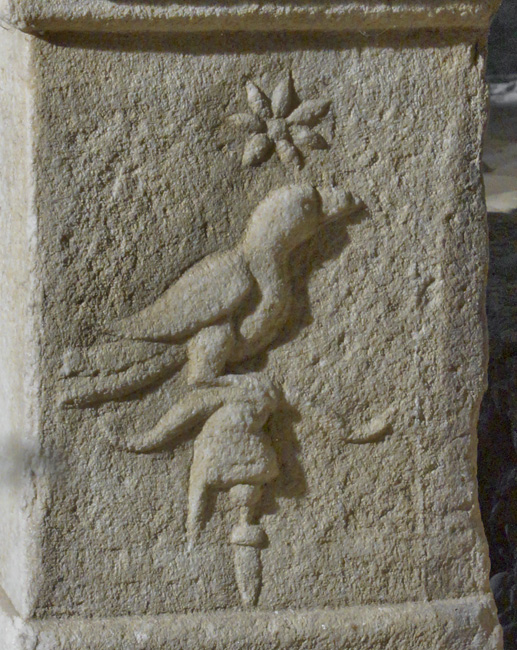
This altar from Ptuj, present-day Poetovio, is decorated with various Mithraic animals such as a tortoise, a cock and a crow and other objects.
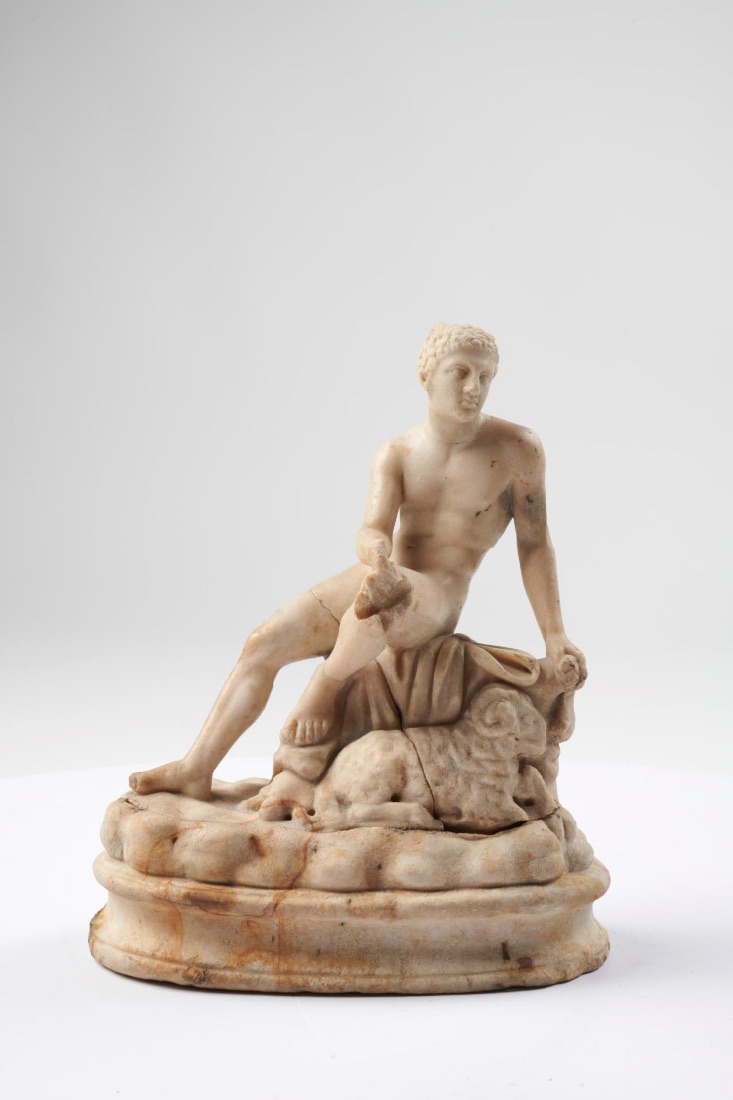
A small marble statuette of naked Mercury from the Mithraeum at Walbrook in London, sitting on a rock with the stumps of wings in his hair and a purse in his left hand, with a ram lying at his feet beside which is a tortoise.
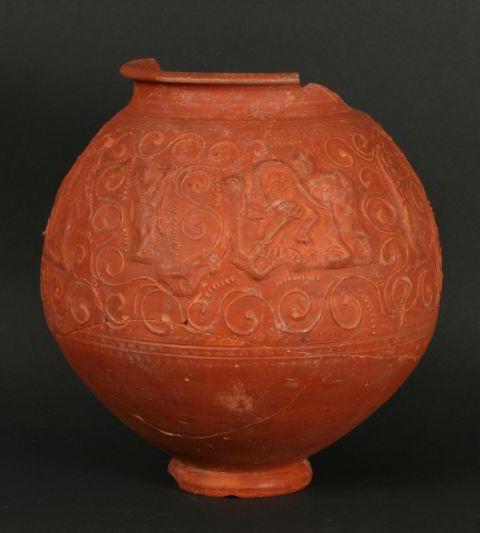
This terracotta vase features prolific decoration, including Mithras Tauroctonos, Fortuna, Cautes, a dog and Pan playing a syrinx.
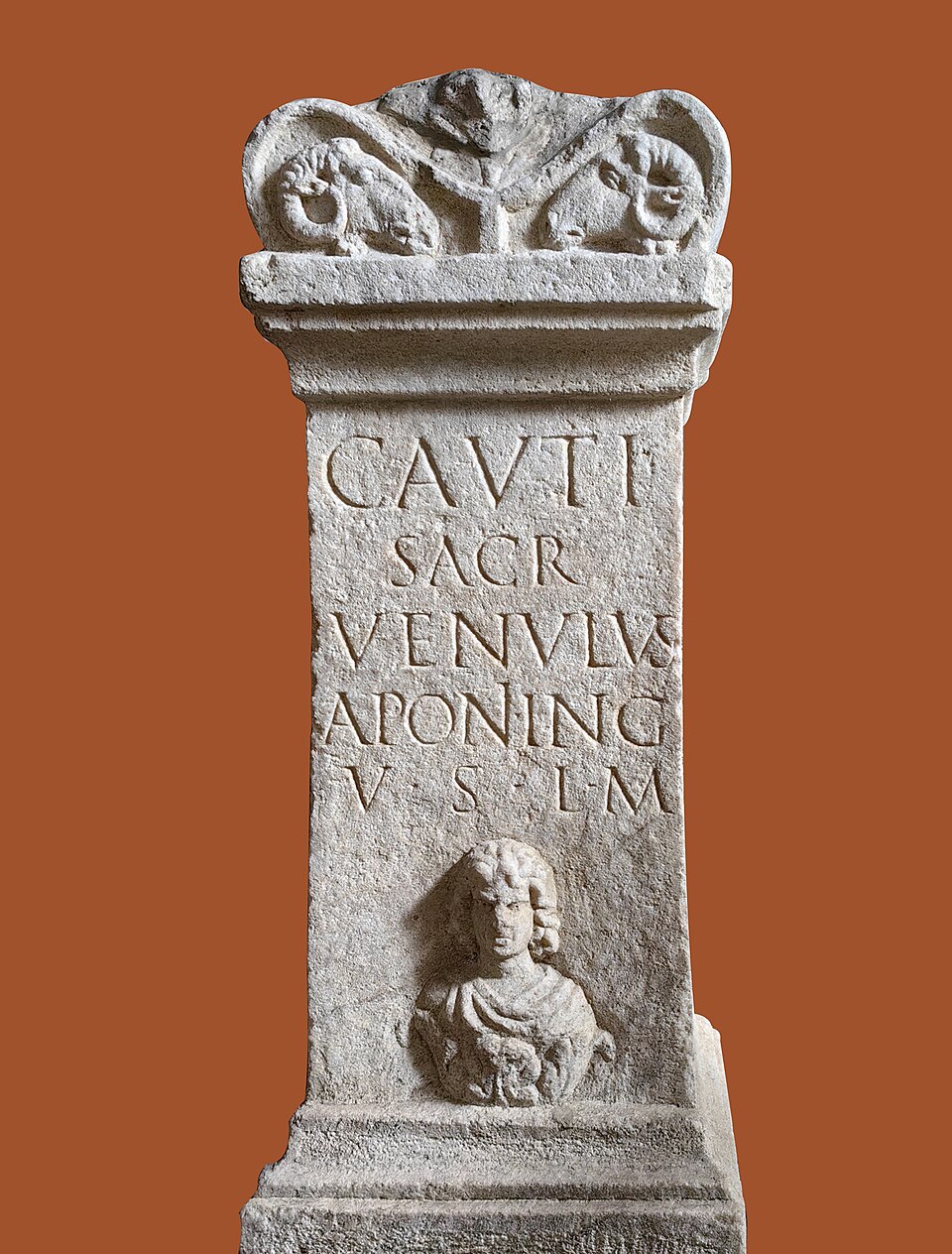
White marble altar from Mithraeum I at Ptuj, dedicated to Cautes by Venulus and decorated with a bust of the god emerging from foliage.
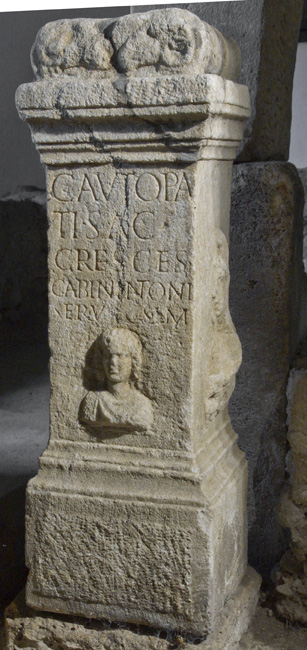
White marble altar from Mithraeum I at Ptuj, ancient Poetovio, decorated with a bust of Cautopates, two ram heads flanking a palm, and lateral representations of Mithras’ rock-birth.
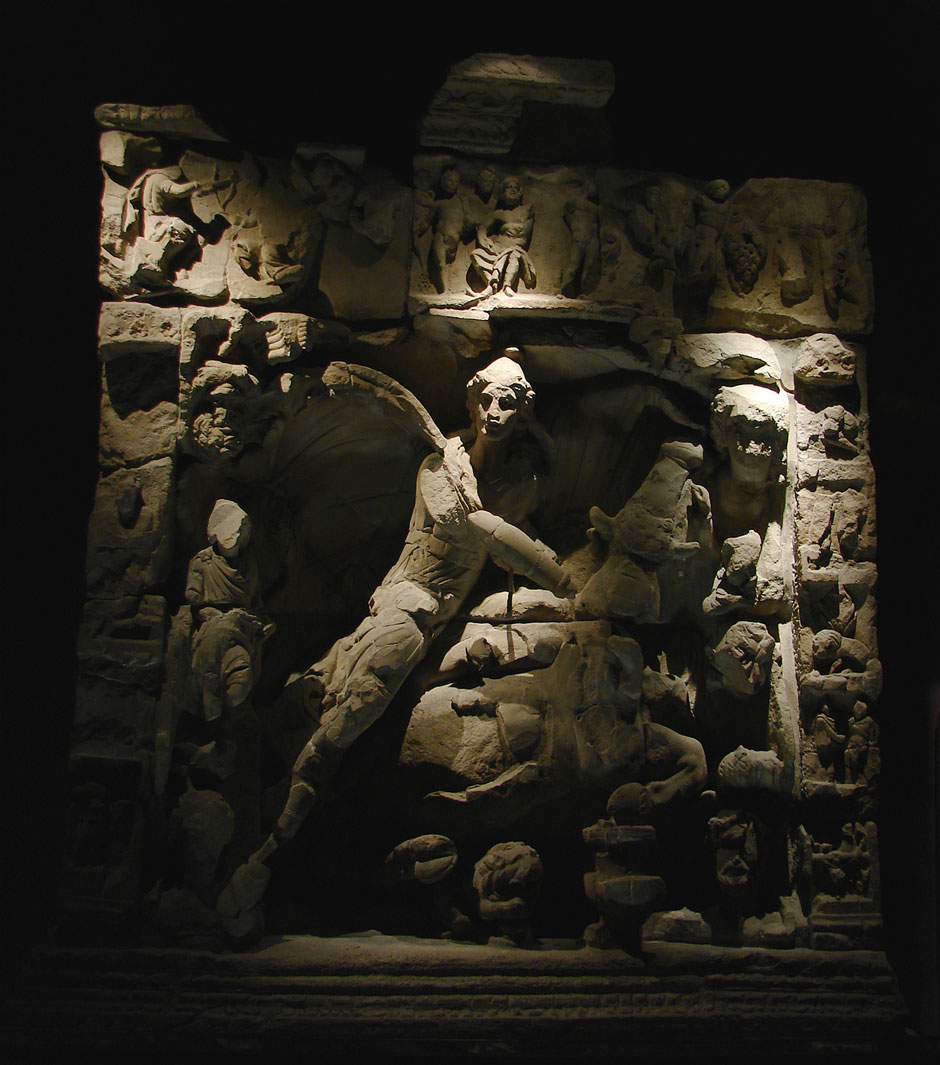
The Tauroctony of Saarbourg (Sarrebourg, ancient Pons Sarravi), France, contains most of Mithras deeds known in a single relief.

Urartian rock-cut sanctuary near Van, later known as Mher's Gate and associated in Armenian tradition with Mher, the Armenian form of Mihr.

Basalt altar from Dvin, dated to the 2nd century AD and interpreted as dedicated to Mithra on the basis of the symbols carved on its four sides.

Fragments of a marble bull discovered at Garni, interpreted by Armenian heritage authorities as remains of a group depicting Mihr fighting a bull.
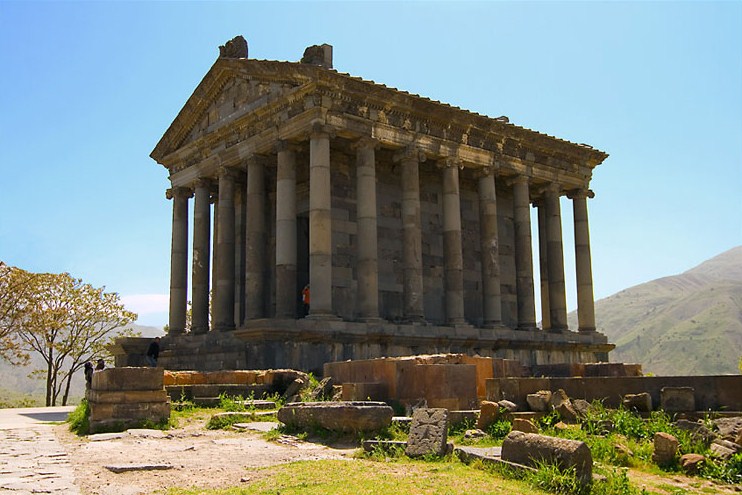
After Christianity was adopted, most pagan monuments were destroyed or abandoned. Garni, however, was preserved at the request of the sister of King Tiridates II and used as a summer residence for Armenian royalty.

Terracotta figurine from the Hoghmik sanctuary complex, identified by Hayk Hakobyan as Mihr-Mithra and dated to the 1st–3rd centuries AD.
.jpg)
The controversial Italian journalist Edmon Durighello discovered this marble statue of a young naked Aion in 1887.

Two marble fragments from a small statuette discovered at Artashat in 1971 and later interpreted as possible remains of a tauroctony.
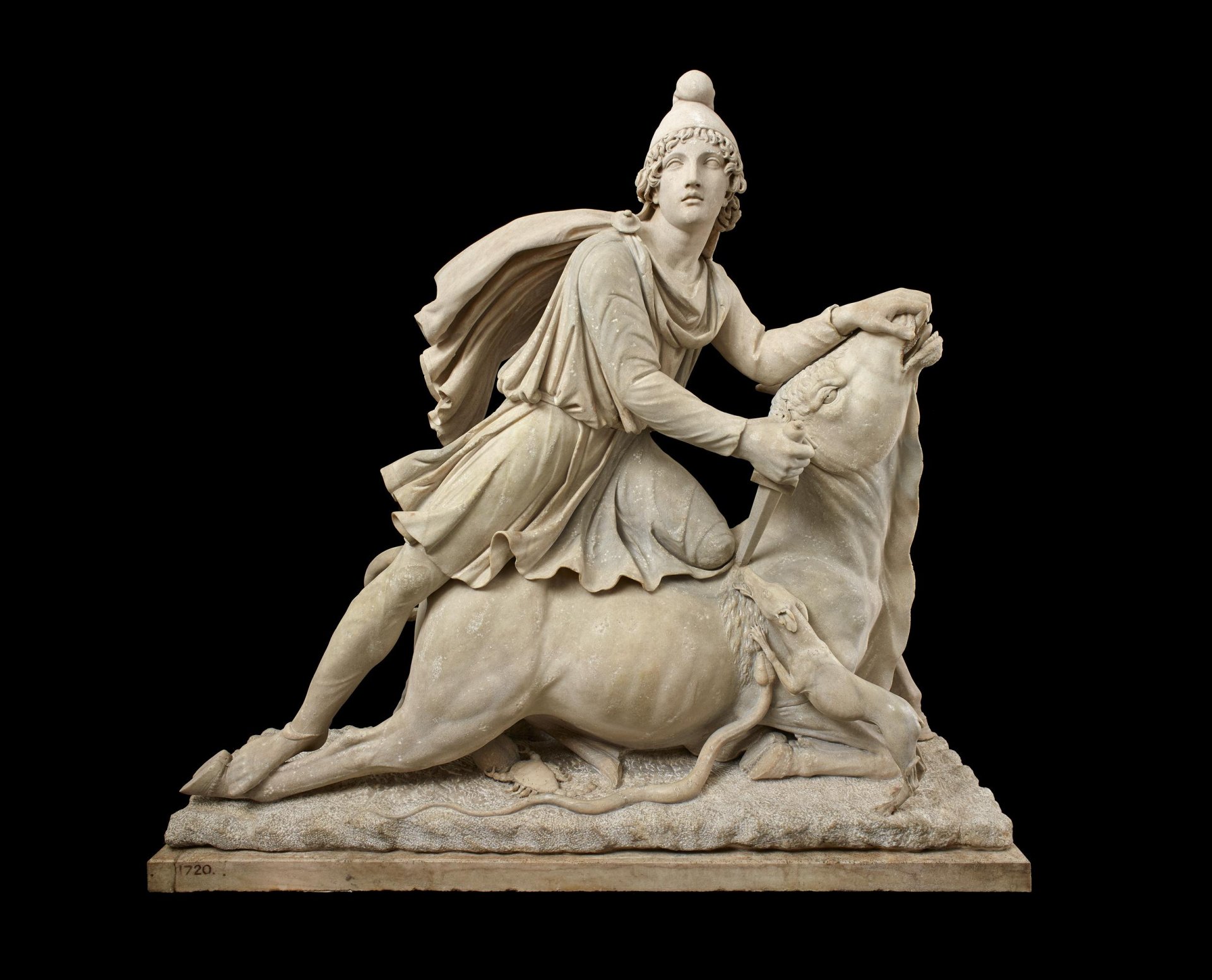
The sculpture of Mithras slaying the bull was transported from Rome to London by Charles Standish in 1815.

Lost altar dedicated by Lucius Apronius Chrysomallus on the occasion of his initiation into the Mithraic grade of Perses, the only known inscription explicitly recording admission to this grade.
