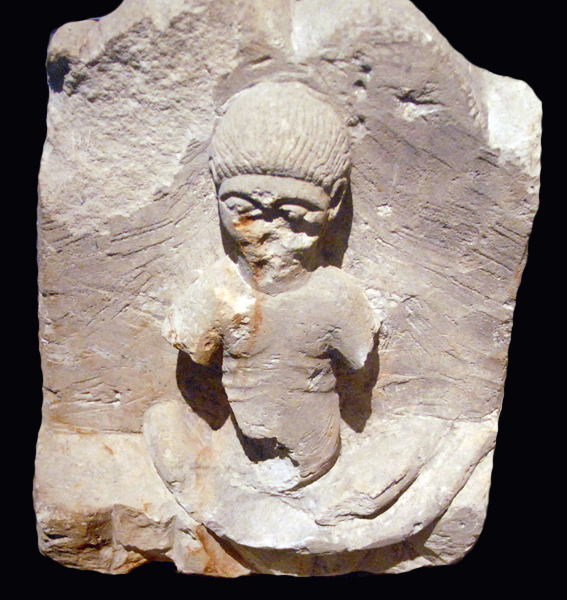
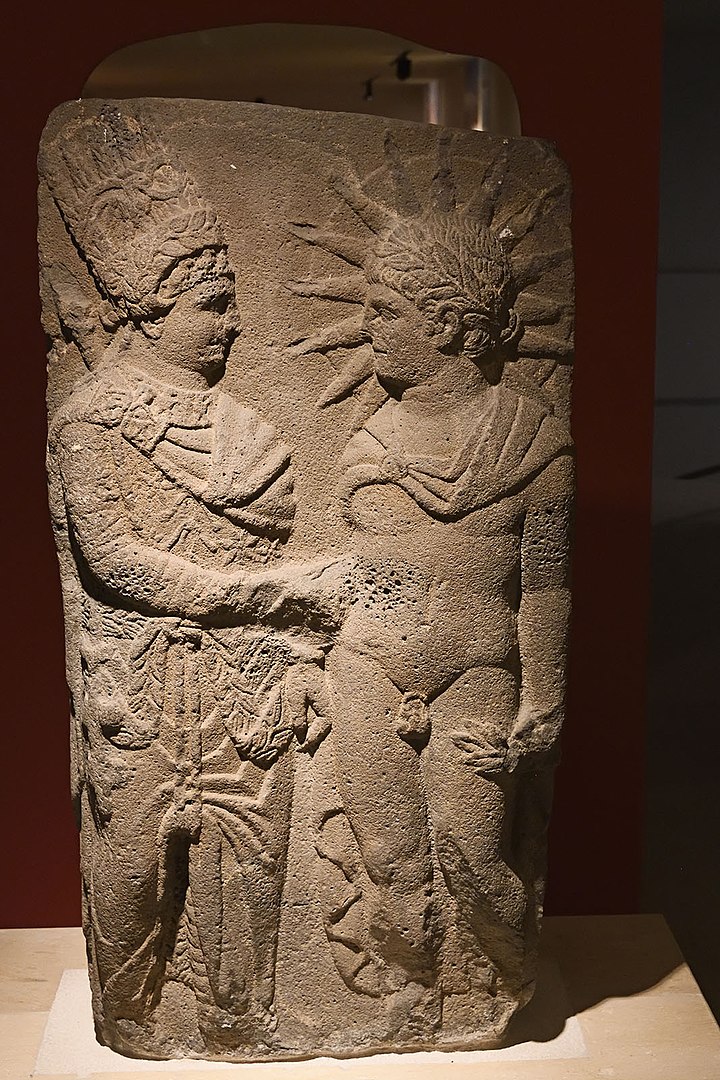
The relief of Mithras slaying the bull by Ottavio Zeno is lost, but two tablets of Cautes and Cautopates, which were part of the same ensemble, has been exposed at the Louvre.
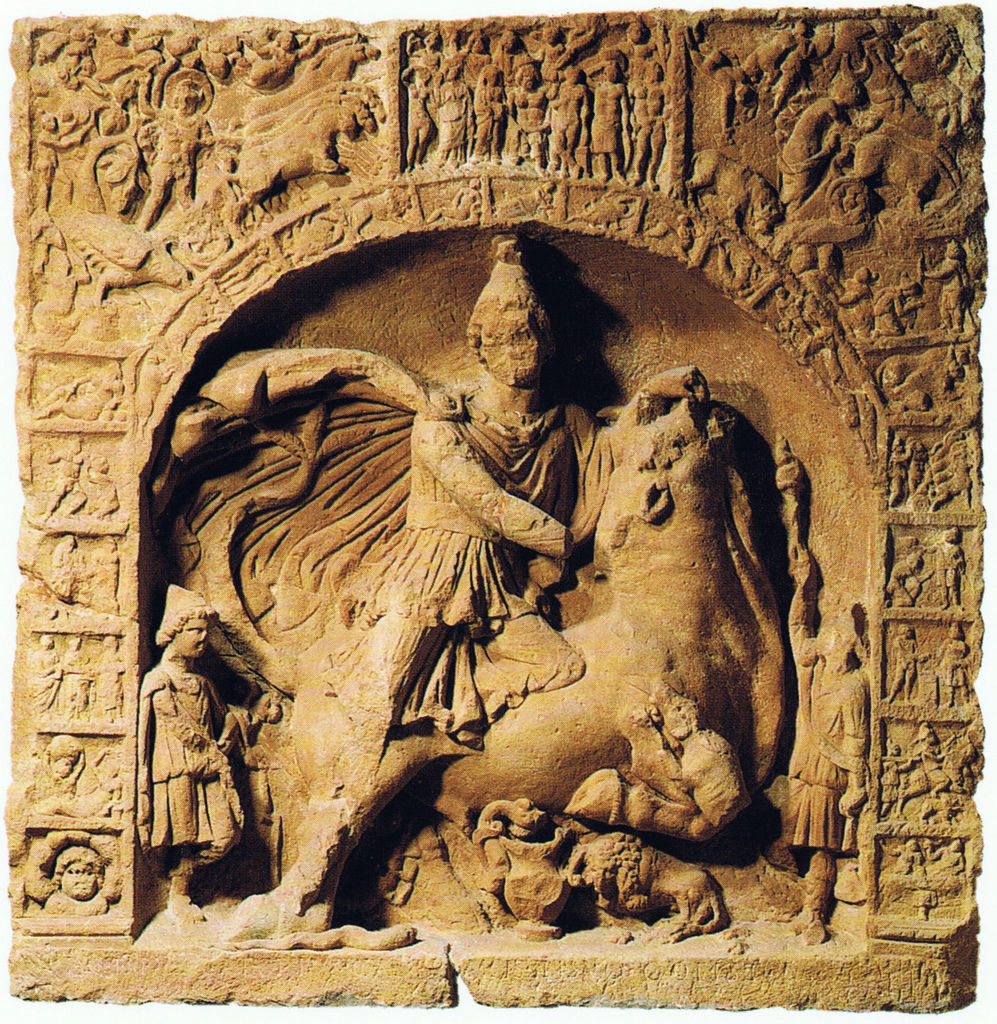
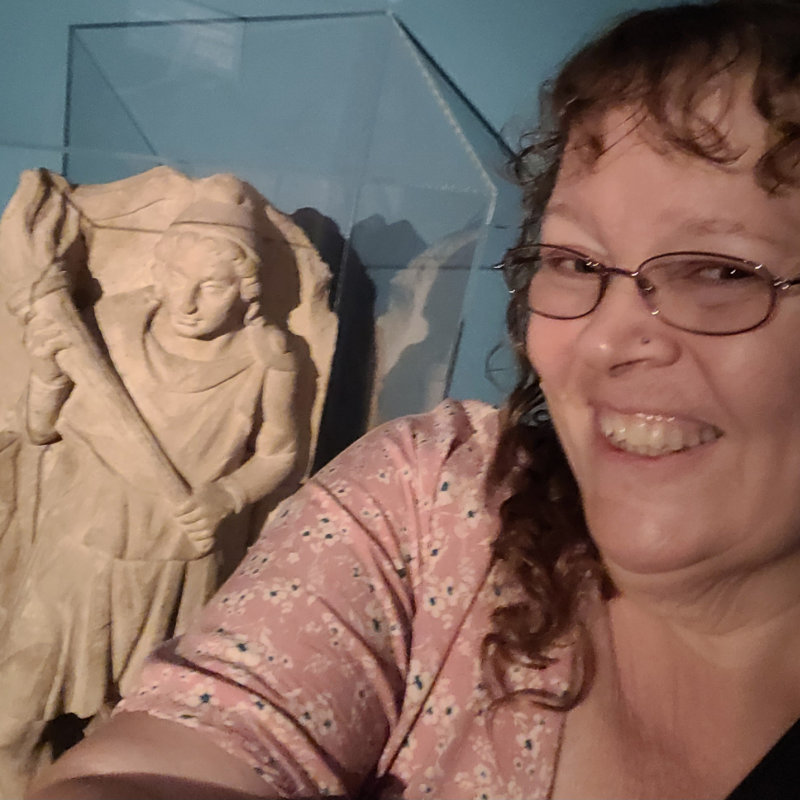
Hello, I love this slab. Here, Cautes is carrying a torch with a figure on it, climbing towards the sky. This is extraordinary. The bas-relief found in the Basilica of Santo Rotondo on the Caelian Hill in Rome shows the Sun holding a small ball or round stone in his left hand which evokes a soul. This would be the image of the resurrection, the path of the soul that ascends to the Sun (Cautès). This image is found on the bas-relief of Tor Cervara in Rome, also kept in the Museum of the Baths of Diocletian. Here too, the Sun carries a round ball in his left hand. Here on your relief, it is a child. This resembles the iconography of the Middle Ages where the soul was represented as a child coming out of the mouth. In the background, the Berlin bull (Neues Museum in Berlin, 2nd century AD.) has its mouth open and is letting out a tongue which could be a soul, as mythology suggests (Gasquet, 1899). So, can we consider this child as the soul carried by Cautès, and coming out of the bull's mouth ? It shoud be revolutionnary !
Danuvius stele a C. Szabo mihi extraordinarius videtur. Accurate pictum videre vellem. Ubi est Sol, numquid puer ex ore tauri egreditur? Videmusne religionem inter Mithrae et Christianitatem? Multae post scriptum quaestiones : nomen meum est dominicus, princeps minimus, hoc est caput familiae.
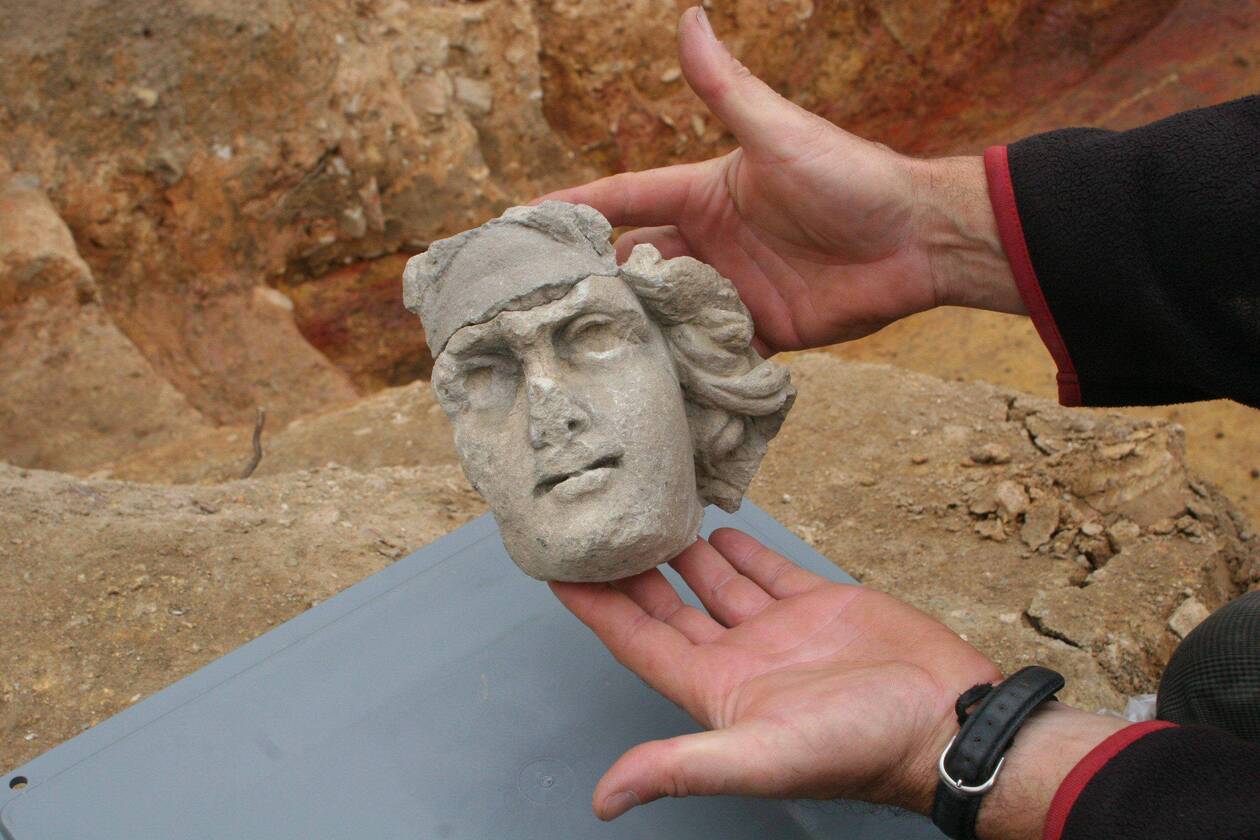
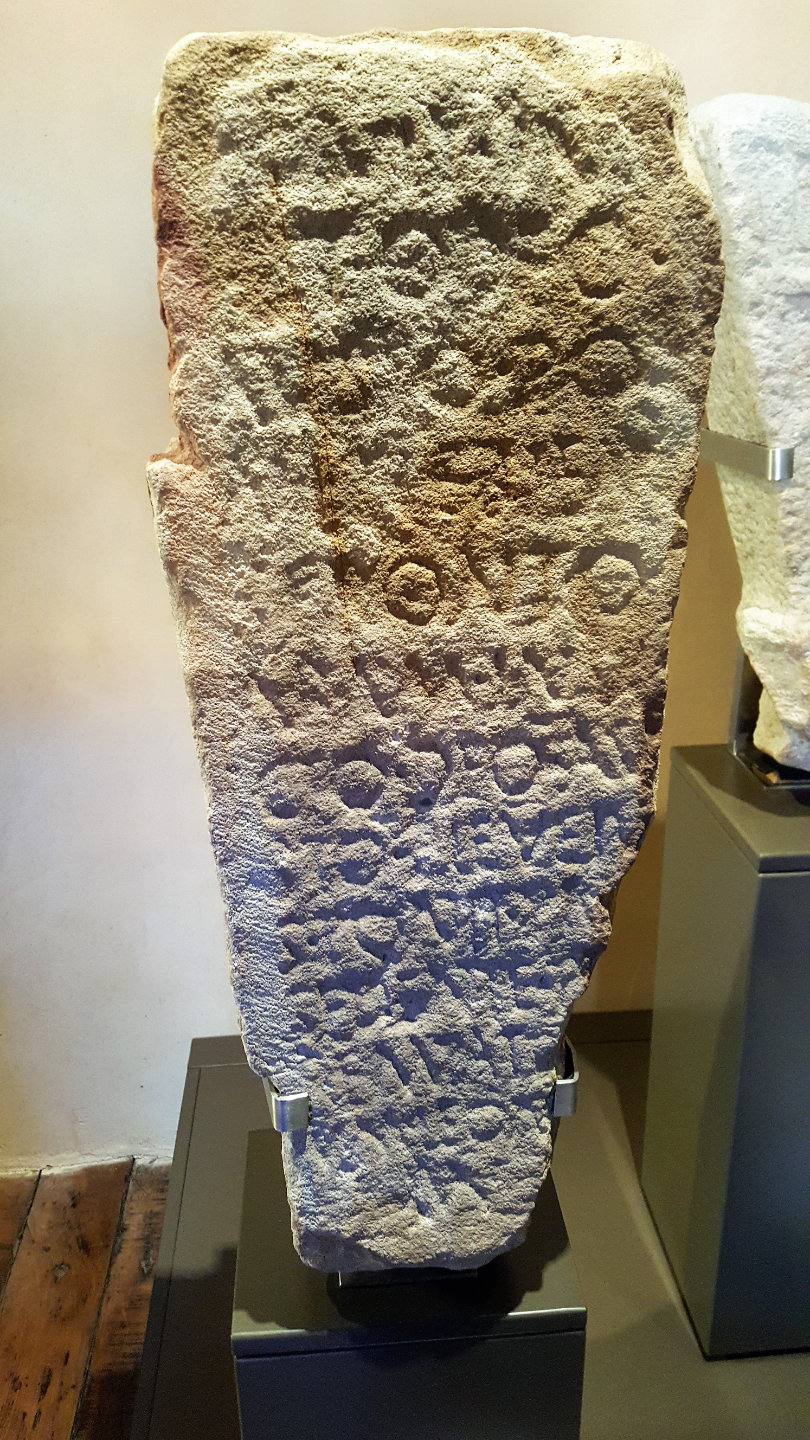
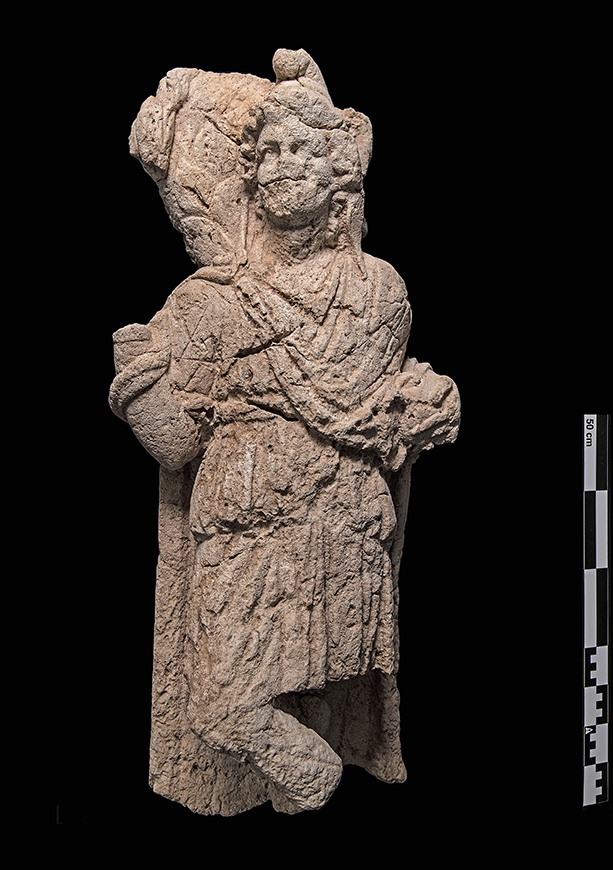
These fragments of a monumental tauroctony found in the Cerro de San Albín must have decorated the Gran Mitreo de Mérida, which has not yet been found.
Este libro es la tercera entrega de una trilogía dedicada al estudio de la implantación en la Península Ibérica de los cultos destinados a dioses que, procedentes originalmente de Oriente, se transforman profundamente en su recepción en Roma y termin...
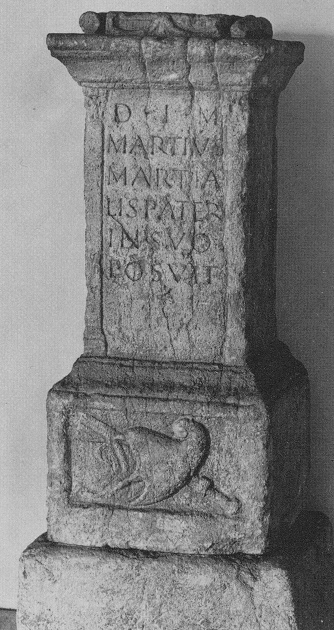
I guess the author has made a mistake. The so called Casa del Mitreo has not provided any document related to Mithras cult. All the mentionned pieces come from the old excavation at the close Cerro de San Albín. The correct origin is to be found at Jaime Alvar’s site https://humanidadesdigitales.uc3m.es/s/mitra/page/inicio
Las excavaciones llevadas a cabo en el yacimiento arqueológico romano de la villa de Mithra, en Cabra (Córdoba), han deparado el excepcional hallazgo de un mitreo, o zona destinada al culto al dios Mithra, cuya estatua fue descubierta hace unos 70 años.