The Mithraic Ritual
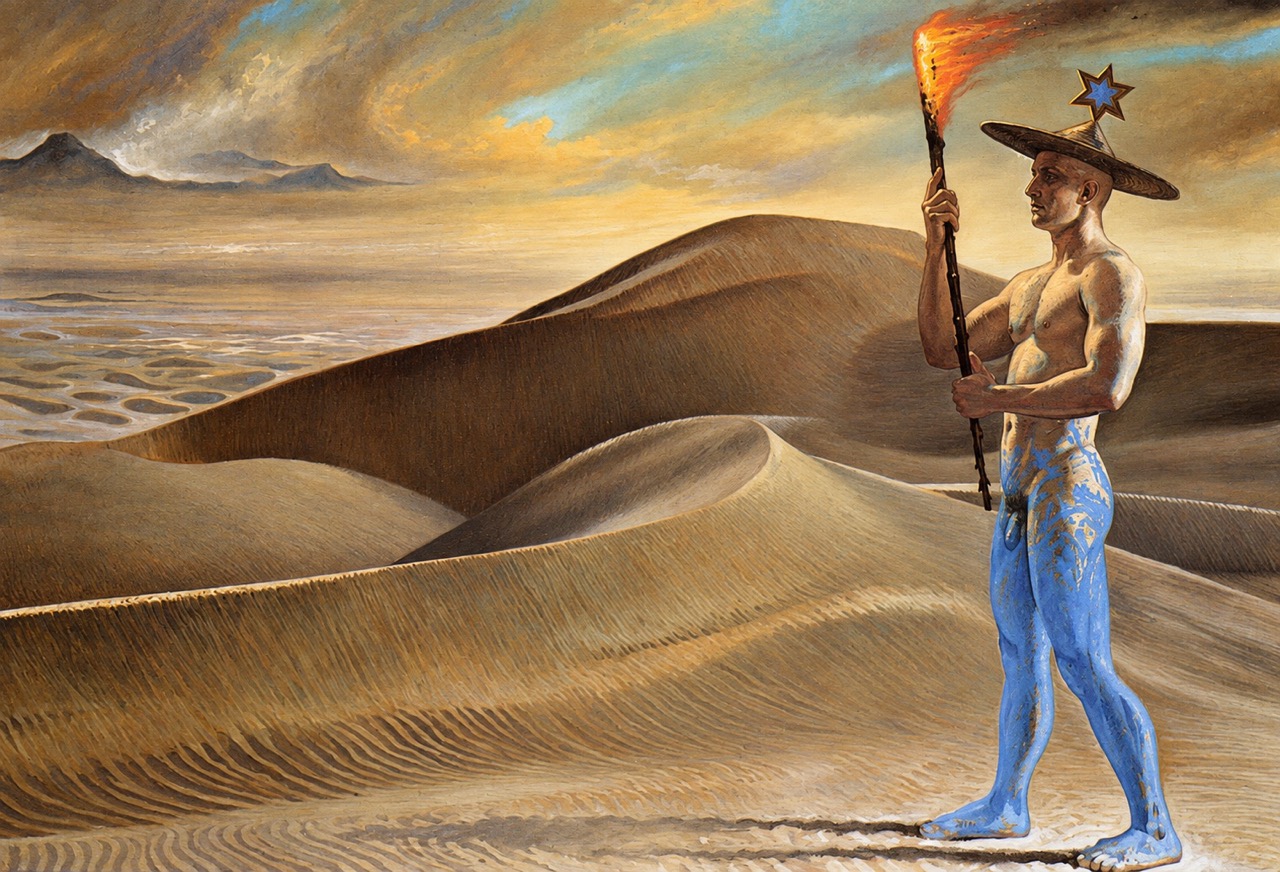
Cautes
Massimo Livadiotti
Inside the mithraeum
The arrangement of a mithraeum gives the first indication of what happened there. Two raised benches usually faced one another across a central aisle, with the image of Mithras killing the bull at the far end. This was a room in which people could recline together, eat and watch ceremonies performed before them. Its architecture placed the assembled community in a close relationship with the god’s image and with one another.
The evidence for these activities survives in several forms: vessels and animal bones, altars and dedications, paintings of participants, and occasional descriptions by ancient authors. Each preserves a different part of ritual life. The remains of a meal can reveal what people ate; a painting may show the roles they assumed; an inscription can name the person who paid for a sanctuary or fulfilled a vow.
No surviving text sets out a complete Mithraic order of service. The picture that emerges is of communities sharing recognisable practices while adapting them to their circumstances, resources and local traditions.
A meal shared with the gods
The communal banquet was central to Mithraic worship. Its divine model appears in images of Mithras and Sol reclining together, often on the hide of the slaughtered bull. Their meal formed part of the sacred story displayed in the sanctuary, giving the gathering of worshippers a counterpart among the gods.
On the relief from Fiano Romano, the sacrifice and the banquet occupy opposite faces of a stone that could turn on its base. The two episodes could therefore be presented successively. This arrangement made their connection visible, although the precise occasions on which the relief was turned are unknown.
The banquet relief from Konjic brings the divine meal closer to the human ceremony through its attendants. Roger Beck interprets this scene, together with the paintings at Santa Prisca, as evidence that the Pater and the Heliodromus could represent Mithras and Sol at the feast. Other initiates served them. On this reading, participants occupied places within the sacred narrative, and differences of grade found expression in the conduct of the meal.
Eating together could strengthen relationships without removing distinctions of authority. Someone provided the food, others prepared and served it, and particular members held positions of honour. The banquet gave these relationships a religious setting, with the feast of Mithras and Sol as its enduring point of reference.
Food and the work of worship
Excavation brings the banquet into sharper focus. At the mithraeum of Tienen, in Belgium, a substantial deposit of pottery and animal remains records feasting on an exceptional scale. The bones include hundreds of chickens, alongside sheep or goats and pigs. The quantities raise questions about gatherings larger than the group that could recline inside the sanctuary, although the identity and number of those present remain uncertain.
At Septeuil, in France, a former spring sanctuary was adapted for Mithraic use. A kitchen area contained a substantial hearth, with ash and numerous bones, chiefly from chickens and young pigs. The preparation of food had a physical place within the sanctuary complex. A recent study of Mithraic kitchens by Matthew McCarty and colleagues draws attention to this work and to the people who performed it, expanding the study of the banquet beyond the moment of consumption.
Written evidence concerns particular ritual uses of food as well. In his First Apology (66), Justin Martyr mentions bread and a cup of water, accompanied by spoken formulae, in Mithraic initiation. He writes as a Christian opponent, presenting the practice as an imitation of the Eucharist. His account provides evidence for a specific offering; it cannot establish a standard menu for every communal meal.
The bull killed by Mithras belongs to the divine story. Its prominence in the cult image does not establish that worshippers regularly slaughtered a bull inside the mithraeum. Archaeological remains allow the animals actually consumed at particular sanctuaries to be considered on their own evidence.
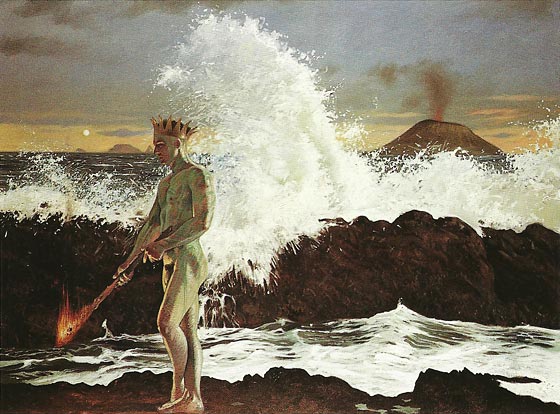
Cautopates
Massimo Livadiotti
Offerings and processions
The paintings at the Mithraeum of Santa Prisca in Rome give an unusually detailed view of service to the god. A procession of Lions carries offerings, including animals and a large mixing vessel. Painted acclamations identify members by name and grade. The scene associates the provision of a feast with recognised duties within the community.
These figures are valuable precisely because they show activity. The worshippers approach in an ordered procession, carrying things required for the ceremony. Their participation involves movement, equipment and shared work. Names written beside them also preserve individual identities within a collective act of worship.
Dedications record another form of participation: providing a lasting gift. Altars, sculptures and improvements to a sanctuary could commemorate the donor’s relationship with Mithras while making that contribution visible to other members. The sanctuary accumulated such acts over time. A new image or a repaired room became part of the setting inherited by those who worshipped there afterwards.
The bond of the right hand
Images of Mithras and Sol joining their right hands express an agreement between the gods. The gesture, commonly called dexiosis, belonged to a wider Greek and Roman language of trust, alliance and mutual recognition. In the mysteries, its significance also extended to the relationship between worshippers.
An inscription set up by the Father Proficentius in Rome calls the members syndexi, a term referring to those joined by the right hand. Proficentius explains that Mithras prompted him to build and dedicate a sacred cave, where these companions could joyfully celebrate their vows. The text connects the god’s initiative, the Father’s provision of a meeting place and the continuing worship of the group.
This language gives the handshake an importance beyond a conventional greeting. It expressed a bond through which members understood their association. The inscription does not describe the ceremony in which that bond was established, but it preserves the community’s own vocabulary for belonging.
Entering the mysteries
Initiation admitted a person to the mysteries and placed him under the guidance of those already entitled to conduct their rites. Some of the most revealing evidence comes from the painted scenes at Santa Maria Capua Vetere. Here a naked candidate appears in the company of clothed figures who direct his movements.
In one panel, he kneels blindfolded, with his hands held behind his back, while attendants stand nearby. Another shows a figure stretched out on the ground. The contrast between the exposed candidate and his clothed guides makes dependence and authority visible. His posture is controlled, and his access to what is happening around him is restricted.
The paintings offer evidence for an initiation involving bodily experience, guidance and submission to a ritual process. Their damaged condition and the absence of an accompanying explanation limit any reconstruction of the sequence. They do not provide a script that can simply be transferred to every Mithraic community.
A different episode appears in Tertullian’s On the Crown (15). He reports that a crown was offered to a soldier of Mithras during initiation and that the recipient rejected it, declaring Mithras to be his crown. Tertullian uses this example to challenge Christian soldiers to show comparable loyalty. Even through that hostile comparison, the ceremony conveys a clear demand: the participant was required to express his allegiance through a prescribed action and response.
Taking part in the myth
The Mithraic vessel from Mainz suggests another way in which initiation could draw upon the god’s story. Its decoration includes a seated archer aiming towards a smaller, naked figure accompanied by a third person. Beck identifies the archer as a Father acting in the role of Mithras, the naked figure as an initiate, and his companion as a guide.
Beck connects this scene with the water miracle, in which Mithras shoots at a rock and releases a spring. The interpretation proposes a performance in which a familiar divine action acquired an immediate meaning for a human participant.
This reconstruction suggests that members encountered the sacred story through roles and gestures as well as through images.
Honey and purification
Porphyry provides a rare description of the substances used in Mithraic purification. In On the Cave of the Nymphs (15–16), he explains that those initiated as Lions received honey on their hands instead of water. He connects this practice with fire, to which the Lion was associated, and reports an injunction to keep the hands pure from wrongdoing.
Honey was also applied to the tongue, linking purification to speech. In the same discussion, Porphyry associates honey with the Persian grade and its role as guardian of fruits. A familiar food thus carried several meanings, understood through its qualities and its relation to a particular ritual identity.
Porphyry’s account is concerned with symbolic interpretation, but it preserves unusually concrete actions: something was placed on the hands and tongue, and instructions accompanied the act. Purification addressed how the initiate should act and speak. It connected a material experience with expectations of conduct.
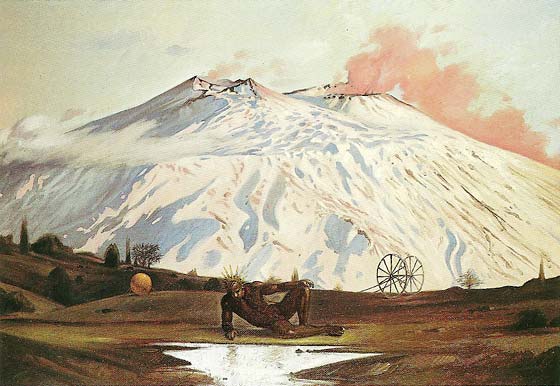
Corriere Solare
Massimo Livadotti
Grades and the heavens
The seven Mithraic grades gave ritual distinctions a celestial dimension. Raven, Bridegroom, Soldier, Lion, Persian, Sun-Runner and Father were associated with planetary powers. At the Mithraeum of Felicissimus in Ostia, their emblems occupy successive panels along the central aisle. Movement through the room brought worshippers past a visible arrangement of grades and their attributes.
The painted acclamations at Santa Prisca also connect grades with divine protection. Such evidence shows how a community could express its internal order through the structure of the heavens. The Father held a position of religious authority, while other grades could involve particular services or ritual responsibilities.
The extent of this organisation remains debated. The full sequence is much better documented in some places than in others, and there is no basis for assuming that every member had to complete all seven grades. Their names and planetary associations are explored further in the Mithraic grades.
Light and the presence of the god
Lighting could contribute directly to the presentation of a sacred image. An altar from Carrawburgh, on Hadrian’s Wall, bears a radiate figure whose crown has pierced openings. A recess behind the carving could hold a lamp, allowing light to shine through the rays around the god’s head.
The surviving construction reveals how the effect was produced, even though its place in a particular ceremony is unknown. Stone and flame worked together to give the image a luminous presence. Like the turning relief at Fiano Romano, the altar shows the care devoted to how worshippers encountered the god within the room.
Such objects belong to the same religious environment as the benches, offering vessels and painted processions. The members who gathered there ate, served, made gifts and underwent ceremonies in a space furnished for those activities. Repeated use gave its images and objects a place in their shared experience of the mysteries.
References
- Roger Beck (2000) Ritual, Myth, Doctrine, and Initiation in the Mysteries of Mithras: New Evidence from a Cult Vessel
- Justin Martyr (150 – 160) Justin Martyr: Mithras as a demonic imitation of Christ
- G. R. S. Mead (1907) A mithriac ritual
- Jason Cooper (1996) Mithras: Mysteries and Initiation Rediscovered
- Matthew M. McCarty (2025) Cultic cookery: kitchens and the making of Mithras-worshipping communities
- (2024) On the Cave of the Nymphs
