The Mithraic grades
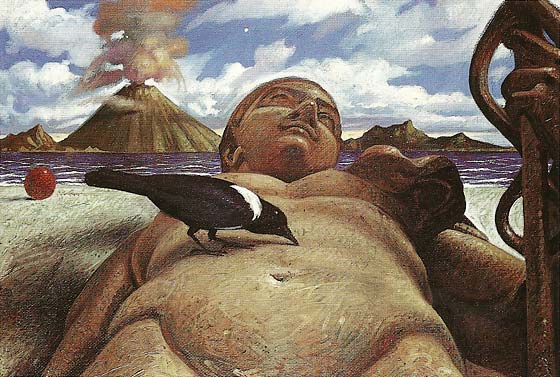
Il Corvo
Massimo Livdiotti
The members of a Mithraic community did not all hold the same place within the group. Some bore special titles, or grades, with names such as Raven, Bridegroom, Lion or Father. These were more than simple ranks. Each had its own symbolic identity, and some were associated with particular objects, animals, planets and ritual practices. Ancient sources also suggest that moving from one grade to another could involve specific rituals and trials.
The fullest system known to us consisted of seven grades: Corax (Raven), Nymphus (Bridegroom), Miles (Soldier), Leo (Lion), Perses (Persian), Heliodromus (Sun-runner) and Pater (Father). At the Mithraeum of Felicissimus in Ostia, they appear in this order along the mosaic floor, each accompanied by its own symbols and linked to one of the seven planetary gods. Other mithraea, inscriptions and ancient authors give us further clues about what individual grades meant and about the rituals connected with them.
The grades seem to have shaped both the religious experience of initiates and life within the mithraeum. A Leo, for example, took part in rituals involving honey and purification, while the Pater occupied a leading position in the community. Some evidence also suggests that members of particular grades could take on the roles of divine figures during ceremonies, although much of what happened during these rituals remains unknown.
It was once common to imagine every Mithraist progressing through all seven grades, beginning as a Corax and eventually, if he advanced far enough, becoming a Pater. The evidence is more uneven. The complete seven-grade system is best documented in Italy, particularly at Rome and Ostia, with further evidence for grades at Dura-Europos. Across much of the Empire, Pater and Leo, and to a lesser extent Corax, are the titles most often encountered, while the others are rare or absent. We therefore cannot assume that all Mithraic communities used all seven grades, or that initiates everywhere progressed through them in the same way (Clauss 2000; Beck 2006; Panagiotidou and Beck 2017).
Corax
Corax, the Raven, is the first of the seven grades listed by Jerome and represented in the Mithraeum of Felicissimus at Ostia. The grade was placed under the protection of Mercury. At Felicissimus its symbols are a raven, a small vessel and the caduceus, the characteristic staff of Mercury. The same planetary association is also found at Santa Prisca in Rome, where the surviving sequence of acclamations assigned each grade to a planetary god (Vermaseren 1959; Mastrocinque 2017).
The connection between the Raven and Mercury may have drawn on their shared role as messengers. In Mithraic imagery, a raven often appears in the tauroctony, traditionally understood as carrying the divine command that leads Mithras to kill the bull, while Mercury was the messenger of the gods. A Christian source attributed to Ambrosiaster also describes Mithraists flapping their arms like birds and imitating the call of a raven, suggesting that the identity of the Corax could be expressed through ritual performance. How such ceremonies worked, and whether they involved masks or special duties within the community, remains uncertain.
Nymphus
The Bridegroom is the second of the seven Mithraic grades. At Santa Prisca in Rome, the grade was placed under the protection of Venus, and the painted figure associated with it appears to wear a bridal veil. The damaged mosaic at the Mithraeum of Felicissimus in Ostia shows a lamp, a diadem and part of a third object, symbols that also point towards the language of marriage and Venus (Vermaseren 1963; Clauss 2000; Mastrocinque 2017).
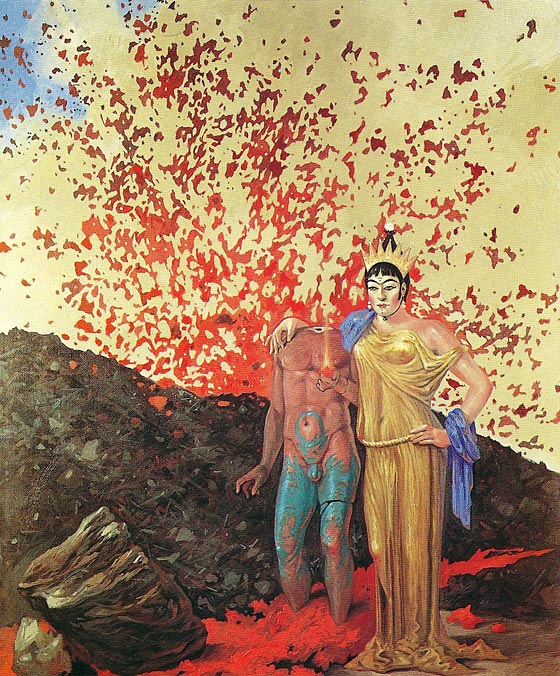
Il Nimpho
Massimo Livadiotti
A passage in Firmicus Maternus preserves a ritual acclamation addressed to the Nymphus: “Hail Nymphus, hail new light.” This suggests that initiation into the grade involved ideas of transformation, unveiling or a new status, although the details of the ceremony remain uncertain. The bridal imagery has often been interpreted as a form of symbolic marriage, but the evidence does not allow us to reconstruct the rite with confidence (Vermaseren 1963; Clauss 2000).
Miles
The Miles, or Soldier, is the Mithraic grades for which an ancient author actually describes an initiation ritual. Tertullian tells us that a crown was offered to the candidate on a sword and placed on his head. The initiate was expected to cast it aside, declaring that Mithras was his crown. Elsewhere, Tertullian also refers to Mithras marking his soldiers on the forehead, although it is uncertain whether he meant the Miles specifically or Mithraic initiates in general (Tertullian, De corona 15; De praescriptione haereticorum 40; Vermaseren 1963).
The military character of the grade is equally clear from its symbols and planetary association. The Miles was under the protection of Mars, and at the Mithraeum of Felicissimus in Ostia a helmet and spear accompany the grade. A third object was traditionally identified as a soldier’s bag, but has more recently been interpreted as the hindquarter of a bull, possibly connecting the grade with sacrifice (Clauss 2000; Chalupa and Glomb 2013). The evidence thus presents the Miles through a strongly military language of service and allegiance, although his actual role within the Mithraic community remains unknown.
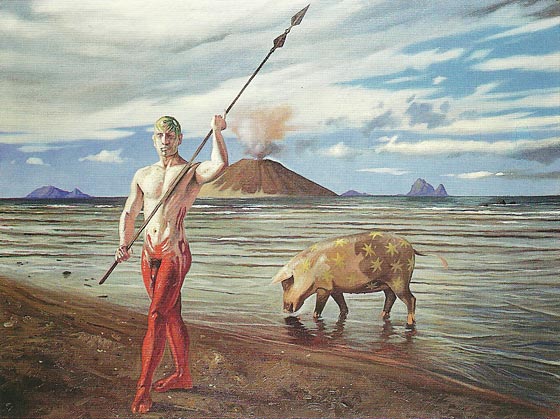
Il Soldato
Massimo Livadiotti
Leo
The grade of Leo, the Lion, seems to have held a particularly prominent place within the Mithraic community. After Pater, it is the grade most frequently attested in inscriptions, and at Santa Prisca in Rome the Lions appear repeatedly in painted processions. Porphyry also distinguishes the Leones as participants in the mysteries, in contrast with the Coraces, whom he describes as servants (Clauss 2000; Mastrocinque 2017).
Fire and purification are central to the symbolism of the grade. Leo was under the protection of Jupiter, and at the Mithraeum of Felicissimus in Ostia its symbols include a fire-shovel, a sistrum and a thunderbolt. Porphyry tells us that initiates into the Leontic rites had honey poured over their hands instead of water and that their tongues were also purified with honey. At Santa Prisca, an inscription refers to the Lions as bearers of incense, reinforcing the connection between the grade, fire and ritual purification (Porphyry, De antro nympharum 15; Clauss 2000; Mastrocinque 2017).
The importance of the grade is also reflected elsewhere. A leonteum, apparently a building associated specifically with Lions, is attested at Carsulae, while the title pater leonum, “Father of the Lions”, is known from Sentinum. These traces suggest that the Leones could form a distinct and visible group within some Mithraic communities, although their precise responsibilities remain uncertain (Clauss 2000; Mastrocinque 2017).
Perses
Honey also played a role in the rites of Perses, the Persian, but here Porphyry gives it a different meaning. He explains that honey was offered to the Perses “as preserver of fruits”, because of its preserving qualities. The grade therefore seems to have been connected with ideas of preservation and fertility rather than with the purificatory symbolism associated with Leo (Porphyry, De antro nympharum 15; Clauss 2000).
Perses was placed under the protection of Luna. At the Mithraeum of Felicissimus in Ostia, the symbols of the grade include a crescent moon and star, together with a sickle and a curved weapon traditionally identified as a Persian dagger. Agricultural imagery also appears elsewhere in connection with the grade, strengthening the association with fruits and the harvest. Beyond these clues, however, the precise meaning and ritual role of the Perses remain difficult to recover (Vermaseren 1963; Clauss 2000; Mastrocinque 2017).
Heliodromus
The close identification of Heliodromus, the Runner of the Sun, with Sol is particularly visible at Santa Prisca. There, the initiate is shown wearing a red garment with a yellow belt and holding a blue globe, while elsewhere in the sanctuary Sol appears at the sacred banquet with Mithras wearing similar clothing and attributes. This correspondence suggests that the Heliodromus could ritually represent the solar god in ceremonies performed within the Mithraeum (Vermaseren 1963).
The grade was accordingly placed under the protection of Sol. At the Mithraeum of Felicissimus in Ostia, its emblems are a radiate crown, a whip and a torch, attributes evoking the Sun and his celestial journey. Santa Prisca likewise associates the Heliodromus with the globe and the radiate halo. As the sixth grade, immediately below Pater, Heliodromus occupied one of the highest positions in the Mithraic hierarchy, although it is comparatively poorly represented in the surviving epigraphic record (Clauss 2000; Beck 1988).
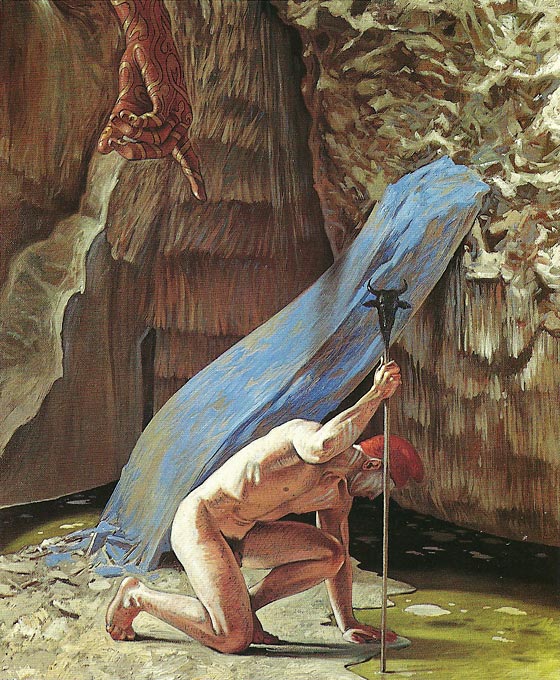
Il Padre
Massimo Livadiotti
Pater
As head of the Mithraic community, the Pater, or Father, occupied the highest of the seven grades. His authority was not merely symbolic: inscriptions show Fathers approving dedications and overseeing the erection of monuments within their Mithraea, sometimes through formulas such as permissum patris, “with the Father’s permission”. Several Fathers could apparently belong to the same community, and the grade is by far the most frequently attested in Mithraic epigraphy (Clauss 2000).
The Pater also represented Mithras within the ritual life of the community. At the Mithraeum of Felicissimus in Ostia, his emblems include Mithras’ Phrygian cap, together with a staff, a vessel and the sickle associated with Saturn, the planetary protector of the grade. This identification finds a striking parallel at Santa Prisca, where the Pater presides over the community in clothing resembling that of Mithras, just as the Heliodromus corresponds to Sol (Vermaseren 1963; Clauss 2000).
The evidence also reveals considerable variation in titles and responsibilities. Inscriptions mention pater patrum, pater sacrorum, pater et antistes and other designations, but these should not necessarily be understood as fixed ranks within a wider Mithraic hierarchy. The existence of several Fathers within individual communities suggests a more flexible organisation, while the precise relationship between these titles remains uncertain (Clauss 2000; Mastrocinque 2017).
References
- Roger Beck (1988) Planetary gods and planetary orders in the mysteries of Mithras
- Roger Beck (2000) Ritual, Myth, Doctrine, and Initiation in the Mysteries of Mithras: New Evidence from a Cult Vessel
- Manfred Clauss (2000) The Roman Cult of Mithras. The God and His Mysteries
- Jason Cooper (1996) Mithras: Mysteries and Initiation Rediscovered
- Richard Gordon (2001) Ritual and hierarchy in the Mysteries of Mithras
- Attilio Mastrocinque (2017) The Mysteries of Mithras. A Different Account
- Maarten Vermaseren (1963) Mithras, the Secret God