This site uses cookies to offer you a better browsing experience.
Find out more on how we use cookies in our privacy policy.

 
Support The New Mithraeum The New Mithraeum is an independent, non-profit project dedicated to Mithraic studies, ancient religions and classical culture. Developed and maintained independently since 2007, the site exists without advertising, paywalls or institutional funding. If you have found value in its articles, interviews, photographs or database, please consider supporting the project with a contribution. Every contribution helps keep The New Mithraeum open, free and alive. Thank you.
Support us →
Monumentum

Mithraea of Dülük

The Mithraea of Doliche, ancient Dülük, Turkey, are unique in that they represent two distinct shrines on the same site.
 
The New Mithraeum
17 Jul 2009
Updated on Sep 2023

TNMM 172

Dülük Ancient City is located 10 kilometres north of Gaziantep city center, whose first known settlement dates back to 600 thousand years. The site is divided into two as 'Ancient City' and 'Sanctuary' . The ancient settlement is under the ground on Keber Hill and its surroundings to the north of Dülük Village. The sanctuary is located on Dülük Baba Hill, approximately 3 kilometers north of Dülük Village.

The Mithraeum of Dülük was unearthed in 1997-1998 as a result of the excavations of Gaziantep Archeology Museum and Germany Münster University. It is the first of the Mithras Underground Temple in Anatolia. The temple was arranged under the coordination of Şehitkamil Municipality and Gaziantep Archeology Museum, and sightseeing routes were created by providing lighting.

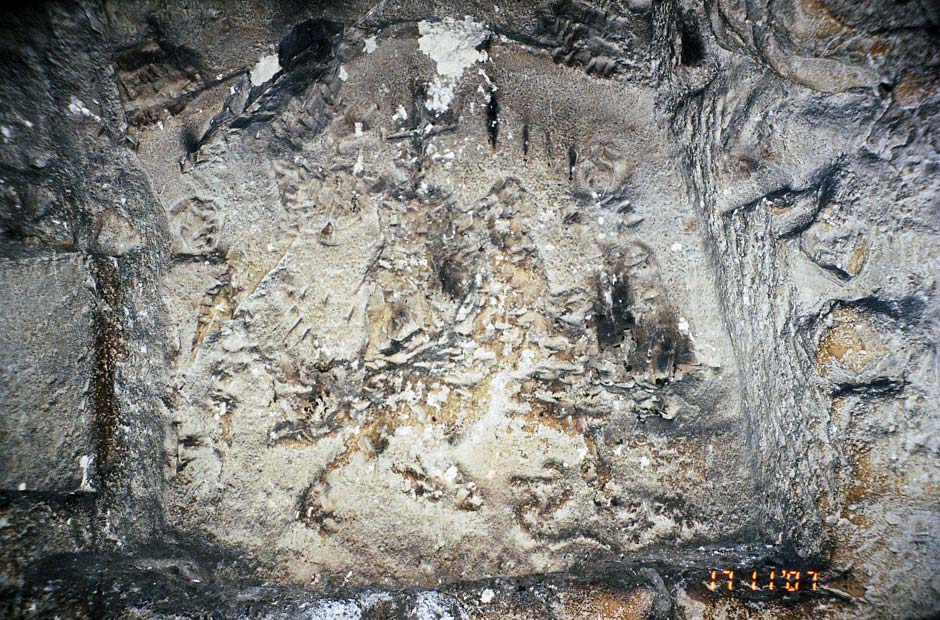
Two Mithraea were discovered in caves at ancient Doliche. Various pulverised ceramics give a date of the 1st-3rd c. AD. There are coins of the time of Elagabalus (3rd c.).

The caves appear to have been worked as a quarry in an earlier period, perhaps attested by a coin of Antiochus IX of Commagene. When the Mithraea were constructed, a layer of lime and limestone was put in place to level the floor, up to 1 meter thick.

A narrow layer of fire damage above the floor-layer indicates the destruction of both Mithraea in the middle of the 3rd century AD. This probably occurs during the occupation of Doliche in 253 by the Sassanid king Shapur I. The destruction of the cult images cannot be dated, but is probably later, and probably by Christians. There are no indications of Christian use of the caves, other than the incised cross.

References

Back to Top