This site uses cookies to offer you a better browsing experience.
Find out more on how we use cookies in our privacy policy.

 
Support The New Mithraeum The New Mithraeum is an independent, non-profit project dedicated to Mithraic studies, ancient religions and classical culture. Developed and maintained independently since 2007, the site exists without advertising, paywalls or institutional funding. If you have found value in its articles, interviews, photographs or database, please consider supporting the project with a contribution. Every contribution helps keep The New Mithraeum open, free and alive. Thank you.
Support us →
Monumentum

Mithräum von Dieburg

There are references to two places of worship from Dieburg, whereby the Mithraeum, discovered in 1926.
  • Plan of the Mithraeum of Dieburg

    Plan of the Mithraeum of Dieburg
    Tertullian.org

  • CIMRM 1246

    CIMRM 1246
    Vermaseren's Corpus

  • Back side of the relief of Dieburg.

    Back side of the relief of Dieburg.
    Pierre-Selim Huard

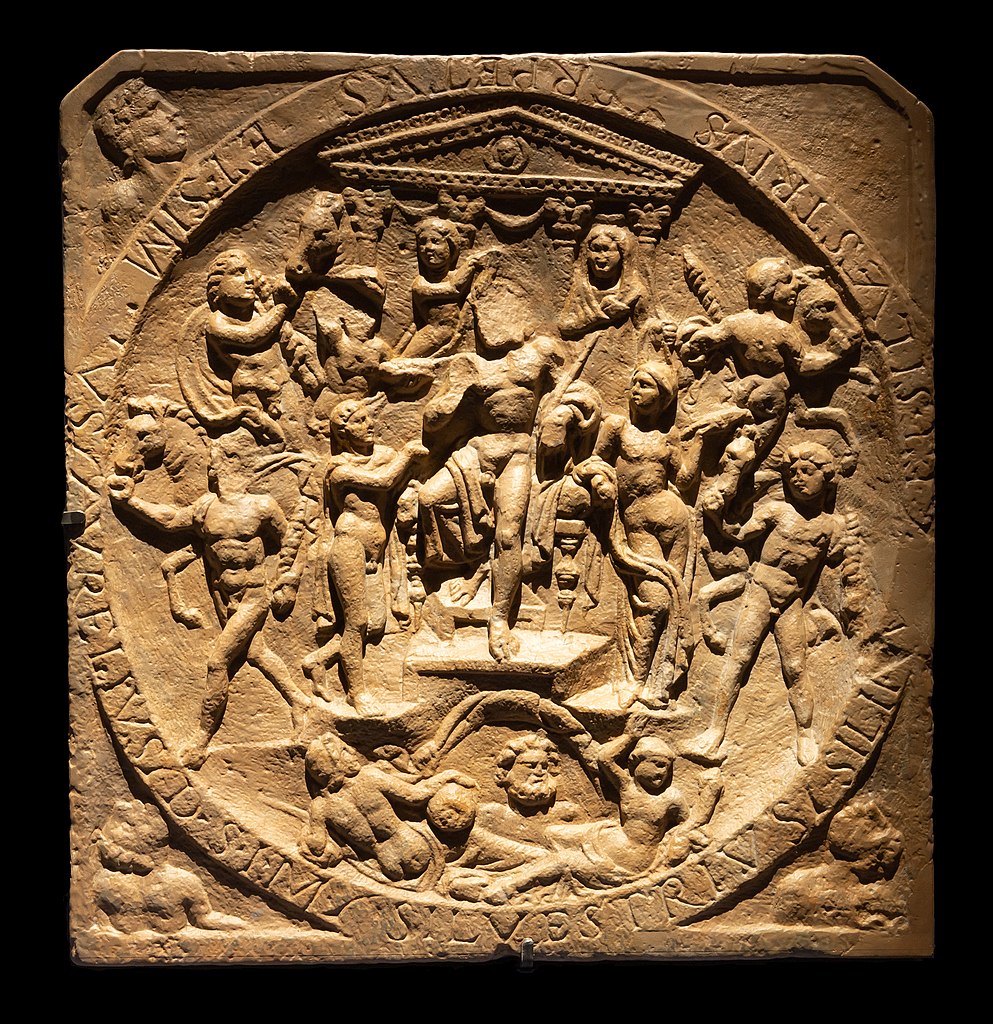
  • Front side of the relief of Dieburg.

    Front side of the relief of Dieburg.
    Pierre-Selim Huard

  • Back side of the relief of Dieburg.

    Back side of the relief of Dieburg.
    CIMRM

  • Front side of the relief of Dieburg.

    Front side of the relief of Dieburg.
    CIMRM

  • Mithras with a boutstatue in yellow sandstone.

    Mithras with a boutstatue in yellow sandstone.
    Following Hadrian

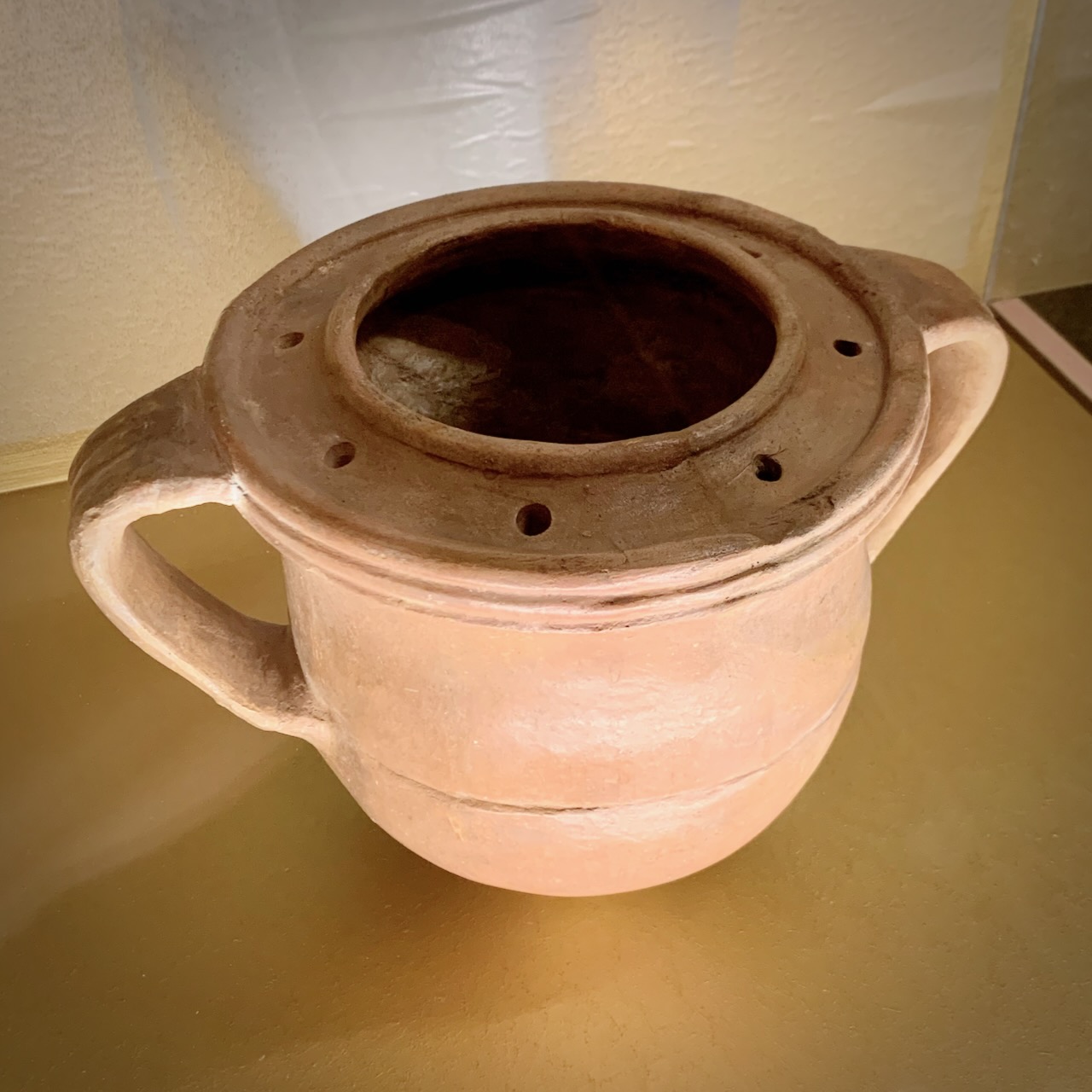
  • Incense vessel from Dieburg

    Incense vessel from Dieburg
    The New Mithraeum / @andreu.abuin (CC BY-SA)

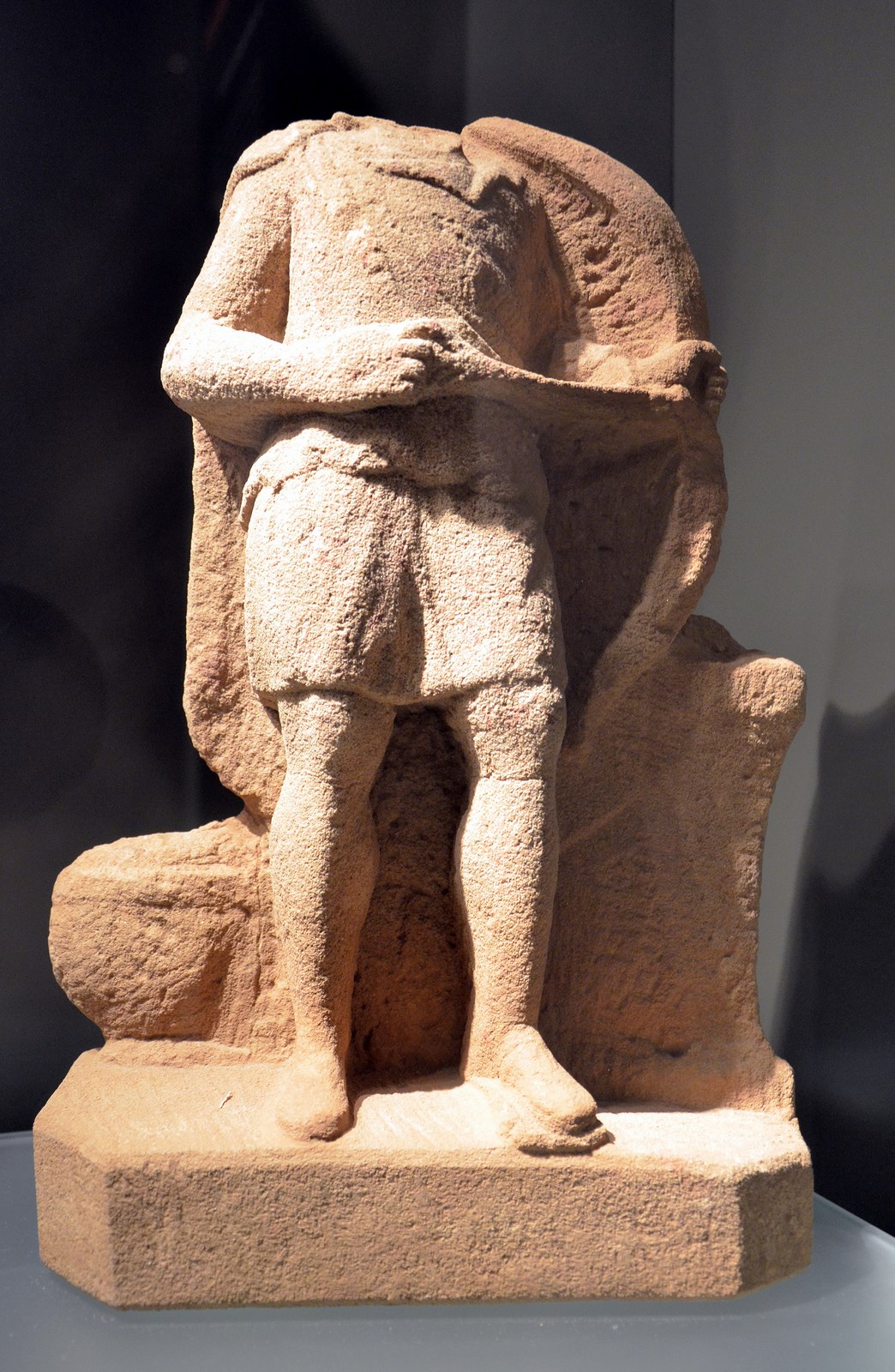
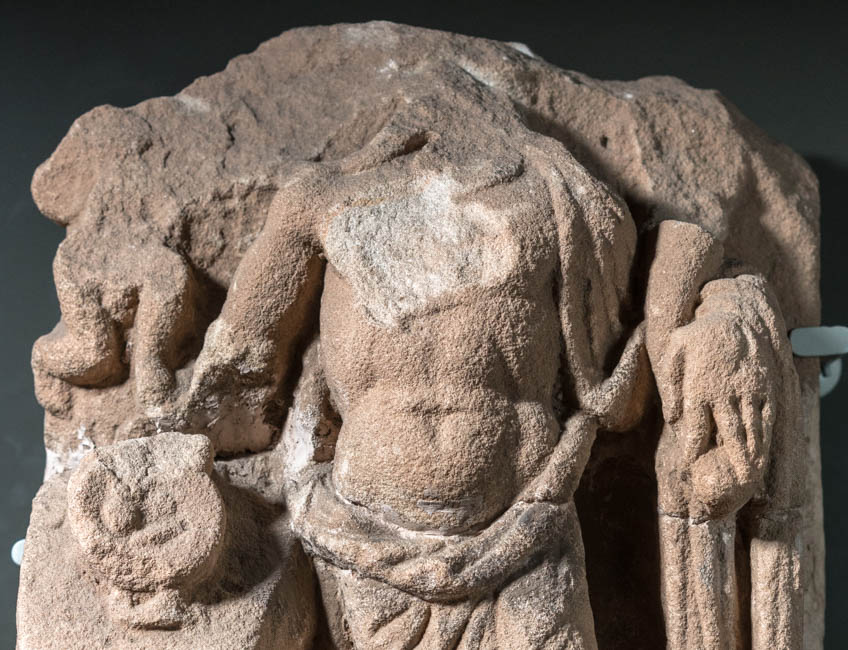
  • Standing man with offering from Dieburg

    Standing man with offering from Dieburg
    Ortolf Harl - Lupa.at

  • Standing man with offering from Dieburg (detail)

    Standing man with offering from Dieburg (detail)
    Ortolf Harl - Lupa.at

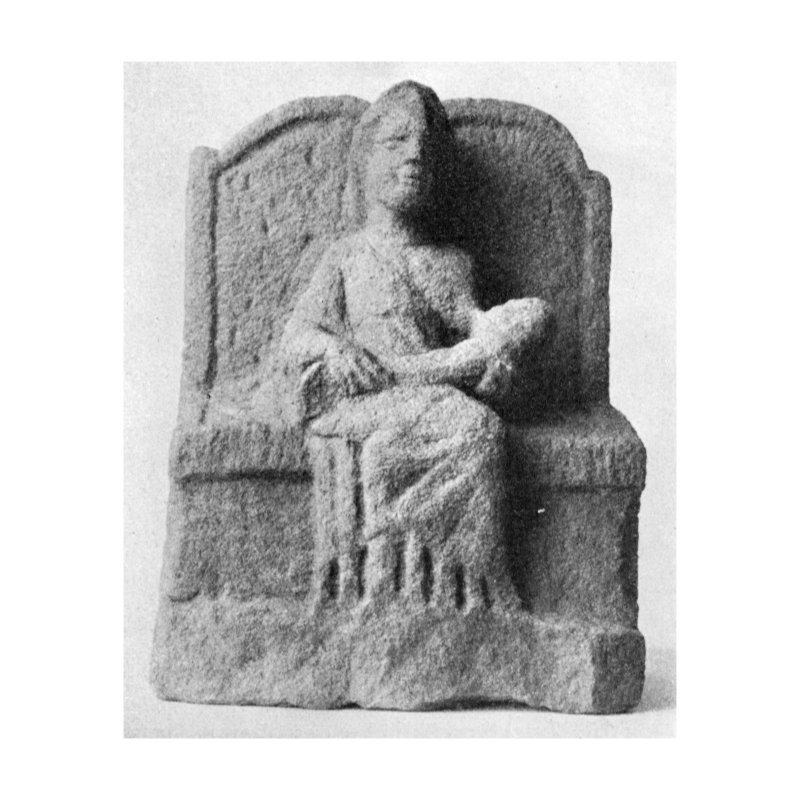
  • Mother and child sculpture of Dieburg

    Mother and child sculpture of Dieburg
    CIMRM

 
The New Mithraeum
31 Dec 2020
Updated on Dec 2023

TNMM 232 ↔ CIMRM 1246

A Mithraeum found at Dieburg at the corner of the Minnefelderseestrasze (Fr. Eberstrasze) and the Forsthausstrasze in the N-E part of the town in 1926.

The Mithraeum is built of trachyte from Eppertshausen near Dieburg. The sanctuary in East-West orientation (L 11.20 Br. 5.60) has the normal division into a central aisle (Br. 2.40) and two benches (Br. 1.60) which begin at a distance of 1.20 m from the entrance. At the beginning of these benches at 0.30 mtrs a cup had been embedded. The r. bench is connected with the base which served for the cult-relief whereas the l. bench ends at a distance of 1.55 mtrs before the backwall.

Between the backwall and the bench is a pit; another pit (diam. 1.10 D. 1.75) is at a distance of 3 mtrs N. of the sanctuary. Of a pronaos only a few traces remained which point to a wood-construction. The whole building has a 2 : 1 proportion. I feel very much inclined to back Cumont’s supposition that the destruction of the sanctuary took place in 260 A.D., the end of the Limes, when the Germans made their invasions.

The Mithraic cult was an exclusively men-only mystery religion in the Roman Empire. There are references to two places of worship from Dieburg, whereby the Mithraeum, discovered in 1926 with its world-famous Mithras stone and numerous other stone monuments, forms the centerpiece of Museum Schloss Fechenbach.

References

Behn in Gnomon II 1926 685ff; NDV II 1926 81ff; FuF 11 1926 193ff; Angelos II 1927 163ff; die Umsshau 31 1929 272ff; M. Dieburg; cf. Lehner in BJ 133 1928 248ff; Cumont in JS 1927 122ff; JRS XVII 1927 233f; Nock in Gnomon 6 1930 30ff; Deubner in ARW XXXIII 1936 124; Esp. Rec. Germ. 163ff; Koepp Germ. Rom. 58ff. See fig. 322. (from Behn).

Related monuments

Two-sided relief of Dieburg

The relief of Dieburg shows Mithras riding a horse as main figure, surrounded by several scenes of the myth.

Mithras with bow from Dieburg

Statue in yellow sandstone found in the pit of the Mithraeum of Dieburg, showing Mithras standing beside an altar with bow and arrow, accompanied by a vase and associated with the water miracle.

Incensiary vessel of Dieburg

The vessel to burn incense from the Mithraeum of Dieburg is similar to those found in other Roman cities of Germany.

Male figure with offerings from Dieburg

A standing half naked man makes offerings to an altar while holding a cornucopia in his other hand.


Statue of a mother goddess with child

This unusual statue in Mithraic iconography of a mother nursing a child was found in the vestibule of the Mithraeum of Dieburg.

 
Back to Top