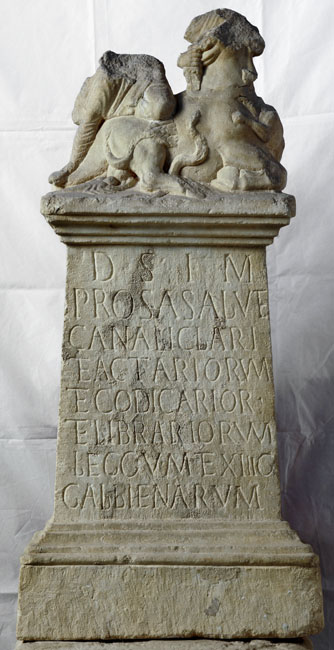
Flavius Aper altar (CIMRM 1584)
TNMM 255 ↔ CIMRM 1584 & 1585
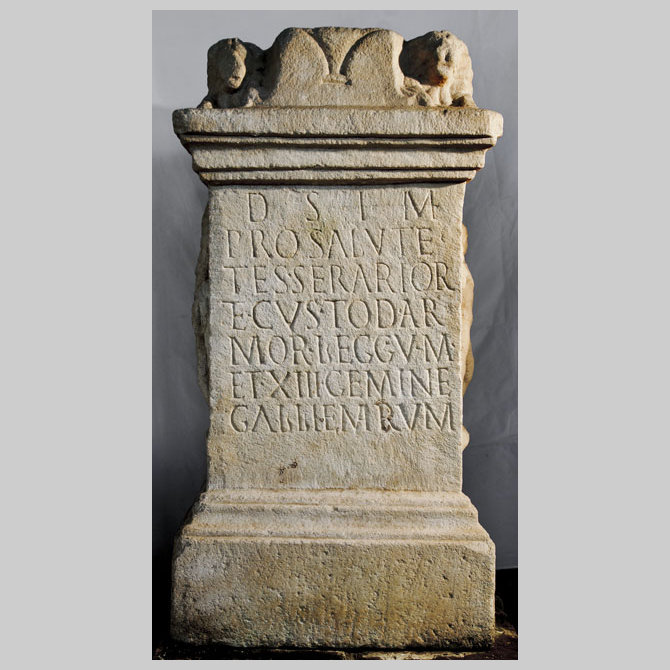
White marble altar (H. 1.12 Br. 0.63 D. 0.54).
On the front standing Mithras in Oriental dress offers to Sol over a burning altar the dagger to which small pieces of meat are speared. Above the meat the raven is flying in order to have a peck at it. In his l.h. Mithras held a large and long object and on the floor before his feet there is a club-shaped object, probably a piece of meat. Sol wears a long shoulder-cape and his head is surrounded by a crown with six rays.
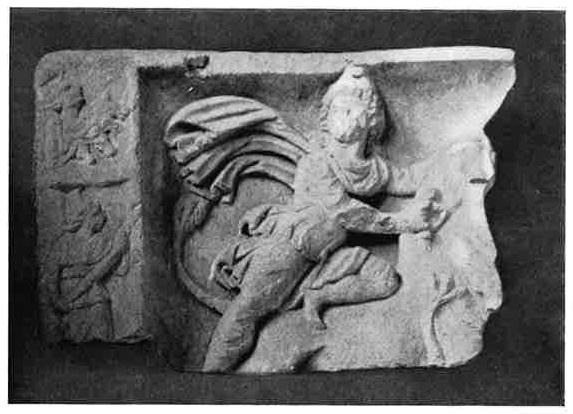
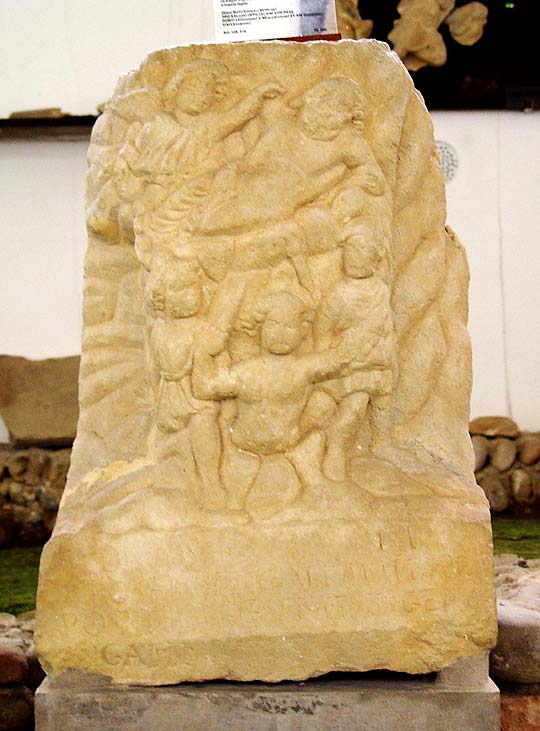
On the side of the altar Mithras is shooting water from a rock before which a person kneels with outstretched hands. Another person embraces Mithras’ knees.
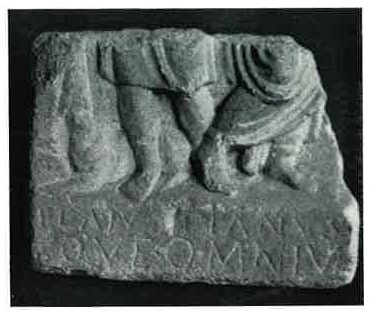
On the l. side a bow, a quiver and a dagger. In the four upper corners a ram’s head. Between the two heads on the front there is an inscription:
CIMRM 1585
L.H. 0.025
D(eo) S(oli) i(nvicto) M(ithrae) / pro sal(ute) d(omini) n(ostri) Gallieni p(ii) f(elicis) / invicti Aug(usti) Fl(avius) Aper v(ir) e(gregius) l(ibens) m(erito).
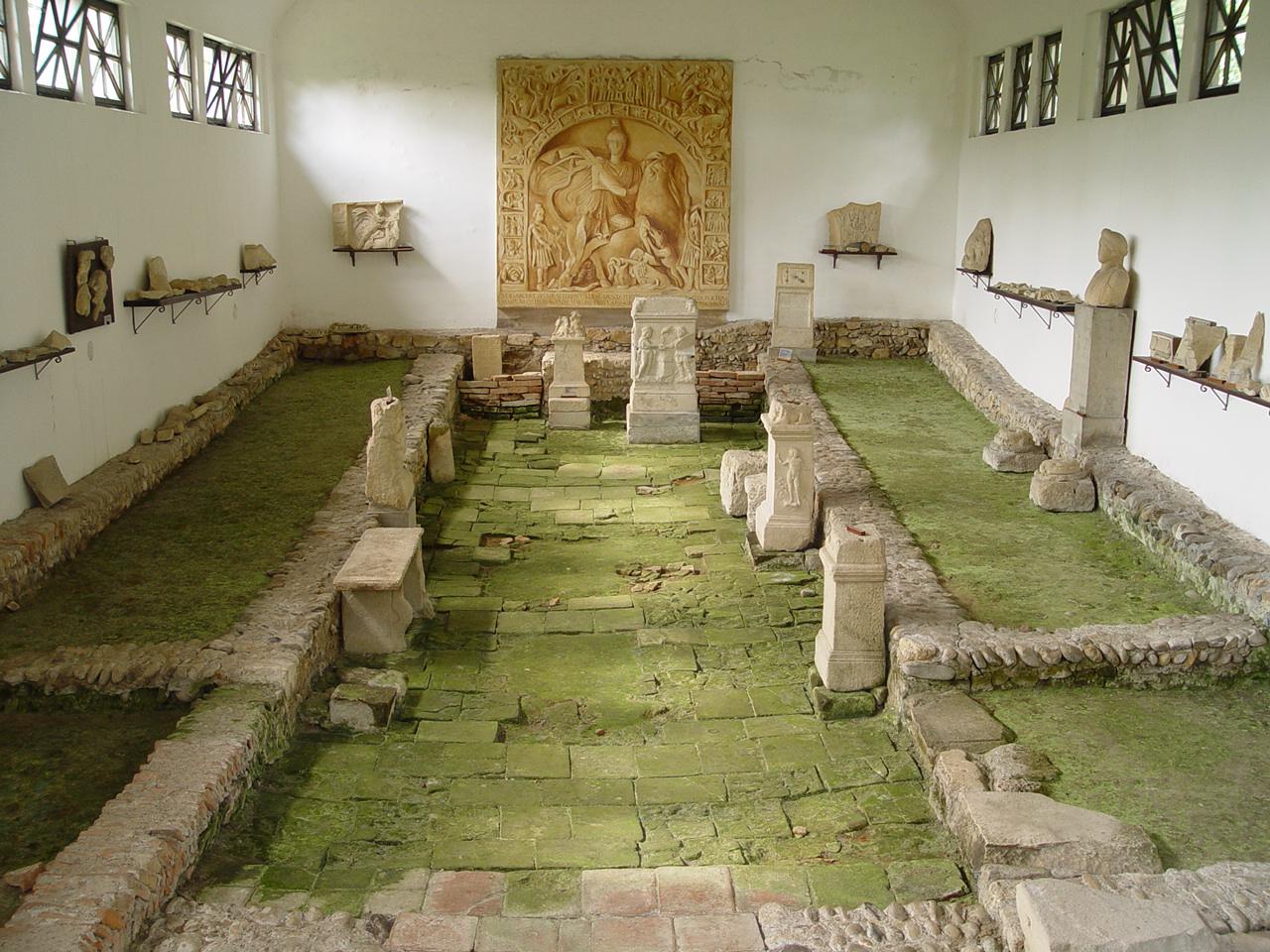
This white marble altar, dedicated by Flavius Aper, whose name appears several times in the epigraph of the temple [see TNMM 204], was located in the worship area of the speleum. Three sides of the monument are decorated with reliefs. The main face shows Mithras and Sol shaking hands over a flaming altar, below the dedication inscription engraved on the crown. On the right is Mithras in military dress and on the left is Sol, wearing a radiant crown, naked (heroicised) and with a simple cloak over his shoulder. Above the altar there is a sword on which there are pieces of meat roasting in the fire, as if on a spit, which must correspond to the exta of the sacrificed bull, while at the foot of the altar, in front of Mithras’ right leg, there is the haunch of the animal. A raven, suspended in mid-air, pecks at the roasted meat. This scene corresponds to one of the sequences depicted on the historiated reliefs, marking the (re)reconciliation of the two gods.
On one side of the altar, the archer Mithras is depicted shooting an arrow at the rock of the fountain in front of two prostrate figures, while the other side shows the attributes of the same scene: bow, quiver and sword.
Among the isolated episodes of the myth, the handshake marks a key moment in the relationship between Sol and Mithras. In the story it takes place after Sol’s oath of allegiance and before the sacred meal. Another handshake occurs when Mithras climbs onto Sol’s chariot at the end of his journey. The gesture also evokes a form of continuity with his Eastern origin, confirming his function as a god of sovereign treaties, as can be seen in a bas-relief from the temple of Nemrud Dagh, erected by Antiochus I, in which Mithras shakes the king’s right hand as a sign of alliance and protection [TNMM 134]. His Vedo-Avestic attributes underpinned the notion of loyalty and fraternity that was also present in the Roman world, where fides and concordia were symbolised by the dextrarum iunctio, expressing reconciliation.
Mithras’ followers also sometimes referred to each other as syndexi [sic], those who are united by a handshake, probably in reference to the very first handshake exchanged between the pater and the new adept after initiation, which in turn replicated the one between Mithras and Sol.
Main inscription
References
Abramic 178f No. 241 and fig. 125; RA (S. 6) VIII 1936 265 No. 53; Schmid Südsteiermark Graz 1925 17 and Pl. II; Schmid in BRGK XV 1923-24 223 fig. 17; Mostra4 720 No. 52; Ferri Arte Dan. 198 fig. 213; Vulic in Bull. Ac. Serbe I 1935202; AIJ I 146 No. 313 and fig. See figs. 402- 404.
- Bricault; Roy (2021) Les cultes de Mithra dans l’Empire romain.