This site uses cookies to offer you a better browsing experience.
Find out more on how we use cookies in our privacy policy.

 
Monumentum

Mitreo della Planta Pedis

The floor of the central aisle of the Mithraeum of the Footprint in Ostia has a mosaic depicting a snake and a footprint.
1 / 6
 
The New Mithraeum
14 Jun 2009
Updated on Mar 2022

TNMM 94 ↔ CIMRM 272

[The Mithraeum of the Footprint was] (Reg. III, Is. XVII, 2) constructed in a building from the Hadrian period, situated near Horrea and a Serapeum.

The part of the house transformed into a Mithraeum has two rows of three pillars, which divide the sanctuary into three sections. In the middle section runs a central-aisle between two small benches (H. 0.40 Br. 0.25), constructed against the pillars. In the right bench, before the middle pillar, is a small rectangular depression (L. 0.10) and in its base a niche (H. 0.35 Br. 0.42 D. 0.30) in which bones of fowls have been found. The niche in the opposite bench is deeper (D. 0.60 Br. 0.42). It seems that behind this bench a larger one extends in the left section (Br. 2.00) of the sanctuary. At the end of the r. bench an entrance (Br. 1.10) had been made in the side wall, the main entrance, however, was opposite the cult- niche (Br. 0.80). The niche had three 'levels: the first (H. 0.55 D. 0.75) is covered with black-white mosaic (five crosses between two squares); the second level (H. 0.25 D. 0.50) had a marble revetment; the third (H. 0.44 D. 0.70) had a small rectangular brick base.

A base is (H. 0.50-0.60 Br. 0.30) on either side before the niche, probably for statues of the torchbearers (lost). Between them is a marble altar (H. 1.00 Br. 0.34 D. 0.30) in the top of which is a depression.

The floor of the central-aisle has a mosaic decoration, existing of a small black line approximately in the centre of the sanctuary. Near this band there is the representation of a serpent (L. 1.00), whereas near the entrance a foot is visible. The original floor of the Mithraeum, however, had only a simple pavement of cocciopisto and in it on the same place a footmark was imprinted. (Becatti, PI. XVI, I).

The shrine was built in the second half of the second or the early third century AD. Modifications have been dated to the second half of the third century.

References

Becatti, Mitrei Ostia, 77ff, fig. 18 and PIs. XV, XVI, 3. See fig. 80.

Related monuments

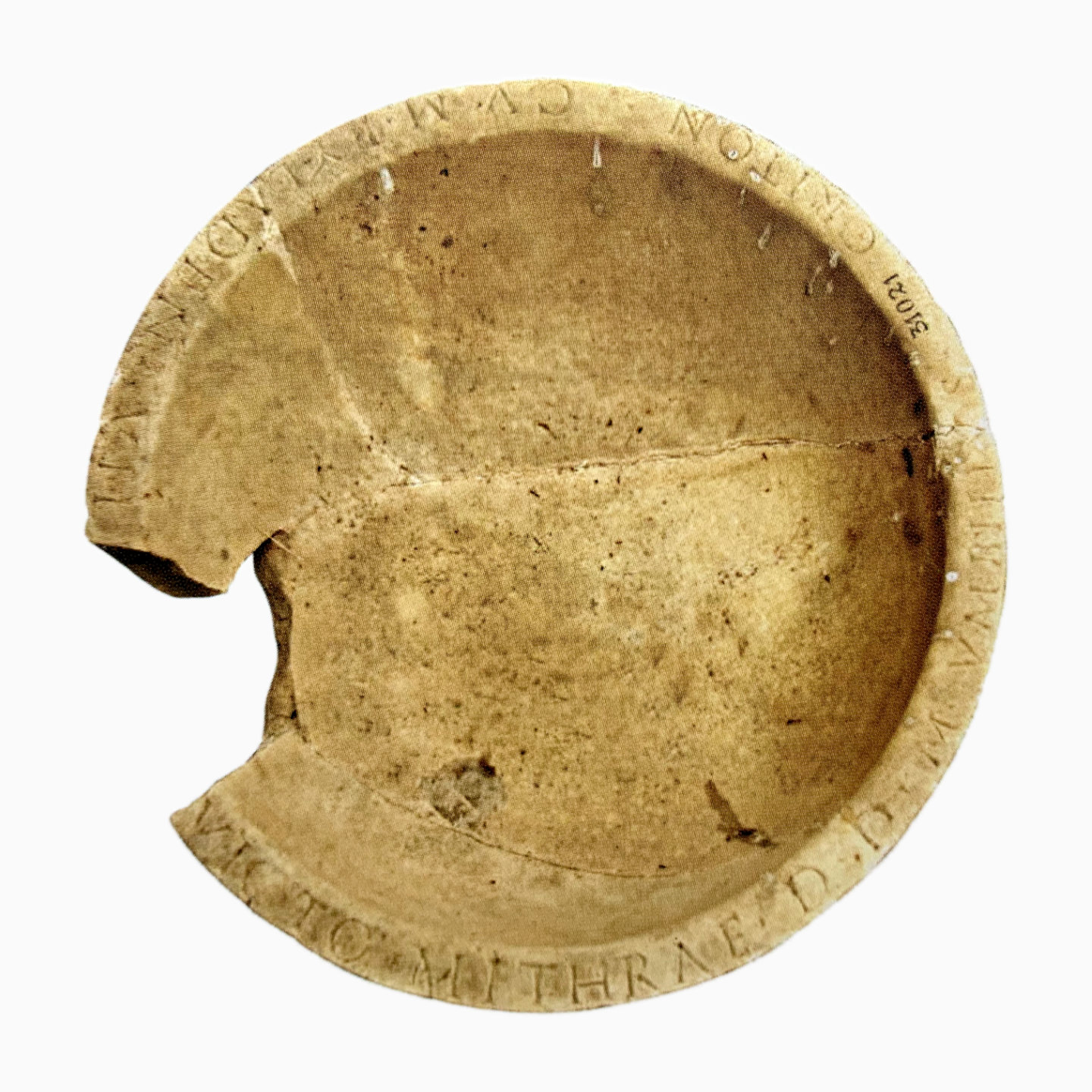
Basin with inscription from Mitreo della Planta Pedis

The dedicator of this marble basin could be the same person who offered the sculpture of Mithras slaying the bull in the Mitreo delle Terme di Mitra.

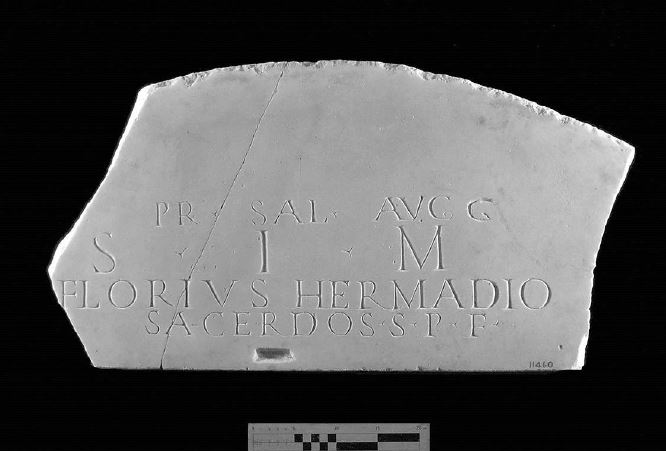
Altar of the Mitreo della Planta Pedis

The altar includes a slab with an inscription for the salvation of two emperors.

Basin from Mitreo della Planta Pedis

This marble basin found in the Mithraeum of the Footprint bears an inscription of a certain Umbilius Criton, associated with a monumental tauroctonic sculpture also found in Ostia.

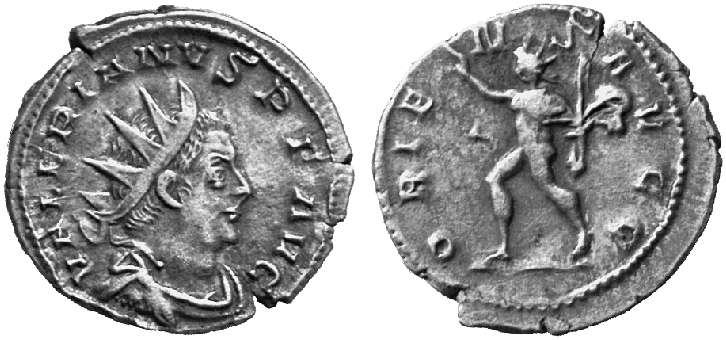
Coin of Valerian and Sol

This coin was deposited in the upper level of the throne in the cult niche of the Mitreo della Planta Pedis.


Inscription of Hermes to Silvanus

This inscription, found in the Mitreo della Planta Pedis, among some other monuments in Ostia, suggests a link between Mithras and Silvanus.

 
Back to Top