Biography
of Fronto Leveius
- Fronto Leveius, a free citizen, is attested as a member of a Mithraic community (syndexios) at the Mitreo de San Juan de la Isla.
- Attested at La Isla, Tarraconensis, Hispania in 200 (TNMM 196).
TNMP 12
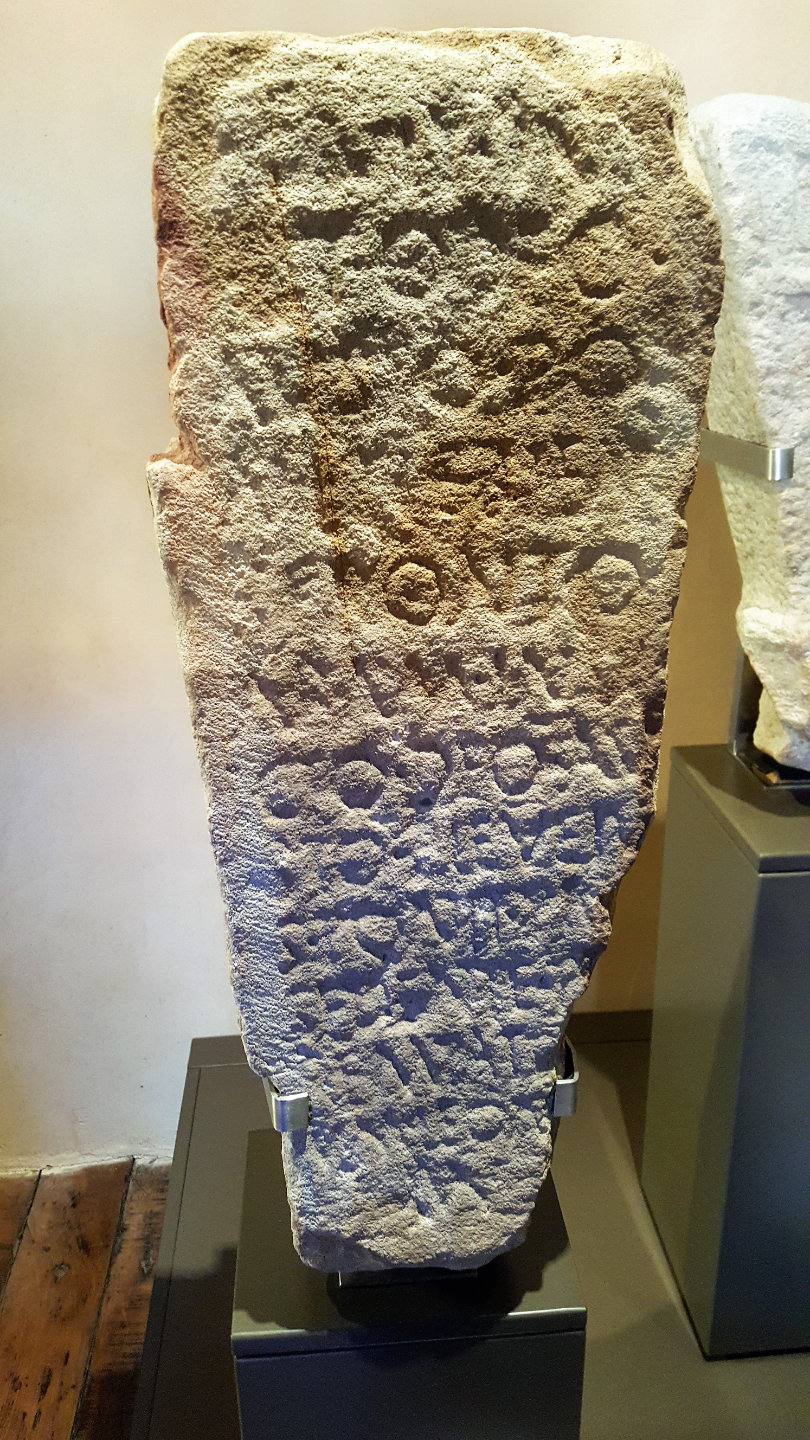
Fronto Leveius, also referred to in the inscription as Fronto Libens, is known exclusively through a Mithraic altar discovered at San Juan de la Isla, near modern Colunga in Asturias. The monument records his dedication to Deus Invictus Augustus and constitutes one of the most important testimonies for the cult of Mithras in the north-west of the Iberian Peninsula. Although the inscription never explicitly names Mithras, the mention of a pater patrum and a group of leones, initiates of the fourth Mithraic grade, leaves little doubt regarding the cultic context of the dedication (TNMM 196; Alvar 2018; Chalupa 2023).
Nothing is known of Fronto’s profession, family background, legal status, or place of origin. His Roman-style nomenclature suggests that he was a free individual, but the available evidence does not permit a more precise assessment of his social position. Earlier attempts to portray him as a merchant or traveller remain speculative and are not supported by the inscription itself. Rather, the text presents him simply as the individual responsible for erecting the altar and commemorating the act through an unusually elaborate inscription.
The importance of Fronto lies less in his personal biography than in what his dedication reveals about the community in which he participated. According to Jaime Alvar Ezquerra, the inscription records a ritual act performed in the presence of a pater patrum and a corporate body of leones, indicating that the cult at San Juan de la Isla was already fully established and hierarchically organised. Fronto therefore appears not as a founder of the community but as a participant acting within an existing religious structure, possibly seeking integration, recognition, or advancement within the group. Whether he was a local inhabitant or a newcomer to the small Cantabrian harbour cannot be determined from the surviving evidence.
The altar also provides valuable evidence for the spread of Mithraism along the maritime networks linking the Cantabrian coast with Aquitania and Gallaecia. Alvar has argued that the monument is best dated to the Severan period, probably in the first decades of the third century CE, when religious movements associated with Mithras, Sol, Isis, and Sarapis experienced renewed vitality in Hispania. In this context, Fronto’s dedication stands as evidence of the integration of this coastal settlement into wider currents of Roman religious life rather than as an isolated expression of local devotion.
References
- Aleš Chalupa (2023) Římský kult boha Mithry. Atlas lokalit a katalog nálezů I.
- Jaime Alvar Ezquerra (2018) El culto de Mitra en Hispania.
- Alfred Shenington Geden. Lápida mitráica de San Juan de la Isla in EDCS.
- Hispania Epigraphica. Lápida mitráica de San Juan de la Isla in HE.
- Mitra en Hispania (2022) Lápida mitráica de San Juan de la Isla in MEH.
Attestations

Lápida mitráica de San Juan de la Isla
TNMM 196
The monument of San Juan de la Isla (Asturias) devoted to Mithras was preserved in the portico of the main church until 1843.