Biography
of Aulus Cluentius Habitus
- Aulus Cluentius Habitus, an eques, is attested as a member of a Mithraic community (syndexios) at the Mithraeum of Carrawburgh.
- Also recorded as Praefectus cohortis I Batavorum.
- Attested at Brocolita, Britannia inferior, Britannia in 3rd century (TNMM 529).
TNMP 158
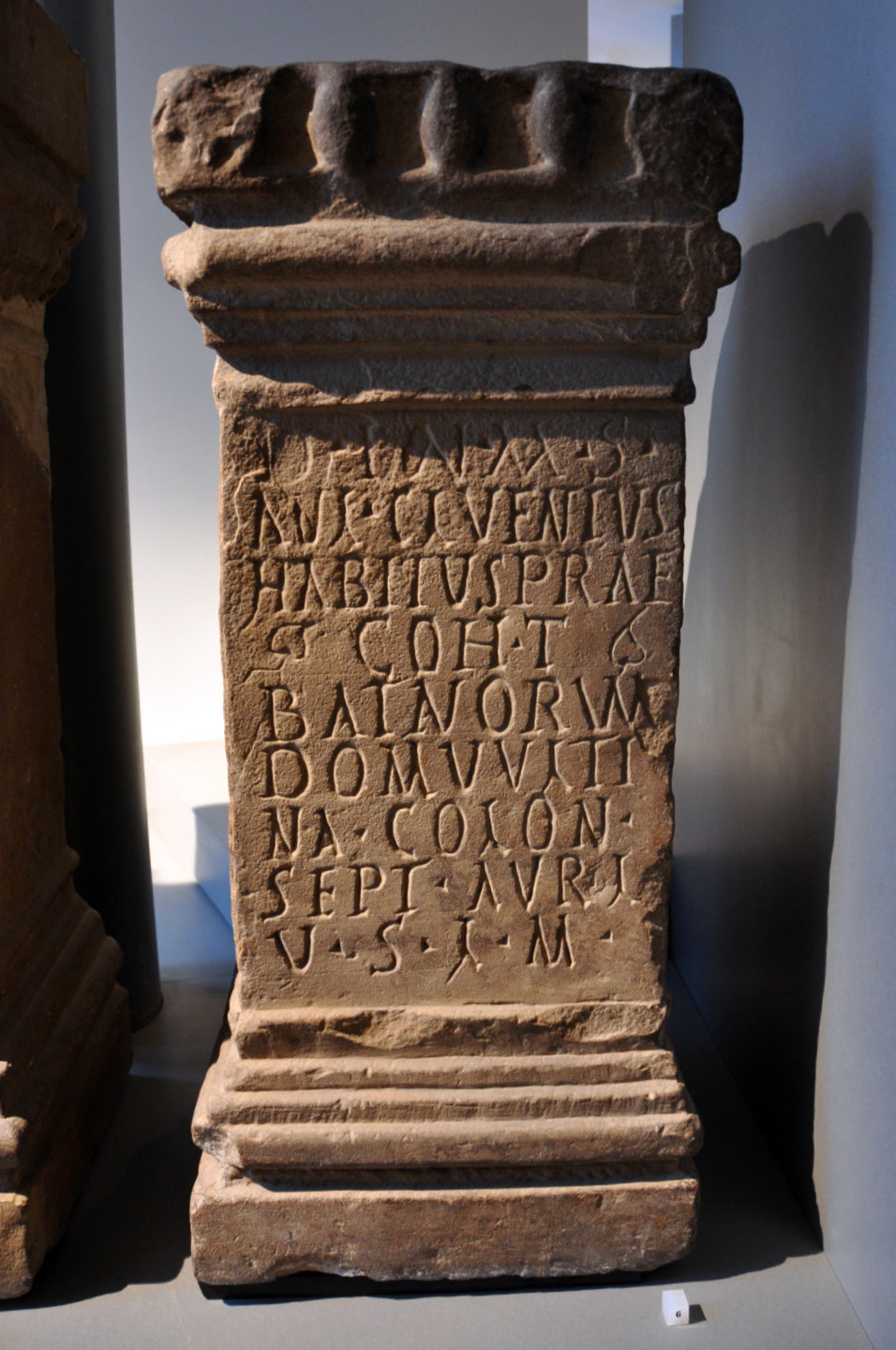
Aulus Cluentius Habitus was a Roman equestrian officer who served as prefect of the Cohors I Batavorum, an auxiliary infantry unit stationed at Brocolitia, modern Carrawburgh, on Hadrian’s Wall during the reign of Septimius Severus. He is known from an inscribed altar dedicated to Deus Invictus Mithras, discovered in the Carrawburgh Mithraeum, which records both his military rank and his place of origin. The inscription identifies him as a member of the Ufentina voting tribe from Colonia Septimia Aurelia Larinum (modern Larino, Italy), making him one of the relatively few Mithraic dedicants whose civic background can be established with confidence (TNMM 529; RIB 1545; CIMRM 846; Richmond & Gillam 1951).
The Severan title of his hometown indicates that the dedication was made during the joint reign of Septimius Severus and Caracalla, most probably between AD 205 and 211. As the earliest securely dated monument from the sanctuary, his altar is generally associated with the foundation or earliest phase of the Carrawburgh Mithraeum, leading several scholars to suggest that Habitus may have supervised its construction and belonged to its first congregation (Birley 1934; Richmond & Gillam 1951; Drummond 2013; Chalupa 2023).
Habitus was succeeded at Brocolitia by Lucius Antonius Proculus, another prefect of the Cohors I Batavorum, whose Mithraic dedication belongs to the period after the unit received the honorific title Antoniniana (AD 213–222). Together, their inscriptions provide an important chronological framework for dating the earliest development of one of the best-preserved Mithraea in Roman Britain.
Although his nomen links him to the distinguished gens Cluentia of Larinum, celebrated through Cicero’s Pro Cluentio, no evidence demonstrates that the Mithraic prefect was directly related to the Republican family. Nevertheless, his inscription illustrates the geographical mobility of Roman officers, whose careers could take them from southern Italy to the northern frontier of Britannia while participating in the spread of the cult of Mithras.
References
- Aleš Chalupa (2023) Římský kult boha Mithry.
- Epigraphic Database Heidelberg. Altar of Carrawburgh by Aulus Cluentius in EDH.
- Ian Archibald Richmond (1951) The Temple of Mithras at Carrawburgh..
- Roman Inscriptions of Britain. Altar of Carrawburgh by Aulus Cluentius in RIB.
Attestations
Altar of Carrawburgh by Aulus Cluentius
TNMM 529
One of the three altars to Mithras found at the Mithraeum of Carrawburgh fort.
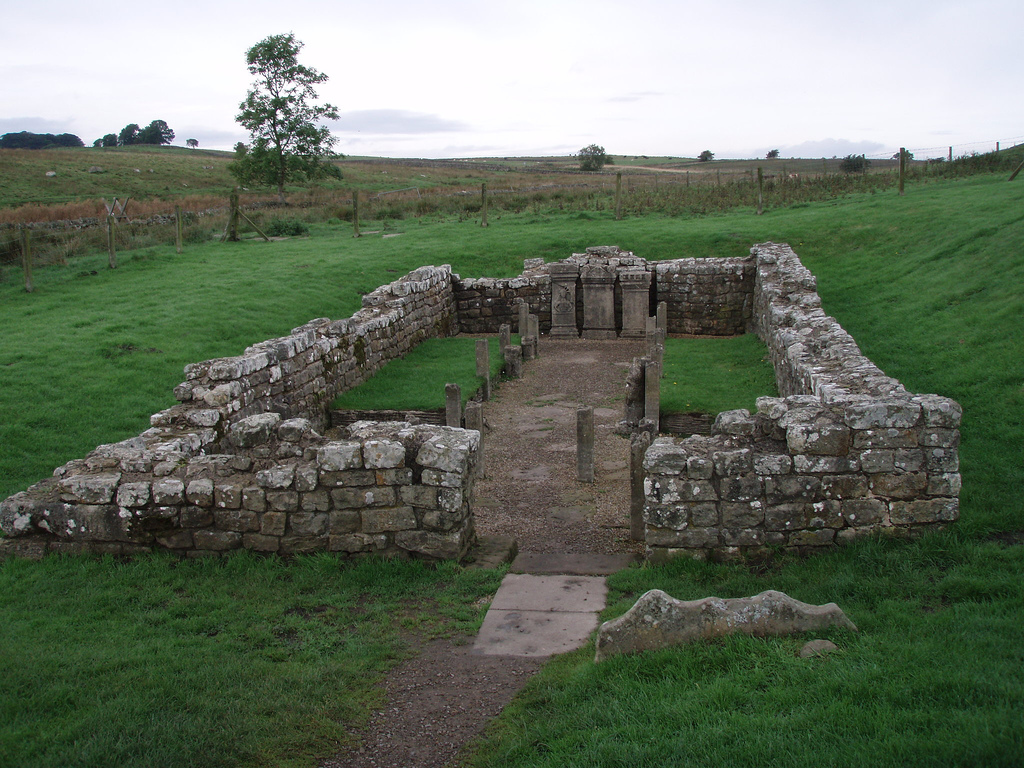
Mithraeum of Carrawburgh
TNMM 26
The temple of Mithras of Carrawburgh, Brocolita, disclosed three main stages of development, the second exhibiting two reconstructions.