
Biography
of Ision
- Ision, a slave, is attested as a member of a Mithraic community (syndexios), with a recorded role as Vilicus vectigalis Illyrici.
- Attested at Guberevac, Moesia superior, Moesia in 2nd century (TNMM 639).
TNMP 215
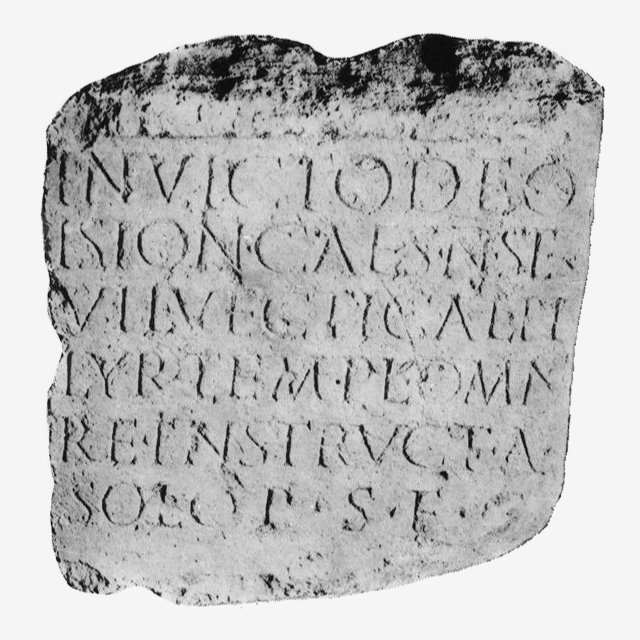
Ision was an imperial slave and customs administrator active in the Danubian provinces during the late 2nd century CE. He is known from a Latin votive inscription discovered at Guberevac, in the region of Singidunum, in Moesia Superior (modern Serbia) (TNMM 639 = CIL III 8163 = CIMRM 2235).
The inscription identifies him as Caesaris nostri servus and vilicus vectigalis Illyrici, indicating that he served within the imperial customs and fiscal administration of Illyricum. At his own expense (pecunia sua), he commissioned the construction of a Mithraic temple “from the ground up” (a solo) and fully furnished it (templum omni re instructum), dedicating it to the Invictus Deus, Mithras.
Modern scholarship has placed Ision within a broader network of imperial fiscal slaves and customs officials associated with the spread of oriental cults across the Danubian and Adriatic regions (De Laet 1949; Merkelbach 1984; Clauss 1992). Mladen Tomorad connected Ision with the wider religious environment of customs officials linked to Isaic and Serapic cults in Illyricum and Pannonia (Tomorad 2018). A bronze statuette of Isis Fortuna discovered at Guberevac has also been interpreted as evidence for the coexistence of multiple eastern cults in the area (Lisičar 1961; Tomorad 2018).
Ision was furthermore cited by Radmila Zotović as an example of private religious patronage in Roman Serbia, highlighting the unusual financial capacity of certain lower-status individuals and imperial dependants to fund temple construction during the Roman period (Zotović 2018).
He remains one of the clearest known examples of a non-elite imperial slave acting as a Mithraic benefactor and temple founder in the Roman Balkans.
References
- Epigraphic Database Heidelberg. Inscription of Ision from Guberevac in EDH.
- Alfred Shenington Geden. Inscription of Ision from Guberevac in EDCS.
Attestations
Inscription of Ision from Guberevac
TNMM 639
In this monument, the imperial slave Ision claims the completion of a new temple to Mithras in Moesia.
