Your search Al-Bahnasa gave 3015 results.
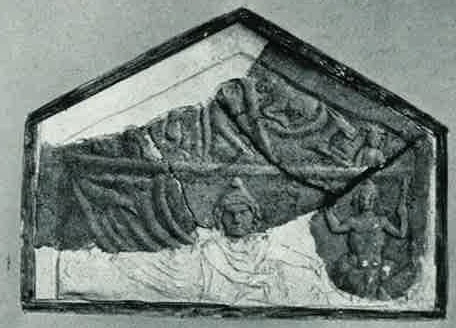
Four fragments of a bluish marble tauroctony relief from the Mithraeum at Sarmizegetusa, Dacia, depicting the central bull-slaying with partially preserved subsidiary scenes.
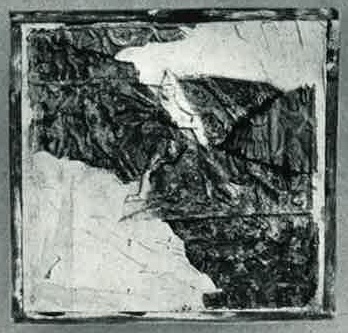
Bluish marble tauroctony relief in fragments from the Mithraeum at Sarmizegetusa, Dacia, divided into horizontal registers with the central bull-slaying and multiple subsidiary Mithraic scenes.
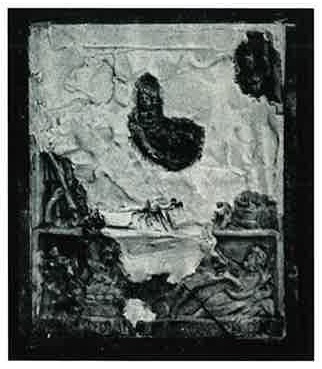
White marble tauroctony relief in eleven fragments from the Mithraeum at Sarmizegetusa, Dacia, divided into three horizontal registers, the central one depicting the bull-slaying and the others bearing subsidiary Mithraic scenes.

Group of unpublished marble reliefs found in 1906 at Cinçsor on the right bank of the river Alt, Dacia, probably associated with a Mithraic sanctuary.
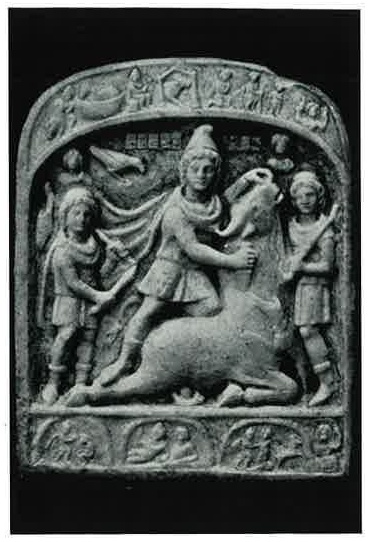
White marble tauroctony relief found in the river Mureș at Vintu de Jos near Apulum, Dacia, around 1859, depicting the bull-slaying with the full iconographic programme.
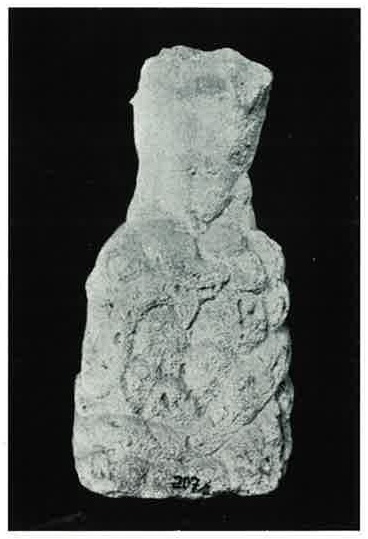
Sandstone rock-birth statue from Apulum, Dacia, depicting the naked Mithras emerging from a rock encircled by a snake; head and arms are lost.
Inscription from Apulum, Dacia, dedicated to Mithrae sacrum by a dedicant whose name begins with M.

Sandstone head in Phrygian cap from Apulum, Dacia; probably belonging to a torchbearer.
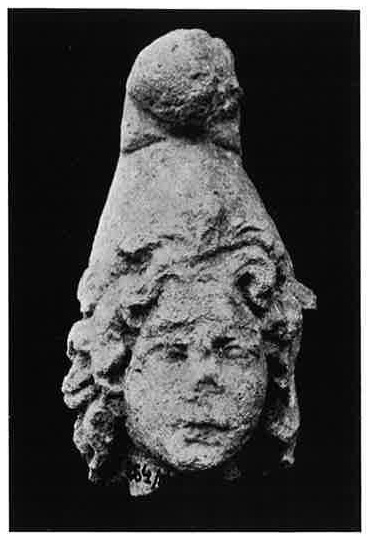
Sandstone head in Phrygian cap from Apulum, Dacia; probably belonging to a torchbearer or Attis.
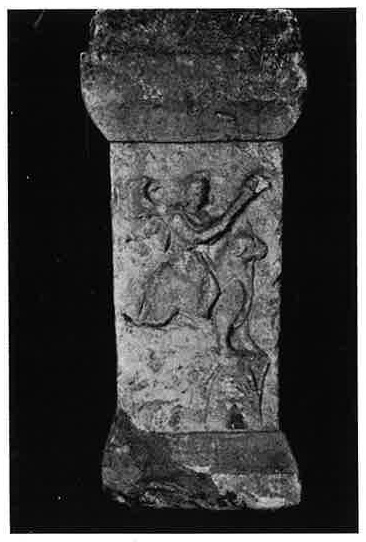
Limestone base from Apulum, Dacia, decorated on the front with Mithras riding the bull to the right while holding an upraised torch — the tauriphoros riding type, distinct from the tauroctony.
Greek inscription from Apulum, Dacia, dedicated to Helios aneuketos — the invincible Sun — by Hermes, son of Gorgios.
Inscription from Apulum, Dacia, preserving the end of a dedication by a beneficiarius consularis.
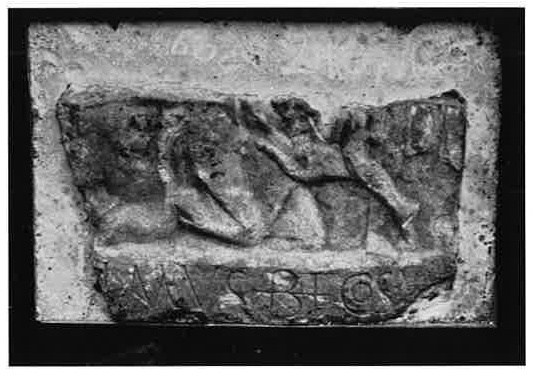
Marble relief fragment from Apulum, Dacia, preserving the forepart of the bull with the serpent and dog, and part of Cautes; the upper portion is lost.
White marble tauroctony relief from Apulum, Dacia, depicting Mithras killing the bull in a grotto with dog and serpent; formerly in a private collection in Budapest.
Statues of a man and a woman from the same Mithraic context at Apulum, Dacia; no further details are known.
Fragment of an open-work marble tauroctony from the Mithraeum at Apulum, Dacia, preserving Mithras's head with only the snout of the bull; the relief is framed by a border.
Small altar bearing only the dedication Cautopati, from near Intercisa, Pannonia Inferior, found in the bed of the Danube.
Head in Phrygian cap from the bed of the Danube near the Isle of Szalk, Intercisa area, Pannonia Inferior; the face is lost — possibly a torchbearer or Attis.
Altar fragment from Intercisa, Pannonia Inferior, dedicated to Deo invicto by Comitius.
Marble statue from Intercisa, Pannonia Inferior, depicting Cautopates in Oriental dress and a high Phrygian cap, walking.
