Your search Al-Bahnasa gave 3013 results.
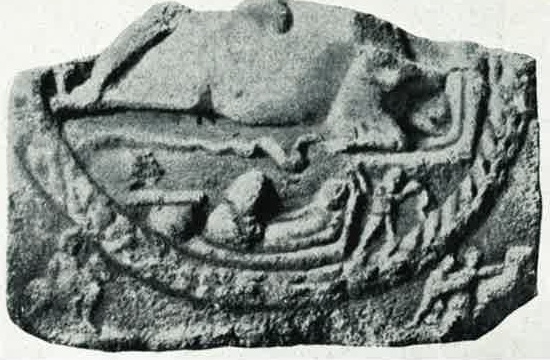
Lower part of a marble tauroctony relief from Küstendil, ancient Pautalia in Moesia Superior, preserving only the lower half of the bull-slaying scene with partially visible legs of the torchbearers.

Monument from Almus, Moesia Superior, with a tauroctony representation and a dedication to Deo invicto above it; no further details are available.
Upper portion of a limestone altar from Kule-Mahata, ancient Almus in Moesia Superior, dedicated to the invictus — possibly but not certainly Mithras — by Caius Plotius Maro for himself and his family.
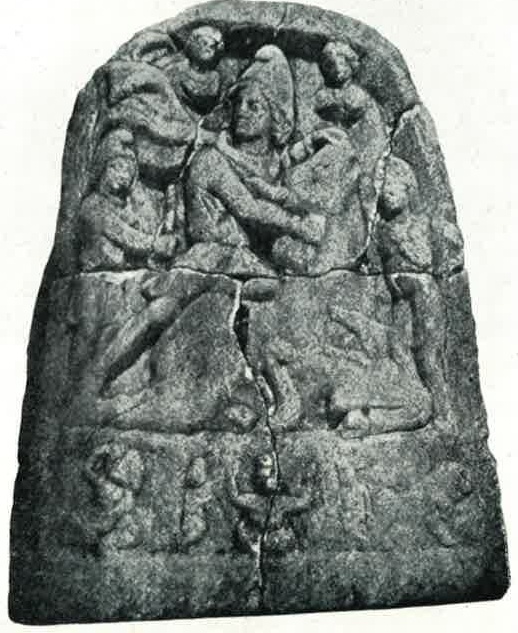
White marble tauroctony relief in five fragments from Dupljane near Călan, ancient Aquae in Dacia, found in 1900, depicting the bull-slaying with the standard iconographic programme.
Inscription from Șard near Apulum, Dacia, dedicated to Soli invicto in Latin and to Helios aniketo in Greek by Abeallathos — a rare bilingual Mithraic dedication.
Inscription from the village of Șard near Apulum, Dacia, dedicated to Soli invicto for the welfare of the Emperor, the Roman people, and the ordo of the Colonia Apuli by Caius Iulius Valens.
Column found at Sankt Peter in Holz, ancient Teurnia in Noricum, dedicated to Cautes by Lucius Albius Atticus and Caius Albius Avitus — probably father and son — making it a rare joint family dedication to a Mithraic torchbearer.
Deposit of 1,200 coins spanning Augustus to Constantine and a small bronze bell from Thun-Allmendingen, representing the longest chronological range of any coin assemblage from a Mithraic context in Germania.
The six divine names inscribed on the bronze hatchets from Thun-Allmendingen — Iovi, Neptuni, Minervae, Mercurio, Matribus, Matroni — reflecting the polytheistic religious landscape of the Mithraic community at this site.
Set of six triangular bronze votive hatchets from Thun-Allmendingen, each inscribed with the name of a deity: Iovi, Neptuni, Minervae, Mercurio, Matribus, and Matroni; forming a unique ensemble of polytheistic dedications within a Mithraic context.
Limestone left hand holding a caduceus from Thun-Allmendingen, belonging to a statue of Mercury associated with the possible Mithraeum.
Fragmentary limestone relief from Thun-Allmendingen of the same dimensions as the bull relief, depicting a swine; both may have formed part of the sanctuary's ritual décor.
Large limestone relief from Thun-Allmendingen depicting a bull walking to the left; the head is lost. At approximately 2.91 × 2.43 m one of the largest single-animal reliefs from a Mithraic context.
Two small limestone heads in Phrygian caps from the Stockhorn Mountains near Thun-Allmendingen, each approximately fist-sized, probably belonging to statues of the torchbearers.
Site excavated by C. F. L. Lohner in 1824–25 at the Renzenbühl near Thun-Allmendingen, Germania Superior, where the outline of five rooms was identified, one or more of which may have served as a Mithraic sanctuary.
Fragment of an altar from Alzey, ancient Vicus Altiajensium, dedicated to Deo invicto by Adiutorius Tertius, found in the north-west corner of the castellum in 1920
Poorly preserved subterranean Mithraic sanctuary discovered beneath a medieval convent.
Sandstone altar combining imagery of Apollo, Mithras and the torchbearers Cautes and Cautopates near the Roman fort of Whitley Castle.
Small altar dedicated to Cautopates discovered at Ospedaletto di Gemona and later lost.
Circular marble relief preserving part of the bull, a serpent and zodiacal signs associated with Mithraic iconography.
