Your search Ancient Agora of Athens gave 661 results.
Sandstone tauroctony relief from Balcic, ancient Dionysopolis in Moesia Inferior, depicting the standard bull-slaying scene; the attribution to Dionysopolis rather than another site is disputed.

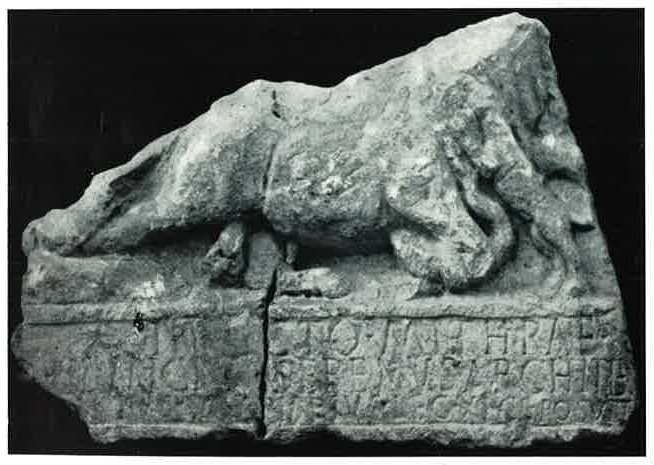
Altar from Kokardscha near Adam Klissi, ancient Tropaeum Traiani in Moesia Inferior, dedicated to Deo invicto for the welfare of Emperor Marcus Antoninus Verus by Annius Saturninus, centurion of Legio XI Claudia.
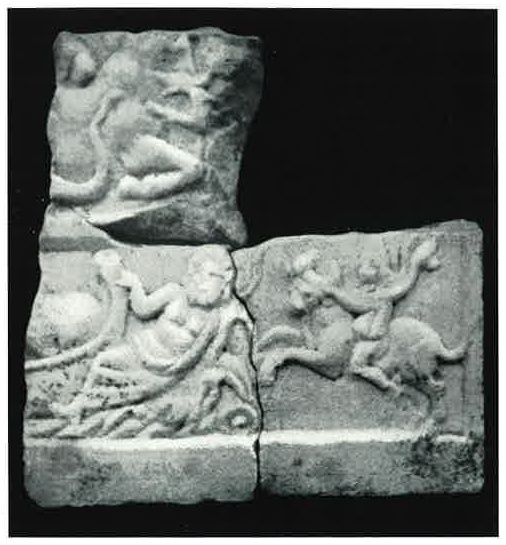
Three white marble tauroctony fragments from Gànt la Mangalia, ancient Callatis in Moesia Inferior, depicting part of the standard bull-slaying scene.
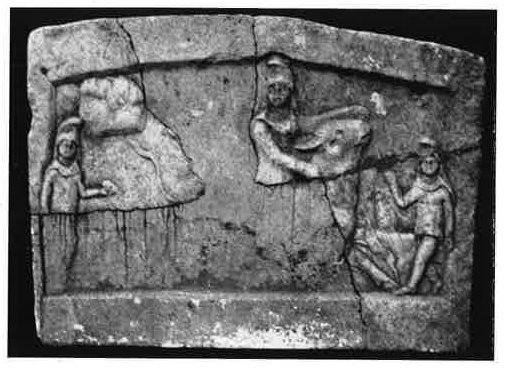
Three white marble tauroctony fragments from Constanța, ancient Tomis in Moesia Inferior, preserving the upper part of Mithras as bull-slayer with flanking divine busts.
Inscription from Constanța, ancient Tomis in Moesia Inferior, recording a dedication to Deo Soli for the welfare and victory of Emperors Diocletian and Maximianus invicti Augusti; a significant tetrarchic dedication from this region.
Two marble tauroctony fragments from near the station at Constanța, ancient Tomis in Moesia Inferior, depicting the bull-slaying with Sol visible above; lost during the war.
Marble tauroctony fragment from Constanța, ancient Tomis in Moesia Inferior, depicting the bull-slaying with dog, serpent, and scorpion; Cautes holds both an upraised torch and a pedum.
White marble trapezium-shaped tauroctony relief probably from Constanța, ancient Tomis in Moesia Inferior, divided into three horizontal registers with the central tauroctony and subsidiary scenes.
Limestone tauroctony relief from Iglița, ancient Troesmis in Moesia Inferior, found in 1882, depicting the standard bull-slaying with serpent, scorpion, and a partial dog; the raven is lost.
Marble tauroctony relief fragment from the Byzantine camp at Pontelimonul de sus, ancient Ulmetum in Moesia Inferior, found reused in the masonry; the subject is partly identifiable.

Marble tauroctony relief in five fragments from Ruse, ancient Sexantaprista in Moesia Inferior, found near the confluence of the river Lom with the Danube, depicting the standard bull-slaying.
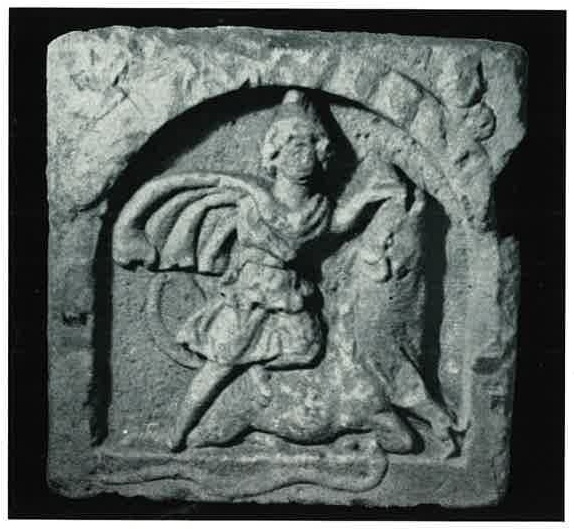
Limestone tauroctony relief from Bechli, 8 km from Ghighen, ancient Oescus in Moesia Inferior, depicting the standard bull-slaying scene in a grotto.
Large marble altar from Ghighen, ancient Oescus in Moesia Inferior, dedicated to Deo invicto Mithrae by Marcus Titius Maximus, duumviralis of the Colonia, with Aelianus as scribe.
White marble head in Phrygian cap with a sorrowful expression from Ghighen, ancient Oescus in Moesia Inferior, probably the head of Mithras as bull-slayer.
Marble tauroctony relief from the surroundings of Küstendil, ancient Pautalia in Moesia Superior, depicting the bull-slaying with torchbearers and Sol and Luna busts in the upper corners.
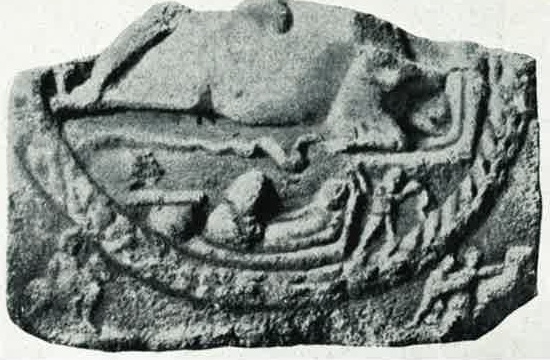
Lower part of a marble tauroctony relief from Küstendil, ancient Pautalia in Moesia Superior, preserving only the lower half of the bull-slaying scene with partially visible legs of the torchbearers.
Upper portion of a limestone altar from Kule-Mahata, ancient Almus in Moesia Superior, dedicated to the invictus — possibly but not certainly Mithras — by Caius Plotius Maro for himself and his family.
White marble tauroctony relief from Golema Kutlovica, ancient Civitas Montanensium in Moesia Superior, depicting the standard bull-slaying scene.
Marble relief fragment from Artschar, ancient Ratiaria in Moesia Superior, preserving a scene of Mithras in Phrygian cap and Sol reclining behind a tripod — part of the sacred banquet.
Fragment of a marble tauroctony statuette from Artschar, ancient Ratiaria in Moesia Superior, preserving Mithras's head, cloak, right foot, the bull's head, and feet.
