Your search Ancient Agora of Athens gave 661 results.

Altar found at Rab, ancient Arba in Dalmatia, in 1867, bearing a dedication to Invicto by Octavius Geminus; the Mithraic attribution is uncertain.
Altar found at Osijek in 1922 when the fortress was demolished, ancient Mursa in Pannonia Inferior, now in the Zagreb Archaeological Museum, bearing a dedication to Deo Aeterno — the Eternal God.
Altar from Osijek, ancient Mursa, found when the fortress was demolished in 1922, dedicated to Deo Aeterno — the Eternal God — a title sometimes associated with Mithraic worship.
Limestone altar from Osijek, ancient Mursa in Pannonia Inferior, found in 1937, dedicated to Deo invicto Mithrae by Antonius.
Fragment of a marble tauroctony relief from Surduk, ancient Rittium in Pannonia Inferior, preserving only Mithras's right foot and leg with the bull below.
Altar from Petrovaradin, ancient Cusum in Pannonia Inferior, found around 1690, dedicated to Soli invicto Mithrae by Donatus, sacerdos — one of the attestations of the Mithraic priestly title from the Danubian provinces.
Altar from Pécs, ancient Sopianae in Pannonia Inferior, found during church restoration in 1890, dedicated to Soli invicto pro salute.
Trapezium-shaped limestone tauroctony relief from Nagytétény, ancient Campona in Pannonia Inferior, depicting Mithras killing the bull in an arched niche with scorpion, serpent, and torchbearers.
Limestone tauroctony relief found in a quarry at Békásmegyer, ancient Vicus Vindonianus in Pannonia Inferior, together with the upper portion of a sacrificial altar; the standard bull-slaying scene with torchbearers.
Fragment of an altar from Pócsmegyer, ancient Ulcisia Castra in Pannonia Inferior, dedicated to Invicto Soli Mithrae by a custos armorum of the Cohors milliaria nova Severiana.
Bronze plate from Budapest, ancient Aquincum or vicinity, preserving a Mithraic representation of uncertain composition; no longer in a known collection.
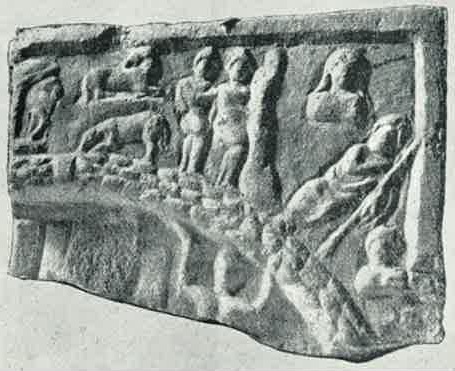
White marble statuette from Budapest, ancient Aquincum or vicinity, depicting a badly damaged Mithras killing the bull with dog and serpent; the god's head is lost.
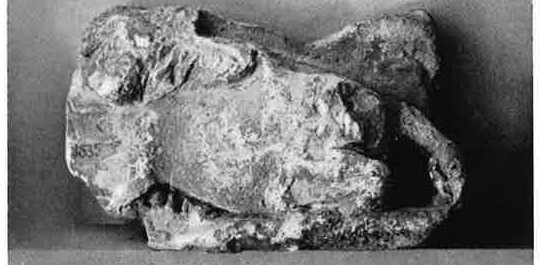
Fragment of a sandstone tauroctony relief from Schwadorf area, ancient Aequinoctium in Pannonia Superior, depicting Mithras killing the bull; the upper part of Mithras's body, the head, and parts of the bull are lost.
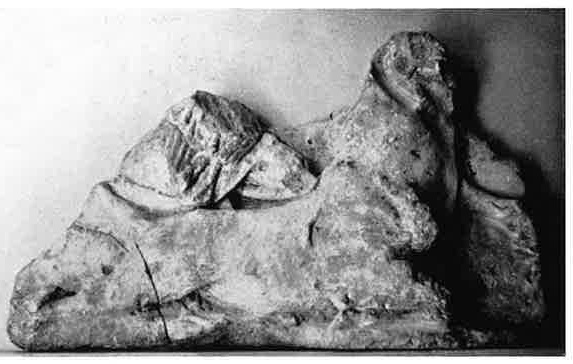
Fragment of a large sandstone tauroctony relief from Schwadorf, ancient Aequinoctium, depicting Mithras killing the bull; the upper part of the god's body, his head, the end of the tail, and the scorpion are lost.
Inscription from Schwadorf, ancient Aequinoctium in Pannonia Superior, dedicated to Petrae genetrici dei — the rock that gives birth to the god — by Aurelius Statorius.
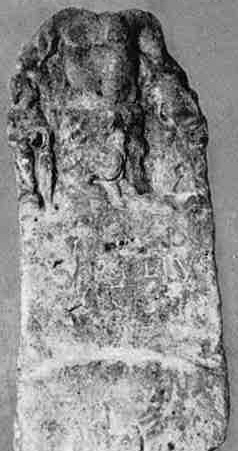
Limestone relief from Schwadorf, ancient Aequinoctium in Pannonia Superior, depicting the naked Mithras being born from the rock with a serpent encircling it, flanked by torchbearers; one of the finest examples of this iconographic type from the Danubian region…
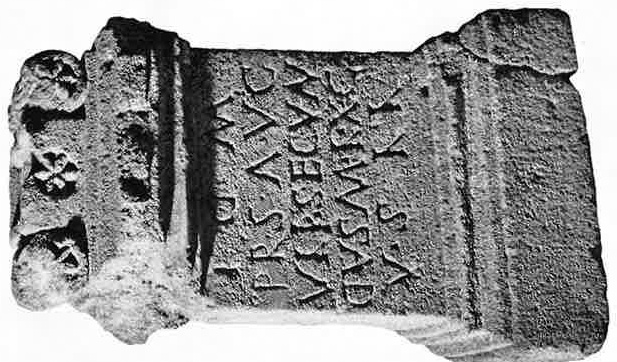
Limestone altar from Vienna, ancient Vindobona in Pannonia Superior, found in 1896 together with two terracotta lamps; the dedicant and full text are not known from the summary description.
Marble inscription fragment from the Mithraeum at Sopron, ancient Scarabantia, preserving only the closing votive formula.
Marble statuette of Cautopates from the Mithraeum at Sopron, ancient Scarabantia, in Phrygian cap and Oriental dress, holding the torch downwards; the head is lost.
Marble statuette of Cautes from the Mithraeum at Sopron, ancient Scarabantia, in Phrygian cap and Oriental dress, holding the upraised torch with both hands; the head is lost.
