Your search Arsha wa Qibar gave 1681 results.

Graffito on a wall of the Caseggiato del Sole adjacent to the Mitreo dei Serpenti at Ostia, reading "Dominus Sol hic avitat" (Lord Sun dwells here).
Small stone block inscribed to Deo Soli, found walled up in an Arabic wall near a Roman spring at Sicca Veneria (modern Kef).
Statuettes of eastern deities including Mithras, found in a walled compartment near a Punic cemetery at Duimes, Carthage.
One of the rooms in a sustantive masonry building in Hollytrees Meadow was considered to be a Mithreum, a theory that has now been discarded.
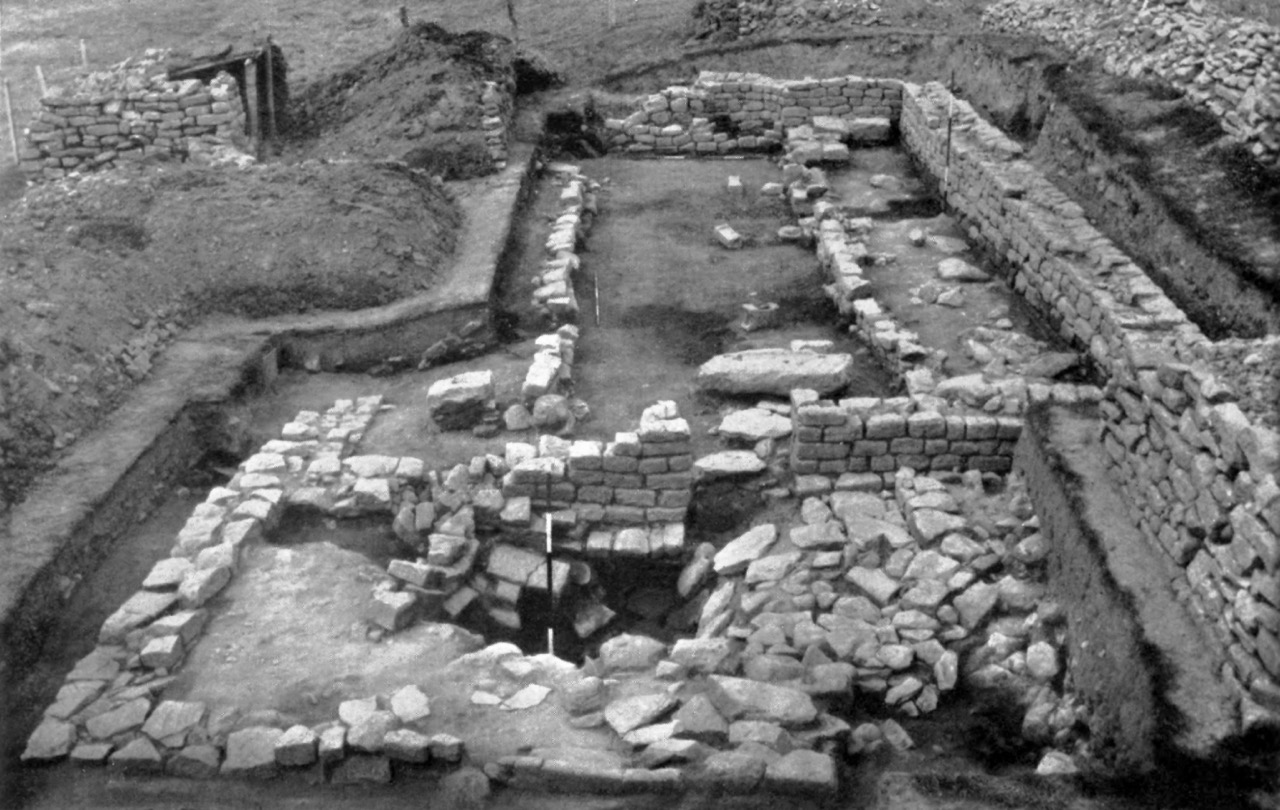
The Mithraeum of Rudchester was discovered in 1844 on the brow of the hill outside the roman station.
Marble head from the south-west walls of Thasos, Macedonia, found in 1920, with long curly hair, Phrygian cap, and a pathetic expression; possibly Mithras or Attis.
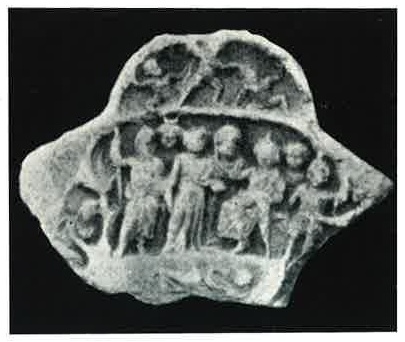
White marble tauroctony relief from Veles, ancient Bylazora in Macedonia; the merchant reported that other fragments of the same monument were walled into a fountain in Veles.
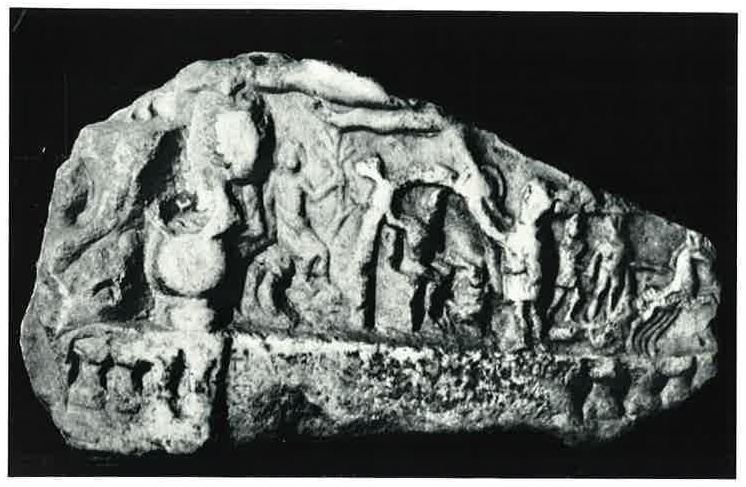
Lower part of a marble tauroctony relief from Sinitovo, Thracia, found walled into a well, depicting the lower portion of the bull-slaying scene; the Greek inscription in the lower border records a thanksgiving to Helios Mithras invictos.
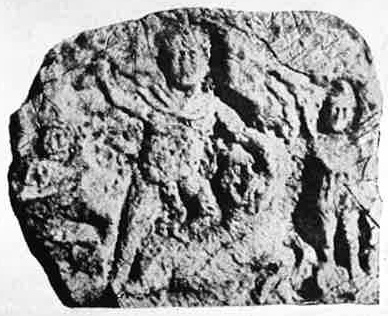
Rough relief from Gaganica, Thracia, depicting Mithras as bull-slayer in an unusual frontal attitude, wearing only a shoulder-cape and holding the dagger upwards; with dog, serpent, scorpion, and a non-cross-legged Cautes.
Marble relief fragment from near Debeli-Lak, Thracia, depicting Cautopates in Oriental dress holding the torch downwards with both hands, not cross-legged; head, shoulder, and feet are lost.
Two marble tauroctony fragments from near the station at Constanța, ancient Tomis in Moesia Inferior, depicting the bull-slaying with Sol visible above; lost during the war.
Altar at Knjaževac (Ravna), Moesia Superior, preserved beneath a water-mill called Kulina, dedicated to Invicto deo for the welfare of Emperor Marcus Aurelius Antoninus Augustus.
Limestone tauroctony relief fragment from Mintia-Vețel, ancient Micia in Dacia, now lost, preserving the left corner with Cautopates with torch downward and a partially legible inscription below.
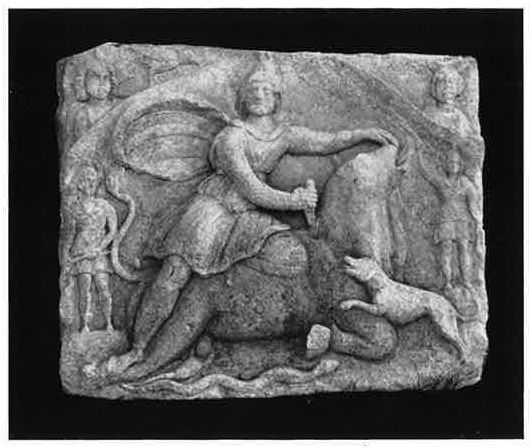
Sandstone tauroctony relief from Pritok near Bihać, Dalmatia, lost during World War II, depicting Mithras in Oriental dress killing the bull in a grotto with the bull's tail ending in corn-ears.
Limestone altar from the ruins of ancient Plevlje, Dalmatia, walled into the well of the local barracks, dedicated to Soli invicto sacrum by Sextus Baberius Ianoarius.
Tauroctony relief mentioned from a mountaintop at Krivošije near Risn, Boka Kotorska, Dalmatia, found before World War I; the relief was lost.
Natural rock enclosure at a quarter-hour's walk from Veliki Vitalj near Prozor, Dalmatia, used as a Mithraic sanctuary, with a tauroctony carved directly into the rock.
Altar and a relief of a figure tearing a lion to pieces, found along the Otočac–Gospić road near the mountains Veliki and Mali Vitalj, Dalmatia; the tauroctony interpretation of the lion-tearing relief was subsequently disputed.

First Mithraic sanctuary in the potter's quarter of Aquincum, Pannonia Inferior; destroyed during the Marcoman wars; the rectangular building is known only from the four altars found side by side.
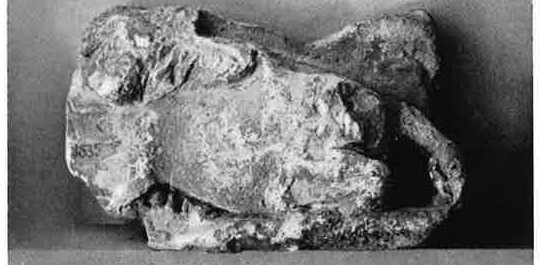
Fragment of a sandstone tauroctony relief from Schwadorf area, ancient Aequinoctium in Pannonia Superior, depicting Mithras killing the bull; the upper part of Mithras's body, the head, and parts of the bull are lost.
