Your search Ay-Todor gave 1077 results.

White marble tauroctony relief fragment of unknown provenance, preserving the foremost part of the bull and part of Mithras as bull-slayer.
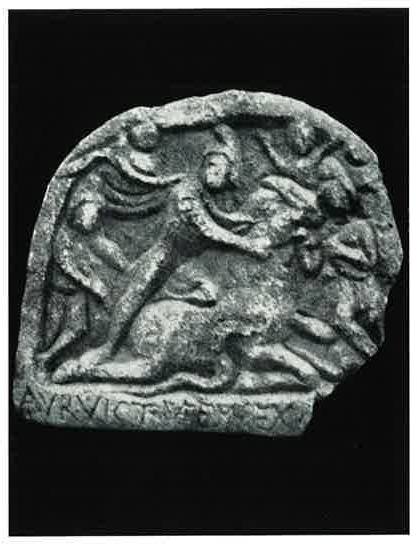
Arched white marble tauroctony relief of unknown provenance, depicting the standard bull-slaying in the usual attitude with dog and serpent.

Industria was a Roman settlement in northern Italy, today associated with Monteu da Po.
Luguvallium was a Roman settlement and fort in northern Britannia, today Carlisle.
Longovicium was a Roman fort and settlement in northern Britannia, today associated with Lanchester.
Deva was a major Roman legionary fortress in northern Britannia, today Chester.
Pausilypum, modern Posillipo, overlooked the Bay of Naples and became renowned for its elite villas and coastal setting.
The hill fort of Epiacum, known today as Whitley Castle, occupied a strategic upland position south of Hadrian’s Wall.
Thagaste was a Roman-Berber city in present-day Algeria, now called Souk Ahras.
Zaraï was a Berber, Carthaginian, and Roman town at the site of present-day Aïn Oulmene, Algeria.
Roman Carthage was an important city in ancient Rome, located in modern-day Tunisia.
A fragment of a stone relief from Interanum (modern Entrains-sur-Nohain) in Lugdunensis, showing the arched end of Mithras's flying cloak and an ear emerging from the bull's tail, possibly belonging to CIMRM 946.
A suggestion by H. Corot that a Mithraeum may have existed near the sources of the Seine (ancient Sequana) in Lugdunensis, a hypothesis awaiting archaeological confirmation.
Two small marble heads in Phrygian caps from the Castle at Cataio in the Veneto, cited by Dütschke, which may belong to torchbearer figures.
Roman military settlement in Germania superior, generally identified with present-day Ober-Florstadt and known for its well-preserved Mithraic sanctuary.
