Your search Boulogne-sur-mer gave 339 results.

A fragment from the Mithraeum at Pons Saravi (modern Saarburg) in Belgica, showing a standing naked man with a bird, possibly a cock, on his left arm, tentatively identified as Mercury, with the head, hands, and parts of the legs lost.
A small marble statuette of naked Mercury from the Mithraeum at Walbrook in London, sitting on a rock with the stumps of wings in his hair and a purse in his left hand, with a ram lying at his feet beside which is a tortoise.
Flat marble base from Rome, with fragments of statue feet still resting on it, bearing a dedication to the Lord Sol in fulfilment of a vow by Claudius Amerimnus, a lictor curiatus.
Limestone left hand holding a caduceus from Thun-Allmendingen, belonging to a statue of Mercury associated with the possible Mithraeum.
Small yellow-red sandstone altar from the Mithraeum at Dieburg dedicated to Deo sancto Mercurio
Red sandstone base of a Mercury statue from the Mithraeum at Dieburg, preserving only the tortoise attribute at the god's feet
Twenty-three fragments of a yellow sandstone statue of Mercury from the Mithraeum at Dieburg, dressed in a short mantle and holding a caduceus
A lost Mithraic relief acquired near Rome and formerly held by the Lyceum Hosianum of Braunsberg in East Prussia, known only through a 1910 communication to Cumont; possibly identical with the relief from Macerata.
Marble statue of the naked Mithras emerging from the rock, holding a dagger in his right hand and a torch in his left, visible to the knees, from the Mithraeum of S. Lorenzo in Damaso; the head is lost.
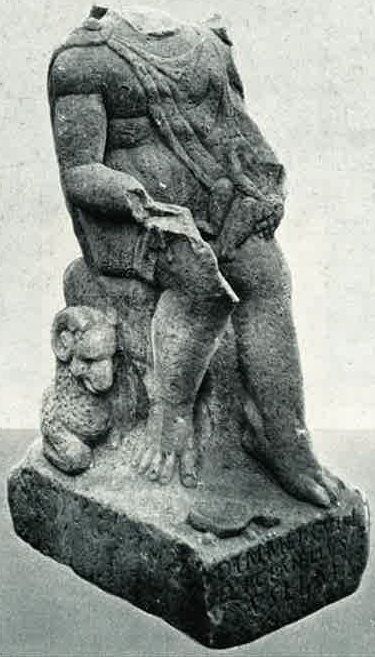
Sandstone statue of Mercury seated on a rock from Mithraeum II at Stockstadt, found near location 5 in the sanctuary
Upper portion of a red sandstone Mercury statuette from Mithraeum I at Stockstadt, wearing a winged cap and mantle on the left shoulder
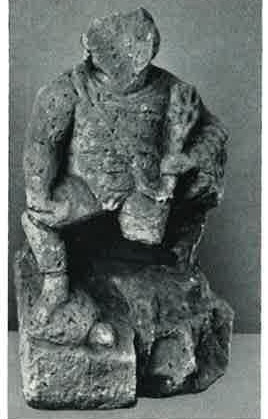
Yellow sandstone statue of a seated Mercury from Mithraeum I at Stockstadt, holding a caduceus, with his right foot resting on a tortoise

White sandstone statuette of Mercury from Mithraeum I at Stockstadt, standing in a shoulder cape, holding a purse and wearing wings in his hair
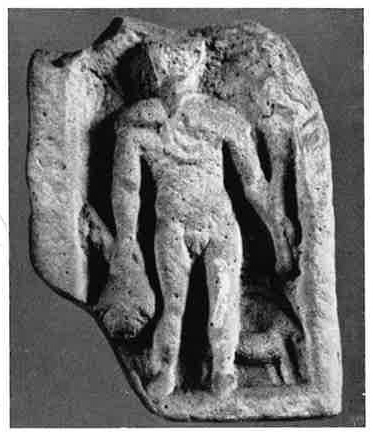
Sandstone relief from the Mithraeum at Gimmeldingen depicting a standing Mercury with caduceus and purse, accompanied by a ram and a cock; the head and upper caduceus are damaged.
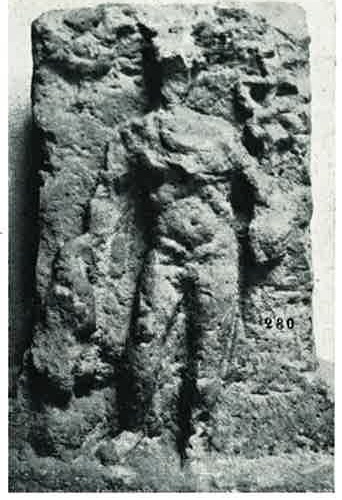
Weathered sandstone relief from Mithraeum I at Heddernheim, ancient Nida, showing a standing Mercury whose body is covered by a shoulder cape
Sandstone fragment of a Mercury statuette preserving part of the shoulder and caduceus.
Fragmentary inscribed altar dedicated to Mercury from the Saalburg sanctuary area.
Small inscribed plaque invoking Mithras and Mercury attached to a sandstone column inside the sanctuary.

Founded on the east bank of the Tigris, Sumere is mentioned in Roman sources as a fortified settlement during the Persian campaign of Julian in 363 CE, notably by Ammianus Marcellinus.
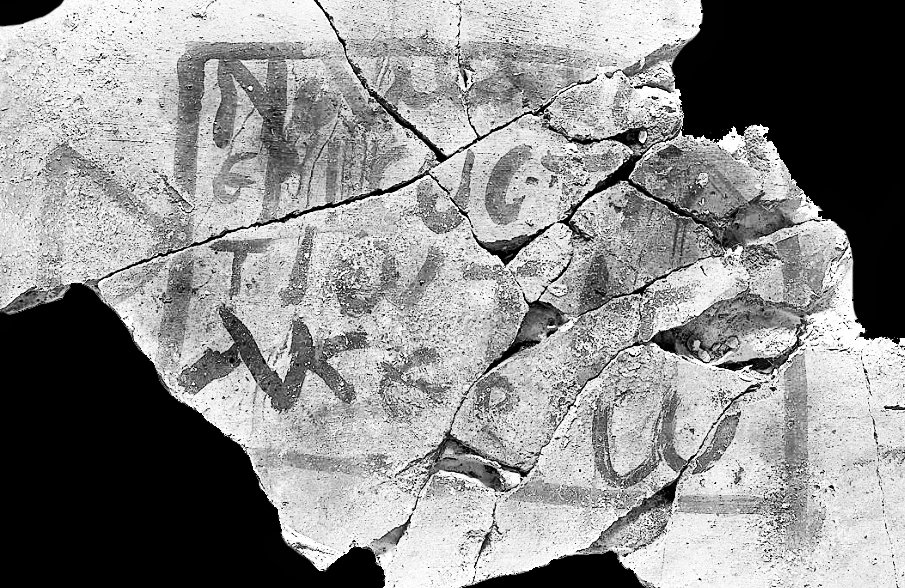
The text mentions a certain Kamerios, described as immaculate miles.
