Your search Catacombe dei Santi Marcellino e Pietro gave 242 results.
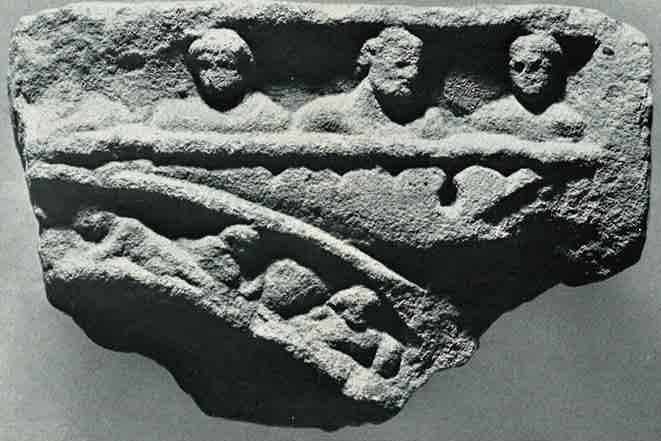
Fragment of a red sandstone relief found in the Frankfurterstrasse at Dieburg, depicting four divine busts in the upper corner of the composition

Tauroctony relief formerly in the house of the Alterii near S. Marco in Rome, now of unknown whereabouts, described by Gruterus as showing Mithras pressing both knees onto the bull and grasping its horns with the knife in the shoulder, with scorpion, serpent, raven, Sol and Luna…
Marble base in poor lettering found in the church of S. Maria de Cacabariis in Rome, recording the dedication by M. Aurelius Victor, vir clarissimus and prefect of the Feriae Latinae, to his patron Iovinus Callidianus, priest of Sol.
Altar with a Greek dedication to Magna Mater and Attis and a Latin inscription recording the dedication by Petronius Apollodorus, vir clarissimus and pater sacrorum of Invictus Mithras, following his taurobolium and criobolium with his wife, dated to 370 A.D…
Marble base from the gardens of Julius III dedicated to Iunius Postumianus, vir clarissimus and pater patrum of Sol Invictus Mithras, pontifex of the sacerdotal order of the Sun, placed under the care of Flavius Herculus.
Large marble altar found near S. Giovanni in Laterano, dedicated by Sextilius Agesilaus Aedesius, pater patrum of Sol Invictus Mithras, to the Great Mother and Attis following his taurobolium and criobolium, dated to 376 A.D.
Marble slab from the Palazzo dei Musei Mithraeum bearing a pierced star in the centre and a dedication to the Invictus by L. Reminius Fortunatus.
Marble altar found near S. Lorenzo in Piscibus in 1949, dedicated to the Great Mother, Attis, and the Invincible Mithras by Sextus Rusticus, vir clarissimus, pater patrum, proconsul of Africa between 371 and 373 A.D.
Great royal inscription of Antiochus I of Commagene carved on the thrones at Nemrud Dağı, invoking Apollo-Mithras-Helios among the guardian deities of the kingdom, 69–34 B.C.
Gold coin of the Scythian king Hooerkes, reverse showing Mithras (MIIPO) in tunic with lance and sword, north-west India, c. 87–129 A.D.

Fragment of a silvered bronze plate from Mithraeum II at Stockstadt depicting Mithras grasping the bull for the kill
Fragment of a sandstone relief from Mithraeum I at Stockstadt depicting a beardless figure in a velum, identified as a wind or winter deity
Marble altar from the Mithraeum at Biljanovac, Moesia Superior, with its shaft hollowed out at the sides; the inscription is fragmentary and the dedicatee — either Natura or Transitus — cannot be determined.
Fragmentary relief from the area of the Porticus of Pompey once interpreted as Mithraic but later identified as a representation of Victoria.
Monumental inscription honouring the senator and Mithraic pater Kamenius together with his numerous priestly offices and initiatory roles.
Limestone altar fragment from the Mithraeum at Sárkeszi, Pannonia Inferior, dedicated to Fonti dei by Septimius Valentinus, optio.
Fragment of a marble relief from Mithraeum II at Ptuj, ancient Poetovio, preserving a woman's head adorned with a wreath; probably a secondary deity from the sanctuary's sculptural programme.
Altar found in the Zollfeld at Virunum in March 1837, together with a statue of a bearded man holding a modius, dedicated to Invicto patrio by Ulbius Gaianus, praefectus vehiculorum — a rare reference to Mithras as a paternal deity.
Sandstone relief fragment from the Mithraeum at Gimmeldingen preserving the upper bodies of two standing deities: a bearded male, possibly Vulcanus, and a helmeted Minerva with lance.
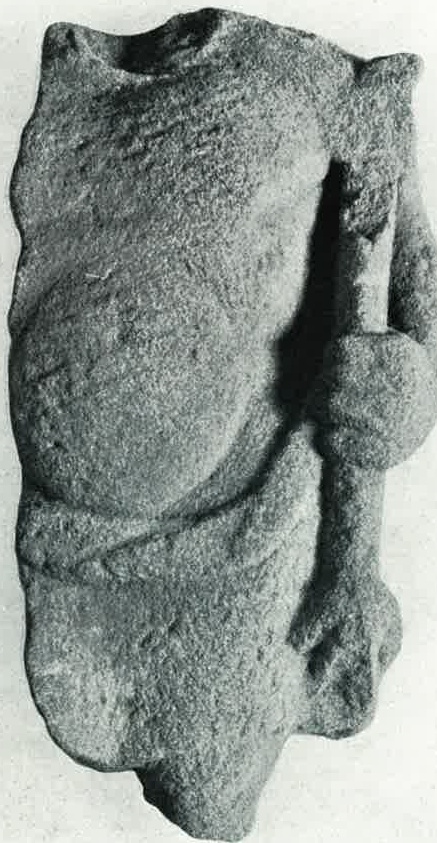
Group of sandstone relief fragments from Rückingen depicting multiple deities including a male head identified as Hercules
