Your search Farid ud-Din Attar gave 1805 results.
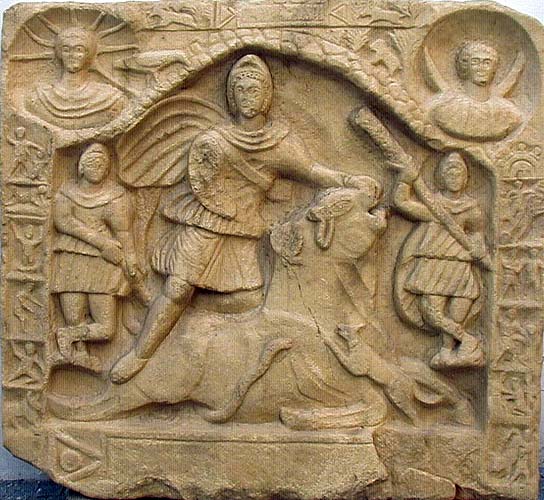
The relief of Mithras slaying the bull at Mauls in Gallia cisalpina is a paradigmatic example of the so-called Rhine-type Tauroctony.
In these passages from his hymns and satires, Julian articulates a solar theology in which Helios governs cosmic order and time. Within this framework, Mithras appears as a personal divine guide associated with the ascent of souls.
Cet ouvrage propose une étude d’ensemble du culte de Mithra en Afrique romaine. S’appuyant sur un rigoureux examen croisé des sources épigraphiques, archéologiques et littéraires, il restitue l’histoire et les spécificités de ce culte à mystères sur le sol africain…

He and his brother, both of the Legio II Adiutrix, built a temple and erected several monuments in Budaors, Pannonia.

Frontinianus and Fronto built a Mithraeum in Budaors, probably on their own property.

The relief of Palazzo Colonna, Rome, depicts a lion-headed figure holding a burning torch in his outstretched hands.
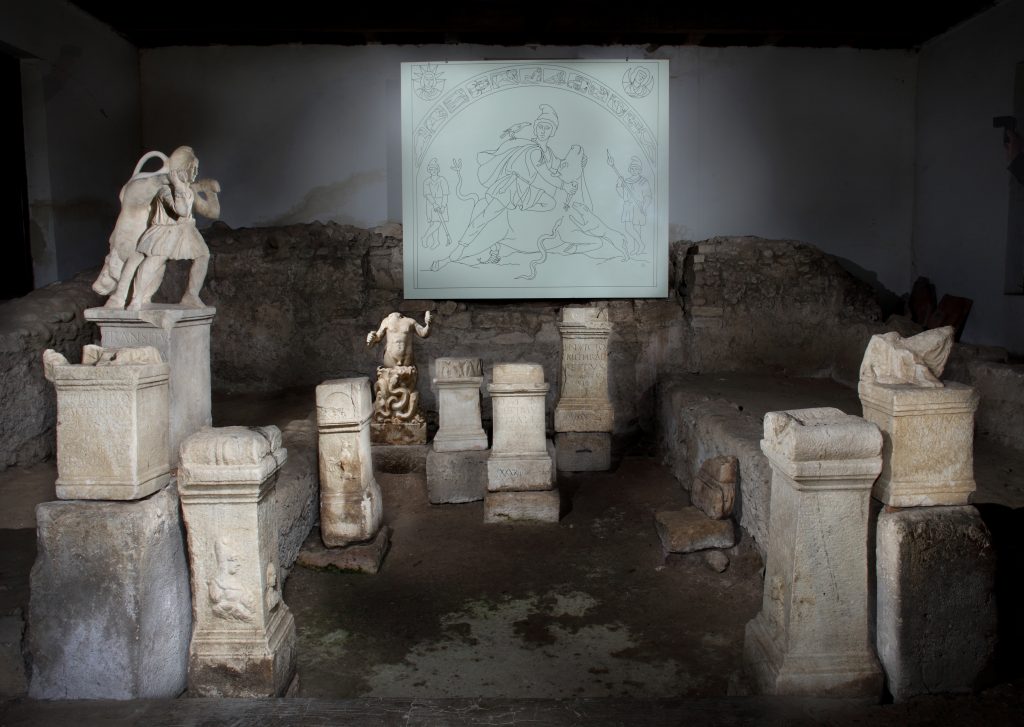
The Mithraeum I of Ptuj contains the foundation, altars, reliefs and cult imagery found in it.
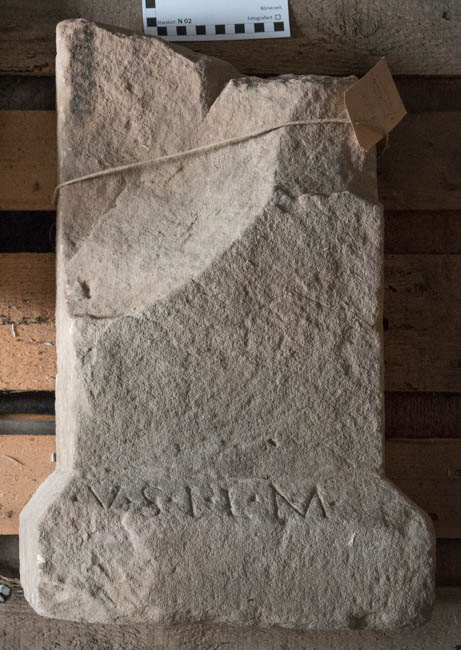
These fragmentary monuments, one with an inscription, were found in the Gimmeldingen mithraeum.
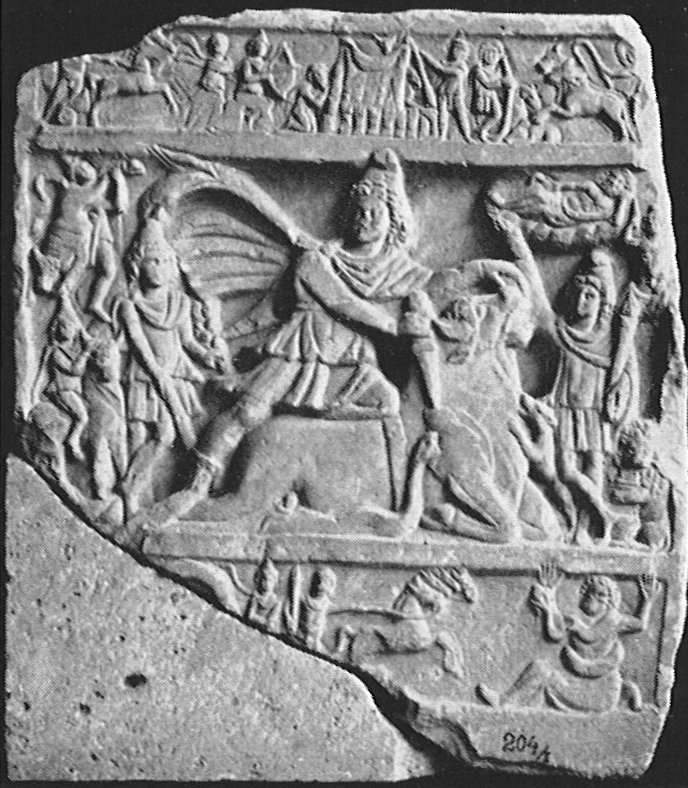
This relief of Mithras killing the bull from Apulum, now Alba Iulia, Romania, contains several scenes from the Mithras legend.

Roger Beck revisits the zodiac circle of the Mithraeum on the island of Ponza, a composition unique within the Mithraic corpus. His reading places the monument in relation to cosmology, ritual space, and Mithraic doctrine.


Sandstone altar from the Mithraeum of Vindobala bearing a dedication to Sol Invictus and Mithras by the prefect Aponius Rogatianus.
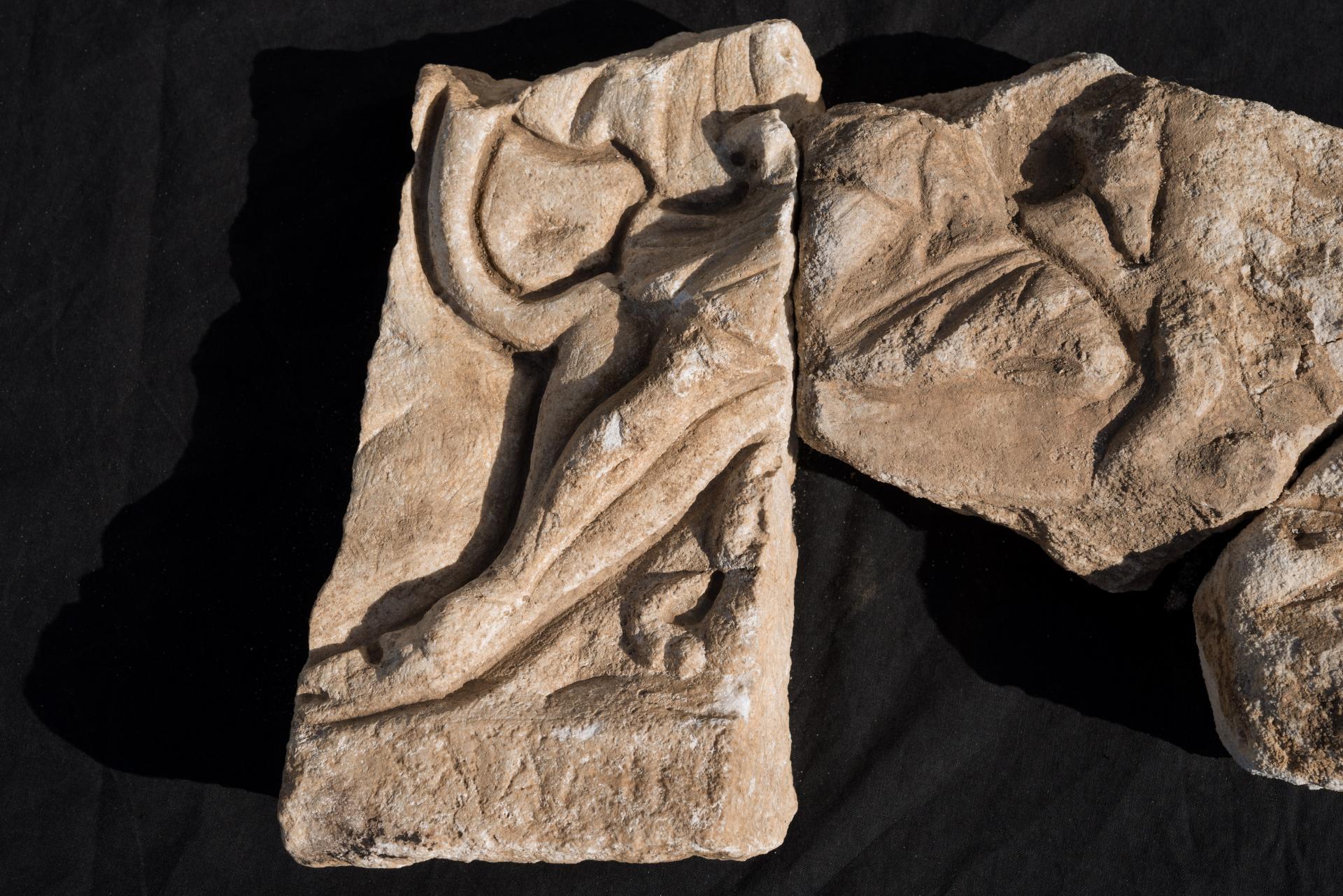
The archeologists have found three fragments of the Tauroctony of Lucciana, which includes Cautes and Cautopates.


