Your search Frankfurt am Main gave 1171 results.

A small limestone votive altar from Pola (modern Pula) bearing on its front face a damaged relief head of a youthful Sol with long curly hair, above which is carved the inscription Soli and below the dedicatory text by Atticus (No. 757).
Fragmentary inscription of unknown provenance, preserving only a pro salute formula and the name Attius Valerianus.
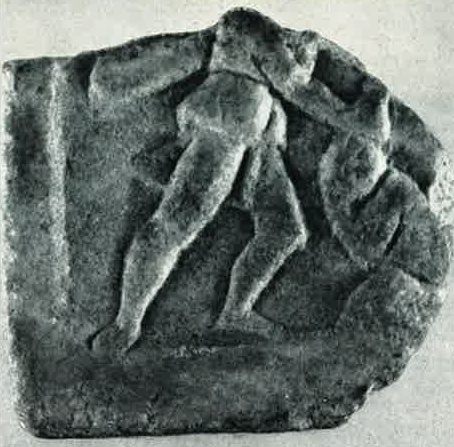
Marble relief fragment from Dacia, depicting Mithras placing a Phrygian cap on the kneeling Sol — one of the more unusual variants of the Mithraic iconographic programme.

The locality of Bruckla is associated with archaeological remains from the Roman province of Dacia.
Vichy is known for its thermal springs and archaeological remains connected with Roman Gaul.
Topusko is known for its thermal springs and archaeological remains connected with Roman Pannonia.
Tomis became one of the principal urban and maritime centres of the western Black Sea coast.
Thessalonike became one of the principal urban centres of the Balkans and the Via Egnatia corridor.
Teurnia became an important late Roman urban centre in the province of Noricum.
The identification of Tavalicavo remains uncertain, though it appears connected with the Balkan interior.
Tabernae became an important settlement and production centre in the Rhine frontier region.
Scarabantia became one of the principal urban centres of western Pannonia near the Amber Road.
Saifnitz occupied a position near important Alpine crossing routes between Italy and Noricum.
Ratiaria became one of the principal military and urban centres of the upper Danube frontier.
Plevlje is associated with archaeological remains connected with the inland regions of ancient Dalmatia.
Philippi became an important Roman colony in eastern Macedonia along the Via Egnatia.
Pautalia became an important urban and thermal centre in the southwestern Balkans.
Pausilypum, modern Posillipo, overlooked the Bay of Naples and became renowned for its elite villas and coastal setting.
The identification of Nefertara remains uncertain, though it appears connected with the Dalmatian inland zone.
The city of Narona occupied a prominent position in the Neretva valley and became one of the principal centres of Roman Dalmatia.
