Your search Mit Rahina gave 2641 results.
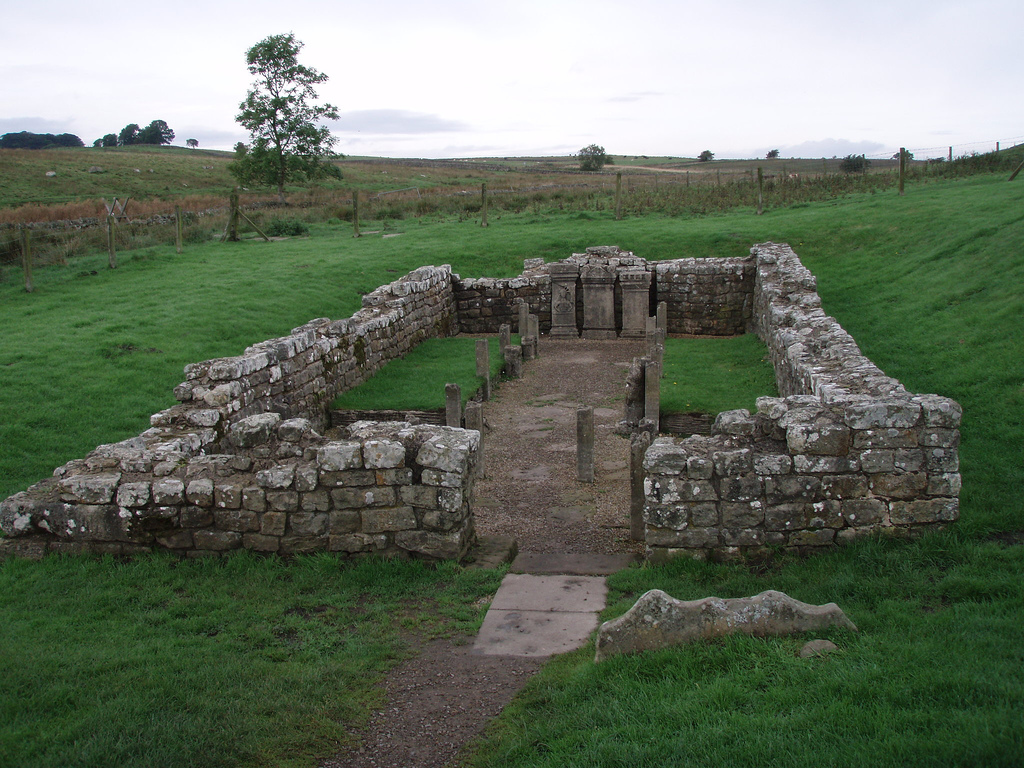
The temple of Mithras of Carrawburgh, Brocolita, disclosed three main stages of development, the second exhibiting two reconstructions.

One of the rooms in a sustantive masonry building in Hollytrees Meadow was considered to be a Mithreum, a theory that has now been discarded.
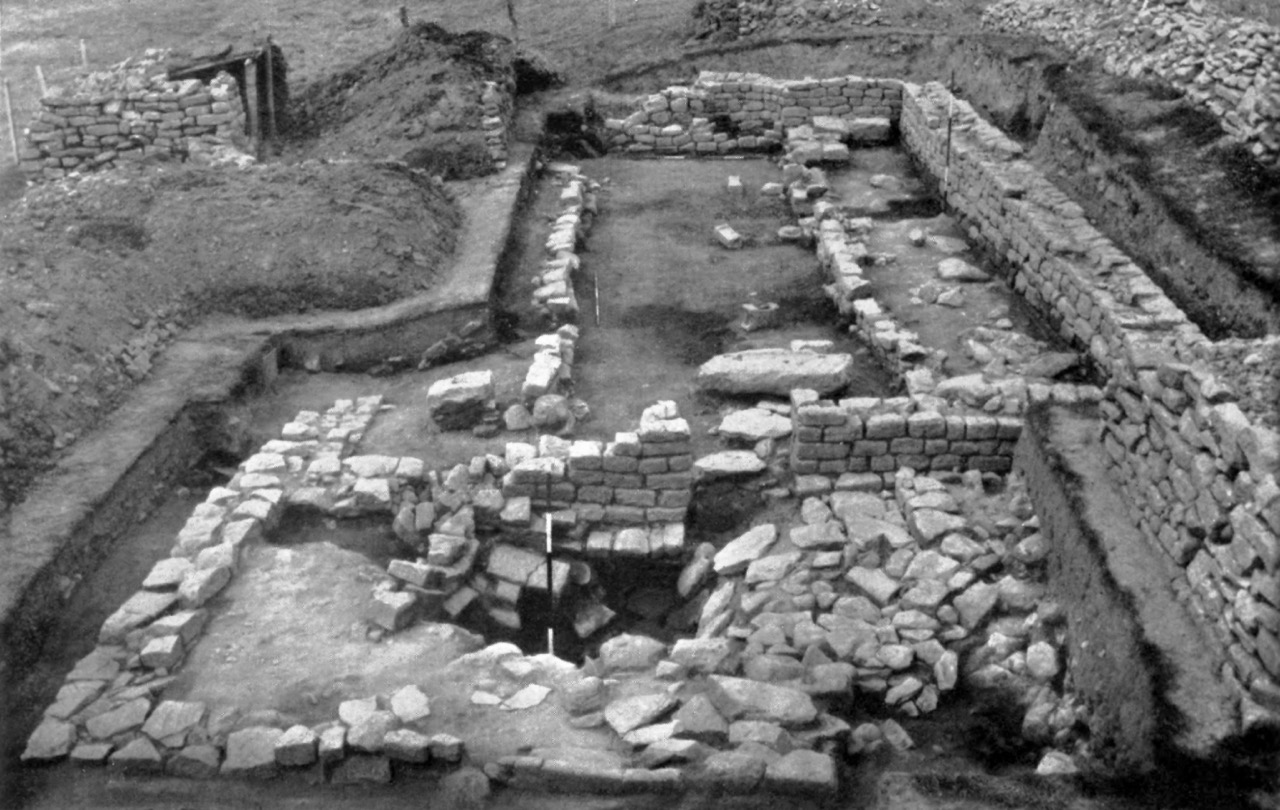
The Mithraeum of Rudchester was discovered in 1844 on the brow of the hill outside the roman station.

Limestone stele recording endowments for the feast of the Mithrakana by Antipater and his son Gaios, found at Amorium (modern Hisarköy), Phrygia.
Two embroidered pieces from an Egyptian grave, dated to the early centuries AD, now in the Benaki Museum in Athens, depicting a Mithraic procession with figures on horseback and attendants.
Small altar found in the foundations of a school building in the Piraeus, near Athens, dedicated to Helios Mithras.
Greek inscription from Athens, recording that Acrisius dedicated a gift to Mithras in honour of Chrysippos.
Marble bust from the south-east slope of the Acropolis at Athens, from the Attic mountain Pentelikon, depicting a man with an uncovered breast and mantle; probably Mithras, though the head is lost.
Third-century sepulchral inscription from near Philippi, Macedonia, studied for its Mithraic content in the upper lines of the text.
Greek inscription from Sinitovo, Thracia, recording a thanksgiving gift to Helios Mithras invictos — the invincible Sun-Mithras.
Small Mithraic sanctuary discovered in 1958 in the grotto called Adam near Tirgușor, Moesia Inferior, about 30 km from Constanța; the monuments are remarkable for their Greek inscriptions.
Archaeological context at Acbunar (Mircea Vodă) near Troesmis, Moesia Inferior, where twelve marble pieces, pottery, lamps, and a coin were found 30 metres from a Roman building, suggesting the presence of a Mithraeum.
Inscription from Axiopolis, Moesia Inferior, recording a dedication by a vir perfectissimus dux limitis provinciae Scythiae.
White marble head in Phrygian cap with a sorrowful expression from Ghighen, ancient Oescus in Moesia Inferior, probably the head of Mithras as bull-slayer.
Fragment of a Mithraic relief in a crown from Ratiaria, Moesia Superior, mentioned in a personal communication from Radnóti; no further details.
Stone slab still in front of the church in Kumanovo, ancient Lopata in Moesia Superior, bearing a dedication to Deo sancto Mithrae.
Mithraic sanctuary found in 1837 on the right bank of the river Olt near Slăveni-Romanați, Dacia; the construction of the building is not detailed.
Primitive marble tauroctony relief from the Museum at Cluj, Dacia, attributed to Micia but with uncertain provenance; a rough representation of Mithras killing the bull without Phrygian cap.
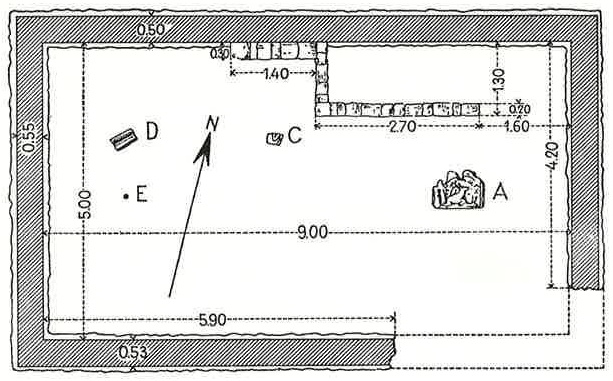
Mithraic sanctuary found in 1897 on the slope of the Repovic mountains on the right bank of the river Trstenic near Konjic in Herzegovina, Dalmatia; a limestone sanctuary with cult relief, altar, and architectural elements.
Mithraic sanctuary in a steep rock face called Preslica at Nefertara near Plevlje, Dalmatia, described as carved into the cliff above a ravine with a carved tauroctony scene.
