Your search Mit Rahina gave 2642 results.

Altar in poor-quality lettering from Burnum, Dalmatia, dedicated to Soli invicto by Caius Secundulus; the Mithraic interpretation is not entirely certain.
Limestone altar found on the summit of Monte Vitalj near Prozor, Dalmatia, in 1900, dedicated to Soli invicto deo by Lucius Lucceius; the epithet rupe nato may be present in line one.
Rocky pass about twenty minutes south of Prozor, Dalmatia, containing a rock niche with a carved Mithraic scene; probably a secondary cult place related to the Vitalj sanctuary.
Altar found at Rab, ancient Arba in Dalmatia, in 1867, bearing a dedication to Invicto by Octavius Geminus; the Mithraic attribution is uncertain.
Altar from Osijek, ancient Mursa, found when the fortress was demolished in 1922, dedicated to Deo Aeterno — the Eternal God — a title sometimes associated with Mithraic worship.
Limestone altar from Osijek, ancient Mursa in Pannonia Inferior, found in 1937, dedicated to Deo invicto Mithrae by Antonius.
Fragmentary inscription from Rittium, Pannonia Inferior, dedicated to Deo invicto Mithrae.
Fragment of a marble tauroctony relief from Surduk, ancient Rittium in Pannonia Inferior, preserving only Mithras's right foot and leg with the bull below.
Altar from Petrovaradin, ancient Cusum in Pannonia Inferior, found around 1690, dedicated to Soli invicto Mithrae by Donatus, sacerdos — one of the attestations of the Mithraic priestly title from the Danubian provinces.
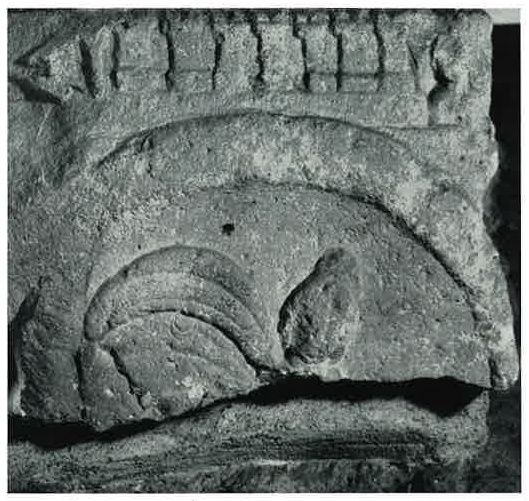
Altar from Intercisa, Pannonia Inferior, dedicated to Deo Soli invicto by Antonius Veranus, pater sacrorum — one of the clearest attestations of the Mithraic grade pater from Pannonia Inferior.
Trapezium-shaped limestone tauroctony relief from Nagytétény, ancient Campona in Pannonia Inferior, depicting Mithras killing the bull in an arched niche with scorpion, serpent, and torchbearers.
Fragment of an altar from Pócsmegyer, ancient Ulcisia Castra in Pannonia Inferior, dedicated to Invicto Soli Mithrae by a custos armorum of the Cohors milliaria nova Severiana.
Fragment of a Mithras relief from Zsámbék near Aquincum, Pannonia Inferior, showing seven altars alternated with trees — a processional or decorative border rather than a main tauroctony scene.
Bronze plate from Budapest, ancient Aquincum or vicinity, preserving a Mithraic representation of uncertain composition; no longer in a known collection.
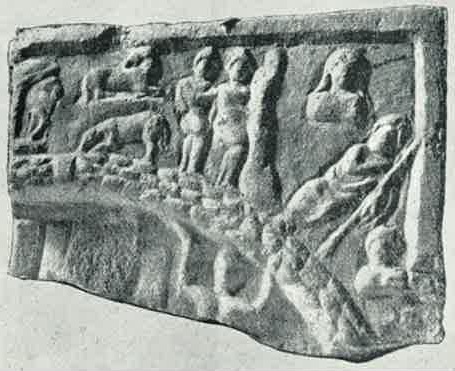
White marble statuette from Budapest, ancient Aquincum or vicinity, depicting a badly damaged Mithras killing the bull with dog and serpent; the god's head is lost.
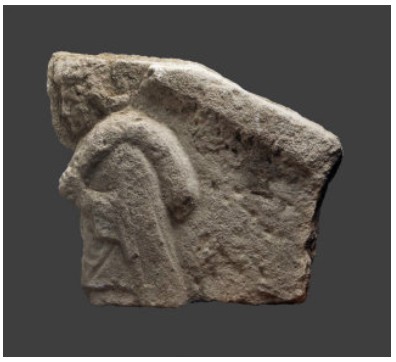
Fragment of a relief from Potz Neusiedl near Stix-Neusiedl, Pannonia Superior, brought to Eisenstadt in 1926, depicting part of a Mithraic bull-slaying scene.
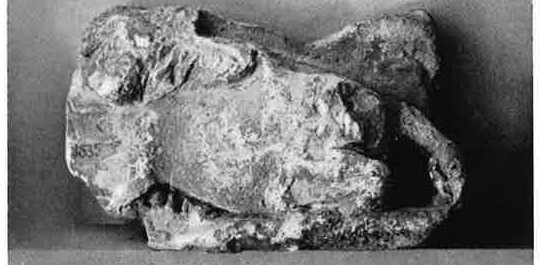
Fragment of a sandstone tauroctony relief from Schwadorf area, ancient Aequinoctium in Pannonia Superior, depicting Mithras killing the bull; the upper part of Mithras's body, the head, and parts of the bull are lost.
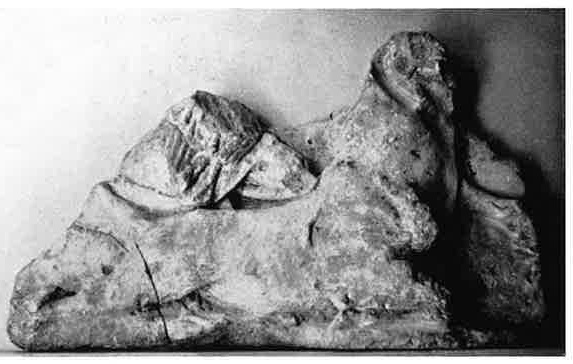
Fragment of a large sandstone tauroctony relief from Schwadorf, ancient Aequinoctium, depicting Mithras killing the bull; the upper part of the god's body, his head, the end of the tail, and the scorpion are lost.
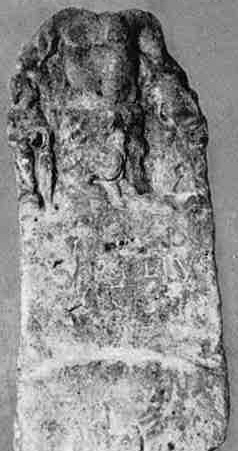
Limestone relief from Schwadorf, ancient Aequinoctium in Pannonia Superior, depicting the naked Mithras being born from the rock with a serpent encircling it, flanked by torchbearers; one of the finest examples of this iconographic type from the Danubian region…
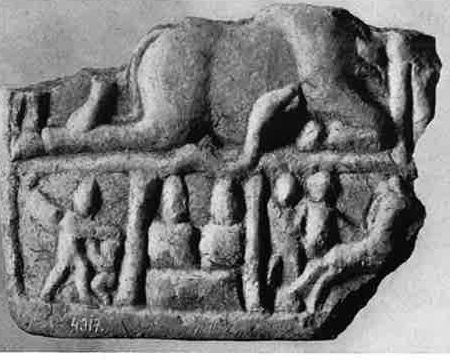
Altar from Eisenstadt, Pannonia Superior, dedicated to Deo invicto Mithrae by Titus Claudius Frontinus, centurion of Legio XIIII Gemina.
