Your search Monteu da Po gave 2935 results.

Marble tauroctony relief from Aquincum or possibly Budaörs, Pannonia Inferior, depicting the bull-slaying scene with cypress trees between the torchbearers and the central group.
Inscription from Mithraeum III at Ptuj, ancient Poetovio, recording that Sextus Vibius Hermes, Augustalis of the Colonia Ulpia Traiana Poetovionis, donated a silver signum with its base to Soli invicto Mithrae, with Lucius Vernasius Heraclida presiding as pater…
Inscription from Mithraeum III at Ptuj, ancient Poetovio, dedicated to Deo Soli invicto Mithrae for the welfare of Legio V Macedonica and Legio XIII Gemina Gallienarum by Flavius Aper, vir egregius praepositus — dated to the reign of Gallienus, AD 260–268…
Damaged marble relief from Mithraeum III at Ptuj, ancient Poetovio, preserving Cautopates with torch downward on the right and the outline of a standing Cautes on the other side, with a fragmentary inscription in the lower border.
Inscription from Mithraeum III at Ptuj, ancient Poetovio, dedicated to Invicto Augusto sacrum by an imperial slave serving as hereditatum tabularius — an officer for death-duties — one of the rarer administrative titles attested in Mithraic epigraphy.
Marble inscription fragment from Mithraeum II at Ptuj, ancient Poetovio, preserving only the beginning of a name: Aulus Po-.
Inscription from Mithraeum II at Ptuj, ancient Poetovio, dedicated to Deo Soli invicto Mithrae for the welfare of Flavius Iovinus, who had vowed the gift after witnessing the birth of the god; dated to the consulship of Peregrinus and Aemilianus, AD 244.
White marble base from Mithraeum I at Ptuj, ancient Poetovio, bearing a dressed bust of Sol on the left lateral face and an inscription recording a dedication related to the Mithraic transit ritual.
Assemblage of lamps, keys, torches, an iron knife, pottery, glass fragments, and five coins from Mithraeum III at Heddernheim, ancient Nida
Square bronze plate from Mithraeum III at Heddernheim, ancient Nida, probably a cult tessera bearing barely legible engraved letters
Two basalt altars set into the corners of the west podium at Mithraeum III, Heddernheim, ancient Nida, one now lost
Two sandstone altars with voluted tops from Mithraeum III at Heddernheim, ancient Nida, possibly used to support a partition bar across the cult niche
Assemblage of cult refuse from shaft M at Mithraeum I, Heddernheim, ancient Nida, including pottery, bones, a boar's tooth, and a bronze ring with Mercury
Tall sandstone column base from Mithraeum I at Heddernheim, ancient Nida, with an inscription set between two columns, possibly naming Mithras
Sandstone statue of a seated lion in attacking posture, from Mithraeum I at Heddernheim, ancient Nida, with its hindmost part lost
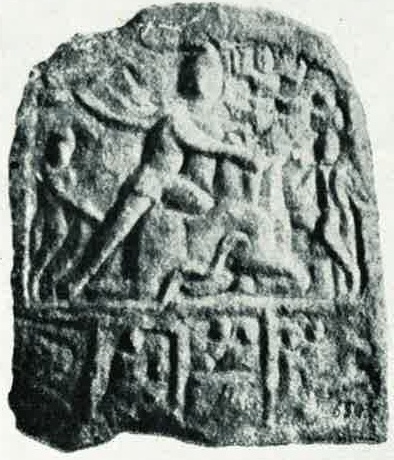
Small arched marble tauroctony relief from Philippovtsi near Sofia, Thracia, divided into two parts by a horizontal rim.
Scene from a bull-slaying relief preserving the dagger of Mithras, the dog and the raised torch of Cautes.
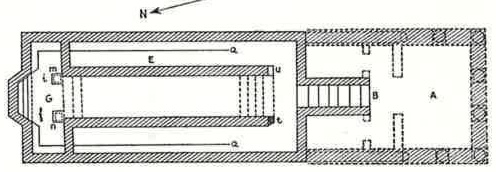
Second Mithraic sanctuary discovered in 1826 some 150 metres west of Mithraeum I at Heddernheim, ancient Nida, with finds in the Wiesbaden museum.

Anazarbus was an ancient Cilician city. Under the late Roman Empire, it was the capital of Cilicia Secunda.

Clarissimus knight and legate born in Poetovio that helped to disseminate the cult of Mithras in the African provinces.
