Your search Monteu da Po gave 2105 results.

Inscription copied at Vintu de Jos near Apulum, Dacia, in the 16th century, probably from Apulum, dedicated to Invicto Mithrae by Lucius Octavius Gratus.

Marble tauroctony relief from Vintu de Jos near Apulum, Dacia, depicting the standard bull-slaying scene.
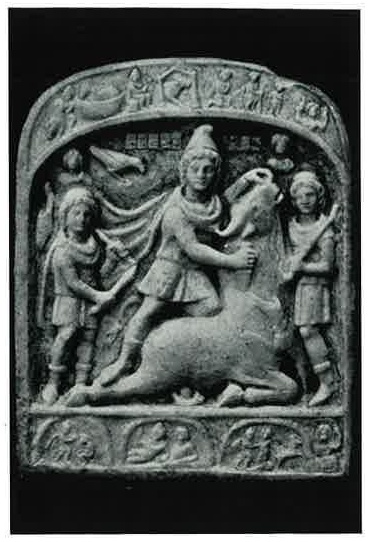
White marble tauroctony relief found in the river Mureș at Vintu de Jos near Apulum, Dacia, around 1859, depicting the bull-slaying with the full iconographic programme.
Inscription from Apulum, Dacia, dedicated to Deo bono puero Phosphoro — the Good Boy who Brings Light — a Mithraic epithet attested in several inscriptions from Apulum.
Inscription from Apulum, Dacia, dedicated to Bono Puero by Aurelius Chrestus — one of several dedications to the Bonus Puer from Apulum with Mithraic associations.
Marble altar from Apulum, Dacia, decorated with leaf ornaments at the top and rosettes between leaves on the sides, bearing an inscription.
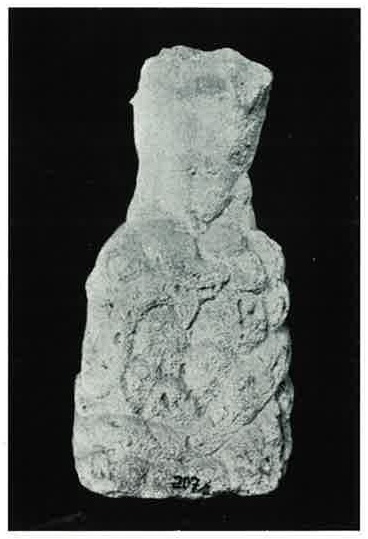
Sandstone rock-birth statue from Apulum, Dacia, depicting the naked Mithras emerging from a rock encircled by a snake; head and arms are lost.
Lost tauroctony relief from Apulum, Dacia, formerly at the Palace of the Prince at Alba Julia, recorded only in early modern sources.
Inscription from Apulum, Dacia, dedicated to Mithrae sacrum by a dedicant whose name begins with M.
Lost limestone altar from Apulum, Dacia, decorated on the sides with a rose and serpent, on the reverse with a bull's head; the front bears a Mithraic inscription.

Sandstone head in Phrygian cap from Apulum, Dacia; probably belonging to a torchbearer.
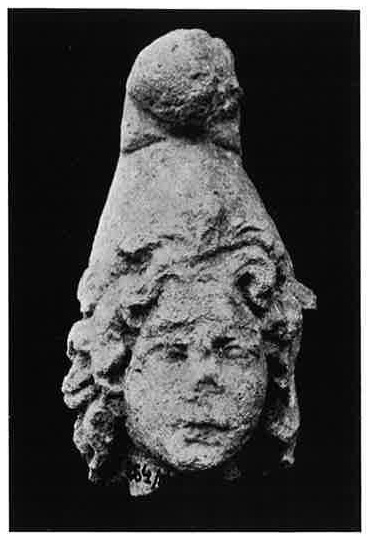
Sandstone head in Phrygian cap from Apulum, Dacia; probably belonging to a torchbearer or Attis.
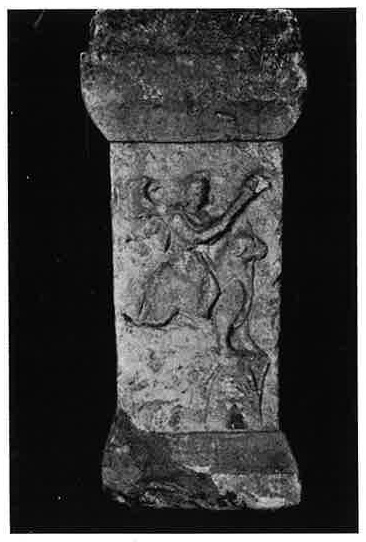
Limestone base from Apulum, Dacia, decorated on the front with Mithras riding the bull to the right while holding an upraised torch — the tauriphoros riding type, distinct from the tauroctony.
Greek inscription from Apulum, Dacia, dedicated to Helios aneuketos — the invincible Sun — by Hermes, son of Gorgios.
Limestone altar from Apulum, Dacia, decorated on one side with Medusa, on another with a vase, flowers, a bull's head, and a serpent; the front bears an inscription.
Inscription from Apulum, Dacia, preserving the end of a dedication by a beneficiarius consularis.
Inscription from a house wall at Apulum, Dacia, dedicated to Cautes by Gaius Herennius Ermes.
White marble tauroctony relief from Apulum, Dacia, depicting Mithras killing the bull in a grotto with dog and serpent; formerly in a private collection in Budapest.
Limestone base from near the Kutyamál vineyard south of the fortress at Apulum, Dacia, decorated with Bacchic vine scrolls and grapes at the top.
Slab from Apulum, Dacia, dedicated to Soli invicto by Quintus Caecilius Laetus, legatus Augusti of Legio XIII Gemina.
