Your search Monteu da Po gave 2105 results.

Late Roman funerary inscription from Antium commemorating the senator, governor of Numidia and Mithraic pater Alfenius Ceionius Iulianus Kamenius.
Small white marble relief from Kostolac, ancient Viminacium in Moesia Superior, depicting the sacred repast of Mithras and Sol: two reclining figures behind a three-legged table (tripod), in an arched niche.
Right portion of a limestone Cautes relief from Kostolac, ancient Viminacium in Moesia Superior, depicting Cautes standing on an elevation in Oriental dress — not cross-legged — with a semicircle above him, probably Sol's nimbus.
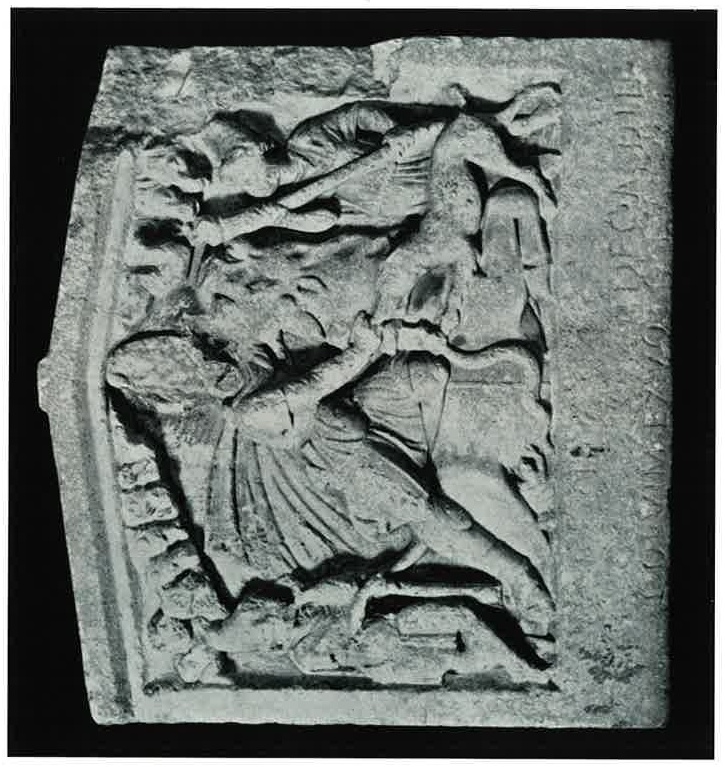
White marble tauroctony relief from Kostolac, ancient Viminacium in Moesia Superior, formerly walled into the Castle of George Branković at Smederevo, depicting the standard bull-slaying.
Head in Phrygian cap from the bed of the Danube near the Isle of Szalk, Intercisa area, Pannonia Inferior; the face is lost — possibly a torchbearer or Attis.
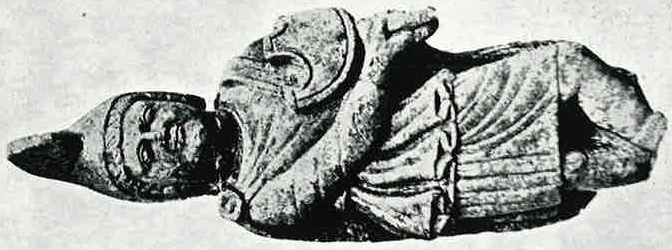
Small head in Phrygian cap from Aquincum, Pannonia Inferior, possibly representing a torchbearer or Attis.
Base from Aquincum, Pannonia Inferior, recording that Marcus Aurelius Frontinianus and Marcus Aurelius Fronto, soldiers of Legio II Adiutrix and fratres, built a temple to Soli socio; dated to the consulship of Antoninus, either AD 213 or 222.
Altar from Aquincum, Pannonia Inferior, dedicated to Deo Soli by Claudius Patasio; dated to AD 191, one of the earliest dated Mithraic inscriptions from Aquincum.
Marble tauroctony relief from Aquincum, Pannonia Inferior, found at Budapest III, Fötér, depicting Mithras as bull-slayer with both torchbearers flanking the central group.
Fourth Mithraic sanctuary discovered near the southern town-wall of Aquincum, Pannonia Inferior, between a rectangular building and an apsidal structure; excavated in 1941–42 and yielding the most complete sculptural assemblage from the city.
Second Mithraic sanctuary discovered at Altofen in 1888, Pannonia Inferior; rectangular (15.03 × 7.06 m) and raised two metres above ground, with benches and a cult niche; one of the most fully excavated Mithraea from the Danubian region.
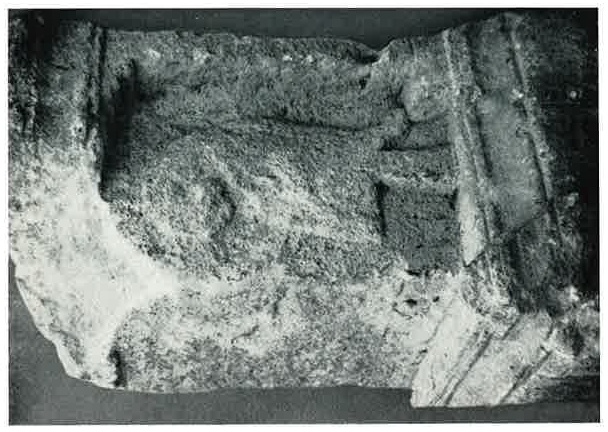
Sandstone altar from Mithraeum I at Carnuntum, Pannonia Superior, decorated on each lateral face with a Phrygian cap upon a dagger — a distinctive Mithraic iconographic pairing — and bearing an inscription on the front.
Fragment of a marble altar from Mithraeum IV at Ptuj, ancient Poetovio, preserving only the opening of a dedication to Deo invicto Mithrae.
Marble altar from Mithraeum IV at Ptuj, ancient Poetovio, dedicated to Deo invicto Mithrae by Aurelius Aurelianus.
Marble altar from Mithraeum IV at Ptuj, ancient Poetovio, dedicated to Deo invicto Mithrae by Titus Flavius Aper, decurio of the Colonia Poetovionis.
Marble altar fragment from Mithraeum III at Ptuj, ancient Poetovio, dedicated to Deo invicto Mithrae by a dedicant whose name is partially preserved as -us Candidus.
Marble altar from Mithraeum III at Ptuj, ancient Poetovio, dedicated to Deo invicto Mithrae by Aurelius Victor, miles of Legio XIII Gemina.
Marble altar from Mithraeum III at Ptuj, ancient Poetovio, dedicated to Deo invicto Mithrae by Titus Flavius Maximianus, decurio of the Colonia Poetovionis.
Marble altar from Mithraeum III at Ptuj, ancient Poetovio, dedicated in honour of the Domus Divina to Deo invicto Mithrae by Ulpius Valerianus, veteran of Legio XIII Gemina.
Marble altar from Mithraeum III at Ptuj, ancient Poetovio, dedicated to Deo invicto Mithrae by Aurelius Sabinus, signifer of Legio XIII Gemina.
