Your search Monteu da Po gave 2099 results.
Mithraic sanctuary found in 1897 on the slope of the Repovic mountains on the right bank of the river Trstenic near Konjic in Herzegovina, Dalmatia; a limestone sanctuary with cult relief, altar, and architectural elements.

Fragmentary inscription from Aequum, Dalmatia, preserving only the phrase invicti posuit.
Altar in poor-quality lettering from Burnum, Dalmatia, dedicated to Soli invicto by Caius Secundulus; the Mithraic interpretation is not entirely certain.
Sandstone altar from Campona, Pannonia Inferior, dedicated to Deo Soli invicto by Claudius Neronianus; the dedication is painted red.
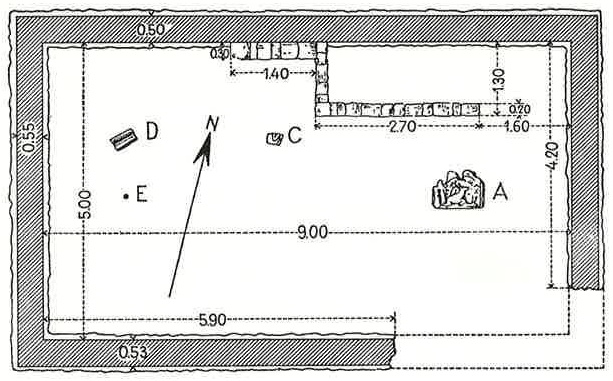
Mithraic sanctuary found in the district of Campona near Nagytétény, Pannonia Inferior, in 1934, yielding three inscribed altars, statue fragments, and other cult objects.
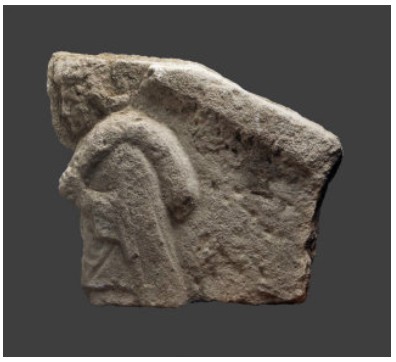
Fragment of a relief from Potz Neusiedl near Stix-Neusiedl, Pannonia Superior, brought to Eisenstadt in 1926, depicting part of a Mithraic bull-slaying scene.
Marble altar from Poljčane between Celje and Maribor, Pannonia Superior, dedicated to Deo invicto Mithrae by Lucius Annius Serecinus for the welfare of his grandson Lucius Annius Verus — a rare three-generation Mithraic dedication.
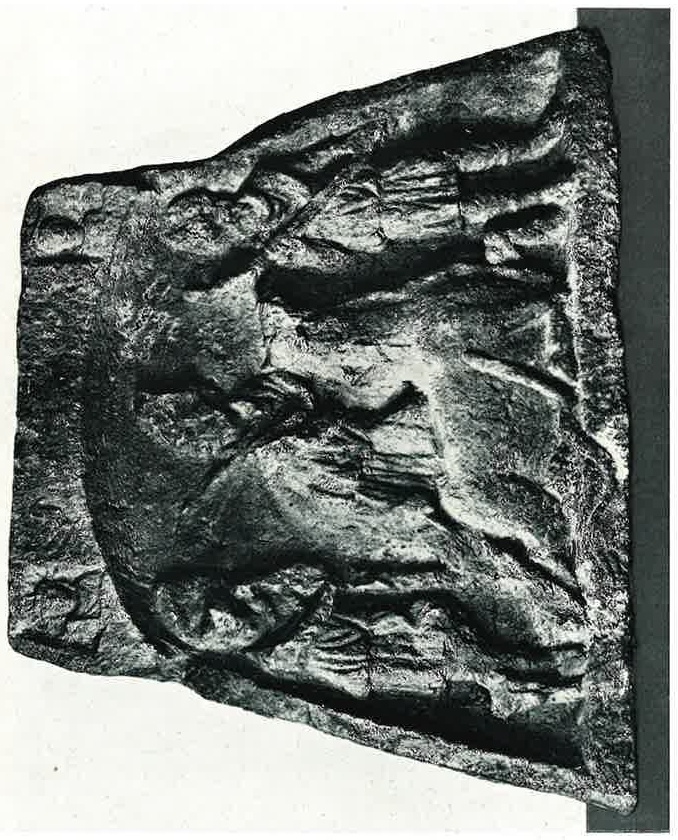
Limestone slab from the Mithraeum at Pohanica, Noricum, elaborately carved on both faces; a metal plate originally attached by pins to its interior was removed, probably by the Mithraists themselves — paralleled at Poetovio.
Sandstone altar with akroteria from the Mithraeum at Pohanica, Noricum, dedicated to Deo invicto Mithrae by Metilius Iustinianus; the sculptor initially misspelt the name Justianus before correcting it.
Small Mithraic sanctuary found in the slope of a ravine called Zlodjer (Devil's Ditch) at Ober-Pohanica near Zdole, Noricum; the finds are among the finest marble Mithraic sculpture from the eastern Alpine provinces.
Fragmentary inscription from Pola preserving a possible reading of the name Atticus.
An earthen lamp bearing the name of C. Dessi along with two coins of Constantine and one of Gratianus, found in the Mithraeum at Spoleto in Umbria.
An oxidized sacrificial knife found in the Mithraeum at Spoleto in Umbria.
A terracotta arm found near the cone-shaped stone in the Mithraeum at Spoleto, the hand holding a broken object possibly from a representation of Mithras's rock-birth.
A small bone statuette from the Mithraeum at Spoleto, depicting a youth dressed in tunic and long cloak with a laurel wreath around the head.
Two surviving wall paintings from the side-benches of the Mithraeum at Spoleto, out of an original six, depicting a cloaked bearded man identified as Saturn holding a sickle and a youth in a red shoulder-cape holding a money-bag, probably representing the seven planets…
A triangular prism in cipollino marble with a hollow on the upper side, found standing in front of the cone-shaped stone in the Mithraeum at Spoleto.
A cone-shaped piece of stone with a square hole found to the left of the altar in the Mithraeum at Spoleto, unlikely to have supported a representation of Mithras's rock-birth despite earlier suggestions, given that the stone tapers slightly.
A travertine altar bearing a brief dedication to Sol Invictus Mithras, found before the main niche in the Mithraeum discovered at Spoleto in 1878 near the Porta S. Gregorio.
Marble relief fragment from Romula, Dacia, bought in Resca in 1933, preserving the feet and forepart of a horse — possibly from a scene of Mithras ascending Sol's chariot.
